
Introduction

* All photos are AI generated
On Tuesday, April 7, 2026, while I was listening to the radio at work, the host of a conservative talk show in Des Moines, Iowa, stated that the pilot of Artemis II shared the gospel just before entering a planned 40-minute radio blackout behind the moon on Monday evening, April 6, 2026. When I heard this introduction, I got so excited because the whole world would probably be tuned in to hear the gospel.
The radio host then played the recording of pilot Victor Glover: “As we get close to the nearest point to the Moon and farthest point from Earth, as we continue to unlock the mysteries of the cosmos, I would like to remind you of one of the most important mysteries there on Earth, and that’s love.
“Christ said, in response to what was the greatest command, that it was to ‘love God with all that you are.’ And he also, being a great teacher, said the second is equal to it, and that is to ‘love your neighbor as you love yourself.’
“As we prepare to go out of radio communication, we feel your love from Earth. And to all of you down there on Earth and around Earth, we love you from the Moon.”
That was “the gospel” that was shared with the world. While Glover did not say it was the gospel, the radio host that morning in Des Moines said it was.
After that radio broadcast, my mind began to wonder how many people would conclude that the way to heaven is to love God with all that you are and your neighbor as yourself? Is this what Jesus taught?The Parable of the Good Samaritan (Luke 10:25-37).
The Parable of the Good Samaritan (Luke 10:25-37)

In one of Jesus’ most famous teachings known as the Parable of the Good Samaritan (Luke 10:25-37), it seems at first glance that Christ is saying that the way to have eternal life is by loving God with all that you are and your neighbor as yourself. A ”lawyer” or expert in the Law of Moses asked Jesus, “Teacher, what shall I do to inherit eternal life?” (Luke 10:25). Jesus responded by asking the lawyer what the Law taught about that (Luke 10:26), and the lawyer answered, “‘You shall love the Lord your God with all your heart, with all your soul, with all your strength, and with all your mind,’ and ‘your neighbor as yourself.’” (Luke 10:27; quoting Deuteronomy 6:5 and Leviticus 19:18). Jesus said to him, “You have answered rightly; do this and you will live.” (Luke 10:28).
Did I read that right? Jesus said the lawyer answered “rightly”? Then He told the expert in the Law of Moses, “do this and your will live.” Some interpreters understand this to mean that entering God’s kingdom is based on doing good works and that doing good works is evidence of a true child of God. If there are no good works in a professing Christian’s life, then saving faith never existed. [1]
But such an understanding of this parable would be salvation by works which is contrary to what Jesus taught in the gospel of John where He emphasizes that eternal life is a free gift that is received by believing in Jesus for it (John 3:14-18; 4:10-14; 5:24, 39-40; 6:27, 29, 35-40, 47, 68-69; 10:28-29; 11:25-26; 17:1-3; et al). According to Jesus in John’s gospel, works have no part in obtaining eternal life as a present possession.
The Bible teaches that eternal life as a future acquisition is always a reward that is based upon works (cf. Matt. 19:29-30; Mark 10:29-30; Luke 18:29-30; John 4:36; 12:25; Rom. 2:7; Gal. 6:7-9; I Tim. 6:12, 19), but when eternal life is presented as a present possession it is always received as a free gift by faith alone in Christ alone (John 3:16; 4:10-14; 5:24; 6:40, 47; Rom. 6:23b; Eph. 2:8-9; Rev. 22:17). [2]
In addition, all of the Bible teaches that salvation is by faith alone apart from any good works. [3] Since the Bible is not going to contradict itself, the parable of the Good Samaritan cannot be teaching that one must love God and one’s neighbor as oneself to get to heaven. Such an understanding can only be obtained by ignoring the context and the rest of Scripture. [4]
The Context of the Good Samaritan Parable

After describing the costs of discipleship (Luke 9:57-62), Christ begins chapter 10 by appointing and sending seventy disciples out “into every city and place where He Himself was about to go” (Luke 10:1) in the nation of Israel. He assured these disciples that the spiritual harvest would be plentiful, and that God would provide for their needs (Luke 10:2-7). Their message was that Jesus was the Christ, the promised Messiah, and that He was offering the kingdom to that generation of Jews (Luke 10:9, 11). [5] Christ enabled them to confirm this message by performing miraculous healings (Luke 10:9). If the Jews rejected this message, Jesus would be the One to judge them (Luke 10:12-15) since their rejection of the seventy’s message was ultimately a rejection of Jesus and the Father Who sent Him (Luke 10:16). [6]
When the seventy returned to Jesus, they were celebrating how “even the demons” were subject to them in Jesus’ mighty “name” (Luke 10:17) through the miracles they performed (Luke 10:19). Christ reminds these seventy disciples not to “rejoice… that the demons are subject to” them, “but rather” to “rejoice because” their “names are written in heaven” (Luke 10:20). This is a clear statement from Jesus that these seventy disciples already had eternal life by believing in Jesus. [7] Unlike Satan (Lucifer) who was kicked out of heaven when his pride led him to rebel against God (Luke 10:18; cf. Isa. 14:12-14; Ezek. 28:11-19), [8] these believers would be permanent citizens of heaven. [9]
The next few verses (Luke 10:21-24) are key to understanding the Good Samaritan parable. “In that hour Jesus rejoiced in the Spirit and said, ‘I thank You, Father, Lord of heaven and earth, that You have hidden these things from the wise and prudent and revealed them to babes. Even so, Father, for so it seemed good in Your sight.’” (Luke 10:21). Christ refers to these believers whose names are permanently written in heaven (Luke 10:20)as “babes” (nēpiois) or infants who possess childlike faith that is unspoiled by learning in contrast to “the wise and prudent.” [10]
Wright states,“Hodges makes the point that the Lord’s statement about names written in heaven means that these ‘babes’ had assurance of eternal life. These wonderful truths had been revealed to them as babes (v 21). The Lord was calling them to do His work, in the case of the Twelve and the seventy, but that work had nothing to do with the gift He had already given them. They could never lose the gift of everlasting life because works were not involved in any way in the gift they had received.” [11] [emphasis added]
Jesus thanked His Father that “babes” (the seventy and rest of Jesus’ disciples – v. 23) understood “these things”about how to have their names written in heaven, that is, how to obtain eternal life (Luke 10:21b). But notice that the Father had “hidden these things from the wise and prudent” (Luke 10:21a). Christ’s thanksgiving may also be directed at having authority to judge the nation of Israel. [12]
This thought of judgment can be seen in the next verse when Jesus says, “All things have been delivered to Me by My Father.” (Luke 10:22a; cf. John 5:20-30).God the Father had given Jesus that authority. The fact that Jesus is the Christ and can give eternal life through faith alone in Him alone is based upon knowing “who the Son is” (Luke 10:22b).These are the things “revealed” to “babes.” [13]
Christ then turned to His disciples (babes) and told them privately that they were “blessed” because they were able to “see” these things (Luke 10:23). At the same time, the “wise and prudent” were those from whom “these things” have been “hidden” (Luke 10:21). They were and are even today spiritually blind to such truths. [14]
In this context, “babes” are those who are convinced that Jesus is the Christ and in Him they have eternal life. Jesus is the One who will judge. The wise and intelligent, however, do not see “these things.”
After establishing these important truths, Luke gives an example of a “wise and prudent” person (Luke 10:25-37) and an example of a “babe” (Luke 10:39). The lawyer was a “wise and prudent” man in his own eyes and in the eyes of the Jewish community. He is the one who asked Christ the question which led to the Good Samaritan Parable. But Mary was the “babe” in that she was discerning. She chose to sit at Jesus’ feet and learn from Him (Luke 10:39, 42).
The Question of the Lawyer and the Answer from the Lord (Luke 10:25-29) [15]
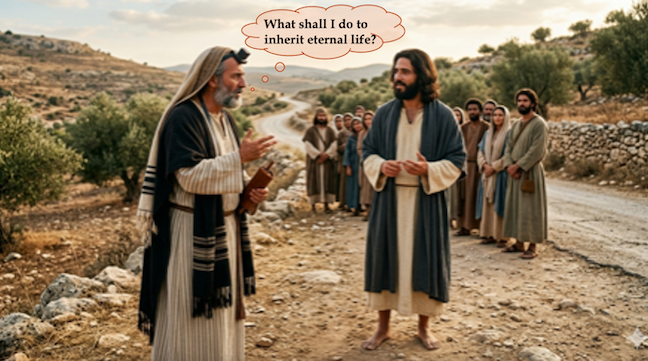
Then we are told that “a certain lawyer stood up and tested Him, saying ‘Teacher, what shall I do to inherit eternal life?’” (Luke 10:25). Wright makes several important observations about this verse: This “lawyer” (nomikos) was considered to be “well informed about the law, a legal… expert in the Mosaic law.” [16] In Luke’s gospel, “lawyers” gospel, “lawyers” are always presented in a negative light (cf. Luke 5:17-21; 7:30; 9:22; 11:45-46, 52-53; 14:3). The lawyer did not recognize Jesus as the Christ Who could give eternal life to him. Instead, he saw Jesus as a fellow “teacher” and addressed Him with the same word by which he as an expert in the law would have been addressed by those seeking his counsel. [17] Luke tells us this lawyer “stood up and tested Him.” The Greek word translated “tested”(ekpeirazō) occurs only four times in the New Testament and is always used in a negative way (cf. Matt. 4:7; Luke 4:12; 10:25; I Cor. 10:9). The lawyer might have sought to entrap Jesus with his question, [18] assuming that Jesus wasn’t as knowledgeable of the Law as he was.
We also see that this lawyer did not view eternal life as a free gift that is received by believing in Christ alone as indicated by his question, “What shall I do to inherit eternal life?” (Luke 10:25b). He did not say, “What shall I believe to inherit eternal life?” Like many religious people today, his focus was on doing, not believing. He thought that he could earn eternal life, so he asked Jesus what he must do.
“In this entire episode, the word ‘do’ is important; in the Greek text, the word in v. 25 is a participle. In His initial answer as well as in His final application, the Lord used the imperative verb form of the same word (vv. 28, 37). This section, then, begins and ends with the concept of ‘doing’ good works. The lawyer’s question fits a Jewish context. As a proud Jewish lawyer, he mistakenly thought he could earn his eternal salvation by such works. He looked to the Law of Moses to determine what those works would involve. This question not only led to the parable, it also is the key to understanding it.” [19] [emphasis added]
Since the lawyer was an expert in the Law of Moses, Jesus directed him there when He asked, “What is written in the law? What is your reading of it?” (Luke 10:26). This question further places Jesus in the authoritative role of “Teacher” using the lawyer’s term of address. [20]
The man summarized the Law by quoting from Deuteronomy 6:5 and Leviticus 19:18, saying, “’You shall love the Lord your God with all your heart, with all your soul, with all your strength, and with all your mind,’ and ‘your neighbor as yourself.’” (Luke 10:27). Jesus affirmed the lawyer’s answer, saying, “You have answered rightly; do this and you will live.” (Luke 10:28). Many commentators conclude from Jesus’ response that salvation is by works since Christ told the lawyer to “do this” and promised him he “will live” which in the context means he will “inherit eternal life.” The lawyer thought he could earn eternal life by doing good works (loving God with all that he is and his neighbor as himself) and Jesus tells him he can do that by doing what the Law commands.
Why would Jesus say this? Has He suddenly changed the gospel message, so it now includes faith and good works? No. Christ is using the Law to convict this proud man to come to his senses so he can see that he can never live up to the demands of the Law, and therefore he needs a Savior.
Keep in mind that Luke was a traveling companion of the apostle Paul (Acts 16:10-17; 20:5-15; 21:1-18; 27:1-37; 28:1-16; cf. Col. 4:14; Phlm. 1:24; 2 Tim. 4:11), [21] and Paul wrote, “10 There is none righteous, no, not one…12There is none who does good, no, not one… 20 Therefore by the deeds of the law no flesh will be justified in His sight, for by the law is the knowledge of sin.” (Rom. 3:10, 12, 20). The Law was intended to reveal our sin to us so we would see our need for a Savior. But the lawyer was convinced he could keep the Law. But could he?
Paul also wrote, “21 For if there had been a law given which could have given life, truly righteousness would have been by the law. 22 But the Scripture has confined all under sin, that the promise by faith in Jesus Christ might be given to those who believe. 23 But before faith came, we were kept under guard by the law, kept for the faith which would afterward be revealed. 24 Therefore the law was our tutor to bring us to Christ, that we might be justified by faith. 25 But after faith has come, we are no longer under a tutor.” (Gal. 3:21-25). People couldn’t become righteous before God by keeping the Law because they are all sinners, incapable of keeping it. The law can’t empower sinners to obey; it can’t give “life” (Gal. 3:21). Instead, the lawrevealed God’s righteous standards and imprisoned everyone under sin’s power so that people were positioned to receive “the promise by faith in Jesus Christ” (Gal. 3:22). The law functioned as a “tutor to bring us to Christ that we might be justified by faith” (Gal. 3:24).
The Lord Jesus was using the Law to show the lawyer that no one can love God with his whole being, and no one can love his neighbor as he loves himself. The Lord was saying that if you could do the impossible, you would have eternal life. “The problem was, of course, that neither the lawyer himself nor anyone else (other than the Lord Jesus) has ever, or will ever, fulfill these two supreme commandments.” [22] The answer to the lawyer’s question is that he could not “do” anything to earn eternal life. Only a “wise” and arrogant person would think he could.
Christ was using the Law to convict the lawyer of his sin so he would see his need for a Savior. Hence, what the lawyer’s response should have been was to ask Jesus, “How can I love God above all else and my neighbor as myself? I am not able. I need help.” [23]
But instead, the lawyer “wanting to justify himself, said to Jesus, ‘And who is my neighbor?’” (Luke 10:29). This proud man tried to “justify” or defend himselfagainst the implications of Jesus’ words by getting the focus off of himself. In his arrogance, the lawyer had convinced himself that he was able to love God with all that he is, but in Leviticus 19:18, the neighbor is a fellow Jew. Yet the lawyer lived in a region where he would encounter Gentiles, especially being under Roman rule. There were also Samaritans who were despised by the Jews because they were descendants of the Assyrians and Israelites who intermarried after the Assyrians conquered the northern kingdom of Israel (722 B.C.) and introduced their idolatrous religion to the Israelites. [24]
It is also possible that the lawyer sought to “justify himself” in a way that is similar to the book of Romans. That is, the man wanted to be justified before God by his works. If he had to love his neighbor to do that, he needed to know whom among all the different people surrounding him were considered to be his neighbor. He is thinking if he can obtain that information, then he can put forth enough effort to be righteous in God’s eyes. This leads Jesus to share the Good Samaritan Parable.
The Good Samaritan Parable (Luke 10:30-37)

“Then Jesus answered and said: ‘A certain man went down from Jerusalem to Jericho, and fell among thieves, who stripped him of his clothing, wounded him, and departed, leaving him half dead.’” (Luke 10:30). Christ does not specify the ethnicity or occupation of the “man” in this verse, but His listeners would probably assume he was a Jew. The 17-mile desert road that descended about 3,300 feet from Jerusalem to Jericho was treacherous, winding, and a favorite hangout of robbers. [25] Clothing was a valuable commodity in that day, so it explains why the “thieves… stripped him of his clothing.” Understandably, the man may have resisted these robbers and suffered a near fatal beating. His attackers left him “half dead.” This man was completely helpless and exposed to the elements and unable to save himself. He desperately needed help.

Fortunately for him a religious Jew who was expected to love others was coming down the road toward him. “Now by chance a certain priest came down that road. And when he saw him, he passed by on the other side.” (Luke 10:31). Priests were responsible for interpreting the law and officiating in the temple. [26]A priest of all people would normally show compassion to people. He served in a so-called “helping profession” and often had contact with the Scriptures and their demands. [27] He would have been familiar with Leviticus 19:18 and God’s command to love one’s neighbor. Yet this priest, for whatever reason, passed by the half dead man “on the other side” of the road.

Another religious Jew came and looked at the beaten man. “Likewise, a Levite, when he arrived at the place, came and looked, and passed by on the other side.” (Luke 10:32). Levites assisted the priests in the mundane affairs of Jewish worship. [28] Perhaps these two religious men had fulfilled their obligations in Jerusalem and wanted to get home, or maybe they were on their way to Jerusalem and didn’t want to be late. Maybe they thought contact with the man would contaminate them or they were afraid of being robbed themselves should they stop. Regardless, they didn’t want to show love to this man in need. [29] They did not “do” what they were commanded by God to do.
Like the lawyer, these two Jewish religious leaders probably took pride in being men who followed the Mosaic Law. But as the apostle Paul said, they were those who have the Law but do not keep it (Rom. 2:21-23). If the lawyer began to see himself in people like the priest and Levite, perhaps he might begin to question if he kept the Law. And if he did question it, he might begin to doubt that he could “justify himself.” [30]

Unlike the two religious Jews, the next man showed compassion to the stricken man. “33 But a certain Samaritan, as he journeyed, came where he was. And when he saw him, he had compassion.” (Luke 10:33). Jews hated Samaritans because of their mixed heritage. So, a Samaritan was probably not someone the lawyer thought of as a neighbor that he was required to love.
But the Samaritan showed “compassion” to this nearly dead man that the Jewish religious leaders ignored. It is not surprising that the only other time this verb for “compassion” (splagchnizomai) is used in Luke’s gospel is in reference to the heart of God (Luke 15:20) and Jesus (Luke 7:13).
Notice the extent of the Samaritan’s compassion: “34 So he went to him and bandaged his wounds, pouring on oil and wine; and he set him on his own animal, brought him to an inn, and took care of him. 35 On the next day, when he departed, he took out two denarii, gave them to the innkeeper, and said to him, ‘Take care of him; and whatever more you spend, when I come again, I will repay you.’” (Luke 10:34-35). The Samaritan “went to” the man who was left half dead, whereas the religious leaders avoided him. He poured “oil” with its medicinal properties “and wine” as a disinfectant on the man’s “wounds” before applying “bandages” to them.After taking him “to an inn,” the Samaritan watched the man overnight, caring for him (Luke 10:34). “When he departed” the next day, he left enough money (“two denarii” = two days of wages [31]) to pay for all his needs, instructing “the innkeeper” to “take care of” the man with the funds he provided while he was gone. He promised to return and to pay for whatever more the innkeeper might spend (Luke 10:35).
Hearing this parable was probably difficult for the lawyer. We call it the Parable of the Good Samaritan, but the word “good” is not in this passage. The lawyer would not have considered the Samaritan to be a good man. But he is the only one who fulfilled the requirements of the Law in this case, not the religious leaders with whom the lawyer would have found like-mindedness.
The Lord Jesus asked the lawyer, “So which of these three do you think was neighbor to him who fell among the thieves?” (Luke 10:36). The lawyer originally asked who his neighbor was (Luke 10:29) because in his mind, he had to love his neighbor to obtain eternal life. He wanted to limit those he was commanded to love in order to avoid the responsibility the Law placed upon him. But Jesus turns the lawyer’s original question around to get him to focus on being a neighbor. In other words, Jesus was asking, “What kind of neighbor are you?” [32] This was intended to get the lawyer to reassess what he thought about “doing” the Law. [33]
The lawyer replied to Jesus, “He who showed mercy on him.” (Luke 10:37a). Notice that the lawyer does not say the word “Samaritan.” Why?Perhaps it was because ofhis contempt for Samaritans or on a positive note – because he now understoodthat showing mercy was the main issue, not the nationality or religion of one’s neighbor. [34]
Having answered Christ’s question correctly, we then read, “Then Jesus said to him, ‘Go and do likewise.’” (Luke 10:37b). The passage began with what the lawyer must “do” to obtain eternal life (Luke 10:25) and now it ends with Jesus commanding him to “do” what the Samaritan did (Luke 10:37).
The Traditional View of the Parable [35]

While there are several interpretations of this passage, I want to focus first on the traditional interpretationamong evangelical Christians which understands this parable to be a call to social action and an end to racial prejudice. The lawyer was only talking about what he should do, but Jesus commanded him to “go” and “do” it. So instead of just talking about doing the right thing, we must go and do the right thing and show compassion to those in need.
For example, we are to stop and help someone who has a flat tire. We are to feed a family that is hungry or help an unemployed person find a job. What Jesus said to the lawyer He is saying to the church! We are to “do” what Jesus commanded and be a compassionate neighbor to others. [36] The question to ask is not, “Who is my neighbor?” but “Who acts like a neighbor?” [37]
This view of the parable is seen as specifically directed toward the lawyer. He had heard the Law and knew what it said, but the question is will he do it? So, the lawyer represents those who hear God’s Word and understand what it says, but now the question is will they do it? The hearing of the Law is substantiated by obeying it. [38]
This view is also used as a call to end racial prejudice. God can use anyone who is open to Him. The Samaritan was considered a despised minority but was still used by God. Such a person is a neighbor, regardless of his ethnicity, religion, or status in society or our churches. [39]
As stated earlier, related to this kind of interpretation of the parable is the view that “true” Christians will do such things. According to this understanding, a person who does not fight against social ills and needs should question his eternal salvation. But how do we measure this? On several occasions, all of us have passed by people begging at street corners or stranded on the side of the road. Does that call into question our salvation?
How many Christians today have gone to the extent that the Samaritan did to meet the needs of someone when they were given the opportunity? Have we administered first aid to a total stranger who was the victim of an assault, spent the night with him, given two days wages for others to continue caring for him, and committed ourselves to the financial costs above and beyond that if needed? If that is the standard by which we can know we are a true child of God who possesses eternal life, all of us will all live with doubt and insecurity about whether we are truly born again.
While I believe most evangelical Christians are familiar with this view, I agree with Wright when she concludes that such a position is a misuse of the Good Samaritan Parable because it ignores the context. [40] The lawyer’s main concern was about earning eternal life (Luke 10:25). If Jesus was telling him not to be racially prejudiced and to help those in need in order to obtain eternal life, it is clear He was teaching salvation by works. But this lawyer was one of the “wise and prudent” people who are blind to spiritual truth (Luke 10:21). The interpreter must start there and realize that this man’s desire to earn eternal life was flawed from the start. Christ was not encouraging him to continue to believe he could do enough good works to justify himself before God and obtain eternal life. Hence, I believe there is a much better way to understand this parable that is consistent with the context and the rest of Scripture.
An Alternative View of the Parable [41]

The lawyer’s thinking was flawed from the beginning when he thought he could “do” enough good works to obtain eternal life (Luke 10:25). Hence, Jesus needed to show this arrogant “wise and prudent” lawyer (Luke 10:21) that he could not “do” enough to “inherit eternal life.”
The lawyer sought to limit whom he needed to love when he asked, “Who is my neighbor?” (Luke 10:29). But the Lord Jesus expanded the number of people he must love to include any person in need. The Samaritan wasn’t concerned about the nationality or religion of the man lying by the side of the road.
None of us love like the Samaritan in the parable did. Even if a person could point to one time in his life when he showed love like the Samaritan did, it would not be on a daily or continual basis. It is impossible, just as the apostle Paul taught (Rom. 2:20-3:23). When the Lord told the lawyer to go and do that, He was telling him to do the impossible. And that is the point. The lawyer wanted to earn eternal life by his works. He could not. As one of the “wise and prudent” people of this world, the lawyer needed to become like a “babe” and realize that having his name written in heaven is given as a gift (Luke 10:20-21) and is not something that can be earned.
THE LAWYER IS THE MAN LEFT FOR DEAD (Luke 10:30). [42] The lawyer was a self-professed wise but spiritually blind unbeliever who thought he could earn eternal life. He was spiritually dead and blind to the truth. When he came to Jesus, he was seeking life or a relationship with God, though he probably was not aware of this. Like the fallen man on the side of the road, he was spiritually destitute, naked, and dying and he could not save himself.No amount of obedience to the law could take away his sin or the penalty of his sin. He needed help. He needed rescue. This man left for dead is a picture of every unbeliever. I agree with Wright who said, “Every believer can see that at one time, before faith, he himself was the man lying, without hope, on the side of the road, but Christ came and saved him.” [43]
RELIGION AND GOOD WORKS ARE THE PRIEST AND LEVITE (Luke 10: 31-32). When the priest and the Levite pass by the fallen man, Jesus makes it clear that the best of religion and good works cannot save a sinner from spiritual death. Spiritual leaders cannot get sinners to heaven. No one can fulfill the role of the Good Samaritan except the One telling this parable. [44]
JESUS IS THE GOOD SAMARITAN (Luke 10: 33-35). The Good Samaritan represents the Lord Jesus Christ. The Samaritan was despised and rejected by the Jews and so was Jesus. Pentecost mentions how Jesus was even “called a Samaritan (John 8:48) [and] had come to offer help for those in need. Thus, this parable may have been a veiled invitation to this expert in the law to accept the help He offered, even as the dying man had accepted the help of the Samaritan traveler.” [45] [brackets added]
It is Jesus Who rescues the helpless and defenseless. The man on the ground is the lawyer who needed to be redeemed. [46] Although the Samaritan was hated by the Jews, he was willing to stop and help this defenseless man even though to do so could be dangerous especially if the thieves were nearby. The oil and wine that he used to treat the man’s wounds were expensive. He placed the man on his own animal and took him to the inn where he paid for the man’s stay there. The Samaritan did everything that was necessary to save this fallen man. He paid the price to rescue him from certain death. [47]
The Lord Jesus paid the price for our salvation when He took our place on the cross and rose again (John 19:30; I Cor. 6:20). We do not pay the price for our salvation, nor do we pay the price for another’s salvation. Only Jesus, the perfect Lamb of God, can and did do this (John 1:29; I Cor. 15:3-6).
In addition, before the Samaritan departed from the inn, he said he would return to repay the innkeeper for any additional expenses he had while taking care of the wounded man (Luke 10:35). Though he was leaving, he was coming back. Doesn’t that sound like the Lord Jesus who said He would return after He ascended to the Father (Matt. 24:36-51; 25:14-30; John 14:1-3; et al.).
Someone might say I am reading too much into this by identifying Jesus as the Samaritan. But in the New Testament, it is not unusual for Jesus to be the Person the parable is talking about. In the gospel of Luke, Christ shared a parable about a master (Jesus) and his servants (disciples) to teach His disciples to be ready for His return (Luke 12:35-49). In the Parable of the Minas, Jesus is the conquering King (Luke 19:11-27). In the Parable of the Wicked Vinedressers, Jesus is the beloved son of the owner of the vineyard (Luke 20:9-19). And in the Parable of the Good Samaritan, Christ was the Despised and Rejected One who came to rescue the one who could not save himself.

THE BELIEVER IS THE INNKEEPER (Luke 10:35). So far, we have identified all the characters in this parable except the innkeeper. I agree with Wilkin when he says the innkeeper represents believers in Jesus. [48] “On the next day, when he departed, he took out two denarii, gave them to the innkeeper, and said to him, ‘Take care of him; and whatever more you spend, when I come again, I will repay you.’” (Luke 10:35). Before departing from the inn, the Good Samaritan told the innkeeper to take care of the wounded man he rescued the day before. The innkeeper was to continue what the Good Samaritan began. He was to serve the wounded man, just as the Samaritan had done. He was told to do it until the Samaritan returned. [49] He assured the innkeeper that when he returned, he would “repay” him for any additional expenses he incurred while taking care of the man. The Greek word translated “repay” (apodōsō) means to “recompense or reward.” [50] It is used of eternal rewards that believers will receive at the Judgment Seat of Christ in the future (cf. Matt. 6:4, 6, 18; 16:27; Rev. 22:12).
This is a beautiful picture of Jesus departing to go to heaven and when (not if) He returns, He will reward His servants who continue to take care of those He rescued! Christ has entrusted us to disciple those He has redeemed. If we are faithful to do this, He promises to reward us according to what we did for Him (cf. Matt. 20:1-16; 24:36-51; 25:14-30; Luke 19:11-19; cf. I Cor. 3:8-15; 2 Cor. 5:9-11; Rev. 22:12).
Conclusion [51]
When the pilot of Artemis II spoke of loving God with all that you are and loving your neighbor as yourself, he was not sharing the gospel by which we are saved. Those who say a person must love God and his neighbor as himself to get to heaven, have misunderstood or mishandled Christ’s Parable of the Good Samaritan. They have failed to look at that parable in light of the context and the rest of Scripture.

Before Jesus shared the Parable of the Good Samaritan, He gave a summary of how people responded to His message. Some were blind to Who Jesus was and His free offer of eternal life. Jesus called them “wise and prudent.”Others saw and heard these things and were addressed as “babes” (Luke 10:21). The “babes” were able to “see”and “hear” the things Jesus taught, whereas the “wise and prudent” could not (Luke 10:23-24).
The lawyer who asked Jesus what he must do to earn eternal life (Luke 10:25) was an example of the “wise and prudent” who could not see or hear the things Jesus taught. He asked a question which showed that he was spiritually blind and deaf. The Lord empathized with his limitations and shared the Parable of the Good Samaritan to help the man begin to see that he could not earn eternal life, but Jesus could give it to him as a free gift.
There were “babes” or discerning people, who may have also heard Jesus’ parable. After the parable, Luke tells us the name of one of them. Her name was “Mary,” and she “sat at Jesus’ feet and heard His word.” (Luke 10:39). If Christ had shared the Good Samaritan parable with her, she would have heard it in a way that was much different than the lawyer heard it. She would have seen the Good Samaritan as a wonderful portrait of Jesus. And like the innkeeper, she would have been excited to care for those her Lord had rescued. If she did so faithfully, she understood that she would receive eternal rewards from her Master when He returned for His church.
An important application in evangelism for us as Christians is to approach non-Christians who think they can obtain eternal life through their good works the same way Jesus approached the lawyer. We are to pre-evangelize them with the Law which is designed to reveal their sin (Rom. 3:20). The lawyer was not ready to hear the gospel yet because he did not see himself as a sinner in need of a Savior. Christ masterfully used the Law to cause the lawyer to begin questioning if he could truly love his neighbor as himself. As that small ray of light began to penetrate his heart, he may have considered that he could not keep the Law as he once thought. Perhaps he would need help.
And if he did realize his need for help, then he would be more open to hearing the gospel of Jesus which says eternal life is a free gift we receive by believing in Christ to give it to us (John 3:14-16). Why is eternal life free? Because Jesus paid the price in full when He died in our place on the cross and rose from the dead (John 19:30; I Cor. 15:3-6). Our world needs to hear this good news! Too many are dying without Jesus’ gift of eternal life. If one sinner who repents, that is, changes his mind about whatever is keeping him from believing in Christ and then believes in Him for salvation, causes all of heaven to rejoice (Luke 15:7, 10), think of what happens in heaven when thousands die every day without Christ (Matt. 18:14; I Tim. 2:3-4; 2 Pet. 3:9)!
I also believe this passage encourages us to be like the innkeeper who cared for the wounded man the Samaritan rescued the day before. The Lord Jesus is rescuing sinners all around us and it is essential that we take care of them through the discipleship process, knowing that when the Lord returns for His church, He will “repay” or reward those who remain faithful (cf. Matt. 20:1-16; 24:36-51; 25:14-30; Luke 19:11-19; cf. I Cor. 3:8-15; 2 Cor. 5:9-11; Rev. 2:25-27; 22:12; et al.).
ENDNOTES:
[1] Robert H. Stein, Luke, The New American Commentary, vol. 24 (Nashville, TN: Broadman & Holman Publishers, 1992), pp. 316, 319.
[2] See Joseph Dillow, Final Destiny: The Future Reign of The Servant Kings: Fourth Revised Edition (Grace Theology Press, 2018 Kindle Edition), pp. 221-224; cf. Zane C. Hodges, Grace in Eclipse; A Study on Eternal Rewards (Corinth, TX: Grace Evangelical Society, 2016 Kindle Edition),pp. 53-69.
[3] Gen. 15:6; I Sam. 10:1-10; Matt. 18:6; 21: 32(3); 24:23, 26; 27:42; Mark 1:15, 9:42; 15:32;16:16(2), 17; Luke 8:12, 13; 22:67; John 1:7, 12, 50; 2:11, 23; 3:12(2), 15, 16, 18(3), 36(2); 4:39, 41, 42, 48, 53; 5:24, 38, 44, 45, 46, 47(2); 6:29, 30, 35, 36, 40, 47, 64, 69; 7:5, 31, 38(2), 39, 48; 8:24, 30, 31, 45, 46; 9:35, 36, 38; 10:25, 26, 37, 38(3), 42; 11:25, 26, 27(2), 42, 45, 48; 12:11, 36, 37, 38, 39, 42, 44(2), 46, 47; 13:19; 14:12; 16:9, 27; 17:8, 20, 21; 19:35; 20:29, 31(2); Acts 2:44; 4:4, 32; 5:14; 8:12, 13, 37(2); 9:42; 10:43, 45; 11:17, 21; 13:12, 39, 41, 48; 14:1, 23, 27; 15:5, 7; 16:1, 31, 34; 17:4, 5, 12, 34; 18:8, 27; 19:2, 4, 9, 18; 21:20, 25; 22:19; 26:27(2); 28:24(2); Rom. 1:16; 3:3, 22, 4:3, 5, 11, 17, 24; 9:33; 10:4, 9, 10, 11, 14(2), 16; 13:11; 15:31; I Cor. 1:21; 3:5; 7:12, 13; 9:5; 10:27; 14:22(2); 15:2, 11; 2 Cor. 4:4; Gal. 2:16; 3:6, 9, 22; Ephes. 1:13, 19; Phil. 1:29; I Thess. 1:7; 2:10; 4:14; 2 Thess. 1:10; 2:12,13; I Tim. 1:16; 3:16; 4:3, 10; 6:2(2); 2 Tim. 1:12; Tit. 3:8; Heb. 11:31; I Pet. 1:21; 2:6, 7; I John 3:23; 5:1, 5, 10(3), 13.
[4] Kathryn Wright, September 1, 2022, journal article entitled, “The Good Samaritan (Luke 10:25-37)” at www.faithalone.org or at this LINK.
[5] Ibid.
[6] Alberto Samuel Valdez, “Luke,” The Grace New Testament Commentary: Revised Edition, 2019 Kindle Edition, pg. 430.
[7] Wright, “The Good Samaritan (Luke 10:25-37),” at www.faithalone.org.
[8] Tony Evans, The Tony Evans Bible Commentary, 2019 Kindle Edition, pp. 1410, 1638, 2116-2117.
[9] Valdez, “Luke,” The Grace New Testament Commentary: Revised Edition, 2019 Kindle Edition, pg. 431.
[10] Walter Bauer, A Greek-English Lexicon of the New Testament and Other Early Christian Literature, 2000 Kindle Edition, pg. 671.
[11] Wright, “The Good Samaritan (Luke 10:25-37),” at www.faithalone.org cites Zane C. Hodges, A Free Grace Primer (Denton, TX: Grace Evangelical Society, 2018), pp. 95, 541.
[12] Wright, “The Good Samaritan (Luke 10:25-37),” at www.faithalone.org.
[13] Ibid.
[14] Ibid.
[15] Much of this section is adapted from Ibid, unless otherwise noted.
[16] Bauer, A Greek-English Lexicon of the New Testament and Other Early Christian Literature, 2000 Kindle Edition, pp. 675-676.
[17] J. Dwight Pentecost, The Words & Works of Jesus Christ (Grand Rapids: Zondervan, 1981), pg. 299.
[18] Archibald Thomas Robertson, A. T. Robertson’s Word Pictures in the New Testament, 2014 Kindle Locations 36347 to 36352.
[19] Wright, “The Good Samaritan (Luke 10:25-37),” at www.faithalone.org.
[20] Valdez, “Luke,” The Grace New Testament Commentary: Revised Edition, 2019 Kindle Edition, pg. 432.
[21] Evans, The Tony Evans Bible Commentary, 2019 Kindle Edition, pg. 2308
[22] Zane C. Hodges, Romans: Deliverance from Wrath (Corinth, TX: Grace Evangelical Society), 2013 Kindle Locations 1311 to 1327.
[23] John Martin, “Luke,” The Bible Knowledge Commentary Gospels, 2018 Kindle Edition, pg. 511.
[24] Evans, The Tony Evans Bible Commentary, 2019 Kindle Edition, pp. 2210-2211.
[25] Tom Constable, Dr. Constable’s Notes on Luke, 2026 Edition, pg. 248 cites Walter L. Liefeld, “Luke,” in Matthew-Luke. Vol. 8 of The Expositor’s Bible Commentary 12 vols. Edited by Frank E. Gaebelein and J. D. Douglas (Grand Rapids: Zondervan Publishing House, 1984), pg. 943; Howard I. Marshall, The Gospel of Luke New International Greek Testament Commentary series (Exeter, England: Paternoster Press, 1978),
pg. 447. See also Jack Finegan, Light from the Ancient Past: The Archeological Background of Judaism and Christianity 2nd edition (Princeton University Press. London: Oxford University Press, 1959), pp. 314-15.
[26] Evans, The Tony Evans Bible Commentary, 2019 Kindle Edition, pg. 2118.
[27] Constable, Dr. Constable’s Notes on Luke, 2026 Edition, pg. 249.
[28] Ibid.
[29] Evans, The Tony Evans Bible Commentary, 2019 Kindle Edition, pg. 2118.
[30] Wright, “The Good Samaritan (Luke 10:25-37),” at www.faithalone.org.
[31] Valdez, “Luke,” The Grace New Testament Commentary: Revised Edition, 2019 Kindle Edition, pg. 433.
[32] Evans, The Tony Evans Bible Commentary, 2019 Kindle Edition, pg. 2119.
[33] Wright, “The Good Samaritan (Luke 10:25-37),” at www.faithalone.org.
[34] Constable, Dr. Constable’s Notes on Luke, 2026 Edition, pg. 251.
[35] Much of this section is adapted from Wright, “The Good Samaritan (Luke 10:25-37),” at www.faithalone.org, unless otherwise noted.
[36] Wright, “The Good Samaritan (Luke 10:25-37),” at www.faithalone.org cites Warren W. Wiersbe, The Bible Exposition Commentary, vol. 1 (Wheaton, IL: Victor Books, 1996), pg. 213.
[37] Ibid., cites Joel B. Green, The Gospel of Luke (Grand Rapids, MI: Eerdmans, 1997), pg. 432.
[38] Ibid., cites Green, The Gospel of Luke (1997), pp. 426, 432.
[39] Ibid., cites Grant R. Osborne, Luke: Verse by Verse (Bellingham, WA: Lexham Press, 2018), pg. 290.
[40] Wright, “The Good Samaritan (Luke 10:25-37),” at www.faithalone.org.
[41] Much of this section is adapted from Wright, “The Good Samaritan (Luke 10:25-37),” at www.faithalone.org, unless otherwise noted.
[42] Ken Yates, May 15, 2024, audio message entitled, “The Good Samaritan,” at the 2024 Boise GES Regional Conference at www.faithalone.org or at this LINK.
[43] Wright, “The Good Samaritan (Luke 10:25-37),” at www.faithalone.org.
[44] Robert Wilkin, January 1, 1999, article entitled, “Do This and You Will Live – Luke 10:28,” at www.faithalone.org.
[45] Pentecost, The Words & Works of Jesus Christ (1981), pg. 301.
[46] Wilkin, “Do This and You Will Live – Luke 10:28,” at www.faithalone.org.
[47] Yates, “The Good Samaritan,” at the 2024 Boise GES Regional Conference at www.faithalone.org
[48] Wilkin, “Do This and You Will Live – Luke 10:28,” at www.faithalone.org.
[49] Wright, “The Good Samaritan (Luke 10:25-37),” at www.faithalone.org.
[50] Bauer, A Greek-English Lexicon of the New Testament and Other Early Christian Literature, 2000 Kindle Edition, pg. 110. [51] Adapted from Wright, “The Good Samaritan (Luke 10:25-37),” at www.faithalone.org.