This video is about the everlasting hope that is found in the risen Lord Jesus Christ. Why do millions of people around the world celebrate Easter? What evidence is there that Jesus Christ is alive today? Discover the answers to these questions and much more. Please share this video with those you want to see in heaven.
Scriptures are from the New King James Version unless otherwise noted. Pictures are used with permission from Good News Productions International and College Press Publishing/ www.Freebibleimages.org, www.Goodsalt.com, or they are creative common licenses.
The last few weeks have been filled with disturbing reports about the dismantling of the United States so that our country is no longer a superpower. These reports are not addressing an enemy that is outside of the U.S. They are speaking of an enemy that is here on U.S. soil. Reports indicate that thousands of Chinese military-aged males, Iranians, and Iranian-backed terrorists such as Hezbollah, have entered our country through its porous borders during the previous presidential administration. [1]
Following the bombing of Iran’s nuclear facilities by the U.S. military on June 22, 2025, there is a growing concern that terrorist sleeper cells here in the U.S. will seek revenge against Americans.[2]Now with 4th of July celebrations coming up this week across the country, U.S. law enforcement is on high alert for Iranian retaliation. [3]
There are some analysts who believe that Islam is also seeking to cause America to collapse from within. We have over 2,700 mosques throughout the U.S.[4] What are these mosques teaching? Their sacred writing is called the Qur’an which they understand to be divine and unchanging. These mosques teach Jihad[5] and want there to be a movement towards Sharia Law[6] which is contrary to American Law.
It is naïve for Americans to believe that Islam is a peaceful religion. It is not. The ultimate goal of Islam is to convert the world to its religion (Qur’an 8:39). Allah (the god of Islam) [7] instructs his followers to kill the infidels – those who refuse to convert to Islam (Qur’an 5:72-76; 9:5; 47:4). However, Allah instructs his followers to treat infidels peacefully and not involve them in war only when the infidels have more might and larger numbers (Qur’an 47:35), much like their prophet Mohammed said as when he was weak in Mecca. Then when Mohammed became strong, he went to war with them and took over the city of Mecca by the edge of the sword. [8]
When Muslims are outnumbered by non-Muslims (infidels), instead of overtaking them with violence, they seek to overtake them through non-violent means. Some examples written by a Christian Arab American years ago, include: [9] [brackets added]
1. Terminate America’s freedom of speech by replacing it with statewide and nationwide hate-crime bills.
2. Wage a war of words using black leaders like Louis Farrakhan, Rev. Jesse Jackson and other visible religious personalities who promote Islam as the religion of African Americans while insisting Christianity is for whites only. What they fail to tell African Americans is that it was Arab Muslims who captured them and sold them as slaves. In fact, the Arabic word for black and slave is the same, “Abed.”
3. Engage the American public in dialogues, discussions, debates in colleges, universities, public libraries, radio, TV, churches and mosques on the virtues of Islam. Proclaim how it is historically another religion like Judaism and Christianity with the same monotheistic faith.
4. Nominate Muslim sympathizers to political office to bring about favorable legislation toward Islam and support potential sympathizers by block voting.
5. Take control of as much of Hollywood, the press, TV, radio and the Internet as possible by buying the related corporations or a controlling stock.
6. Yield to the fear of the imminent shut-off of the lifeblood of America – black gold. America’s economy depends on oil and 41 percent of it comes from the Middle East.
7. Yell “foul, out-of-context, personal interpretation, hate crime, Zionist, un- American, inaccurate interpretation of the Qur’an”anytime Islam is criticized, or the Qur’an is analyzed in the public arena.
8. Encourage Muslims to penetrate the White House, specifically with Islamists who can articulate a marvelous and peaceful picture of Islam [President Obama welcomed the Muslim Brotherhood to the White House during his administration. [10]]…
9. Accelerate Islamic demographic growth via:
• Massive immigration (100,000 annually since 1961).
• Use no birth control whatsoever – every baby of Muslim parents is automatically a Muslim and cannot choose another religion later.
• Muslim men must marry American women and Islamize them (10,000 annually). Then divorce them and remarry every five years – since one can’t legally marry four at one time. This is a legal solution in America.
• Convert angry, alienated black inmates and turn them into militants (so far 2,000 released inmates have joined al-Qaida worldwide). Only a few ”sleeper cells” have been captured in Afghanistan and on American soil.
10. Reading, writing, arithmetic and research through the American educational system, mosques and student centers (now 1,500) should be sprinkled with dislike of Jews, evangelical Christians and democracy…
When you read through this plan, every point has been unfolding since the time of its writing years ago. Its author wrote, “Will Americans continue to sleep through this invasion as they did when we were attacked on 9/11?“
Here in the U.S., our largest city has a Muslim democratic mayoral candidate who recently defeated the former Democratic governor of New York in the primary elections. [11] This mayoral candidate states that Israel has no right to exist as a Jewish state. [12] I wonder how this will play out if Mamdani is elected mayor of New York City, especially among its Jewish and Christian residents there?
What I am describing in this introduction is warfare that is up close, not “out there”somewhere in another country. We are facing a complex battle on our own soil.
The apostle Paul reminds us that our battle is not against “flesh and blood, but against principalities, against powers, against the rulers of the darkness of this age, against spiritual hosts of wickedness in the heavenly places.” (Eph. 6:12). Paul discusses four groupings of demonic spirits in this verse. You can read more details about these groupings in the third of these articles in this Spiritual Warfare series. But the main thing to understand is that our primary battle is not with people – not with Iranians, the Chinese, or Islamists. Our primary battle is with the Devil and his entire kingdom of darkness consisting of various demonic spirits under different levels of authority, all of which are under Satan, who is “the prince” (Eph. 2:2) of this kingdom, “the god of this age” (2 Cor. 4:4), and “the ruler of this world” (John 12:31; 14:30; 16:11; cf. Matt. 4:8-9).
The Whole Armor of God
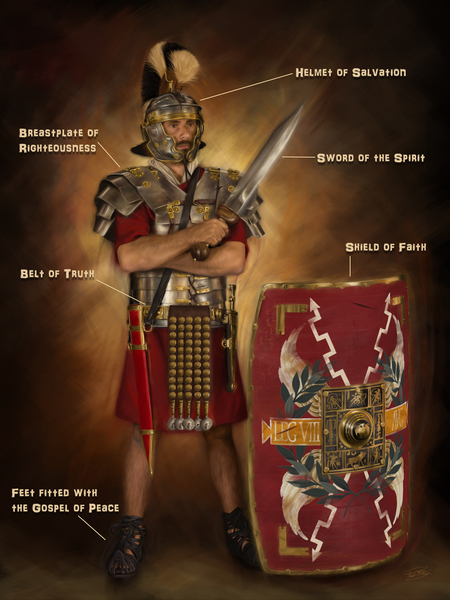
God wants every Christian to wear “the whole armor of God” so we may stand against the “wiles” or trickery of the Devil (Eph. 6:11). The first three pieces of armor we have with us all of the time [13] (“having girded… put on… shod…” – Eph. 6:14-15). [14] This is the state we are always in. But the last three pieces of armor we are called to take and use as needed [15] (“taking … take…” Eph. 6:16-17), [16] especially “in the evil day” (Eph. 6:13b) when all hell breaks loose and seeks to steal, kill, and destroy us (John 10:10a).
Paul describes the armor that Roman infantrymen wore in the order they would put it on. The soldier first puts on his belt which represents the Christian’s belt of truth (Eph. 6:14a). Since Satan is the father of lies (John 8:44), this first piece of armor is essential to protecting us from Satan’s deceptions and lies. We learned that truth is God’s viewpoint on a subject. It is the absolute standard by which reality is measured in its original form. [17]Truth points us in the direction that God wants to lead us.
After putting on his belt, the soldier then puts on his breastplate which protects his vital organs in his chest region. “The breastplate” (Eph. 6:14b) we are to put on is “righteousness” (dikaiosunē) which refers to the quality of “being right.” [18]God’s truth is the informational base that tells us the right thing to do. The truth points our heart in the direction of God’s righteousness. The breastplate of righteousness is our response to God’s truth or viewpoint on a matter.
When God’s truth and righteousness are operative in our lives, it will lead to the next piece of armor which is feet shod with the gospel of peace (Eph. 6:15). We are often faced with a myriad of choices and decisions in life, but how do we know we have made the right choices or decisions? How do we know we are moving in the right direction? How do we know we have the right perspective on a matter? God’s peace will confirm it. The Lord will give us a deep-seated calm to move forward (“feet” suggest movement) with a decision even though hell may be breaking loose in our lives.
As we experience God’s peace as a result of His truth and righteousness being operative in our lives, we can then see our faith in God renewed and strengthened. This leads to the fourth piece of armor which is “the shield of faith” (Eph. 6:16) which can protect us from the flaming arrows of the evil one that he uses to cause us to doubt our Christian faith.
The next piece of armor we are to take up is the “helmet of salvation” (Eph. 6:17a). This powerful piece of spiritual armor protects and directs our thoughts, so our lives are filled with hope. Satan wants us to lose hope about our past salvation from the penalty of sin (Acts 16:31), our present salvation from the power of sin (Jas. 1:21-22), and our future salvation from the presence of sin (I Thess. 1:10; 4:13-5:11; I John 3:2-3).
Up to this point Paul has been focusing on our defensive armor. But the sixth piece of armor is “the sword of the Spirit, which is the word of God.” (Eph. 6:17b). This is the only offensive piece of spiritual armor God has given us. Why would God give us only one offensive piece of armor to use against the kingdom of darkness? Because this one piece of armor is sufficient to overcome our enemy. Notice that it is a “sword” that belongs to “the Spirit.” This is the tool the Spirit of God uses to address the spiritual attacks we are facing.
Two Types of Swords
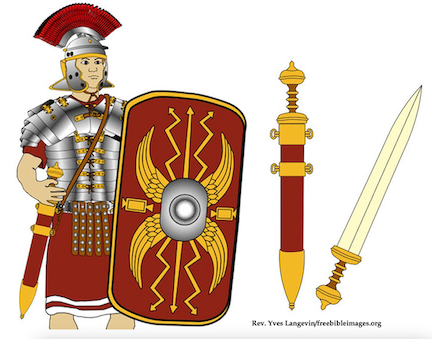
The New Testament uses two different Greek words for “sword.” One of those words (rhomphaia) refers to “a large and broad sword”[19] that was used for defending oneself from somewhat of a distance (cf. Luke 2:35; 21:24; Rev. 2:12, 16; 6:8). This word is used figuratively to describe the powerful word that proceeds from the mouth of King Jesus to decimate His enemies when He returns to earth at the end of the seven-year Tribulation (Rev. 19:15, 21). But this is not the word Paul uses in Ephesians 6:17b.
The other Greek word used for “sword” (machaira) was used of a shorter and very sharp sword like a dagger. [20]It was approximately eighteen inches long. This is what Peter used to cut off the ear of the high priest’s servant in his attempt to protect Jesus in the Garden of Gethsemane (cf. Matt. 26:51; Mark 14:47; Luke 22:49-50; John 18:10-11). This sword was used in hand-to-hand combat when the enemy was up close and in your face. This is the word Paul uses in Ephesians 6:17b
“The sword of the Spirit” is the tool that the Holy Spirit uses in the spiritual realm. [21] The Spirit uses this sword when the enemy confronts you up close in “the evil day.” When Satan or his demonic spirits are attacking you up close and there is no escape because they have encompassed you, you must get to the enemy quickly, definitively, and decisively. This is the sword the Holy Spirit (not us) uses to stab the enemy and give him a death blow to his attempts to defeat us.
This is the only offensive weapon the Spirit uses in the spiritual realm. He uses the sword of the Spirit to address the spiritual conflict in the invisible world which is being manifested up close in our visible world. This is the piece of armor that the Spirit uses to deal with what is causing us distress in the world in which we live. If we don’t believe the source of our battle stems from the spiritual world, we won’t use this piece of armor.
If we don’t use this spiritual weapon God has given us, we will be like Moses and Peter. When Moses tried to deliver Israel, he killed the Egyptian who was mistreating a Hebrew slave (Exod. 2:11-15). When Peter wanted to deliver Jesus in Gethsemane, he took out his sword and cut off the ear of the high priest’s servant (Matt. 26:51; John 18:10). Jesus, the God of the Old and New Testaments, told both of these men that He did not need their human methodologies or perspectives to fight a spiritual battle (Exod. 3:2-10; Matt. 26:52-54; John 18:11).
Many of us may be losing our spiritual battle because our default response to spiritual attack is to turn to human approaches or perspectives instead of God’s approach and perspective. We may be quick to seek human wisdom instead of God’s wisdom. When we choose to use a man-made method for a spiritual battle, we will have no assistance from God in our war against the kingdom of darkness.
For example, this is why God’s Word says, “For the wrath of man does not produce the righteousness of God.” (Jas. 1:20b). My human anger will not produce the righteousness of God. When I get cut off in traffic during rush hour, it is easy for me to be quick to anger toward that inconsiderate driver. My thoughts and words at that time do not express the righteousness of God. But God says, “Let Me handle this, Jeff.” (Rom. 12:17-19).
What is the Sword?
Paul informs us that “the sword of the Spirit” is “the word of God.” (Eph. 6:17b). There are three Greek words that are translated “word” in the New Testament. The first is graphē and it refers to the “writings or a piece of writing.”[22] Scripture is called the graphē (2 Tim. 3:16). The Bible you hold in your hand is the graphē. Those sixty-six books in written form are the graphē. But Paul is not talking about carrying your Bible around to defeat the devil on the evil day. Some people treat the Bible as a lucky charm and take it with them everywhere they go. That is not what Paul is talking about here.
The second Greek word is logos.The apostle John referred to Jesus as the Logos (John 1:1). Logos refers to a “message.”[23] Jesus was God’s messenger to the world. He presented God to humanity (John 1:18). Logos is also the content of the Bible (graphē). For example, when you hear a sermon at church, you are hearing the logos or message of the Bible which brings clarity to your understanding so you can apply it more effectively to your Christian life. Logos is very powerful. But this is not the word Paul uses for the sword of the Spirit.
The Greek word that Paul uses for “word” is the Greek word rhēma. This word means “utterance” or “words spoken and declared.” [24]Paul did not say, “the sword of the Spirit, which is the graphē of God.” Nor did he say, “the sword of the Spirit, which is the logos of God.” No, Paul says, “the sword of the Spirit, which is the rhēma of God.”
Evans explains it like this: “The rhēma is the declaration of the logos that you got from the graphē… The sword that the Spirit uses is the rhēma of God. The graphē, the book, gives you the logos, the message. But it is the rhēma that plunges in and draws blood. It is the rhēma that the Spirit uses. So many of us are not seeing the power of the Spirit because we have not graduated to the rhēma. We are either stuck at graphē… Others of us… come to understand the logos, the message. We want to understand the sermon… the truth… We may be inspired by it or educated by it… But when it comes to spiritual warfare… you need more than graphē and logos. You need rhēma – the logos from the graphē uttered.” [25]
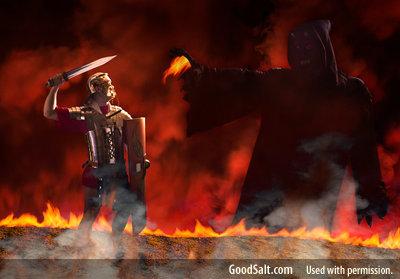
Two swords clash together and the Word of God is victorious.
We want to utter or declare (rhēma) the logos (message) because of its intrinsic nature. Regarding the logos, the Bible says, “For the word (logos) of God is living and powerful, and sharper than any two-edged sword, piercing even to the division of soul and spirit, and of joints and marrow, and is a discerner of the thoughts and intents of the heart.” (Heb. 4:12). When we get the message (logos) it is “living and powerful.” It has supernatural energy behind it. It is “sharper than any two-edged sword.” It can cut either way you swing it because on both sides of its blade it is razor sharp.
How sharp is the logos of God? It is so sharp, it can pierce “to the division of soul and spirit.” The “word”(logos) that God uses is able to penetrate the invisible world (“soul and spirit”). The spiritual world consists of our “soul” (psyches) which is being saved from the power of sin (sanctification) as we hear and do what God says (Phil. 2:12; Jas. 1:21-22) and our “spirit” (pneumatos) which was saved forever from the penalty of sin (justification) when we believed in Jesus for His gift of salvation (cf. Ezek. 36:26; Acts 16:21; Eph. 4:23-24; Heb. 10:14).
The author of Hebrews is telling us that “the word” (logos) is so sharp it can slice into the spiritual realm and separate what is “spirit” and what is “soul” (Heb. 4:12). Why does God want to use the message or logos to separate our “soul and spirit”? Because our “soul” can get in the way of our “spirit.” Our “soul” has been distorted by sin and it can hinder us from expressing our “spirit” which is who we truly are in Christ. Our personality, how we were raised, educated, and the perspective we have can all get in the way of our “spirit” which is our true identity in Christ.
Our “spirit” and “soul” can be so intertwined that we need the logos to separate the two so He can remove our soul-driven life and enable the “spirit” to express God’s presence in our lives. Remember, our “spirit” was created “according to God, in true righteousness and holiness” (Eph. 4:23-24) and was “perfected forever” (Heb. 10:14) when we were born again through faith in Jesus. Our spirit “cannot sin because” it “has been born of God” (I John 3:9). When the soul is removed from our decision making, then our “spirit” can express the character of Jesus in our lives. But the only thing that can get our “soul” out of the way is the logos of God.
For example, when you hear a sermon online or in person, the message (logos) of the Bible (graphē) is used by God to reveal that what you thought (“soul”) about a matter and what God thought (“spirit”) about it are not the same. The logos is revealing that the perspective your parents or peers or a politician or a professor or a post on social media taught you is not the same as what God is teaching you. You are realizing that what God thinks about that particular matter is not the same as what you thought. When that happens, you are getting sliced and diced by the word (logos).
But the “word” (logos) not only exposes what we do, but it also reveals what we think. It “is a discerner of the thoughts and intents of the heart.” (Heb. 4:12b). The logos not only discerns our thoughts but the intentions behind them. The goal of logos is to expose. The logos is God’s MRI or Xray machine.
When we come to church and read our Bibles, all we have done is open up graphē, the written word.But when the truth pierces our heart, we have encountered logos because the message is given. When we receive the message (logos) and accept it, we now have understanding and clarity about what God is saying. But in an up-close spiritual battle, the Spirit of God wants to use not just the graphē and the logos when you listen to Bible teaching on radio broadcasts or podcasts, He wants to use the rhēma of God, i.e., the spoken or declared word of God (Eph. 6:17b).
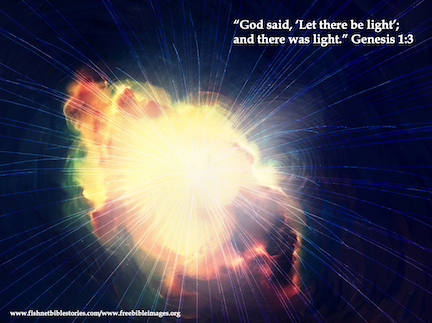
In the beginning when God created the heavens and the earth, “God said, ‘Let there be light’; and there was light.” (Gen. 1:3). God spoke, and it was so. The spoken word had the power within it to do what the spoken word declared would be done. God spoke it, and it happened exactly like He said it. Notice that there was no light until God spoke it into existence. God did not just think it into existence. He declared it and then there was light. There was power in the word spoken, not just in the word that is known. God used what He knew. The spoken word had the power within it to produce what the spoken word called for.
This is what the Spirit of God used to create light. How do we know this is what the Spirit used? The Bible tells us that when God was ready to create, “the Spirit of God was hovering over the face of the waters.” (Gen. 1:2b). The Spirit of God was ready to move when He heard the spoken word of Jesus. But the word of God had to be spoken before the Spirit could use it.
The same is true for us when we are in a spiritual battle. God’s Spirit wants to use the spoken word of God to defeat our enemy. It is not enough to know the Word. We must declare it to the enemy. This is what Jesus did when He was tempted in the wilderness by the devil. More on that after this next section.
Satan’s strategy is to knock the Sword of the Spirit out of our hands. Imagine you are a Roman soldier in a battle and an enemy soldier is coming at you. He is fully armed. He has his big rectangular shield that protects his entire body. All you can see is that big shield coming at you along with the top of his helmet … and … a … sword. If you are going to overcome this soldier, what is the first thing you will have to do? That’s right. You will have to knock the sword out of his hand. That is the only offensive weapon he has. If you go for his shield or even his helmet, he may stab you through with his sword. You have to get the sword out of his hand.
The “wiles” of the devil seek to knock the sword of the Spirit out of our hands. The best way for Satan to overcome the Christian is to knock the sword out of his hand. And, according to Ephesians 6:17b, the sword is the spoken (rhēma) word of God. If the devil can knock the spoken word of God out of the hand of the Christian, he can easily defeat the unarmed soldier for Christ. So, let’s look more closely at the wiles or methods of deception that Satan uses.
When Adam and Eve sinned in the Garden of Eden, the devil cast doubt on the spoken word of God. He said, “Had God indeed said, ‘You shall not eat of every tree of the garden’?” (Gen. 3:1b). The enemy got Eve to begin to doubt God’s spoken word. [29] Here the serpent turns Eve’s eye away from the freedom she has (“of every tree of the garden you may freely eat” – Gen. 2:16) and onto the single prohibition (“but of the tree of the knowledge of good and evil you shall not eat” – Gen. 2:17). Eve said to the serpent, “2 We may eat the fruit of the trees of the garden; 3 but of the fruit of the tree which is in the midst of the garden, God has said, ‘You shall not eat it, nor shall you touch it, lest you die.’” (Gen. 3:2-3). This turns her into a legalist in that she forgot the word “every” (she limited her freedom) and added the words “nor shall you touch it” (she increased her limitation). She begins to doubt the love and goodness of God.
Next Satan denies God’s spoken word. “Then the serpent said to the woman, ‘You will not surely die.’” (Gen. 3:4). This is an outright claim that God’s Word is not true; it cannot be trusted.
Finally, Satan distorts God’s spoken word when he says to Eve, “For God knows that in the day you eat of it your eyes will be opened, and you will be like God, knowing good and evil.” (Gen. 3:5). The serpent distorts the truth by claiming God limited Adam and Eve because He (God) did not want them to be like He was, knowing good from evil. Of course, when Eve and Adam ate of the fruit, they did learn the difference between good and evil, but not the way God knows the difference.
God’s knowledge was intuitive; Eve’s knowledge was experiential. Adam and Eve tasted sin for the first time and felt its effects, the effects of the fall. They experienced sin. Up until this point, God has known about sin intuitively. Not until the cross will He know it experientially. He knows about sin the way a heart doctor knows about heart attacks. The man with the heart attack knows about heart attacks in a way the surgeon does not. This new knowledge doesn’t get Eve to first base in the realm of knowledge when compared to an omniscient Being. She got duped. Nevertheless, the serpent has done his work: three blows to the mid-section of Eve. Now he hops out of the ring and tags his partner, the world.
The world leaps into the ring in round two in order to knock Eve out. “So, when the woman saw that the tree was good for food, that it was pleasant to the eyes, and a tree desirable to make one wise, she took of its fruit and ate. She also gave to her husband with her, and he ate.” (Gen. 3:6). The world is made up of “the lust of the flesh, the lust of the eyes, and the pride of life” (I John 2:16). The fruit “was good for food” (lust of the flesh), “pleasant to the eyes” (lust of the eyes), “desirable to make one wise” (pride of life). The world scores an uppercut, a chop to the chin, and a haymaker to the temple. Down goes Eve, down goes Eve, down goes Eve. Her husband wasn’t far behind.
Satan has been using these same simple boxing moves ever since. But notice, in round one the serpent is knocking the sword out of Eve’s hand (Gen. 3:1-5). The entire round is an attack on the spoken Word of God. Once the Word of God is no longer in the hand of the believer, he or she has lost the only offensive weapon they have. In leading Adam and Eve to sin, the serpent enjoys a two-round knockout. He is present only in round one. He uses the three punches mentioned above to undermine Eve’s faith in God’s Word. He tried to do the same thing with Jesus.
Remember when the Holy Spirit led Jesus into the wilderness to be tempted by the devil (Matt. 4:1-11)? Satan tried to use the same three punches on Jesus that he used on Eve in the Garden of Eden. First, the devil uses the lust of the flesh when he says to Jesus, “If You are the Son of God, command that these stones become bread.” (Matt. 4:3). The phrase, “If You are the Son of God” is a first-class condition in the Greek language which assumes the condition is true, [31] and would therefore be translated, “Since You are the Son of God…” Satan is so crafty. He had been watching Jesus go without food for ”forty days and forty nights,” and of course “afterward He was hungry” (Matt. 4:2). So, the devil attacks Jesus at the point of His vulnerability.
And you know what? Satan and his demons are watching us and taking notes. They keep a scouting report on each of us. They know when we are vulnerable to temptation, and they act accordingly. [32]
So, Satan shows up at a specific time to address a legitimate need that Jesus has. He is telling Jesus, “Look, You are the Son of God. You can do whatever You want to do. So, You might as well command these stones to become bread.”“In this situation, Satan questioned the provision of God: Jesus was hungry. God hadn’t fed him. Why shouldn’t Jesus just make what was needed?” [33]
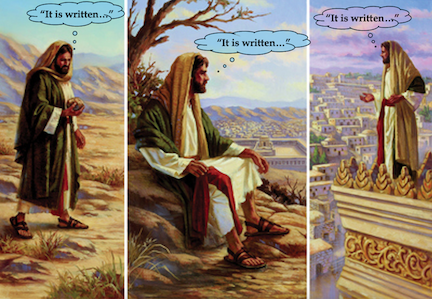
How does Jesus respond? He says, “It is written…” (Matt. 4:4a). Then Jesus quotes a verse from a chapter in the Old Testament, “Man shall not live by bread alone, but by every word that proceeds from the mouth of God.” (Deut. 8:3). If the living Word (Jesus) needed to use the written Word to deal with the enemy of the Word, how much more must you and I who have written no word, need to use that same Word against the enemy of the Word?! Christ did not respond to the devil based on what He thought, and He had perfect thinking.
Jesus says, “Let Me tell you what the graphē says.” Christ tells Satan what the graphē says based on the logos. Christ doesn’t quote just any verse. He goes back to the Old Testament to a passage that deals with what He is facing in the New Testament. Christ was hungry. So, what does He do? He goes to Deuteronomy 8 where Moses explained to Israel how they survived through the wilderness when they were hungry. They survived by God’s provision. They didn’t survive merely because of the manna, but because of the One Who provided it through supernatural means. Was Jesus hungry? Yes. But He was willing to trust His Father to provide for Him supernaturally instead of acting independently of Him.[34]
Jesus had a legitimate need (hunger), and Satan was offering to meet that need in an illegitimate way – by having Jesus act independently of God. But God was offering to meet Christ’s legitimate need His way. The issue is not whether your need is legitimate; the issue is who is giving you the advice to address it? God or Satan?
Christ runs to Deuteronomy 8 and says to the devil, “Let Me tell You what God said about this situation.” “It is written: ‘Man shall not live by bread alone, but by every word that proceeds from the mouth of God.’” (Deut. 8:3). Man doesn’t live by bread alone, but by where it came from, “by every word that proceeds from the mouth of God.” When Satan heard what was written, he couldn’t handle that anymore, so he went to another subject.
Satan’s next temptation uses the pride of life. “ 5 Then the devil took Him up into the holy city, set Him on the pinnacle of the temple, 6 and said to Him, ‘If You are the Son of God, throw Yourself down. For it is written: ‘He shall give His angels charge over you,’ and, ‘In their hands they shall bear you up, lest you dash your foot against a stone.’” (Matt. 4:5-6). Challenging Jesus to jump to His death doesn’t sound like much of a temptation. But notice that the devil supported his appeal by quoting God’s promise of angelic protection in Psalm 91:11-12. Jesus, then, had an opportunity to demonstrate that He was the promised Messiah for all of Jerusalem to see. The problem with Satan’s plan was it ignored God’s plan. If Jesus did what Satan advised Him to do, it would bypass the cross which was contrary to God’s will. [35]
Notice that Satan knows the Bible and he uses it. If the devil can’t convince you to act independently of God, he’ll work through your religion. But God doesn’t need Satan’s help to get you where He wants you to go.
Christ responds to Satan, by quoting Deuteronomy 6:16, “It is written again, ‘You shall not tempt the Lord your God.’” (Matt. 4:7). We are never to use disobedience to back God into a corner to force Him to fulfill His plan. [36]Satan was telling Jesus to test God. And Christ says to the devil, “God told Me in His Word not to test Him.” Notice that Satan does not argue with Jesus when He responds with the rhēma of God.
Instead, the devil uses the lust of the eyes to tempt Jesus. “8 Again, the devil took Him up on an exceedingly high mountain, and showed Him all the kingdoms of the world and their glory. 9 And he said to Him, ‘All these things I will give You if You will fall down and worship me.’” (Matt. 4:8-9). Did you catch that? “The devil took Him…” Sometimes God lets the devil take us to tempt us. Ultimately Satan wanted Christ to worship him. So, he offers Jesus the entire kingdoms of the world and their glory if Jesus would take a knee before him. Satan wants our worship too. He will make incredible offers to us to get us to bow down to him.
How does Jesus respond? “Then Jesus said to him, ‘Get behind Me, Satan!” (Matt. 4:10a). This command displays Jesus’ absolute authority over the devil. Then Christ quotes, Deuteronomy 6:13, “For it is written, ‘You shall worship the Lord your God, and Him only you shall serve.’” (Matt. 4:10b). Worship is reserved for the one true God and Him only. Too often we may come to worship God on Sunday and then serve lesser agendas and gods the rest of the week. But if Jesus is the ultimate authority in the universe, He deserves our exclusive worship and service. [37]
In responding to each of Satan’s temptations, Jesus did not just study the Bible and know what it said. He opened His mouth and uttered what it said. He said to the devil, “Let Me tell You what God just said about what you are telling Me.” And when Jesus told Satan what God said, “Then the devil left Him, and behold, angels came and ministered to Him.” (Matt. 4:11). The devil failed to knock the sword of the Spirit out of Jesus’ hands. He could not handle hearing the rhēma of God three times, so he left Jesus alone. When the fallen angel left, the faithful angels came and ministered to Jesus.
We may ask, “Why doesn’t the devil leave me alone?” Could it be because he knows we will never say, “It is written…”? He knows we will never bring that up. Instead, he knows we will talk about our families, our jobs, our education, our reading, our favorite sports, TV programs, and politicians, etc. He knows that we will never say, “It is written…” and if we do study the Word, he knows we are never going to use it and speak it to him. Thus, the devil does not fear us because we are not wielding “the sword of the Spirit, the word (rhēma) of God.” (Eph. 6:17b).
A Personal Example of the Rhēma of God
During a short-term mission trip in the Philippines with an evangelistic association in the summer of 2013, I was scheduled to go with three other American men to a predominantly Muslim area in the southern Philippines to preach the gospel in public schools. Two nights before we were to go there, the Filipino director and other Filipino staff who lived in or near that province began to brief me about the mission there and the high risk of going. Two countries recently issued an alert not to go into this area due to militant Muslim activity. I was told we would have to keep a low profile and have military escorts at all times. We would stay in our hotel when we were not preaching in schools.
The Filipinos then asked me a series of questions. They asked me, “What will you do if you are kidnapped?” “I would preach Jesus to them.” They asked, “But they will move you from militant camp to militant camp to make it difficult to find you. Then what?” “Then more Muslims will hear the gospel,” I said. They asked, “What about Pat and the girls if you are killed?” “God is their Father and He will take much better care of them than I ever could.” The staff then asked me, “What about how it would affect our evangelistic association if you were kidnapped or killed?” To which I said, “Good question. I will consider the implications.” But I thought to myself, Christ will be magnified in life or death. I knew I was called to go.
The pastors and I prayed and then I went to talk to the American founder and director of the association. He said no one should go if they are afraid because Muslims sense fear and try to bully those who are afraid. He said they don’t know how to handle fearless Christians. They can’t bully them. I told him I believed the Lord wanted me to go. I then went to tell the three other Americans of this new information to see if they were still led to go to the area. We talked and prayed a lot and the short of it is only two of us went.
I talked and prayed with Pat and the girls as well. They had obvious concerns, but I could not deny that the Lord Jesus wanted me to go. I shared with them verses God was bringing to my attention. “And the Lord, He is the One who goes before you. He will be with you, He will not leave you nor forsake you; do not fear nor be dismayed.” (Deut. 31:8). I asked, “Is there anywhere we can go where God has not already gone before us?” “No.” “Is there anywhere we can go where God will not be with us?” “No.” “Is there any place we can go where God will abandon us?” “No.” “Then what is there to fear?” “Nothing.” “Why be discouraged or dismayed?” “No reason.” We claimed Psalm 31:14-15, “But as for me, I trust in You, O Lord; I say, ‘You are my God. My times are in Your hand.’” My family was very concerned, but they knew the Lord was calling me to go.
I also shared with Pat and the girls how God had been speaking to me all week long leading up to this trip. I was having my devotions in the Book of Acts, and I would fall asleep thinking about what I had read and then dream about it at night and how God delivered the apostles from opposition and plots to kill them. When Stephen was being stoned, he saw Jesus standing in heaven as if to applaud his sacrifice for the gospel.
Satan’s attacks during the two nights before the trip were very intense. I felt an intense evil presence and intense fear gripped me. I had intrusive thoughts of being kidnapped, tortured, and dying a slow death. God led me to pull out the sword of the Spirit to confront the enemy. Two verses that especially ministered to me said, “9 Now the Lord spoke to Paul in the night by a vision, ‘Do not be afraid, but speak, and do not keep silent; 10 for I am with you, and no one will attack you to hurt you; for I have many people in this city.’” (Acts 18:9-10). It wasn’t enough to read these verses (graphē) or understand their significance (logos). I needed to declare their message to the powers of darkness, “It is written: ‘9 Now the Lord spoke to Paul in the night by a vision, ‘Do not be afraid, but speak, and do not keep silent; 10 for I am with you, and no one will attack you to hurt you; for I have many people in this city.’” (Acts 18:9-10). The Holy Spirit calmed my heart and encouraged me, assuring me of His presence, His protection, and His people to watch out for us. By God’s grace, I was prepared to die but planning to return to my family.
When our team of Filipino pastors/translators and myself and another American arrived in the province we were to evangelize, we went to the Filipino military battalion to meet with them and share our intentions to preach the Gospel of peace in that area. Their commander was a very gracious and kind man who informed our Filipino staff that it was too dangerous for Americans to go alone, and they would provide 24/7 military escorts for us. Honestly, with Jesus with us I did not believe it was necessary to have military escorts, but God had a higher purpose than our own safety.
We learned additional information about the criticalness of the area a day or two later. A month before our arrival, the Filipino military had captured the Militant Muslims’ commander and now the Militants were threatening to kill our military escorts (3 of the 4 were already believers and the 4th became a believer during the week with us) and kidnap a teacher since we were preaching in elementary and high schools. We had a choice to make at this point: Do we pull out or press on and preach the Gospel to these needy souls?
We pressed on because God is much greater than the lies of Militant Muslims and their threats. The Lord went before us and we preached the gospel of grace in eighty-five schools, two-thirds of which were 90% Muslim. Our military escorts had agents in the jungle giving them updates on the position of the Militants. I learned from our Filipino team leader that the militants had 60-70 men who could have overpowered our military escorts at any time, but God protected us from them. We also would be an easy target for a sniper as we preached outdoors at school assemblies, but the Lord was our rock and refuge.
The most memorable experience for me was when we went to an elementary school composed of mostly Muslim students. When we arrived, we saw a crowd of adults meeting around a stage. Classes were cancelled due to a PTA meeting. The president of the PTA permitted us to interrupt their meeting so we could share the gospel with over 220 adults, most of whom were devoted Muslims as shown by the head garments they were wearing and their veils over the faces of the women.
I began by saying, “The God who made this universe, the God of Abraham loves you very much.” My translator boldly and clearly translated for me which emboldened me even more. I then proceeded to talk about sin, death, and deserving to die forever in hell where the fire never stops burning to which all the Muslims and a few Catholics nodded in agreement when they heard these truths. I then asked, “How many of you want to live forever in hell?”, raise your hands. None of them did.
Then God led me to say, “How many of you believe Jesus Christ was a prophet from God?” They all shook their heads “Yes.” Then I asked, “How many of you believe a prophet of God can lie?” They all shook their heads “No.” Then the Lord led me to say, “Jesus Christ said, ‘I am the way, the truth, and the life. No one comes to the Father, except through me. The only way to heaven, the only way to the God of Abraham is through Jesus Christ.”
As I said this, the devoted Muslims began to form a circle with each other in front of the stage, looking at me with eyes of anger and/or curiosity. I silently asked God to increase my love for them and my boldness. God enabled me to look each one in the eye through the remainder of the presentation as I shared about Jesus, Who was fully God and fully man. He loved them so much that He took their punishment for all of their sins and rose from the dead so that He is not alive to offer everlasting life as a free gift and peace with God to all who believe or trust in Him alone for His gift of everlasting life. After explaining the gospel, I invited them to take Jesus at His Word when He said, “Whoever believes in Him should not perish [in hell], but have everlasting life [in heaven]” (John 3:16b).
After leading them in a prayer to tell God they were now trusting in His Son, Jesus, for a home in heaven, I asked them, “How many of you just trusted in Jesus to give you a home in heaven? Raise your hands.” My heart leaped for joy as all of the people raised their hands, including the devoted Muslims whose faces turned from hate and confusion to hope and peace. We had to leave quickly for security reasons, but I praise the Lord Jesus for His faithfulness to seek and to save the lost.
God truly went before us on this trip as nearly twenty-seven thousand people heard the gospel in five days, and over twenty-four thousand said they trusted in Jesus for His gift of salvation. According to my figures, 96% of the people I shared with all publicly indicated they trusted in Jesus for a home in heaven. For the Muslims, this was more of an act of discipleship to publicly identify with Jesus Christ.
God also had believers in almost every school and/or village to fellowship with and feed us. In fact, every evening we met in the home of our team leader’s mother-in-law to feast and fellowship. Our last night in this province, we had a celebration dinner there. Afterward, we spent time in worship of our Savior Who is mighty to save.
Then each person shared a highlight from the trip, including the four soldiers who were with us 24/7. One of them said this, “Until the very last drop of our blood, we will protect you.”This was so humbling to hear. These soldiers were willing to take a bullet for us as were our translators. Their courage rubbed off on us. I experienced more peace in the militant area than I have experienced anywhere else. When I returned to the States, I learned that two Australian missionaries were shot and killed in the areas where we were either the week before we arrived or the week after.
As with all the pieces of armor, we take up the sword of the Spirit through prayer (Eph. 6:18-19).
Prayer:Gracious heavenly Father, thank You so much for the sword of the Spirit, the spoken word of God which has the power in Itself to do what it declares. It is with great joy that I lift the sword of Spirit and choose to abide in its truth and power. Holy Spirit, please open my eyes to see wonderful things in Your Word! Please enable me to use Your Word to defend myself from Satan, and also to wield the sword well on the battlefield when the Devil attacks me, so his lies and deceptions are exposed, and he is pushed back and defeated. I pray the power of the Holy Spirit is ignited in my life, so that Jesus may live His victorious life through me today and every day. In the mighty name of the Lord Jesus Christ, I pray. Amen.
FOOTNOTES:
[1] Colonel Rob Maness Live with David Pyne, President of the Task Force on National & Homeland Security on June 23, 2025, “The U.S. Enters War with Iran – More War Monday,” at www.worldviewtube.com; Brannon Howse Live with Shahram Hadian on June 20, 2025 – “Iran-Backed Terror Threats Inside the U.S. as FBI Increases Efforts to Monitor Them” at www.worldviewtube.com; Sophia Compton’s June 19, 2025, Fox News article entitled, “Border Patrol agents shut down massive drug smuggling tunnel between Tijuana and San Diego,” at www.foxnews.com.
[2] Madison Colombo’s June 25, 2025, article entitled, “Obama’s former DHS secretary sounds alarm on Iranian sleeper cells, calls it concern of ‘highest magnitude’” at www.foxnews.com. Brannon Howse, June 24, 2025, “Rising Threat of Terror Cells in US,” at www.worldviewtube.com; Adam Goldman and Devlin Barrett’s June 23, 2025, article entitled, “F.B.I. Warns of Possible Retaliation by Iran After Bombing of Nuclear Sites,” atwww.nytimes.com; Tara Suter’s June 22, 2025, article entitled, “Threat of sleeper cells in US has ‘never been higher’: CBP,” at www.thehill.com.
[3] Bill Hutchinson’s June 25, 2025, article entitled, “With July 4 just days away, US law enforcement on high alert for Iran retaliation,” at www.abcnews.go.com; Brooke Shafer’s article, entitled, “US cities ramp up security ahead of Fourth of July celebrations,” at www.newsnationnow.com.
[4] See March 12, 2024, article entitled, “Mosques: A fixture of America’s cultural landscape,”
[5] Jihad refers to a holy war. In the Bible, people were killed because of their sin in the Old Testament. In the New Testament, Jesus Christ was killed for the sin of the world. But in Islam, Mohammed was commanded by Allah to kill the Christians and the Jews for not accepting Islam (Qur’an 9:29). According to the Qur’an, anyone who believes in Jesus is an infidel (Qur’an 5:72-76). Mohammed was killing Christians not because of their sins but because they believed in Christ. See Usama Dakdok’s article entitled, “Jihad,” at www.thestraightway.org.
[6] Shariah Law is Islamic Law and encompasses the words of Allah in the Qur’an and the words of Mohammed in the Hadith. For example, the Qur’an commands that Jews and Christians be decapitated (Qur’an 47:4). It also commands Muslims to kill the idolater which is anyone who worships any god but Allah (Qur’an 9:5). Men can beat their wives if they merely suspect rebellion (Qur’an 4:34). The Hadith (Abu Dawud 38:4447) teaches that the punishment for homosexuality is execution. This is what is practiced in Islamic countries. Muslims who come to America do not want to acclimate to our Constitution and laws. They want to establish Shariah Law which cannot coexist with American Law. See Anita Kuta’s article entitled “Sharia (Islamic Law),” at www.thestraightway.org.
[7] The god of Islam (Allah), is Satan for he is said to be the lord of the world in Qur’an 1:1-2, which when compared to the Bible, Satan is the ruler of the world, John 12:31; 14:30; 16:11; 2 Cor. 4:4. Allah is also known as the best deceiver as we read in Qur’an 3:54 and 8:30, when compared to the Bible, Satan is the deceiver, Gen. 3:1-6; 2 Cor. 11:3; Rev. 12:9. Allah also leads people astray as we read in Qur’an 35:8 which is a description of Satan in the Bible, Gen. 3:1-6; Rev. 12:9. He also desires to fill hell with people as we read in Qur’an 38:85, 11:119, and 32:13, but the Bible teaches that God desires all people to be saved (I Tim. 2:3-4) and that not one person should perish in hell (2 Pet. 3:9). Adapted from Asuma Dakdok’s article, “Are Allah and God the same?” at www.thestraightway.org.
[9] To see all 20 points go to the article posted by Pam Geller on July 1, 2009, entitled, “ISLAMIC INVASION OF AMERICA: THE 20 POINT PLAN,” at www.thestraightway.org. This 20-point plan originated from a refugee from the Muslim Middle East named Anis Shorrosh, author of ”Islam Revealed” and ”The True Furqan.” Anis is a Christian Arab American who emigrated from Arab-controlled Jerusalem in January 1967. Shorrosh says, “The following [20-point plan] is my analysis of Islamic invasion of America, the agenda of Islamists and visible methods to take over America by the year 2020.”
[10] See Frank Gaffney’s pamphlet, The Muslim Brotherhood in the Obama Administration (David Horowitz Freedom Center, 2012 Kindle Edition).
[11] Ryan King and Carl Campanile’s June 29, 2025, article entitled, “Zohran Mamdani doubles down on plan to target ‘whiter neighborhoods’ with higher taxes — and says billionaires shouldn’t exist,” at www.nypost.com; Joseph Ax’s June 29, 2025, article entitled, “New York mayoral candidate Mamdani defends campaign despite Democratic unease,” at www.reuters.com.
[12] Jill Colvin’s June 29, 2025, article entitled, “How Democrats in America’s most Jewish city embraced a critic of Israel for New York mayor,” at www.apnews.com.
[13] Evans, The Tony Evans Bible Commentary, 2019 Kindle Edition, pg. 2665.
[14] The first three verbs in Greek (perizōsamenoi… endysamenoi… hypodēsamenoi… ) are aorist middle participles which means they have already been put on by the soldier or Christian.
[15] Evans, The Tony Evans Bible Commentary, 2019 Kindle Edition, pg. 2665.
[16] The Greek verb translated “taking…” (analabontes) is an aorist active participle, meaning the Christian is taking the shield of faith as needed and the last Greek verb translated “take…” (dexasthe) is an aorist middle imperative which is used of the last two pieces of armor and means for oneself to take them up as needed.
[17] Evans, The Tony Evans Bible Commentary, 2019 Kindle Edition, pp. 1820-1821.
[18] Bauer, A Greek-English Lexicon of the New Testament, 2000 Kindle Edition, pp. 247-248.
[21] These next five paragraphs are adapted from Tony Evan’s sermon video entitled, “The Sword of the Spirit” posted on July 17, 2021, at www.youtube.com.
[22] Walter Bauer, A Greek-English Lexicon of the New Testament and Other Early Christian Literature, 2000 Kindle Edition, pg. 206.
[25] Evan’s sermon video entitled, “The Sword of the Spirit” posted on July 17, 2021, at www.youtube.com.
[26] Much of this section is adapted from Ibid unless otherwise noted.
[27] Much of this section is adapted from Ibid., unless otherwise noted.
[28] Much of this section is adapted from David R. Anderson, Position and Condition: An Exposition of the Book of Ephesians (Grace Theological Press, 2017 Kindle Edition), pp. 376-378, unless otherwise noted.
[29] Evan’s sermon video entitled, “The Sword of the Spirit” posted on July 17, 2021, at www.youtube.com.
[30] Much of this section is adapted from Evan’s sermon video entitled, “The Sword of the Spirit” posted on July 17, 2021, at www.youtube.com, unless otherwise noted.
[31] A. T. Robertson, A Grammar of the Greek New Testament in Light of Historical Research (Originally published in 1914), 2014 Kindle Edition locations 1413-1414.
[32] Evans, The Tony Evans Bible Commentary, 2019 Kindle Edition, pg. 1867.
With tensions escalating in our world today, you may be wondering how much longer you will be able to live here on earth. This VIDEO explains from the Bible what you must do to go to heaven, whether you have 60 seconds or 60 years to live. Please share this video with those you want to see in heaven. Thank you.
Note: The Acts 16 pictures belong to Sweet Publishing / FreeBibleimages.org. The movie clip of hell is used with permission from the makers of The Free Gift movie.
“He must increase, but I must decrease.” John 3:30
Muhammad Ali once said to Mark McCormack, “I’m more famous than Jesus Christ.” Recounting the incident in his book, What They Don’t Teach You at Harvard Business School, McCormack remarked, “I was appalled at the statement, dismissed it as braggadocio, and let it go at that. But months later for some reason I got to thinking about it and started counting up all the Muslim, Hindu, and other non-Christian countries in which Ali was extremely well known. The statement was still braggadocio, but I realized it was also probably true.”[1] The tragedy was not just that Muhammad Ali was arrogant, but it’s that he was probably accurate.
What about in the region where you live? Is Jesus more popular among the people of your town, city, or state than the Mormons, Jehovah Witnesses, Muslims, or Hindus? Is He more popular than your governor or favorite celebrity or athlete?
In this chapter, we are going to talk more about vision. Vision is a picture of what God wants us to be and do. In this year, I believe God wants Jesus Christ to become more well-known where you and I are living. So, we are going to talk about how Jesus Christ can become more popular where we live. In doing so, we will discover three ways in John 3:22-36 how Christ can grow in prominence in our area. THE FIRST WAY FOR JESUS TO BECOME MORE POPULAR is for us to…
RESPOND TO GOD’S BLESSING ON OTHERS WITH HUMILITY (3:22-27).3:22: “After these things” refers to Christ’s conversation with a religious leader named Nicodemus where He stressed that faith alone in Christ alone is the only way to heaven (3:5-18). If Jesus’ conversation with Nicodemus took place in Jerusalem, then the reference to Christ coming “into the land of Judea” probably refers to the Judean countryside. [2] While in this remote place, Jesus begins to develop new believers into His disciples. A disciple is a devoted follower of Jesus. Once a person believes in Christ to get to heaven, he is then initiated into the discipleship process through water baptism (Matt. 28:19-20; Mark 16:15).
Look at the phrase, “He remained with them.” This was an unhurried period that Jesus had with these new believers. They are getting to know each other. Being the Lord’s disciple meant you were with Him. You spent time with Him. New birth or getting to heaven is by believing in Christ alone (3:5-18), but discipleship involves being “baptized” with water and instruction (3:22; cf. Matt. 28:19-20). In all nations, God wants to expand His church through the discipleship process whereby older Christians meet with younger Christians one on one or in small groups to reproduce devoted followers of Christ. This is God’s only plan for increasing Jesus’ popularity around the world (cf. Matt. 28:19-20; 2 Tim. 2:2).
Jesus was not the only one baptizing. 3:23: While Jesus baptized downstream, “John“ the Baptist was baptizing “in Aenon” (Ainōn) which means “springs”[3]“near Salim,” a Hebrew and Arabic term meaning “peace.”[4] At this location there were seven springs within a quarter mile radius which meant there was plenty of water to baptize by immersion. [5]The exact location of “Aenon” is not known today. [6]
“The best evidence seems to point to a site just south of Scythopolis (Old Testament Bethshan) … about 15 miles south of the Sea ofGalilee.” [7]
“The other possible site was a few miles east of Sychar (near OldTestament ‘Shechem’) … approximately midway between the Sea ofGalilee and the Dead Sea. Both plausible sites are only a few miles west of the Jordan River.” [8]
While the exact location of John’s baptizing ministry cannot be determined today, it is important to recognize that the Baptist moved from the south to the north, leaving Jesus to baptize closer to Jerusalem [9] (see map).
3:24: John notes that John the Baptist “had not yet been thrown into prison” yet. The apostle John is the only gospel writer to inform us that “between Jesus’ temptation and John the Baptist’s arrest, John and Jesus baptized at the same time. His reference to John the Baptist’s imprisonment is important because it helps the reader to see that John’s account does not contradict the Synoptics. Yethis primary concern was John the Baptist’s witness for Jesus.” [10]
John’s baptism of repentance prepared people to believe in Jesus. “Then Paul said, ‘John indeed baptized with a baptism of repentance, saying to the people that they should believe on Him who would come after him, that is, on Christ Jesus’”(Acts 19:4; cf.John 3:36).
3:25: John the Baptist’s disciples found themselves at a disadvantage in “a dispute” with “the Jews about purification.” These “Jews” were asking why they should participate in John’s ceremonial washing (baptism) when Christ’s following was larger. [11] It seems as those these interrogators sought to generate a division between John the Baptist and Jesus. Both ministries were inviting people to believe in Jesus as the promised Messiah (cf. John 1:7, 41, 49-51; 2:11; 3:15-18, 36; cf. Matt. 21:25, 31-32; Mark 1:15). The Judeans feared that if these two ministries remained united, their message would sweep through the entire nation. The ones who sought to divide these ministries directed their attack towards John the Baptist. [12]
3:26: The “they” may refer to the Baptist’s disciples [13] or to the Judeans who disputed with them. [14] In the context, it makes more sense to me that the Baptist’s disciples “came to John” expressing jealousy towards Jesus’ growing popularity. John’s ministry was dwindling, and Jesus’ ministry was advancing. Notice that they don’t refer to Jesus by name. They say, “He who was with you… to whom you testified… He is baptizing… all are coming to Him.” They are complaining. “John, you did Him a favor by telling others about Him and now He is taking all of your followers.” These men were loyal followers of John the Baptist. They longed for the former days when everyone was coming to listen to their leader. Now this new guy comes into town, and they didn’t like it one bit. To them it was competition.
Can you relate to John’s disciples? When God blesses another ministry near you, do you ever find yourself asking God why they have more people coming to Christ than you do? Do you find yourself comparing the size of your church with other churches? Instead of thanking God for their growth, you wish you had that many people! Or when God blesses an individual believer in your church, do you find yourself feeling jealous of that person? You compare yourself to him or her and think you should have more blessings than them because you are more deserving? If we are honest with ourselves, we have all had these kinds of thoughts and feelings.
How did John the Baptist respond to Jesus’ growing popularity? 3:27: John’s pride was not wounded like his disciples’ were. [15] He understood that any ministry comes “from heaven,” whether it be his or Jesus’ ministry. He realizes that heaven determined that Jesus’ ministry would grow and his would decrease now. More people were coming to Christ because God was bringing them. It was God’s plan for John to prepare the way for Christ and that was all. John humbly accepted God’s plan for him to decrease in popularity and for Jesus to increase in popularity now.
“Everything belongs to the Lord and He has the sovereign right to give or take as He desires, including authority to lead. Because all authority derives from God’s sovereign choosing, no leader can legitimately claim any entitlement to his or her position. Those who claim to exercise authority by ‘divine right’ fail to acknowledge their duty to God and become guilty of pride.”[16]
God is the One who determines the size of a ministry. Therefore, there is no basis for jealousy over another’s opportunity or ministry. Our responsibility is to be faithful to what God has called us to do (cf. I Cor. 4:2). You and I can receive nothing unless it has been given to us from heaven. So, we don’t have to concern ourselves with the size or popularity of our church or our ministries. Thank God for using all kinds of churches and individual believers to reach the lost for Christ!
If we are going to see Jesus become more popular where we live, we must not allow any room for jealousy or competition among different churches or ministries. The spirit of competition causes Christians to compare themselves with what God is doing in another person’s life. No one in our community wants to be a part of that. People in our community want to be a part of churches that are working together and praying for each other. After all, we are on the same team and we want to see God bless all the Bible-believing churches in our area and beyond because it is not about us, it is about Jesus Christ and seeing Him grow in popularity. So, Jesus will become more popular where we live as churches and individuals respond to God’s blessings on others with humility. The second way for Jesus to grow in popularity is to…
REJOICE IN ATTRACTING OTHERS TO JESUS EVEN AT YOUR OWN EXPENSE (3:28-30). 3:28: John reminds his disciples that they already heard him explain that he was only a forerunner (“I have been sent before Him”), and not the Messiah himself (“I am not the Christ”; cf. 1:7-8, 15, 20, 23).God’s plan for John was to prepare people for Jesus’ ministry (cf. Acts 19:4). It was God’s plan now for Jesus to increase in prominence and for John to decrease in prominence. Jesus’ growing popularity was in part due to John doing his job so well. Rather than seek the limelight for himself, John was content to be an instrument to glorify Christ.
The Baptist then refers to the wedding customs of his day to support this fulfillment of his joy. 3:29: In the first century, “the friend of the bridegroom” was an assistant, not the main participant in a wedding. He was responsible for making wedding arrangements and waiting for the groom to return with his bride to the groom’s house for the wedding banquet. The friend of the bridegroom did not expect to take center stage.
“The ‘friend of the bridegroom’ in ancient Near East culture heldconsiderably more responsibility than the ‘best man’ today. In addition to helping the bridegroom prepare his home for the eventual day when the bride would come to stay, he helped direct the wedding feast at the end of the betrothal period. His most significant duty was to guard the bridal chamber during the feast, especially after the bride had slipped into the room unnoticed by the guests. No one except for the groom was allowed to go near the bridal chamber. When the ‘friend of the groom’ heard the groom’s voice, he stood aside. His joy was complete when the groom arrived.” [17]
With this comparison in mind, John rejoiced fully in Jesus’ success. John was simply the “friend of the bridegroom,” but Jesus is “the bridegroom.”[18] In effect John says, “When I see crowds of people leaving me and going to Jesus I am thrilled because Jesus can do for them what I could never do. For their sakes and His, I rejoice!” He says, “It fills my heart with joy to see them leaving me and going to Jesus.” And a heart full of joy has no room for jealousy. [19]
3:30: Some have misunderstood this verse to mean that you must die to yourself and that there be less and less of you so that there can be more and more of Christ in you. But in the context, what John means here is that Jesus “must increase” in popularity and he “must decrease” in popularity. After all, John was the forerunner; Christ was the promised Messiah-God. If he was preparing the way for the Messiah, then surely the Messiah would need to be better known than the forerunner.
“John was simply the opening act, expected to warm up the crowd and then get off the stage. Jesus was the main event, the star attraction. John’s job was to point to and glorify the Messiah. And that’s our job too. John was content with and grateful for his role. Are you?”[20]
Don’t we want to see this where we live? Don’t we want to see Christ grow in popularity in our communities? Don’t we want to see more people in our community talking about Jesus Christ and what He is doing in and through our churches? Don’t we want to hear our neighbors and co-workers talking more about Jesus? Are we willing to set aside our own preferences to attract more unbelievers to Jesus? With God, all things are possible. The third way Jesus can become more popular where you live is to…
REVEAL JESUS’ GREATNESS TO OTHERS (3:31-36). The reason why Jesus must increase in popularity is because He is far greater than any other person who has ever walked on this earth. HIS GREATNESS IS SEEN IN…
1. HIS ORIGIN. 3:31: The apostle John’s purpose in writing his gospel was to show that Jesus is the Christ, the Son of God (John 20:31) partially by emphasizing Jesus was “from above.” Being born “from above” (3:3, 5-6) can only take place by believing in Jesus (3:15-16) Who is “from above.”[21] Christ comes “from heaven.” His origin was heavenly. Finite people like John the Baptist have an “earthly” origin. They can only reveal things about their experience on earth. But Jesus can reveal things about His experiences in heaven because that is where He is from. Every human teacher has limited knowledge about heaven, but Jesus knows all about heaven and how to get there because He lived there before coming to earth. Because of His heavenly origin, Jesus is “above all” others. Other religious leaders and teachers are trying to tell us how to go where they have never been. But Jesus is unlike any other teacher – He has lived in heaven and can teach us about it as we shall now see…
2. HIS TEACHING. 3:32: Jesus can teach with authority about heaven because He has firsthand experience and observation of it. He teaches what He had previously “seen and heard” while fellowshipping with God the Father in heaven, and therefore His teaching is trustworthy. In a court of law, second and thirdhand information is not nearly as reliable as firsthand information. But even though Jesus’ teaching is reliable, “no one” from the Jewish authorities who came to question Jesus “receives His testimony.” [22]
But some people did receive Jesus’ message. 3:33: Every time someone “received” Christ’s (God’s) “testimony,” they have “certified” or attested that God’s Word is reliable and “true.” The verb translated “certified” (esphragisen) is used of seals in John’s day.
“Seals indicated a personal guarantee, as well as denoting ownership (cf. 6:27). They also made secure (Matt. 27:66) and concealed (Rev. 22:10) things. Jesus so exactly revealed God’s words, that to believe Jesus is to believe God, and to disbelieve Jesus is to disbelieve God (cf. 1 John 5:10).” [23]
The reason the words Jesus spoke were “true” and trustworthyis given in thenext verse. 3:34: Jesus is referred to by the apostle John as the One “whom God has sent.” Thirty-nine times the gospel of John refers to Jesus being sent from God [24] to demonstrate that Jesus is God and has a heavenly origin. [25]
In the past, God’s messengers had a limited “measure” of God’s Spirit. “Old Testament prophets had the Spirit only for limited times and for limited purposes.”[26] But God has given Jesus “the Spirit” without limits which guarantees that Christ’s words are precisely “the words of God.”[27]
“The Spirit descended on Jesus at His baptism and remained on Him (1:32-33; cf. Isa. 11:2; 42:1; 61:1). God gave His Spirit without measure only to Jesus (cf. 1 Cor. 12:4- 11).”[28] Hence, Jesus’ words are God’s words and therefore they are authoritative and trustworthy because He has the full endowment of the Spirit.
Historian Philip Schaff described the overwhelming influence which Jesus had on subsequent history and culture of the world.“This Jesus of Nazareth, without money and arms, conquered more millions than Alexander, Caesar, Muhammad, and Napoleon; without science… He shed more light on things human and divine than all philosophers and scholars combined; without the eloquence of schools, He spoke such words of life as were never spoken before or since, and produced effects which lie beyond the reach of orator or poet; without writing a single line, He set more pens in motion, and furnished themes for more sermons, orations, discussions, learned volumes, works of art, and songs of praise than the whole army of great men of ancient and modern times.”[29] There has never been a greater teacher than Jesus Christ. Christ’s greatness is also seen in…
3. HIS GIFT. Why has God the Father given Christ the Spirit without limit? 3:35: Because “the Father loves the Son, and has given all things into His hand.” The Father’s love for His Son which was declared at Jesus’ baptism (Matt. 3:17), guarantees Jesus’ authority to give eternal life. Because of the exalted position (“whom God has sent… given all things”) and Person (“from heaven… above all”) of His Son (3:31-35), the Father expects people to believe in Him, and when they don’t, the consequences are permanent.
3:36: We see two very different eternal destinies in this one verse. Those who “believe in the Son” have “everlasting life.” Those who do “not believe the Son shall not see life.” What does it mean to “believe”? The word “believe” (pisteuō) means to be “persuaded something is true and therefore worthy of one’s trust.” [30]Are you persuaded that John the Baptist was speaking the truth when he said, “He who believes in the Son has everlasting life; and he who does not believe the Son shall not see life, but the wrath of God abides on him”? If you now believe in the Son, Jesus Christ, then according to God’s Word, you now have “everlasting life.” You can experience “life”with Jesus both now and forever.
The phrase “he who does not believe the Son,”[31] could also be translated,“he who does not obey the Son.”[32] Refusal to believe the Son’s testimony about Himself is a refusal to “obey” the Father Who sent Him and Who expects people to believe in Him. To disbelieve God’s Son is to disobey the commandment to believe in Him (cf. I John 3:23a). “One cannot refuse the testimony of an Exalted Person like Jesus without rejecting the very words of God.”[33] Disobeying God’s command to believe in His Son for eternal life is the only unforgiveable sin and therefore deserves the greatest consequence – God’s “wrath” (orgē) or anger abiding on him or her forever.
“A God of love must also have the capacity for anger. However, the wrath of God is not the kind of bellowing anger we have come to associate with abusive people. Paul described the Creator’s response to sin using the Greek word orgē, which means ‘upsurging.’ When used to describe wrath, it is a passionate expression of outrage against wrongdoing. In this context, it pictures the passionate righteous anger of God cresting the walls of heaven and spilling over onto earth. And while it is indeed a passionate, upsurging response, it is completely consistent with God’s character, which is also love. Without question, His wrath is fearsome, yet it is also controlled, deliberate, measured, and utterly just. His wrath is nothing less than a reasonable expression of His righteous character and His unfailing love when confronted with evil.
“No Jew would admit to disbelieving God. However, because Jesus is the Word of God, failing to trust Him is the same as choosing to disbelieve God. And Hebrew history is replete with warnings and illustrations of people falling under the wrath of God for failure to believe. John said to his students, in effect, ‘Don’t forget that this “Rival” you are prepared to oppose is none other than God in human flesh; to oppose Him is to rebel against the Almighty.”[34]
A few years ago when we were living on the south side of Des Moines, I spoke with a friend’s neighbor. He told me that several months ago they discovered a massive tumor attached to his heart and the doctor recommended surgery. Did he accept as true that the doctor could remove the tumor? Yes. But he did not believe or trust the doctor to remove the tumor until he climbed up on the operating table. Christ is asking us to come to Him as sinners, recognizing that He died for our sins and rose again, and then believe or trust in Him alone to get us to heaven. Christ is not inviting us to depend upon our good life, religion, or prayers to get us to heaven, but to depend on Him alone to get us there.
Think about this incredible gift that Christ wants to give us – this eternal life. This is life with God that never ends. What makes eternal life so amazing is that it is absolutely free because Jesus Christ paid the full price when He died in our place on a cross and declared, “It is finished” (John 19:30). Trusting Christ alone, we are forever accepted by God, not based on what we have done or will do for Him, but based upon what He has done for us.
This concept of a free gift is often compromised today. Some say God only gives eternal life to those who obey God or promise to obey. Others say eternal life is given only to those who prove they are Christians by their works. These faulty concepts about eternal life rob God of all the glory because if we can get to heaven based on our obedience or works, then we have something to boast about. But if eternal life is absolutely free (and it is), then all the glory goes to God, which is where it belongs (Ephes. 2:8-9).
Jesus’ gift is eternal, and it is absolutely free. So, if my wife, children, close friends, co-workers, and neighbors have believed in Christ, we are going to live together forever! What could be a better message than the one surrounding this gift?
The Bible is telling us that Jesus Christ is the only One who has the ability to give us the greatest gift imaginable – eternal life. Therefore, we must do whatever it takes to tell others about Christ and what He has done for them so they can believe in Him alone to get them to heaven. After all, since eternal life is the greatest gift, why not pass it on to others? According to 3:36b, what happens to those who don’t believe in Jesus? They “shall not see life.” They won’t be with Jesus in heaven because God’s “wrath” will remain on them in a terrible place of suffering called the lake of fire (cf. Mark 9:47-48; Rev. 20:15).
If you had the cure for cancer and didn’t share it, would that be criminal? Yes. If you had the cure for HIV or AIDS and didn’t share it, would that be criminal? Yes. If you knew the only way to get to heaven and you didn’t tell it to the people who lived by you, would that be criminal? Yes. A thousand times YES!!! The Bible says, “For Christ’s love compels us, because we are convinced that one died for all.” (2 Cor. 5:14).Circle “Christ’s love.” God has never made a person that He didn’t love. Everybody matters to God. And because God cares about people, we must care, too. Doesn’t this compel you to tell others? It does me. How much more should we want to share the greatest gift of all with others? But you may say, “Well I don’t know how or I’m afraid.”
Jesus said, “Follow Me, and I will make you fishers of men.” (Matt. 4:19). About a year after believing in Jesus (cf. Matt. 4:12; John 1:35-4:35), Simon Peter and his brother, Andrew, are casting their fishing net into the sea when Jesus approaches them (Matt. 4:18). Christ invites them to follow Him and promises that He will make them fishers of men. How could Jesus use these men with no formal education or ministry experience to make a difference for eternity? Simple. Their responsibility was to follow Jesus. Christ’s responsibility was to make them fishers of men.
Do you feel inadequate to evangelize the lost? Do you ever think that you do not know enough to share the gospel with non-Christians? Ask the Lord Jesus to help you follow Him daily and He will teach you all you need to know about evangelism. The best way to learn to talk to unbelievers is to walk and talk with Jesus.
When we examine the gospels, we see that Jesus did not have one standard approach to evangelism. He simply started wherever people were at. When He was with the Samaritan woman at the well, He talked about living waters (John 4:1-26). When He was with the fishermen, He talked about fishing for men (Matt. 4:18-20). When He was with farmers, He talked about sowing seed (Luke 8:4-15). In other words, Jesus was being relevant to the people He was with. He used methods and words they would understand and value.
If you have ever fished for an entire day, you know that sometimes you must change bait as the day progresses. What bait worked in the morning may not attract the same fish in the afternoon or evening. Likewise, some Christians and churches are failing to reach the unchurched in the twenty-first century because they are using the same bait that worked in the 1950s and 1960s. The problem is the unbelievers are not biting on that bait any longer. We cannot expect to reach the lost if we are not using methods that best ministers to their needs.
God wants to see Jesus become more popular where you live. He wants to see Jesus’ name become more famous than our names. God may be placing something on your heart right now that He wants to use to increase Jesus’ popularity in your community or around the world. Your first response may be, “Lord, I can’t do that.” You are right, you cannot, but God can do it through you if you will respond in faith instead of fear. With God, all things are possible. And it starts when you respond to God’s blessing on others with humility, then rejoice in attracting others to Jesus even at your own expense and reveal Jesus’ greatness to others.
Prayer: Lord Jesus, this planet is Your stage to show Your grace and truth off. Please forgive us for wanting the attention that belongs only to You. Thank You for the grace that enables us to be Your voices with the understanding that You are the living Word Who changes peoples’ lives. Nothing is more thrilling than seeing people come to You in faith for Your incredible gift of everlasting life. You are the most amazing Person in the universe! Please show us today how we can make You more well-known in this fallen world. In Your matchless name we pray, Lord Jesus. Amen.
FOOTNOTES:
[1] Mark H. McCormack, What They Don’t Teach You at Harvard Business School (London: Profile Books LTD, 2014 edition), pg. ?
[2] Robert Wilkin, The Grace New Testament Commentary, Kindle Edition, pg. 187. Constable, Dr. Constable’s Notes on John, pg. 110.
[3] Tom Constable, Dr. Constable’s Notes on John, pg. 110.
[5] J. Dwight Pentecost, The Words and Works of Jesus Christ, (Grand Rapids: Zondervan, 1981), pg. 128 cites William Hendriksen, Exposition of the Gospel According to John, 2 Vols. (Grand Rapids: Baker Book House, 1953), Vol.1, pg. 147.
[6] Edward Blum, The Bible Knowledge Commentary Gospels, pg. 568.
[7] Constable, Dr. Constable’s Notes on John, pg. 110 cites Tenney, “John,” in John—Acts. Vol. 9 of The Expositor’s Bible Commentary, pg. 52.
[8] Ibid., pg. 110 cites Alfred Edersheim, The Life and Times of Jesus the Messiah.Vol. 2 (New York: Longmans, Green, 1912), pp. 767-769.
[27] The phrase translated “for God does not give the Spirit by measure” (ou gar ek metrou didōsin to Pneuma), “does not mean that all believers are equally gifted or equally spiritual (cf. 1 Cor. 3:1-15; 12:1-31). Rather, it means that if God is speaking through someone (a true prophet), then whatever he says is absolutely true. There is no such thing as a person who speaks falsely under the power of the Spirit.” (Wilkin, The Grace New Testament Commentary, Kindle Edition, pg. 187).
[28] Constable, Dr. Constable’s Notes on John, pg. 115.
[29] Sujo John, Do You Know Where You Are Going? (New York: Lantern Books, 2002), pg. 98.
[30] Walter Bauer, A Greek-English Lexicon of the New Testament, pp. 816-817.
“He who believes in Him is not condemned; but he who does not believe is condemned already, because he has not believed in the name of the only begotten Son of God.” John 3:18
As I have shared the gospel with others one of the disturbing questions among non-Christians is how can a loving God send anyone to hell? To many people this seems like a major contradiction. One minute, preachers will talk about God’s love and forgiveness. Then they turn around and talk about hell – a terrible place of torment and unending fire where people want to die but they are unable to. How can God claim to be such a pro at love and forgiveness and then turn around and send someone to such a terrible place of agony and suffering?
How do you respond to this question? Let’s turn in our Bibles to John 3:16-21 where Jesus is having a conversation with a religious leader named Nicodemus. We have been doing a verse-by-verse study of the gospel of John. This book helps us see the major emphasis of Jesus’ ministry. While Christ was on earth, He was not scaring people out of going to hell with bad news; instead, He was inviting people to heaven with good news. Jesus spoke more about hell more than anyone else in the Bible, but that was not the major emphasis of His ministry. He did not earn His reputation as a “friend of sinners” by being harsh. He earned it by being loving and kind and extending His love and forgiveness to people like all of us. Jesus’ message and ministry were not trying to scare people out of hell; but inviting them to receive the gift of eternal life so they could live with Him in heaven.
GOD’S LOVE WANTS ALL PEOPLE TO LIVE WITH HIM IN HEAVEN (3:16-17). 3:16: We looked at this verse in the last chapter. God loves the entire world – over 8 billion people! How do we know this? Because He “gave” His only perfect Son to die on a cross. Why did Jesus have to die? Because God is holy and perfect. The fact that God is holy and perfect demands that He must punish sin (Ps. 5:4-5; 11:5; 45:7; Prov. 6:16-19; 8:13; Isa. 6:1-5; Rom. 6:23b; Heb. 1:9). A “slap on the wrist” is not enough. Due to its awful nature, sin is punishable by death. Not physical death – but eternal death or separation from God (Mark 9:43-48; Rev. 20:15).
Fortunately for us, God let His perfect Son, Jesus Christ, who never knew any sin – no wrong thoughts, bad words, unkind attitudes, or evil actions – die on a cross where you and I should have been punished (2 Cor. 5:21; I Pet. 3:18). Christ took our place on a cross. The nails that should have been driven through our hands and feet, were, instead, driven through His. Keep in mind, Christ didn’t have to suffer for your sin – He loved you enough to do it. When God brought His Son up from the grave on the third day, He was providing proof that He could now extend forgiveness and eternal life to “whoever believes in” Jesus. There is no sin that Christ cannot forgive and no person that He will not accept if he or she comes to Him on His terms.
The word “should” communicates the fact that the verbs “perish” (apolētai) and “have” (echē) are in the subjunctive mood, which expresses a condition. [1] Christ is guaranteeing that “whoever believes in Him” will “not perish” in hell but “have everlasting life” both now and forever.
3:17: This is the heart of God. God the Father’s purpose in sending “His Son into the world” was not to “condemn,” but that the world might “be saved” through Jesus. Condemnation and salvation in this verse are parallel to perishing and everlasting life in 3:16. The salvation and condemnation Jesus speaks of here are eternal. [2]
Some people confuse Christianity with religion. They think God sent Jesus to earth to make us miserable. They think Christianity is a bunch of dos and don’ts. “Don’t drink… don’t cuss… don’t smoke… don’t chew… and don’t run around with girls who do.” They perceive God to be sitting up in heaven just waiting to hit them with His holy hammer when they mess up. But this verse tells us the very opposite. God did not send His Son into the world to “condemn” us, but to cleanse us. He did not come to rub our sin in, He came to rub it out.
Imagine for a moment one of your children when they were small, playing in the road. You see a fast-moving car approaching. You know you can’t reach them in time. Running toward them you yell, “Get out of the road and come here!” It is important at that moment that your child trusts you and responds. Are you trying to ruin their fun? No, you are trying to save their life. God knows that we are all in danger. We are in danger of spending eternity separated from Him. The Bible calls it the second death and it is racing toward all of humanity (Rev. 20:6, 11-15). For that reason, God sent His Son to die on a cross, as a sacrifice for our sins. He has paid our penalty if full (John 19:30). All He asks in return is that we believe or trust in Christ alone for His gift of eternal life.
God doesn’t want any human being to spend eternity in hell. In fact, Jesus tells us that hell was intended for the devil and his fallen angels: “Then He will also say to those on the left hand, ‘Depart from Me, you cursed, into the everlasting fire prepared for the devil and his angels.”(Matt. 25:41). Since God did not want us to spend eternity in hell, He sent His Son to die in our place so that whoever believes in Him should not perish but have everlasting life.
I like how author Max Lucado describes God’s love: “One of the sweetest reasons God saved you is because He is fond of you. He likes having you around. He thinks you are the best thing to come down the pike in quite a while… If God had a refrigerator, your picture would be on it. If He had a wallet, your photo would be in it. He sends you flowers every spring and a sunrise every morning. Whenever you want to talk, He’ll listen. He can live anywhere in the universe, and He chose your heart. And the Christmas gift He sent you in Bethlehem? Face it, friend. He’s crazy about you!”[3]
If God is so crazy about us, then why would He send anyone to such a horrible place as hell? Please hear this – God doesn’t send anyone to hell. People send themselves there.
GOD’S LOVE ALLOWS PEOPLE TO CHOOSE BETWEEN HEAVEN AND HELL (3:18).3:18: “He who believes in Him is not condemned; but he who does not believe is condemned already, because he has not believed in the name of the only begotten Son of God” (emphasis added). Three times Jesus uses the word “believe” in this verse to indicate that believing in Him is all that is necessary to escape eternal “condemnation.” No other condition is required to be rescued from this everlasting condition. Why then do Christians so often teach that more is required? Do they know better than the Lord Jesus Christ about what it takes to escape such a horrendous fate!?! Of course not. But Satan knows his fate and he wants to deceive as many as possible to join him in the lake of fire forever.
A person “who believes in Him is not condemned” now or in eternity because Jesus took his or her condemnation when He hung on a cross. The believer “shall not come into judgment” because Christ already took the judgment of God on Himself when our sins were placed upon Him (John 5:24; cf. 2 Cor. 5:21; I Pet. 3:18).
When a person refuses to believe in Jesus Christ, they are rejecting God’s offer. They are condemning themselves.[4] When a person refuses to believe in Christ alone for the free gift of eternal life, they are in essence saying to God, “I reject what Jesus Christ did in my place as my Substitute.” Therefore, God has no choice but to let us pay for our own sin through eternal separation from Him in what the Bible calls hell or the lake of fire (Mark 9:43-48; Rev. 20:15). Those who go to hell are going there of their own choosing because they have rejected Christ and His free offer. God has not rejected them; instead, they have rejected God.
Suppose God blessed you and your spouse with a little boy. You love that little boy so much that you would do anything for him. Forbid the thought, but suppose that when your little boy is twenty-one, he begins a wayward life and eventually murders someone. Your state sentences him to die by lethal injection. Suppose that you could walk into his cell the morning he is to be executed and offer to take his place. That’s how great your love is for him. In so doing, you explain that he can be a free and forgiven man. Much to your surprise, he pushes you aside, walks to the table, and receives the punishment for his horrible crime himself. Did you not love him enough? Would you accept the accusation, “If you really loved your son, you wouldn’t have allowed that to happen”? Hardly! You did not reject him; he rejected you.
This is why the Bible puts the responsibility where it belongs when it says, “He who does not believe is condemned already, because he has not believed in the name of the only begotten Son of God” (3:18b).
“Salvation from sin and judgment is free for the taking. But if you reject the miracle cure that the doctor offers you, don’t blame him when you succumb to your fatal illness.” [5]
Why would someone reject Christ’s free offer of everlasting life? Why would someone choose hell instead of heaven? The answer is in verses 19-20:
PEOPLE LOVE THEIR SIN MORE THAN THE SAVIOR (3:19-21). Jesus explains. 3:19:“This is the condemnation, that the light has come into the world, and men loved darkness rather than light, because their deeds were evil.” The presence of God’s light – His truth- forces people to make a choice – to either believe in Christ or reject Him. The reason people reject Christ’s offer of a free gift is because they love their sin more, and they want to stay in the darkness because it hides their sinfulness.
Let’s be honest – sin is fun. Sin feels good. Sin initially appears attractive. But sin is like a black widow spider. The bite of the female black widow spider can be deadly to humans. But the black widow gets its name because after the male has mated with the female, she kills and eats him. Sin has somewhat of the same effect on us. It is attractive and pleasurable, but in the end, it can devour us forever.
For example, suppose a person is unwilling to come to Christ because he is afraid of what God might do with the sins he enjoys? If that man so enjoys his immorality or drug abuse or overeating and, in fear of what God might do, is unwilling to come to Christ, he needs to examine Jesus’ words: “29 If your right eye causes you to sin, pluck it out and cast it from you; for it is more profitable for you that one of your members perish, than for your whole body to be cast into hell. 30 And if your right hand causes you to sin, cut it off and cast it from you; for it is more profitable for you that one of your members perish, than for your whole body to be cast into hell.”(Matt. 5:29-30).What does Jesus mean here?
Let me explain where I’m at in my understanding of this passage. Alcoholism, drug abuse, pornography, and sexual addiction are examples of sins which dominate the lives and thinking of millions upon millions today. People turn to such things because of inner pain. The sinful addiction provides a temporary distraction. However, it does not eliminate the pain. In fact, it takes more and more of the addictive behavior to keep masking the pain.
People can also turn to things like sports, work, home decorating, shopping, recreational activities, and hobbies to distract them from inner pain. These things, although morally neutral in moderation, can so dominate a person’s time and attention as to become idolatrous and sinful. Evangelist Larry Moyer writes: “Have you ever met a man whose hand was so involved in business that there was no time to think about spiritual things? Or a woman whose eyes were so focused on a neat or new home that she neglected spiritual matters? Christ’s warning to a person in that position was: None of those are worth eternal separation from God. Such a person would be wise to cut off the hand with which he works or to pluck out the eye with which she focuses on a new home.”[6]
No one can come to faith in Christ unless they see their need for Him. People with sinful addictions often cannot see that need unless they hit bottom and give up the addiction. Turning from sins is not a condition of salvation. However, for some it may be a practical necessity – not to clean up their lives, but to be able to see their need and come to faith in Christ. Jesus is telling us in Matthew 5:29-30, that nothing is worth going to hell over. What your “hand” touches and what our “eye” sees – does it keep us from believing or trusting in Christ alone for eternal life? We would be wise to cut off the “hand” or pluck out the “eye.” It is far better to be here with “one… hand” or “eye” than separated from God in hell with two hands or eyes.
Some people won’t let God love them because they will be exposed for what they really are – sinners in need of God’s love and forgiveness. This is especially true with religious people like Nicodemus. They live their lives being basically good, but if an invitation to trust Christ alone for salvation is given, they won’t respond because they are afraid their image will be shattered. They will be exposed and that is just too much to risk. But friends, love is risky. We take a risk receiving God’s love through Jesus Christ and we take a risk expressing our love back to Him.
3:20: The words “everyone practicing evil,” can apply to Christians and non-Christians. [7] The phrase “come to the light” “is a flexible expression that refers to association with the light. Even unbelievers can associate with the light. John 6:60-64 states that some of His disciples did not believe in Him. They came to Him and followed Him, but they did not believe in Him.”[8]
Non-Christians who refuse to come to the light offer many excuses for not believing in Christ. “Some cite the presence of hypocrites in the church. Others claim inability to believe some of the truths about Christ or the gospel. [Many say that they cannot accept the fact that God permits so much suffering in the world.] These are merely attempts to conceal a heart in rebellion against God. The ultimate reason people do not come to Christ is that they do not want to.” [9]
Both Christians and non-Christians “will only come to the light ifthey are willing to allow the light to expose their evil deeds. This happened often as Jesus preached to crowds. He revealed wrong attitudes and wrong actions. People would not come to hear Him if they were unwilling to have their evil exposed.”[10]
We all dislike being shown that we are wrong. I feel that way myself. I don’t like to admit I am wrong. This verse is saying that this normal human reaction is part of our sinful nature. That is why nobody wants to change. Nobody wants to admit he is wrong. When the Republicans are in power, they try to convince the Democrats they have been wrong, but they won’t admit it. When the Democrats are in power, they try to convince the Republicans they have made the wrong choices, but they won’t admit it either. Nobody wants to admit they are wrong. That is why it is so hard to change.
If you are a Christian and you have drifted away from God, you don’t like to be around believers who are walking with the Lord because it exposes your sinfulness, and you start to feel uncomfortable. That is the Holy Spirit convicting you. It is not the committed Christian doing that. It is God inside of you nudging you to come back into the light. So, what do we do? We withdraw from committed believers and hang out with those who have no commitment to Christ. One of the ways we can tell that we are walking in darkness is by our lack of time with committed Christians. At first, we miss a Sunday. And then another and another. We don’t want to be exposed to the light of God’s Word because then we will have to face our sinfulness.
One night, after he had gotten ready for bed, Beverly Dillard’s husband went out to the driveway to retrieve some work papers from his car. Since it was dark, he figured no one would see him make the quick run in his underwear. And he probably would have made it, too—if not for the motion-sensor light, which illuminated him, just as he reached the car door. Christian, you may try to live in the dark for a time, but eventually the light of God’s Word will detect your sinful activity and expose it. Don’t get caught without the covering of God’s forgiveness. Be honest with the Lord and confess your sin so you can resume walking in the light with Jesus without being afraid of exposure (cf. I John 1:9).
The next verse is not distinguishing believers from non-believers as many mistakenly assume.It is distinguishing believers who confess Christ openly, like John the Baptist (3:22-36), and secret believers, like Nicodemus (3:1-20). [11] 3:21: The phrase “comes to the light” refers to the person “who does the truth.” He comes to the light “that his deeds may be clearly seen, that they have been done in God,”meaning that they have “been produced by God.” This verse is referring to Christians. [12] Verse 20 referred to both Christians and non-Christians. But this verse refers specifically to believers. And it is saying that if we will do (not just say the right words but start doing) the right things, despite our dislike of being shown to be wrong – if we are willing, in other words, to begin to obey the truth even though it means we have to admit we have been wrong – then we will find ourselves being drawn to Jesus, for He is the Light. And if we are doers of the truth of God’s Word, then we will openly identify with the light of Jesus Christ so that our works can be seen as being produced by God’s grace working in our lives.
When we are living the way God wants us to live, we will have more boldness to openly confess Jesus Christ before others whether they know the Lord or not; whether they are receptive to Christ or not. But when we are not living in a way that pleases the Lord, we are less likely to openly identify with Him because we are feeling guilty and ashamed.
John the Baptist is a believer who “does the truth and comesto the light” by boldly expressing his convictions about the Lord Jesus Christ (John 1:15-18, 29-34; 3:22-36). Jesus is warning Nicodemus, who came “by night” (3:2), to come to Him “by day” now [13] by boldly confessing Christ which would be contrary to many of the other believing Pharisees (cf. 12:42-43).
TO SUMMARIZE: How can a loving God send anyone to hell? He doesn’t. People send themselves to hell by rejecting God’s free offer of eternal life through Jesus Christ. Why? Because they love their sin more than the Savior.
Some of you reading this may be afraid to come to Jesus Christ because of mistakes in your past that still haunt you. You are afraid He will condemn you instead of cleanse you. There is no wrong too great for Jesus Christ to forgive. When I came to Christ as a filthy sinner back in 1979, I was met with compassion, not condemnation. Christ forgave me and accepted me as His own when I believed in Him for His gifts of eternal life and forgiveness. And He helped me to put all my wrongdoings behind me. For the last forty-four years, I’ve been living in forgiveness. If He forgave me, He will forgive you, too. One of the most exciting things about the Christian life is not simply knowing I have been forgiven and I am going to heaven, although that is enough. But since I have come to Christ, I know He is with me all day every day. Disappointments don’t seem nearly as big, and bad days don’t seem nearly as bad with Him there.
Years ago, a young man had a verbal argument with his father and left home. He continued to keep in touch with his mother, and wanted very badly to come home for Christmas, but he was afraid his father would not allow him. His mother wrote to him and urged him to come home, but he didn’t feel he could until he knew his father had forgiven him. Finally, there was no time for any more letters. His mother wrote and said she would talk with the father, and if he had forgiven him, she would tie a white rag on the tree which grew right alongside the railroad tracks near their home, which he could see before the train reached the station. If there was no rag, it would be better if he went on.
So, the young man started home. As the train drew near his home; he was so nervous he said to his friend who was traveling with him, “I can’t bear to look. Sit in my place and look out the window. I’ll tell you what the tree looks like and you tell me whether there is a rag on it or not.” So, his friend changed places with him and looked out the window. After a bit the friend said, “Oh yes, I see the tree.” The son asked, “Is there a white rag tied to it?” For a moment, the friend did not say anything. Then he turned, and in a very gentle voice said, “There is a white rag tied to every limb of that tree!”
That, in a sense, is what God is saying to us in John 3:16-21. God has removed the condemnation and made it possible to come freely and openly home to Him. Will you come home to the Lord now? God does not want any human being to spend eternity in hell. He loves us too much to send us there. We send ourselves to hell by refusing to believe in Christ to get us to heaven. We can run every stop sign, ignore all the warnings, discount all the pleas to change our minds about whatever is keeping us from trusting Christ, and we can choose the path toward destruction. Sunday School teachers can tell us, TV evangelists can preach to us, pastors can warn us, Christians on social media can share with us, the Bible on a hotel nightstand can inform us, but it is our choice to ignore every warning, or we can take them to heart.
My friend, it is still not too late. You can settle this issue right now. Simply take God at His Word when He says, “He who believes in the Son is not condemned” (John 3:18). If you are persuaded that Jesus was speaking the truth in this verse and is therefore worthy of your trust, you can tell God this through prayer. But remember, praying this prayer is not what gets you to heaven. Only believing in Christ alone for eternal life gets you to heaven. This prayer is simply a way of telling God you are now trusting in His Son.
Prayer: Dear God, thank You for showing me that my sin created a barrier between You and me. Thank You for loving me so much by sending Your only perfect Son, Jesus Christ, to suffer the penalty of my sin by dying in my place on a cross and rising from the dead so that barrier could be permanently removed. As best as I know how, I am now believing or trusting in Jesus alone (not my good life, my religion, or my prayers), to forgive all my sins and rescue me forever from eternal condemnation. Thank You for the forgiveness and freedom from eternal condemnation I now have. In Jesus’ mighty name, I pray. Amen.
FOOTNOTES:
[1] Wilkin, The Grace New Testament Commentary, Kindle Edition, pg. 186.
[3] Max Lucado, Charles Swindoll, Anne Graham Lotz, Henry & Richard Blackaby, The Glory of Christmas: Collector’s Edition (Nashville: Thomas Nelson, 1999), pg. 55.
“For God so loved the world that He gave His only begotten Son, that whoever believes in Him should not perish but have everlasting life.” John 3:16
The world often evaluates people by their outward appearance. When we become Christians, God wants us to start to look more at the spiritual part of people rather than how they look on the outside. After all, that is how God looks at us. The Bible says, “The Lord said to Samuel, ‘Do not look at his appearance or at the height of his stature…for the Lord does not see as man sees; for man looks at the outward appearance, but the Lord looks at the heart’”(1 Sam. 16:7).
We are to be more concerned about where people are going to spend eternity. As we grow in the Lord, we start thinking, “I wonder where this person is at spiritually? I wonder if he or she knows Jesus?” Let me ask you, “Do you see yourself as an ambassador for Christ or a customer for Christ? Do your see yourself as a giver or a taker?” God wants every one of us who are believers to give others the best news on planet earth regarding His Son, Jesus Christ.
We meet different kinds of people every day, don’t we? There are boxing, basketball, and volleyball fans. There are little, big, older, younger, middle-aged, married, single, and divorced people. There are educated, illiterate, working, and unemployed people. There are farmers, businessmen, housewives, or househusbands. There are black, brown, and white people – all these many kinds of people in the world.
Some of you can talk computers, internet, Facebook, blogs, Twitter, Instagram, Snapchat, Tik Tok, Skype, Google Chat, etc. Others of you can talk guns, hunting, and fishing. Some of you can talk cars and mechanics. Some can talk agriculture or administration, schools and education, healthcare and insurance, music and sound equipment, fashion or health foods, basketball. You can talk to your friends and peers. Some of you like to talk about the good ole days when you grew up. And on and on and on. I cannot talk intelligently about all those subjects. A couple of them, yes. But not all of them. But many of you can and do. This is why it is so important that you realize that God wants to use you in those people’s lives to help populate heaven.
Every Christ-centered church supports missions. When I speak of missions I am referring to “the sending of authorized believers to people of non-faith or other faiths for the purpose of making disciples of Jesus Christ.”Why does a local church have missions? Let’s look at John 3:16. This is one of the most familiar verses in all the Bible. It has been used by God to lead millions of people to Christ. It has sparked revivals around the world.
This verse falls in the middle of a conversation between Jesus and a religious ruler named Nicodemus (John 3:1-21). Nicodemus thinks the way to heaven is by living a good life. But Jesus confronts him with the truth that he must be born again by believing in Christ alone for eternal life. It is not what you do or don’t do that gets you to heaven, it is what Christ has already done for you on the cross and simply believing or trusting Him alone to get you to heaven. Jesus explains further.
3:16: We are going to break this verse down to look at the individual parts to show WHY EVERYONE NEEDS JOHN 3:16. Jesus tells Nicodemus (and us) that the first reason we need John 3:16 is because GOD LOVED EVERYONE. “For God so loved the world…” The first two words, “For God,” refer to the Creator of the heavens and earth (Gen. 1:1), the Alpha and Omega, the Beginning and the End (Rev. 1:8, 17; 22:13), the Great I Am (Exod. 3:14), the God of Abraham, Isaac, and Jacob (Exod. 3:6) – “so loved the world.”
No one has ever loved to the degree that God has loved. Look at the extent of His love. He loved “the world.” God did not limit His love to one country, culture or color. His love extends beyond Filipinos to Americans, Africans, Australians, Chinese, Russians, Europeans, and Brazilians.
God loved everyone. Red and yellow, black and white, we are all precious in His sight! No one can love like God loves. His love is unlimited. His love is no respecter or rejecter of persons. He loves black skin as much as white skin, tattooed skin as much as freckled skin, shaven as much as bearded, long hair as much as no hair, poor as much as rich, boxing fans as much as basketball fans, rap music fans as much as ballroom dancing fans.
This first phrase, “For God so loved the world…” has motivated people to leave their families and their homes to share God’s love on the other side of the world. Why? Because God loves everyone. His love cannot be earned. God loves us now, not when we get better. He loves us regardless of what we have done or not done. Do you realize that nothing you do can make God love you any less? He loves us even when we offend Him. God has designed us to be loved by Him. Only His love can meet our deepest needs. Unfortunately, we often look in the wrong places for this love, don’t we? We look for it in our occupation, a paycheck, in athletics, a bottle of booze or a dose of drugs, on a computer or phone, or in a brief romantic relationship. God’s love isn’t found in these things. His love is found in the Person of Jesus Christ.
The second reason why everyone needs John 3:16 is because GOD GAVE HIS ONLY PERFECT SON FOR EVERYONE – “that He gave His only begotten Son.” God’s love gives. It doesn’t take. It gives sacrificially. What did He give? He gave what was most precious to Him – His only begotten Son to die in our place on the cross.
The phrase “only begotten Son” does not mean Jesus had a beginning like a baby that is birthed by his parents, as many false religions teach today. The compound Greek word translated “only begotten” is monogenē, which literally means “one (monos) of a kind (genos).” [1] Jesus Christ is the only One of His kind. He is fully God (John 1:1-3) and fully Man (John 1:14). There has never been anyone like Him nor will there be. This is the message of the gospel of John.
Could you kill your only child to save others? Our love is pale compared to God’s love for us. Somebody might say to you, “I love you. Here’s my house. I’ll give it to you.” But how do you know that person doesn’t own ten homes so that giving up one is no sacrifice? Another person could say to you, “I love you. Here’s a million dollars.” But how do you know he does not have a billion dollars? When God says, “I love you. Here’s My perfect and only Son,” that is love. The greatest proof of His love is that He would allow His only begotten Son, Jesus Christ, to die in our place for our sins (Rom. 5:8; I John 4:9-10).
Did Jesus die for one country, culture or color? No! Did He die only for the elect? No! His death was for “all” nations of the world and “all” people (Matt. 28:19; Mark 16:15; John 1:29; 4:42; I Tim. 2:3-6; I John 2:2). Jesus died for all people groups everywhere. Does that include drug addicts and prostitutes? Yes. Does that include Atheists, Hindus, Muslims, Catholics, and Protestants? Yes.He died for the worst of people and the best of people, and everyone in between. Jesus died for all of them, including you and me!
The third reason everyone needs John 3:16 is because HIS INVITATION IS FOR EVERYONE – “that whoever…” When we hear that God loves the world we may think, “Wow, that’s over 8 billion people according to the United Nations.[2] God may lose sight of me among that many people in the world today.” “Sure,” we say, “God loves the world in general, but what about me? What’s to keep Him from forgetting about me?” This is why God has placed the word “whoever” in this verse. When God looks at the world, He sees individuals, including you and me. Thank God for that word “whoever.” If this verse read, “For God so loved the world that He gave His only begotten Son, that when Jeff Ropp believes in Him, he should not perish, but have everlasting life,” I might be inclined to think He was talking about some other Jeff Ropp, because this Jeff Ropp is such a filthy sinner; but “whoever” means this Jeff Ropp and that Jeff Ropp, and all the other Jeff Ropps in the world, and everyone else, whatever his or her name may be. This invitation is for everyone.
When Jesus says “whoever,” does that include Manny Pacquiao, and other professional athletes? What about billionaire Henry Sy and everyone like him? ISIS and all other terrorists? Does Jesus’ invitation include evangelist Billy Graham and other dedicated servants of God? President Marcos or President Biden? Pope Francis? Actress Kris Aquino? Or rock star Marilyn Manson and everyone like him? When Jesus says, “whoever,” does He include Ellen DeGeneres and others like her? What about Adolf Hitler and other leaders who have tortured and killed millions of people? Yes. His invitation is for everyone, including you and me. What is Jesus inviting everyone to do?
This leads to the fourth reason why everyone needs John 3:16: Because EVERYONE NEEDS SUCH SIMPLICITY. Jesus said, “believes in Him.” He is inviting us to believe in Him for everlasting life. Yet, we are notorious for taking something simple and making it confusing. For example, if you ask someone from China for some tea, within five minutes, he will bring you a simple cup of hot tea. But if you ask an American for some tea, he will ask you several questions. Do you want hot tea or cold tea? Sweetened or unsweetened tea? Do you want sugar or Sweet and Low? Do you want one teaspoon or two? Do you want it with lemon or without lemon? A person from China said, “Those Americans are so confusing. They first boil their tea to make it hot, and then they put ice in it to make it cold. Then they put sugar in it to make it sweet, and then they put lemon in it to make it sour.” We take simple things and make them complicated.
But God is an Expert when it comes to keeping things simple. He simply says, “Whoever believes in Him…” This is so simple even children can understand this and believe it.
What does it mean to believe? The word “believe” (pisteuō) means to be “persuaded something is true and therefore worthy of one’s trust.” [3]The moment you are persuaded Jesus was speaking the truth in John 3:16 and is therefore worthy of your trust to give you eternal life – you have eternal life. It is so simple a child can do it, yet, as adults, we have made it difficult.
Jesus says the person “believes” and “have.” You have what you take, correct? Jesus asks us to take the eternal life that He is freely offering to us.
For example, if I were to say to you, “This $100 bill is yours ifyou will take it.” You cannot enjoy that $100 until you take it from my hand. If you take it, you have believed my promise to give it to you. Jesus asks us to take by faith the eternal life that He is freely offering to us. The moment you believe His promise to give everlasting live to all who believe in Him, you “have” everlasting life. Jesus guarantees that you will “not perish” in hell, but “have” everlasting life both now and forever. This is so simple that children often believe it much sooner than adults.
Jesus is saying, “I love you. I died for you and rose from the dead. Will you trust Me to give you the never-ending life I bought for you with My own blood?” This is an invitation to believe in Jesus Christ and Him alone – not ourselves, our good works, or some mystical new age Christ. But to believe in the Jesus of the Bible.
Jesus did not say, “Whoever is a committed Catholic” or a “behaving Baptist.” No, He says, “Whoever believes in Him.” That means, whoever believes or trusts in Christ alone to get them to heaven, “shall not perish” in hell “but have everlasting life” both now and forever!
Jesus is not asking you, “Have you lived a good life?” because the text does not say, “Whoever lives a good life should not perish.” He is not asking, “Have you been baptized with water?” because the text does not say, “Whoever is baptized with water should not perish.” Nor is Christ asking, “Have you turned from your sins?” because He does not say, “Whoever turns from his sins should not perish.” Jesus is not asking, “Have you asked me to be the Leader of your life?” because He does not say, “Whoever asks Me to be the Leader of his life should not perish.” Christ is not asking, “Have you taken the sacraments offered by your church?” because the text does not say, “Whoever takes the sacraments should not perish.” He is not asking, “Have you prayed five times a day facing the east?” because the text does not say, “Whoever prays five times a day facing the east should not perish.” Nor is Jesus asking, “Do believe there is a God?” because the text does not say, “Whoever believes there is a God should not perish.”
Instead, all Jesus is asking is, “DO YOU BELIEVE IN ME?” Because the text says, “Whoever believes in Him should not perish but have everlasting life.” God cannot make it any simpler than that! Every person in the world needs such simplicity!
But someone may say, “But Pastor Jeff, believing in Christ is not enough because even the demons believe in God, and they will not be in heaven because they have not submitted to God or obeyed Him (James 2:19).”It is important to understand the following simple observations about James 2:19:[4]
1. THIS VERSE IS NOT ABOUT SALVATION FROM HELL BECAUSE JESUS DID NOT DIE FOR DEMONS, HE DIED FOR PEOPLE (Rom. 5:8; Heb. 2:16). Therefore, demons are not savable. Demons are unsaved because they willfully rebelled with Lucifer against God (Isa. 14:13-15; Ezek. 28:11-19) and are condemned to everlasting fire in hell prepared for the devil and his demons (Matt. 25:41; cf. Matt. 8:29; Jude 1:6). This is why demons “tremble” when they think about God. Their trembling has nothing to do with lacking insufficient faith. Jesus’ work on the cross did not save demons. His work on the cross destroyed the devil and his power (Heb. 2:14-15). Nowhere in the Bible does God offer demons eternal life because demons are not savable.
2. BELIEF THAT GOD IS ONE IS NOT SAVING. What makes faith saving is the object of faith, not the amount or duration of faith. Demons really do believe there is only one God which is monotheism. But believing that God is one does not get anyone to heaven. Therefore, this verse is not to be used evangelistically. There are many world religions (Islam and Judaism, etc.) that believe God is one, but you will not see them in heaven because they have missed the object of saving faith – believing in Jesus Christ alone, Who died for their sins and rose from the dead, to give them everlasting life (I Cor. 15:1-6; John 3:14-18; 6:47; 14:6 20:31; Acts 4:10-12). What makes saving faith saving, is the object, not some special kind of faith. Not all facts about God are saving. Believing in Christ for eternal life is a saving fact. Believing that God is one is not a saving fact.
3. SINCE THE WORDS OF JAMES 2:19 BELONG TO A SKEPTIC, THEY SHOULD NOT BE USED TO PROVE SUCH AN IMPORTANT THEOLOGICAL POINT. Bing writes, “a quick survey of commentaries shows the difficulty of properly interpreting this verse in the context of James 2:16-20. At question is when James’ words end, and the objector’s words begin and end. If, as some argue, verse 19 is spoken by an objector to James, should it be used to prove a crucial theological point? Also, if it is from such a difficult passage to interpret, should it be used as a primary text to prove or disprove anyone’s salvation? Much clearer passages dismiss works as necessary for obtaining eternal salvation (e.g., Rom. 4:4-5; Eph. 2:8-10; Titus 3:4-5).”[5] Using this verse to redefine the meaning of the word “believe” or to dismiss the use of the word “believe” in gospel presentations misunderstands the author’s intended meaning and leads to misapplication.
The fifth reason everyone needs John 3:16 is because EVERYONE NEEDS TO BE RESCUED. Jesus says that the person who believes in Him, “should not perish.” When we believe in Jesus, He guarantees the greatest rescue. The word “perish,”[6] refers to eternal destruction, ruin, or condemnation in hell or the lake of fire (cf. John 3:18, 36). [7] When Jesus speaks of perishing, He is not talking about physical death or temporary suffering. He is talking about eternal suffering because he is talking about eternal consequences (“perish” vs. “everlasting life”), not temporal ones. All of us are sinners who deserve eternal punishment. When a person refuses to believe in Jesus, he not only misses the joy of being with God forever, but he will be tormented forever along with the devil and his companions: “The devil, who deceived them, was cast into the lake of fire and brimstone where the beast and the false prophet are. And they will be tormented day and night forever and ever” (Rev. 20:10).
The Bible is clear, “And anyone not found written in the Book of Life was cast into the lake of fire” (Rev. 20:15). Eternal condemnation in the lake of fire is not based on a person’s behavior, but on whether his or her name is written in “the bookof life.” Those who believe in Jesus Christ alone for His gift of eternal life will be found to have their names written in the book of life permanently (cf. John 3:16, 36; 5:24; et al.). [8] They have been credited with God’s imputed righteousness because of their faith in Jesus, not because of their good works (Rom. 4:5). No one will receive eternal life based on what is written in a book of deeds because everyone has sinned and fallen short of God’s perfect standard of righteousness (Rom. 3:23; 6:23). [9] Hence, all nonbelievers, will not have their names written in the book of life because they were never saved by grace through faith alone in Christ alone for His gift of salvation (Ephes. 2:8-9).
Many people don’t believe in hell today, but they need to realize that Jesus spoke about hell more than anyone else in the Bible (cf. Matt. 5:22, 29-30; 10:28; 13:40, 42, 50; 18:8-9; 23:14-15, 33; 25:41, 46; Mark 3:29; 9:43-48; 12:40; Luke 12:5; 16:19-31; 20:47; John 3:15-18; 5:29; 10:28; et al.). For example, Jesus said, “47 And if your eye causes you to sin, pluck it out. It is better for you to enter the kingdom of God with one eye, rather than having two eyes, to be cast into hell fire— 48 where ‘Their worm does not die and the fire is not quenched.’” (Mark 9:47-48). In these two verses, we learn the following from God the Son: [10]
1. JESUS CONSIDERED HELL TO BE A REAL PLACE, NOT A FIGMENT OF ONE’S IMAGINATION. He spoke of the reality of being “cast into hell fire.” Many people today deny the existence of hell, but their claims are contrary to the authoritative teaching of Jesus Christ.
2. HELL IS A PLACE OF AGONIZING SUFFERING, BOTH INWARDLY AND OUTWARDLY. We must remember when nonbelievers are resurrected prior to standing before the Great White Throne Judgment (Rev. 20:5, 11-15), their resurrection bodies will be indestructible which means their agony and suffering will never cease. Just as our earthly bodies are suitable for our current temporal existence on earth, so our resurrection bodies will be suitable for our eternal existence whether it be in heaven (cf. John 5:28-29a; I Cor. 15:35-58; Phil. 3:20-21; I John 3:2-3) or in hell (cf. John 5:28, 29b; Matt. 10:28; Mark 9:43-48; Rev. 20:5, 11-15).
The “worm” signifies the source of the internal pain – like the gnawing of a parasite within one’s body. Imagine being eaten from the inside out forever! The “fire” symbolizes the source of the external suffering, whereby one’s flesh burns forever without any decrease in the excruciating pain. A person’s bodily tissue in hell would be perpetually burning and regenerating to be burned again without any loss of sensitivity to pain (cf. Luke 16:23-25). The agony and torment of such an eternal existence is unimaginable to our finite minds.
3. CHRIST ALSO TEACHES THAT HELL IS ETERNAL. Some teach that nonbelievers are “annihilated” after death, but Jesus says their “worm does not die” and “the fire is not quenched.” The torment of hell, therefore, is never-ending. What makes the good news of Jesus Christ so good is that the bad news of hell is so bad!
The reality of hell is not only based on what Jesus said, but also on what the apostles said about it (James 3:6; 2 Pet. 2:17; Jude 1:13; Rev. 14:9-11; 19:20; 20:10, 14-15; 21:8). In addition, the reality of hell is also based on the reality of sin and death (Rom. 5:12; 6:23). Death is the consequence of humanity’s sin. Physical death is the temporal consequence of sin and eternal death in hell is the eternal consequence of sin.
Those who say that eternal punishment in hell is contrary to the love of God, are defining the love of God on their terms, instead of God’s terms. The fact that God is love is why you and I have the freedom to choose heaven or hell. God has warned us about how He has provided an escape from hell through the death and resurrection of His Son, so you do have a choice. You can choose to believe in Jesus Christ and escape hell (John 3:36a), or you can choose not to believe in Jesus Christ, and go to hell (John 3:36b). The existence of hell does not violate the love of God. It is actually the logical reality based on God’s love. We must also understand that God‘s love is not His only attribute. He is also a God of holiness and justice which demands that sin be punished. But out of love God sent His Son to take our punishment, so that those who believe in Christ will not face that eternal punishment.
Those who deny hell’s existence better be sure they are right because no one can afford to be wrong on this issue. When you believe in Christ, you are rescued from eternal punishment. Everyone needs to be rescued because “all have sinned…” (Rom. 3:23).
A famous story is told of an old man who was walking along the beach at dawn and noticed a young man ahead of him picking up starfish and flinging them into the sea. Catching up with the youth, he asked him what he was doing. The youth replied, “I’m throwing these starfish back into the ocean. They will die from the heat of the morning sun if left up here.”“I understand,” the old man replied, “but there must be thousands of starfish on this beach. You can’t possibly get to all of them. There are simply too many. And don’t you realize this is probably happening on hundreds of beaches all up and down this coast? Can’t you see that you can’t possibly make a difference?” The young man smiled, bent down and picked up yet another starfish, and as he threw it back into the sea, he replied. “Made a difference to that one!”
Some people may say I can’t possibly make much difference in a world of over 8 billion people, since I am only one person. But as long as there is at least one person without Jesus in the world, I must do whatever it takes to reach them with the gospel.
The sixth reason why everyone needs John 3:16 is because EVERYONE NEEDS TO HEAR THIS ETERNAL CONTRAST – “but…” This is the greatest difference. This little word “but” contrasts eternal death and torment with eternal life and enjoyment. Jesus is acknowledging that there is a place of eternal ruin where people will be in agony forever. “But,” He says, “You can have the opposite of death, agony and torment – you can have eternal life.” All people exist forever, the question is where will you live when you die – heaven or hell?
The seventh reason everyone needs Joh 3:16 is because EVERYONE NEEDS THE GREATEST CERTAINTY. Jesus says, “have…” Jesus did not say, “might have” or “may have” or “hope tohave.” He simply says, “have,” which expresses absolute certainty. You can be absolutely sure about possessing what Jesus offers. And in a postmodern world which denies absolute truth, that is refreshing. Let’s realize that the denial of absolute truth has infiltrated churches around the world. There are many people in churches today who are not 100% sure they are going to heaven. Many people in churches today doubt their salvation.
1. THEY’RE DOUBTERS AT HEART. In other words, some people doubt everything. They doubt whether their mates love them or whether their children respect them. They doubt they’ll reach the age of retirement, or that their plane will reach its destination. Such people have issues they must deal with that are far different than eternal salvation.
2. THEY CAN’T POINT TO A SPECIFIC TIME AND PLACE WHEN THEY TRUSTED CHRIST.They know that Christ alone is their only way to heaven, but they don’t remember the exact moment they met their Savior. They wonder, “Could that mean I’m not saved?” They may have been told, “If you don’t know the date you were saved, you’re not saved.” Let me ask you, did Jesus say, “Whoever believes in Him and knows the date they were saved has everlasting life?” No. The real question is, “Whom am I trusting right now to give me eternal life?” Our salvation is established by WHOM we place our trust in, not WHEN we trusted Him.
3. THEY ARE VICTIMS OF TEACHING THAT CONFUSES ENTERING THE CHRISTIAN LIFE WITH LIVING IT. For example, a few years ago I listened to a preacher on the radio say that the book of I John was written to provide tests to see if you are saved. He said to ask yourself, “do I have fellowship with the Father… am I abiding in Him… do I practice sin habitually … do I love other Christians… am I overcoming sin?” If you couldn’t answer “yes” to these questions, then he said you cannot be certain you are saved.
The purpose of I John is NOT to tell you how to become a Christian. Rather, it tells us how to have fellowship or closeness with Christ (I John 1:3-4). The gospel of John tells you how to receive the gift of eternal life, mentioning the word “believe” ninety-nine times (see comments on 1:7b). The book of I John tells us how to get close to the One you have believed in, using the word “abide” (menō) – which means “to remain, stay, dwell, continue”[12] in fellowship with God – twenty-four times in I John (2:6, 10, 14, 17, 19, 24 [3], 27 [2], 28; 3:6, 9, 14, 15, 17 24 [2]; 4:12, 13, 15, 16 [3]. Therefore, closeness to Christ is discussed in I John, not salvation. People who don’t act like a Christian or a disciple may not be a believer. But to use characteristics of a disciple to determine if you’re a Christian isn’t helpful. Some people might live a good moral life without being a Christian. It could be that those people are trusting in their works instead of Christ’s finished work on the cross to get them to heaven.
What, then, should a doubter do? [13]IF YOU DOUBT YOUR SALVATION…
1. ASK YOURSELF, “DO I UNDERSTAND THE SIMPLICITY OF THE GOSPEL? Since Christ made the full payment for my sins when He died on the cross and rose from the dead (John 19:30), God can now forgive me based on what He has done for me, not what I do for Him. His forgiveness isn’t based on anything we have done for Him. As sinners, we must recognize that He alone is the only basis upon which God can receive us.
2. ASK YOURSELF, “HAVE I BELIEVED OR TRUSTED CHRIST ALONE FOR MY SALVATION?” We appropriate Christ’s death on the cross by coming to Him as sinners, recognizing that He made the full payment for sin on our behalf, and “believing.” Jesus promised, “Whoever believe in Him should not perish but have everlasting life” (John 3:16). The word “believe” means to be persuaded that Jesus is speaking the truth and is therefore worthy of our trust (see comments on 1:5). If you are persuaded Jesus is speaking the truth in John 3:16, and are trusting Him alone to give you everlasting life, you are forever God’s child regardless of when or where that occurred.
3. ASK YOURSELF, “AM I TAKING GOD AT HIS WORD?” Once we trust Christ, we must trust His Word. That means accepting God’s promise that, having believed in Christ, we are forever His. If you were to ask me whose son I am, I would say, “I am the son of Allen and Shirley Ropp.” I have proof that would stand up in a court of law – a birth certificate. A piece of paper assures me that I am their son. God has given us a piece of paper – the inspired Word of God, the Bible. It assures us that once we have believed in Christ, we have everlasting life. We are His forever. If you could lose your salvation, then Jesus just lied to us in John 3:16. Our salvation is based upon a promise that cannot be broken. It comes from a God Who cannot lie.
The eighth reason everyone needs John 3:16 is because EVERYONE NEEDS THE GREATEST POSSESSION – “everlasting life.” Eternal life is defined by Jesus, “And this is eternal life, that they may know You, the only true God, and Jesus Christ whom You have sent.”(John 17:3). Eternal life is knowing God the Father and Jesus Christ forever. It is not knowing about them; it is knowing them personally. Eternal life begins when you believe in Him… not when you die or after you die. We can enjoy eternal life three hundred sixty-five days a year, seven days per week, and twenty-four hours per day! What could possibly be greater than that?
Some Bible interpreters insist that the present tense of “believes” (pisteuōn) means a person must continue to believe in Christ until the end of life to go to heaven. If at some point in time they stop believing in Christ, they lose eternal life. But this is not supported by the Greek grammar. [14]
For example, Moulton and Turner state, “Thus in Greek, one seldom knows apart from the context whether the present indicativemeans, I walk or I am walking.”[15] Often the present tense has a punctiliar meaning. “For example, Matthew 5:22, 28; 9:2 (‘Your sins are forgiven’); 14:8; 26:63; Mark 2:5; Luke 7:8; 12:44; John 5:24; 9:25; Acts 8:23; 9:34 (‘He heals you,’ not ‘is continually healing you’); 16:18; 26:1).”[16]
“Moulton and Turner call attention to the fact that the personal present articular participle ‘the one who believes’ is often used ‘where we would expect aorist.’”[17]“When used that way, they say ‘Action (time or variety) is irrelevant, and the participle has become a proper name.’” [18]“Wallace illustrates from Matthew, ‘Thus, for example, in Matthew 5:28, ‘everyone who looks at a woman’ with lust in his heart does not mean ‘continually looking’ or ‘habitually looking,’ any more than four verses later ‘everyone who divorces his wife’ means ‘repeatedly divorces!’” [19]
Dillow continues by saying, “Perhaps 1 Thessalonians 1:10, ‘Jesus who delivers us from the wrath to come,’ is relevant here. The intent is to describe deliverance from the tribulation wrath. He is not saying that Jesus is the One who continually delivers us from the tribulation wrath. A deliverance once accomplished does not need to be habitually repeated.” [20]
Even if you stop believing in Christ, it does not result in the loss of salvation because that would be contrary to the nature of God’s gift. If everlasting life could be lost, it would no longer be everlasting. The results of believing in Christ are permanent. This is why Jesus said the one who comes to Him or believes in Him “shall never” hunger or thirst for everlasting life (John 6:35). The one who comes to Him in faith “shall be no means be cast out” by Him (John 6:37). Jesus came down to earth to do “the will of Him who sent” Christ (John 6:38). The will of God the Father is “that of all” the believers “He has given” to Jesus, Jesus “should lose nothing” (John 6:39). If any Christian lost his or her salvation, then Jesus would have failed to do His Father’s will. Staying saved is a matter of Jesus doing the Father’s will, not a Christian doing God’s will. The one who believes in Him “shall never perish” nor shall “anyone snatch themout of” His or the Father’s hands (John 10:28-29). Christ guarantees that those who believe in Him “shall never die” (John 11:26). How long is “never”? It is forever. Jesus makes it very clear that the result of believing in Him is permanent. It cannot be undone. If any believer in Jesus Christ ever lost eternal life then Jesus would be a liar.
Dillow illustrates what Jesus is saying in John 3:16: “We might say, ‘Whoever believes that Rockefeller is a philanthropist will receive a million dollars.’ At the point in time a person believes this, he is a millionaire. However, if ten years later, he ceases to believe, he is still in possession of the million dollars. Similarly, if a man has believed in Christ, he is regenerate and in possession of eternal life, even if he ceasesto believe in God in the future.” [21]
The Bible assures us, “If we are faithless, He remains faithful; He cannot deny Himself.” (2 Tim. 2:13). God remains faithful to His promise of eternal life to all who believe in Jesus, even if they stop believing or become “faithless.” Why? Because God “cannot deny Himself.” Christ is “full of truth” (John 1:14) and is “the truth” (John 14:6) and cannot deny what He has already promised. To do so would make Him a liar. “His promise is independent of our continued faith or of anything we may do or not do.”[22]
When a person believes in Christ for eternal life, God the Holy Spirit places him or her into the body of Christ the Church, via Spirit baptism (Acts 10:43-48; I Cor. 12:13; Gal. 3:26-27; Ephes. 1:13-14). Hence, Jesus will never deny or reject His own body (cf. John 6:37). Our placement in the body of Christ is permanent.
Charles Stanley writes: “Faith is simply the way we say yes to God’s free gift of eternal life. Faith and salvation are not one and the same any more than a gift and the hand that receives it are the same. Salvation or justification or adoption- whatever you wish to call it – stands independently of faith. Consequently, God does not require a constant attitude of faith in order to be saved-only an act of faith… You and I are not saved because we have an enduring faith. We are saved because at a moment in time we expressed faith in our enduring Lord.“[23]
Charles Peace was sentenced to die for being a career criminal. On the morning of his execution, a group of prison officials met at Charles’ cell to take him on his final walk to the gallows. Among them was a sleepy prison chaplain whose job it was to prepare the condemned man’s soul for the hereafter. But the chaplain didn’t say a word to Charles. He just yawned and mumbled as he read a religious book.
Charles then tapped him on the shoulder and asked him, “What are you reading?” “The Consolations of Religion” he replied. Charles: “Do you believe what you are reading?” Chaplain: “Well, yes, I guess I do.” Charles stared at the chaplain stunned. Here Charles was going to his death, knowing that his earthly deeds utterly condemned him before the Ultimate Judge, and this chaplain was mouthing words about heaven and hell as if they were a boring chore. Charles said to the chaplain, “Sir, I do not share your faith. But if I did – if I believed what you say you believe – then although England were covered with broken glass from coast to coast, I would crawl the length and breadth of it on hand and knee and think the pain worthwhile just to save a single soul from this eternal hell of which youspeak.” [24]
“For God so loved the world that He gave His only begottenSon, that whoever believes in Him should not perish but have everlasting life.” If we believe this verse is true, what are we willing to do to place it in the hands of those who are perishing without Jesus Christ? Are we willing to do whatever it takes for others to trust in Jesus for eternal life?
Prayer: Father God, thank You for John 3:16. Truly everyone needs this one verse because with great simplicity and power it addresses humanity’s greatest needs. Make me willing to do whatever it takes to get this one verse to those who don’t know You so they can enjoy eternity in Your presence forever. In Jesus’ mighty name, I pray. Amen.
FOOTNOTES:
[1] Bauer, A Greek-English Lexicon of the New Testament, pg. 658.
[7] Bauer, A Greek-English Lexicon of the New Testament, pg. 116.
[8] Some interpreters believe Revelation 3:5 teaches that unfaithful believers will have their names erased from the book of life. Since Jesus taught that eternal life can never be lost when we believe in Him (cf. John 5:24; 6:35-40, 47; 10:28-29; 11:25-27; et al.), it best to understand the phrase “I will not blot out his name from the Book of Life” to be a figure of speech called a litotes which is an understatement in which a positive affirmation is expressed by negating the opposite. A litotes cannot be read in reverse. That is, if a Christian does not remain faithful to Christ, this statement by Jesus does not mean they would lose their salvation. Christ is speaking about eternal rewards for the faithful Christian. In essence, Jesus is saying, “If you remain faithful to Me to the end of your life, I will reward you with the opposite of having your name blotted out of the Book of Life. You will be given an honored name that is supremely secure and confessed or honored before God the Father and His angels throughout eternity. See “What does Revelation 3:5 Means?” or “Revelation 3 – Part 1” at www.seeyouinheaven.life for more detailed explanations.
[10] Adapted from Evans, The Tony Evans Study Bible, pp. 1611-1612.
[11] Adapted from R. Larry Moyer, 21 Things God Never Said: Correcting Our Misconceptions About Evangelism (Grand Rapids: Kregel Publications, 2004), pp. 79-81.
[12] Bauer, A Greek-English Lexicon of the New Testament, pp. 630-631.
[14] Dillow, Final Destiny, pg. 390 cites Fred Chay and John P. Correia, The FaithThat Saves: The Nature of Faith in the New Testament (Haysville, NC: Schoettle Publishing Co.), 2008, pp. 45-53.
[15] Ibid., cites James H. Moulton and Nigel Turner, A Grammar of New Testament Greek, Volume 3: Syntax, reprint ed. (Edinburgh: T. & T. Clark, 1963), Vol. 3, pg. 60.
[17] Ibid., cites Moulton, A Grammar of New Testament Greek, pg. 150. See especially Mark 5:15-16, ho daimonizomenos, even after his healing.
[18] Ibid., cites Moulton, A Grammar of New Testament Greek, pg. 150 and states in footnote 1332: “See also Philippians 3:6 and Hebrews 7:9. Moulton and Turner cite several examples of this aoristic punctiliar used of the articular present participle: Matthew 26:46; 27:40; Mark 1:4; 6:14, 24; John 1:29 (the sin bearer); 6:63; 8:18; Acts 17:17; Romans 8:34; Ephesians 4:28; Galatians 1:23).”
[19] Ibid., cites Daniel Wallace, Greek Grammar Beyond the Basics (Grand Rapids: Zondervan Publishing House, 1996), pg. 616. In footnote 1333, Dillow states, “In spite of Wallace’s recognition that with gnomic present articular participles ‘we would be hard-pressed to make something more out of them – such as a progressive idea,’ he allows his theology to intervene in the case of ho pisteuōn in John (see Wallace, pp. 616, 620-621).”
“14 And as Moses lifted up the serpent in the wilderness, even so must the Son of Man be lifted up, 15 that whoever believes in Him should not perish but have eternal life.” John 3:14-15
After a long illness, a woman died and arrived at the Gates of Heaven.While she was waiting for Saint Peter to greet her, she peeked through the Gates. She saw a beautiful banquet table. Sitting all around were her parents and all the other people she had loved and who had died before her. They saw her and began calling greetings to her:
“Hello. How are you? We’ve been waiting for you. Good to see you.” When Saint Peter came by, the woman said to him, “This is such a wonderful place. How do I get in?” “You have to spell a word,” Saint Peter told her. “Which word?” the woman asked. “Love.” The woman correctly spelled “l-o-v-e,” and Saint Peter welcomed her into Heaven.
About two years later, Saint Peter came to the woman and asked her to watch the Gates of Heaven for him that day. While the woman was guarding the Gates of Heaven, her husband arrived“I’m surprised to see you,” the woman said. “How have you been?” “Oh, I’ve been doing pretty well since you died,” her husband told her. “I married the beautiful young nurse who took care of you while you were ill. And then I won the lottery. I sold the little house you and I lived in and bought a big mansion. And my wife and I traveled all around the world. We were on vacation, and I went water skiing today. I fell, the ski hit my head, and here I am. How do I get in?” “You have to spell a word,” the woman told him.
“Which word?” her husband asked. “Czechoslovakia…” [1]
We have all heard jokes about people showing up at the Pearly Gates seeking entrance into heaven. While many of these jokes bring a smile to our faces, behind most of them is the false assumption that we must do something to get into heaven. It is shocking to people to hear that they can’t do anything to earn entrance into God’s heaven. God’s grace goes beyond human comprehension. By our nature, we want to earn God’s favor.
Have you ever talked to someone about the Lord and have him tell you how religious he is? Or did you ever witness to someone and have the person inform you that he felt he had to work his way to heaven by being good? How do you respond to that? Or did you ever present the gospel to someone only to have them say, “I believe all of that,” even though you sensed he didn’t really understand?
How are we to reach a religious person who thinks he is already saved when he is not? Jesus teaches us by example in John 3:1-15. In this passage, Jesus speaks with a person who had a difficult time understanding the truth of free grace salvation. His name was Nicodemus, and as we move through our text, we will discover that Nicodemus was a very religious man who had a hard time realizing the difference between religion and relationship. Let’s listen in on his conversation with Jesus.
The first way to approach a religious person about Christ is to CONFRONT HIM WITH THE TRUTH (3:1-12). 3:1: In John 2:23-25 we saw new believers whom Jesus did not entrust Himself to at first because they were not trustworthy. They were not willing to openly confess their relationship with Jesus like some of the believing Pharisees in John 12:42-43. It is reasonable to conclude that the apostle John is now going to tell us how one of those Pharisees comes to faith in Jesus. [2]
“John skillfully repeats the word man in 2:25 and 3:1. Immediately after the words, ‘He knew what was in man’ (2:25), John says, ‘Now there was a man…’ (3:1). The new believers in 2:23 were like the man who came to Jesus under the cloak of darkness (3:2).
“John the Baptist is the paradigm of the open believer (cf. 3:22-36); Nicodemus is the paradigm of the secret believer (3:1-21). Every time John mentions Nicodemus, he writes that he came to Jesus by night (3:2; 7:50; 19:39). Night is a symbol of darkness and of secrecy. There are hints in 7:45-52 and certainly in 19:38-42 that Nicodemus believed inJesus, though without openly confessing Him.” [3]
He was “a man of the Pharisees,”a very religious man. Many religious people believe in God. Many believe in angels. Many of them believe Christ was raised from the dead. Like many religious people today, the Pharisees believed the Old Testament, angels, and the resurrection. They were conservatives. They had points to ponder in their head, and a passion in their hearts. They possessed a tremendous zeal for the law. The Pharisees gave their lives to studying and obeying the Law and traditions. Like the Pharisees, many religious people in the world today share our presuppositions – there is a God, the Bible is inspired, Jesus is the Son of God. But they don’t have a relationship with the Lord.
Nicodemus was also a “ruler of the Jews.”He was a member of the Sanhedrin, [4] which “served as Israel’s Parliament/Congress and Supreme Court.”[5] The Sanhedrin was “a ruling body among the Jews consisting of scholarly scribes, elders, and the priestly aristocracy. According to the Mishna (Sanhedrin 1:6), there were seventy-one members in the Sanhedrin. It was empowered to preserve the Torah and served as the final court of appeal in matters of debated interpretation. The Sanhedrin was authorized to excommunicate any persons in violation of Jewish law and to conduct trials of false prophets and rebellious elders. This body retained power in religious and limited civil jurisdiction until the fall of Jerusalem to the Romans (A.D. 70).”[6]
“He would have stressed the careful observance of Israel’s laws and the traditions of the elders. Obedience to these was the way of salvation for Pharisees.”[7]
From a Jewish perspective, Nicodemus had it all. He was wealthy, well-respected, and admired among the Jewish people.
3:2a: This is where Nic at Nite comes from. [8] There has been a lot of speculation as to why Nicodemus came at “night.” Rabbis studied at night. He did this to avoid the crowd or so their conversation would not be interrupted. Perhaps he was afraid to be seen with Jesus by his colleagues, especially in light of Christ’s recent cleansing of the temple. [9] In John’s gospel, darkness opposes light. Perhaps the mention of the fact it was night symbolizes the darkness of sin and shame that shrouded Nicodemus’ heart and soul. [10]
Some of us may be like Nicodemus who tried to medicate his brokenness and shame with religion and did not even realize it. We may see God as a perfectionistic deity that we must appease with our religious performance. And yet, no matter how hard we try, we cannot measure up to His standards which causes us to have more shame. And so, we work harder, trying to please Him. And it is difficult for us to experience Christ’s love and forgiveness for us.
But for whatever reason, Nicodemus comes at night in hopes that this miracle worker can answer some of his spiritual questions. He was a seeker.
3:2b: Nicodemus also has a deep respect and interest in Jesus. His designation of Jesus as “Rabbi” shows great admiration for Christ as a teacher. [11] After all, he is a trained religious ruler and Jesus is only a commoner. Nicodemus even recognizes Jesus’ divine origin. “We know that You are a teacher come from God; for no one can do these signs that You do unless God is with him.” The miraculous “signs” of Jesus were accomplishing in Nicodemus’ life what John wanted them to do in the readers of his gospel (cf. John 20:30-31). They were persuading this religious man to consider Christ’s origin and identity. [12]
“By the way, the gospels present no one, friend or foe of Jesus, ever doubting that He performed miracles. They were so clearly miraculousthat everyone acknowledged Jesus as a miracle worker.” [13]
“Since Nicodemus could be faulted for approaching Jesus secretly, one might think that Jesus would censure him before he could even say anything. However, instead He listens and then responds with a clear presentation of the message of life.” [14]
Jesus welcomed this seeker and did not criticize him for coming to Him at “night.” Nor will Jesus be harsh with us when we come to Him in our shame. Christ did not find fault with Nicodemus for his association with a corrupt religious establishment. Christ, being a Friend of sinners (cf. Matt. 9:10-11; 11:19; Luke 7:34; 15:1-2; et al.), welcomed the opportunity to visit with a lost religious leader. [15] In doing so, Jesus provides a great example for us to follow when we share the gospel with the religious leaders of our communities.
Remember in John 2:25 John told us that Jesus “knew what was in man.” Well, here is “a man” (3:1) and Jesus “knew” what was on his mind. So, He says to him: 3:3: Jesus supernaturally knows why Nicodemus is there, so He immediately challenges him with the truth. Pharisees believed they could get to heaven by their good works and/or heredity as children of Abraham. But Jesus emphasized the inability (“cannot”) of Nicodemus to “see the kingdom of God.” The Greek words translated “cannot” [16] (literally is not able) [17] are a “a verbal link” between Nicodemus’s comment and Jesus’ answer – “no one can” versus “he cannot.” (3:2-3). This Greek verb dunatai occurs six times in Christ’s conversation with Nicodemus (3:2-9) and is an indication of the theme of the whole passage. [18]“John, by his careful repetition of this word and the negatives and interrogative particle used with it, is focusing on man’s inability to bring about his own salvation/new birth” [19]regardless of his religious dedication and devotion. Jesus makes it very clear that no amount of religion or piety can remove our shame and get us to heaven.
Like Nicodemus, many people in the world today believe the way to heaven is by living a good life or being born in a “Christian home.” Jesus says that the way to heaven is by being “born again.” [20] What Jesus is talking about here is a supernatural event which God must do in a human being’s life. It can also be translated as born “from above.” The meaning of “born again” incudes both these aspects and could be translated “born again from above.”[21] It is a second (“again”) birth that is spiritual in contrast to a physical birth.
Just as we cannot conceive ourselves and we cannot become ready for physical birth, so we cannot bring about our spiritual birth. It must be done on our behalf by another. [22] And this new birth comes only from heaven “above.” To be born again is to be made new by the Spirit of God. Jesus is telling this respected Jewish scholar, that he cannot “see” God’s kingdom unless he is born again.
Christ’s reference to “the kingdom of God” only occurs twice in the gospel of John (3:3, 5)compared to many references to this term in the Synoptic gospels (Matt. 6:33; 12:28; 19:24; 21:31; 21:43; Mark 1:14-15; 4:11, 26, 30; 9:1, 47; 10:14-15, 23-25; 12:34; 14:25; 15:43; Luke 4:43; 6:20; 7:28; 8:1, 10; 9:2, 11, 27, 62; 10:9, 11; 11:20; 12:31; 13:18, 20, 28-29; 13:29; 16:16; 17:20-21; 18:16-17, 24-25, 29; 19:11; 21:31; 22:16, 18; 23:51; et al.). “This can be explained by the emphasis in John on eternal life as the present possession of all who believe in Jesus. In these verses John reveals the future aspect of regeneration, the kingdom of God which Jesus will inaugurate when He returns.”[23]
The apostle John informs us in the book of Revelation that “the kingdom of God” is the literal reign of King Jesus on the current earth for one thousand years after He defeats His enemies at the end of the seven-year Tribulation period (Rev. 19:11-20:6).
“All of the Jews were longing for the kingdom of God, for that day when the Messiah would come, vanquish Israel’s enemies, and bless God’s people. Jesus’s first disciples recognized Him as the ‘Messiah’ and the ‘King of Israel’ (1:41, 49), but Jesus wanted Nicodemus to understand that entering into the kingdom required an individual to be spiritually reborn. As the apostle Paul explains it, all people are dead in their trespasses and sins, and only God can give us spiritual life (Eph. 2:1-5). Nicodemus needed a spiritual rebirth; simply being a religious leader wouldn’t cut it.” [24]
But Nicodemus thinks Jesus is talking about physical birth – 3:4: Christ is speaking on a spiritual level and Nicodemus is hearing on a physical level. How can I be born again? Are there any women here who want to give birth to a 200-pound man? Jesus explains further. 3:5:“Unless one is born of water and the Spirit, he cannot enter the kingdom of God.” Some think Jesus was referring to water baptism as a sacrament that is necessary for salvation with the phrase “born of water.”[25] This cannot refer to water baptism for the following reasons:
1. THE CONTEXT WILL NOT ALLOW IT: Jesus is trying to take Nicodemus from the physical birth he had in mind to the spiritual birth Christ had in mind. The context favors the view that the water to which Jesus referred was the water of physical birth. Christ explains in the next verse what is meant by the phrase “born of water.”3:6: “That which is born of the flesh” refers to physical birth. For example, before a baby is born what breaks? The pregnant mother’s water breaks, right? The amniotic fluid that the baby floats in during pregnancy is expelled during delivery. So being “born of water” refers to physical birth which is linked [26] to “that which is born of the Spirit” or spiritual birth. Physical birth or ancestry are not sufficient for obtaining eternal life. [27] One must also be “born of the Spirit.”
Some teach that because God loves everyone, all people will go to heaven. But this is contrary to what Jesus is saying. Christ makes it clear that you must have two births to “enter the kingdom of God”: physical birth (“born of water”) and spiritual birth (“born of the Spirit”). Everyone reading this chapter has been “born of water.” All of us have been born physically. But have we been born spiritually?
2. DROP DOWN TO 3:16 and observe what is the one condition for being “born of the Spirit” or receiving eternal life: Jesus said, “Whoever believes in Him should not perish but have everlasting life.” (3:16). To “have everlasting life” or be to “born again,” one must “believe in Him.” Jesus is not asking us if we have been baptized with water because He does not say, “Whoever is baptized with water should not perish but have everlasting life.” Jesus is asking us, “Do you believe in Him?” because He said, “Whoever believes in Him should not perish but have everlasting life.” The way to be born again is to believe in Christ alone for His gift of everlasting life.
3. THE BIBLE DOES NOT CONTRADICT ITSELF. The apostle John makes it clear that the only condition for eternal life or a forever relationship with Jesus (John 17:3) is belief in Christ alone. Ninety-nine times John uses the word “believe” in His gospel (cf. John 1:7, 12, 50: 2:11, 22-23; 3:12, 15-16, 18, 36; 4:21, 39, 41-42, 48, 50, 53; 5:24, 38, 44, 46-47; 6:29-30, 35-36, 40, 47, 64, 69; 7:5, 31, 38, 48; 8:24, 30-31, 45-46; 9:18, 35-36, 38; 10:25-26, 37-38, 40, 45; 11:15, 25-27, 40, 42, 45, 48, 12:11, 36-39, 42, 44, 46-47, 13:19; 14:1, 10-12, 29; 16:9, 27, 30-31; 17;8, 20-21, 35; 20:8, 25, 29-31). The clear must always interpret the unclear.
3:7-8: Being “born of the Spirit” (3:7) is like “the wind” (3:8a). We “hear” it, but we cannot see it. We cannot control it; all we can do is see its effects (3:8b). The same is true of “everyone who is born of the Spirit” (3:8c). God’s Spirit invisibly does its work inside the human heart when we believe in Jesus. We cannot see it happening. All we see are the results. [28]
Nicodemus is still confused. 3:9: When Nicodemus asks, “How can these things be?” he seems to be asking, “How does this spiritual transformation take place?” Christ confronts this teacher of Israel’s ignorance of the Old Testament Scripture. 3:10: When Jesus asks, “Are you the teacher of Israel, and do not know these things?” He is saying, “Nicodemus, you are one of the main teachers of the nation of Israel. You have given your life to the study of the Scriptures, and yet you are ignorant of this very basic spiritual truth of being born of water and the Spirit? You don’t know what it means to be born from above?” Jesus’ use of the phrase “born of water and the Spirit” should have sparked Nicodemus’ remembrance of a familiar Old Testament passage which spoke of “water” and “the Spirit” involved in giving a “new heart” to someone making it possible for them to enter God’s future kingdom (“dwell in the land”) on earth: [29]“24 For I will take you from among the nations, gather you out of all countries, and bring you into your own land. 25 Then I will sprinkle clean water on you, and you shall be clean; I will cleanse you from all your filthiness and from all your idols. 26 I will give you a new heart and put a new spirit within you; I will take the heart of stone out of your flesh and give you a heart of flesh. 27 I will put My Spirit within you and cause you to walk in My statutes, and you will keep My judgments and do them. 28 Then you shall dwell in the land that I gave to your fathers; you shall be My people, and I will be your God.” (Ezek. 36:24-28; cf. I Sam. 10:6, 9; Isa. 44:3; Jer. 31:31-34; Ezek. 11:19; Joel 2:28-29). The reference to sprinkling “clean water” on them most likely refers to the baptism of the Holy Spirit which John the Baptist referred to earlier(John1:33; cf. Tit. 3:5).
3:11: When Jesus says, “We know,” He was deliberately repeating Nicodemus’s first words to Him in verse two to express a mild rebuke of him and his Jewish colleagues. [30] Jesus states that His teaching about new birth can be relied upon because it is based upon the “witness” of both Him and His Father in heaven as evidenced by His use of plural pronouns in this verse (“We speak… We know and testify… We have seen… Our witness”). Christ is claiming to speak the truth about new birth as an Eyewitness with His Father in heaven, but Nicodemus and his people (“you” is plural and may refer specifically to Nicodemus and his religious colleagues) do not “receive” Their “witness.”
“The real struggle for Nicodemus and the people he represented was their refusal to affirm the truth of eyewitness testimony. In the ancient world, there was no stronger evidence than the corroborating testimony of multiple witnesses.”[31]
Jesus goes on to say, “I should not be shocked…”3:12: Jesus is asking Nicodemus and his people (“you” is plural) how they will “believe” the “heavenly things” (3:12b) He is about to tell them (i.e., Jesus’ descent from heaven, His being lifted up on the Cross, and the response of believing in Him for eternal life for the new birth by the Spirt to occur – 3:13-15), [32] when they do not “believe” the “earthly things” He just spoke about concerning new birth as a condition for entering God’s kingdom on earth (3:3-8)? In other words, it should come as no surprise, Nicodemus, that your sinful mind does not grasp this spiritual truth. Only the one born from above can understand God’s truth.
Christ’s conversation with Nicodemus teaches us that the first thing we need to do when sharing the gospel with the religious person is CONFRONT HIM OR HER WITH THE TRUTH OF THEIR NEED FOR THE NEW BIRTH.
“Arthur Pink pointed out that Jesus skillfully responded to Nicodemus’ statements by using many of the same words. Thus, Jesus met Nicodemus on his own ground, and ‘made his own language the channel of approach to his heart.’ This approach provides a good examplefor personal evangelists.” [33]
Nicodemus’ Statements
Jesus’ Responses
“We know that” (3:2)
“We speak what We know” (3:11)
“You are a teacher come from” (3:2)
“Are you the teacher?” (3:10)
“Unless God is with him.” (3:2)
“Unless one is born again” (3:3)
“How can a man be born” (3:4)
“Unless one is born” (3:5)
“Can he enter” (3:4)
“He cannot enter” (3:5)
“How can” (3:9)
“How will” (3:12)
“These things be” (3:9)
“These things” (3:10)
From Jesus’ interaction with Nicodemus, we learn the following:
BEING BORN AGAIN IS NOT ABOUT HUMAN EFFORTS. If anyone “deserved” eternal life, Nicodemus had all of the right qualifications. He seems worthy of eternal life. But this conversation reminds us that salvation is not about human effort or merit.
POSITION DOES NOT GET YOU TO HEAVEN. Nicodemus was a man of the Pharisees, one of the seventy-one who comprised the Sanhedrin – the Jewish Supreme Court. He was a part of the religious elite. He had a distinguished religious position. But a certain position does not get you to heaven. Being a pastor, a priest, an imam, a Sunday School teacher, a member of the board at a non-profit organization does not save you. Being born again is not about human efforts. It is not about positions.
POPULARITY DOES NOT GET YOU TO HEAVEN. The name “Nicodemus”[34] means “a conqueror or victor of the people.” [35] Nicodemus was well liked or popular. Here was a man who won the approval of the people. He was well known and respected in the community. He was popular. He was recognized as a spiritual leader. Mothers pointed to Nicodemus and told their children, “There is a good man. You grow up to be like Nicodemus.” He was extremely popular. But popularity does not save you. Being recognized as a “Christian” person or as a spiritual leader does not save you. Being born again is not about popularity.
PRESTIGE DOES NOT GET YOU TO HEAVEN. Jesus identified Nicodemus as “the teacher of Israel”(3:10). He was the one to whom people turned for spiritual answers. He was recognized as the spiritual adviser, the religious guru, the one who spent his life studying the Scriptures, but he did not possess eternal life. He knew the Scriptures, but he did not know the Author of the Bible or the Giver of eternal life. Nicodemus was “the” man when it came to religious matters, but he was not saved. He was not born from above because prestige does not save you.
PIETY DOES NOT GET YOU TO HEAVEN. Nicodemus possessed great religious knowledge. As a member of the Pharisees, he knew and lived what was considered right and wrong. Nicodemus’ first words to Jesus were “we know”(3:2), and they expressed a certain level of spiritual knowledge. Yet the reality is that Nicodemus did not “know” of the gift of eternal life nor the Giver of that gift (cf. John 4:10). He was ignorant of spiritual truth. He was religious to the core. The Pharisees went to drastic measures to make sure they obeyed the letter of the law. They fasted and prayed and studied the Scriptures. They lived spiritually disciplined lives, but they were lost. He was religious and lost. Do you know why? Piety does not save.
You can be very God-fearing, devoted to religious doctrine and practices, shun evil and embrace what is good, attend a place of worship often, meditate and pray daily, convert, and teach others your religion, voluntarily serve in your religion, and practice other spiritual disciplines and yet still be lost. You can do all the things that pious people do and be without Christ. Piety does not save. I have heard so many people say, “I live a good life. I try to do what is right. I pray daily. I go to a place of worship often, etc.,” but pious living, good living does not get you to heaven. Why?
The Bible tells us, “For all have sinned and fall short of theglory of God” (Rom. 3:23). Regardless of how good we are, we have stilled sinned. We may have sinned one time or a hundred, but we have still sinned! And sin demands a penalty. “For the wages of sin is death.” (Rom. 6:23a). A just God cannot overlook sin any more than a just judge can overlook a violation of the law. When God looks at the good things we think, say, and do, He sees that they are all stained with sin; they are like “filthy rags” (Isa. 64:4). No matter how good you are, you are facing eternal separation from God in a place called hell or the lake of fire (Mark 9:43-48; Rev. 20:15).
There’s another reason why piety will not get us to heaven. No amount of piety or goodness is as good as God. He is the standard. God is not asking you to be as good as Billy Graham, The Buddha, Confucius, Dalai Lama, Pope Francis, Mahatma Gandhi, or even Mother Teresa. He is asking you to be as good as He is. The Greek verb for “to sin”[36] means “to miss the mark.”[37] God Himself is the mark and even the best of men have missed it. You may never have been in jail or even received a traffic ticket, but at best, you are only the highest of all who have missed God’s standard. Even the preacher and the pope do not measure up to Him.
A young boy once came home from school with a most pathetic report card. It appeared the only thing he majored in were football and girls! His father looked at him and asked for a simple explanation of his low marks. The boy’s hopeful response was, “Well, at least I was the highest of all who failed.” That is where you and I stand before God. He is the standard. No matter how good and pious we are, compared to Him, we are at best only the highest of all who have failed. Frustrated? I would think so. In terms of any goodness you have that could get you to heaven, you stand before God naked and hopeless! No amount of good works or human effort will remove our shame and get us to heaven.
So being born again is not about human efforts. It is not about position, popularity, prestige, or piety. Then what is it about? This leads to the second principle. After we have confronted the religious person with the truth, we then CONFRONT HIM WITH GRACE (3:13-15).
3:13: Jesus could speak authoritatively about “heavenly things” (3:12) because heaven is His home. “No one has ascended to heaven but He who came down from heaven, that is, the Son of Man who is in heaven.” [38] No human teacher had ever “ascended into heaven” and returned to teach about heavenly things before Christ. Jesus was referring to being personally present in heaven since, obviously, many prophets had received visions of heaven (e.g., Isa. 6; cf. 2 Cor. 12:2-4; Rev. 1:10-20). [39] However, the “Son of Man . . . descended from heaven” so He could teach about heavenly things. The apostle John is contrasting no human prior to Christ who could have ascended bodily into heaven with the God-Man Who really did descend from heaven.
Christ claims to be the Messianic “Son of Man” (Dan. 7:13-14) Who had not only come down “from heaven” to reveal God to humankind on the earth (3:13a; 1:18, 51) but at the same time lives “in heaven” (3:13b). How can Jesus descend from heaven to earth and at the same time “is in heaven”? This is possible because as God, Jesus is omnipresent. [40] Throughout his gospel, the apostle John insists on Jesus’ heavenly origin (cf. 3:2, 31-35; 6:32-33, 38, 46, 50-51, 58; 8:42; 9:33; 13:3; 16:27, 30; 18:36-37; et al.). This is one way in which he brings out his point that Jesus is the Christ (John 20:31). Here His heavenly origin marks Jesus off from the rest of humanity as the Messiah-God. [41]
The main point of John 3:13 is substantiating the heavenly origin of Jesus Christ, not the eternal destination of believers. Other Scriptures deal with the eternal destination of believers (John 14:2-3; 2 Cor. 5:8; Phil. 1:21-23; Rev. 4:1-4; 20:4-6; 21-22). Believers did not ascend to heaven until Jesus ascended to heaven after His resurrection (Ephes. 4:8-10; 2 Cor. 5:8; Phil. 1:21-23; Rev. 4:1-4; 19:7-9, 14).
Prior to Christ’s death on the cross, Old Testament believers could not go to the third heaven where God lives (2 Cor. 12:1-4; cf. John 14:1-3; Acts 7:55-59; Ephes. 4:8-10; Rev. 4:1-5; et al.) because Jesus’ blood had not removed all their sins yet. The Old Testament sacrifices had only covered their sins, not removed their sins (cf. Heb. 10:1-4; cf. 9:11-15). Only the blood of the Lamb of God could take away their sins forever (John 1:29; Ephes. 1:7; 2:13-18; Col. 2:13-14; Heb. 9:11-15; 10:10-22). After Christ’s death and resurrection, when a believer in Jesus dies, his spirit and soul go to the third heaven to be with Jesus while his physical body sleeps in the grave (cf. John 11:11-13; I Thess. 4:14, 16). Following Jesus’ death and resurrection, all believers who died prior to Christ’s crucifixion were released from Abraham’s Bosom and taken up to the third heaven where Christ currently lives (2 Cor. 12:1-4; cf. John 14:1-3; Acts 7:55-59; Ephes. 4:8-10).
Jesus is explaining to Nicodemus in 3:13 that no one had ascended to God and returned to earth to teach heavenly things before Him. Instead, God had come down to humanity on the earth in the Person of Jesus Christ. Jesus knows best how to get to heaven because He lived there. No one knows better how to get to your home than you. To find out how to get to heaven ask the One who lives there, Jesus Christ. What does He say?
3:14: When Jesus says, “And as Moses lifted up the serpent in the wilderness,” He is referring to Numbers 21 when the people of Israel were on the way to the Promised Land after God brought them out of Egypt. They were complaining against God and were dissatisfied with the manna He sent them. To discipline them, God sent poisonous snakes among the people, resulting in many physical deaths (Num. 21:4-6). Moses then asked God to remove the snakes. God told Moses, “Make a fiery serpent, and set it on a pole; and it shall be that everyone who is bitten whenhe looks at it, shall live” (Num. 21:8).
In a similar fashion, all of mankind has been struck down by sin. Sin has sunk its fangs in our spiritual souls, and the venom has made its way to our hearts and we are dying in our sins. But God saw our hopelessness and “lifted up” His Son (“the Son of Man”) on the cross to die for all our sins. To be born again and receive eternal life, Nicodemus needed simply to “look and live”as did the Israelites in Numbers 21:8. Christ Jesus explained their “look” as simply believing in Him.
3:15: To Nicodemus, the admonition to look and live would have been both personal and effective. Having fasted, prayed, faithfully attended the synagogue, observed the feasts, and honored the Sabbaths, he was tempted to look at what he had done to give him a right standing with God. Instead, now he discovered he must look to Christ alone for eternal life. Jesus told this prominent religious leader, “Whoever believes in Him should not perish but have eternal life.” (3:15b).
Being born again is all about a personal relationship (John 17:3) between a holy God and a sinful people. How can this be? How is it possible for a holy God to have a relationship with a sinful people? Because GOD “came down” to earth (3:13). And why did He come down? That He might be “lifted up” on the cross to die for all our sins (3:14), “that whoever” looks up or “believes in Him, should not perish but have eternal life” (3:15). Faith alone in Christ alone gets a religious person (or any person) to heaven.
Have you been born again? Is there anything keeping you from believing or trusting in Christ alone to get you to heaven? Four hindrances almost prevented Nicodemus from coming to Christ. These are four obstacles that can prevent any religious person from coming to Christ:
1. PRIDE. A religious man was told he must be born again. Religious people don’t like to be told this because they want to look to what they have done, not what someone else has done to get them to heaven. When I tell a religious man all he must do to get to heaven is believe in Jesus, he says, “But I’ve lived a good life.”
2. TRADITION. We often hear a religious person say, “What will my family and friends think” if I go against what we have been taught and trust Christ for eternal life?” Nicodemus was a ruler of the Jews, a teacher, a religious leader. He couldn’t trust in this miracle-worker. His colleagues would reject him.
3. IGNORANCE. “No one ever told me this before.” Many religious people have not been told that all they must do is look to Christ alone in faith to get them to heaven.
4. MISUNDERSTANDING. Many religious people have said, “Don’t you think I’ll get to heaven if I believe in Christ plus my goodlife?” The only condition for eternal life is belief or trust in Christ (period), not plus something else.
I think we underestimate Satan’s strategy. Satan is a deceiver. You won’t recognize him by his dress or conduct. He might even wear the suit of a preacher. He will probably encourage you to be as much like God as possible without being related to God. Satan is on the side of religion; he’s not opposed to it, as long as religion leaves out a Christ-alone salvation. That way, he can deceive people into an eternal hell.
Nicodemus reminds us that THE BEST OF PEOPLE ARE NOT SO GOOD THEY CAN EARN THEIR WAY TO HEAVEN. God takes us to heaven based on His Son’s performance, not ours. He offers eternal life only based on His grace – favor we do not deserve. Grace with anything added to it ceases to be grace (Rom. 11:6). If we trust in anything in addition to Christ for salvation, then we have fallen victim to Satan’s deception. Christ and Christ alone saves us from the penalty of sin forever (Acts 16:31).
When presenting the gospel to the religious, confront them with the truth of their need for a Savior – they are sinners who deserve eternal separation from God. Then share God’s grace with them – that Christ died in their place and rose again so they can have eternal life simply by believing in Christ for it.
Do you have religion without Christ? Why not turn from religion to a relationship with Jesus? Jesus invites you to believe in Him for eternal life. The word “believe” (pisteuō) means to be “persuaded something is true and therefore worthy of one’s trust.” [42]
Several years ago, a friend of mine visited the Houston Astrodome. Suspended three hundred feet above the playing field was a twenty-seven-thousand-pound gondola. That gondola was held in place by five cables which were each 5/8 of an inch thick. When a newscaster sat in that gondola, he was trusting the cables to hold him. Everything he has done and everything he is means nothing. He must depend on them to hold him.
Christ paid for our sins by dying on the cross. God now comes to you and asks you to believe or depend on Christ alone to get you to heaven. It doesn’t matter if you are a child who is nine or an adult who is ninety. It matters not if you are a morally good person or if you have spent more time inside a jail than outside, you must believe or trust in Christ alone to save you. Perhaps you can identify with Nicodemus – you have always believed the way to heaven was by living a good life or by believing in Christ plus something else. But now you understand you were mistaken, and you want to trust Christ alone to give you eternal life and a future home in His heaven. Christ’s promise is “Whoever believes in Him should not perish but have eternal life”(3:15). Do you believe Him?
The moment you do, you have eternal life (John 3:15) and a future home in Jesus’ heaven (John 14:2-3; Rev. 21-22). Your sin and shame are forever removed (John 3:15; Rom. 10:11; Heb. 10:1-18; cf. Isa. 54:4)! If today is the day you believed in Jesus for eternal life, then today is your spiritual birthday! According to God’s Word, you were born into His forever family (John 1:12)! You now have two birthdays!
Some Christians have been told that they are not truly saved if they do not remember the exact date of their spiritual birthday when they believed in Jesus for His gift of eternal life. They wonder, “Could that mean I’m not saved?” Perhaps a church leader or worker told them, “If you don’t know the date you were saved, you are not saved.” Let me ask you, did Jesus say, “whoever believes in Him and knows the date they were saved should not perish but have everlasting life?” No. The real question is, “Whom am I trusting right now to give me eternal life?”Our salvation is established by Whom we place our trust in for eternal life, not when we trusted Him.
Whenever you have doubts about your salvation, look to the unchanging promises of the Lord Jesus. Christ guarantees, “Whoever believes in Him should not perish but have eternal life.” (3:15). The moment you believe this promise, you can be just as certain of living in His presence in heaven as those who are already there.
PRAYER: Dear Jesus, thank You for confronting me with the truth of my need to be born of Your Spirit to enter Your heaven. I now realize that I have sinned against You in so many ways. I did not want to admit it before because I thought I was good enough to get to heaven on my own. My human efforts, my position, my popularity, my prestige, and my piety, do not change the fact that I am a sinner who needs a Savior. Lord Jesus, I believe You died for me and rose from the dead. I am now trusting You alone, Jesus (not my human efforts, position, popularity, prestige or piety), to give me everlasting life and a future home in heaven. Thank You, Jesus, for the everlasting life I now have and the future home I will have in heaven. I want to thank You by living for You now. Please use me to share this good news with those who have religion but are perishing without You. In Your mighty name I pray, Lord Jesus. Amen.”
[23] Wilkin, The Grace New Testament Commentary, Kindle Edition, pg. 185.
[24] Evans, The Tony Evans Bible Commentary, pg. 2207.
[25] Constable, Dr. Constable’s Notes on John, pg. 95 cites R. E. Brown, The Gospel According to John: Introduction, Translation and Notes, Anchor Bible series. 2 vols. (Garden City, N.Y.: Doubleday, 1966-71)2:139-141.
[26] The construction of the phrase being “born of water and the Spirit” (gennēthē ex hydatos kaiPneumatos) in the Greek text indicates that the preposition “of” (ex) governs both water and Spirit. This means that Jesus was clarifying regeneration by using two terms that both describe the new birth. He was not saying that two separate things have to be present for regeneration to take place. It has but one Source (Constable, Dr. Constable’s Notes on John, pg. 94).
[32] Wilkin, The Grace New Testament Commentary, Kindle Edition, pg. 186.
[33] Constable, Dr. Constable’s Notes on John, pg. 101 cites Arthur W. Pink, Exposition of the Gospel of John (Swengel, PA.: I. C. Herendeen, 1945; 3 Vols. in 1 reprint ed., Grand Rapids: Zondervan Publishing House, 1973), Vol 1, pg. 123.
[37] Bauer, A Greek-English Lexicon of the New Testament, pg. 49.
[38] The last phrase “Who is in heaven” (ho ōn en tō ouranou) is omitted by older Greek manuscripts but is included here because the vast majority of existing Greek manuscripts contain this phrase.
[39] Constable, Dr. Constable’s Notes on John, pp. 101-102.
[40] Wilkin, The Grace New Testament Commentary, Kindle Edition, pg. 186.
[41] Constable., Dr. Constable’s Notes on John, pg. 102 cites Morris, The Gospel According to John pg. 197.
[42] Bauer, A Greek-English Lexicon of the New Testament, pp. 818-819.
“For as the Father raises the dead and gives life to them, even so the Son gives life to whom He will.” John 5:21
After Jesus healed the lame man on the Sabbath (John 5:1-15) and referred to God as His Father (John 5:17), claiming to be equal with God, the critical Jewish religious leaders sought all the more to kill Christ (John 5:18). Christ then makes three major claims to establish His equality with God the Father (John 5:19-30). For our purpose in this article, we will only look at Jesus’ second claim which is that HE IS THE SAVIOR (5:21-24). 5:21: One of the “greater works” of Jesus (John 5:20b) is raising “the dead” and giving “life to whom He will.” The Jews understood that only God has the power to give life. But now Jesus is claiming to have the same power as God the Father. Christ “gives” both physical life (John 1:3) and everlasting life (John 1:12; 3:15-16).
“…In a way, Jesus was telling them, ‘You think you’re upset now because I healed a paralytic? You haven’t seen anything yet. Wait until you see what I do with Lazarus!’ (see 11:1-44).”[1]
Too often I hear Christians telling non-Christians to give their lives to Jesus to get them to heaven. But this is backwards. Jesus “gives life” to the non-Christian when he or she believes in Him (cf. John 1:12; 3:15-16, 36; 4:10, 14; 5:24; et al.). We don’t give our lives to the Lord for salvation. The issue in salvation is not what we give to God, but what He gives to us. The same author of the gospel of John writes in his first epistle, “And this is the testimony: that God has given us eternal life, and this life is in His Son.” (I John 5:11). Who gives eternal life? God does because it is a free gift (John 4:10-14; Rom. 6:23b; Ephes. 2:8-9). Who receives eternal life? We do the moment we believe in Jesus for it.
If we give our life to Jesus to get us to His heaven, we will be eternally disappointed because our lives end at the grave. We need life that lasts beyond the grave. We need Jesus’ everlasting life which we receive by believing in Him alone (John 3:15-16; 11:25-26; cf. I John 5:13). Only those who have Christ’s everlasting life by believing in Him will be able to enter Jesus’ heaven. The Bible clearly tells us that Jesus “gives life” for salvation, we don’t give our life to Him.
I am deeply burdened about this because non-Christians are being misled to think that if they give their lives to Christ, they have everlasting life as a result. This is contrary to Jesus’ teaching! Satan has deceived well-intentioned Christian workers into thinking they are serving God by telling the unsaved to give their lives to Christ to begin a relationship with Him. May God bring these Christian workers to repentance so they can replace this unclear and confusing evangelistic invitation with a clear invitation that uses the words God uses most in evangelism – “believe” (pisteuō) [2] and “faith” (pistis). [3] This will increase the population of heaven because non-Christians are being clearly told what God says they must do to receive His gift of everlasting life.
The Bible says, “9 If we receive the witness of men, the witness of God is greater; for this is the witness of God which He has testified of His Son. 10 He who believes in the Son of God has the witness in himself; he who does not believe God has made Him a liar, because he has not believed the testimony that God has given of His Son. 11 And this is the testimony: that God has given us eternal life, and this life is in His Son. 12 He who has the Son has life; he who does not have the Son of God does not have life. 13 These things I have written to you who believe in the name of the Son of God, that you may know that you have eternal life.” (I John 5:9-13). According to these verses, what is God’s witness? Does God say you must give Christ your life to have eternal life? No. He says, “God has given us eternal life, and this life is in His Son” (5:11). If you carefully read these verses, you will discover that they say nothing about giving your life to Christ to have eternal life. If I were to summarize these verses, I would say this: “The witness of God” says, “Christ gives His eternal life to those who believe in Him,” and “is greater” than “the witness of men” who say, “Give your life to Christ to have eternal life.”
But someone may respond by saying, Jesus said, “He who loves his life will lose it, and he who hates his life in this world will keep it for eternal life.” (John 12:25).Isn’t that the same thing as giving your life to Christ to have eternal life? Great question, but wrong conclusion.
Who is Jesus speaking to when He speaks the words of John 12:25? Jesus is speaking to two of His believing disciples, Andrew and Philip (cf. John 1:35-2:11), who came to Christ to inform Him about certain Greeks at the Passover Feast who wanted to see Him (John 12:20-22). When Jesus hears of the Greeks wanting to see Him, it confirmed that “the hour had come” for Him to “be glorified” through His death on the cross (John 12:23) which Jesus illustrates with a grain of wheat analogy whereby death leads to life (John 12:24). Jesus is the grain of wheat. The word “alone” refers to Christ dealing with Jews alone. It was necessary for Jesus to die to produce life in many others – both Jews and Gentiles (including the Greeks), in one body. Death was necessary for life and fruitfulness.
Since Jesus is talking to two of His believing disciples, He does not reference “eternal life” as a gift to be received by faith alone in Him alone (John 12:25). Instead, He speaks of eternal life as a reward to be earned in the future. [4] The issue here is rewards, not salvation from hell. The believer who “loves his life” by selfishly living for his or herself, “will lose” the fullness of that life both now and in eternity in terms of the loss of rewards. Christ goes on to say that “he who hates his life in the world” by making his or her love and loyalty to Christ a priority “will keep it for eternal life,” that is, they will enjoy a deeper and fuller experience of eternal life both now and in eternity. [5]
Jesus said, “I have come that they may have life, and that they may have it more abundantly.” (John 10:10b). Eternal life must first be received as a gift through faith alone in Jesus alone – “I have come that they may have life” (John 3:15-16; 4:10-14; Rom. 6:23; Ephes. 2:8-9) – before we can experience that life “more abundantly”through obedience to Christ (John 8:31-32; John 12:24-26). The word “abundantly” means over and above or overflowing life. All those who believe in Jesus have “life” in His name (John 3:16; 20:31). But only those believers who obey Christ’s word will experience it “more abundantly” both now and eternity.
Therefore, when eternal life is referred to as a present possession in the New Testament, it is always a free gift that is received by believing in Christ alone (John 3:15-16, 36; 4:10-14; 5:24; 6:40, 47; 10:28-29; 11:25-26; Rom. 6:23b; 4:5; Ephes. 2:8-9; I John 5:11, 13; Rev. 22:17). But when eternal life is referred to as a future acquisition, it is a reward that obedient believers will receive in the future (cf. Matt. 19:29; 25:35-40, 46; Mark 10:29-30; Luke 18:29-30; John 4:36; 12:25; Rom. 2:7; 6:22; Gal. 6:7-9; I Tim. 6:12, 19; Jude 1:21). [6] Eternal life is not static. Believers can experience varying degrees of God’s life as they learn to trust and obey Him.
Those who are dedicated to Christ will “keep” or preserve that lifestyle for eternal rewards (12:25). Our earthly experience becomes a part of “eternal life”in that it contributes to the quality of our future life in eternity. If we put our material things and selfish ambitions ahead of Christ, we will decrease the quality of our life in the world to come. So, the issue is not salvation, but the quality of a believer’s life both now and in the world to come.
This is substantiated further in the next verse when Jesus says, “If anyone serves Me, let him follow Me; and where I am, there My servant will be also. If anyone serves Me, him My Father will honor.” (John 12:26). Jesus is referring to self-denying service to Christ. If you want to serve Christ, you must follow Him. He is to be the number one priority in your life. Just as Jesus denied Himself and died for the world (12:27-28a), His disciples are to deny themselves and serve Him. When Christ says, “and where I am, there My servant will be also”in glory and honor is the main idea here as confirmed in the next part of the verse. “If anyone serves Me, him My Father will honor.” The verb “will honor”[7] refers to honoring faithful Christians with rewards. [8] If you serve Jesus, you will receive “honor” or reward from His Father. If you want to be rewarded in the future, you must earn it by serving Christ now. Rewards are not a free gift. We must work for them to receive them in the future.
We can see then, that giving Christ our lives is a condition for discipleship and is necessary to receive eternal rewards (cf. Matt. 10:32-42; 16:24-27; Mark 8:34-38; Luke 9:23-26; John 12:23-26), not eternal life or salvation as a free gift.
The claim of Jesus is that “life” belongs to Him and He gives it to whom He will (5:21). This cuts right across the philosophy and the propaganda of our day! Much of our culture tells you that your life belongs to you, and you can do with it whatever you want; it is up to you to make of yourself whatever you desire. That is what is fed to us all the time. But that’s a lie! Your physical life is not yours. You did not invent it; you were given it by Jesus.
If this claim of Jesus is real, and it is, it clearly makes Him the most important Person in anybody’s life. If your very physical existence has come from Him, and your spiritual destiny is in His hands, then He is the most important Person you will ever have to deal with. More than that, He is the most important Person in all the universe!
Because of this, it would be wise for us to keep His gospel message clear. Since the Lord Jesus used the words “believe” and “faith” more than any other words to express what a sinner must do to receive everlasting life (John 3:15-16; 5:24; 6:35, 40, 47; 11:25-26, et al.), we submit to His Lordship when we use those words when sharing His gospel with the unsaved. It is not submitting to His Lordship when we refuse to use the words He used the most in evangelism and substitute it with words that are more popular with others such as giving your life to Christ to be saved from hell. Our sinful nature does not like someone else to tell us what to do and how to do it. So, when Jesus tells us to use the words “believe” or “faith” when inviting a non-Christian to respond to the gospel, and we use other words or phrases that confuse instead of clarify the only condition for obtaining eternal life, we are saying to Him, “I know better than You, Lord. I will use some other phrase or condition that everyone else is using.” We are refusing to submit to His Lordship when we neglect to use the words He uses most in evangelism. And because of this, we will forfeit eternal rewards, not salvation, at the Judgment Seat of Christ (cf. I Cor. 3:8-15; 2 Cor. 5:10; Col. 3:23-24; Rev. 22:12).
How would you feel when You stand before the Judgment Seat of Christ and tell the Lord Jesus that you told non-Christians to give their lives to Christ to get saved, and Jesus rebukes you saying, “Why did you tell them that when I told you to invite them to believe in Me to get saved? I had to send someone else to them to tell them to believe in Me for eternal life because you refused to submit to My instructions.” I believe we would feel shame and regret for disobeying our Lord (cf. Matt. 25:24-30; I John 2:28). It is not too late to change and start using the words Jesus used the most in evangelism – “believe” and “faith” instead of the unclear terminology that the majority of Christians use today.
Prayer: Gracious Father in heaven, thank You for establishing that the Lord Jesus is equal with You in His deity when He claimed to be the Savior Who gives life to whom He wills. He is as much God as You and the Holy Spirit are. Because Jesus is the One Who gives physical life and eternal life, He is by far the most important Person in our lives. Please forgive us for substituting the words Jesus used most in evangelism – “believe” and “faith,” with unclear words like giving your life to Christ, follow Christ, or turn from your sins as conditions for eternal life. Please enable us to submit to Your Lordship in our lives by using the words Jesus used the most in evangelism because Your approval is far more important than the approval of people. In the name of the Lord Jesus Christ, we pray. Amen.
FOOTNOTES:
[1] Tony Evans, CSB Bibles by Holman, The Tony Evans Bible Commentary (B&H Publishing Group, 2019 Kindle Edition), pg. 2219.
[4] The word translated “will keep” (phylaxei) is in the future tense.
[5]The Evangelism Study Bible (Grand Rapids: Kregel Publications, copyright 2014 EvanTell, Inc.), pg. 1180; Evans, The Tony Evans Bible Commentary, pg. 2257; Robert Wilkin, “John,” The Grace New Testament Commentary: Revised Edition (Grace Evangelical Society, 2019 Kindle Edition), pg. 213.
[6] Joseph Dillow, Final Destiny: The Future Reign of The Servant Kings: Fourth Revised Edition (Grace Theology Press, 2018 Kindle Edition), pp. 221-232; Zane C. Hodges, Grace in Eclipse: A Study on Eternal Rewards (Corinth, TX: Grace Evangelical Society, 2016 Kindle Edition), pp. 53-68.
[8] Walter Bauer, A Greek-English Lexicon of the New Testamentand Other Early Christian Literature: Third Edition revised and edited by Frederick William Danker (Chicago: University of Chicago Press, 2000 Kindle Edition), pp. 1004-1005.
“22 Then they said to him, ‘Who are you, that we may give an answer to those who sent us? What do you say about yourself?’ 23 He said: “I am ‘The voice of one crying in the wilderness: ‘Make straight the way of the Lord,’ as the prophet Isaiah said.” John 1:22-23
“A remarkable religious phenomenon broke out in the United States in the year 1948. It started in a tent near the Hollywood area of Los Angeles, under the preaching of a young evangelist by the name of Billy Graham. The crowds were a little sparse in that tent at first, but as the preaching went on, they began to grow. Finally, certain rather prominent Hollywood celebrities came to the meetings and were converted. At first, as often happens with gatherings of that sort, the press totally ignored them. But when some of the well-known names of Hollywood became involved, the media began to take an interest in what was happening. Eventually reporters were sent to investigate and to interview this rather strange young preacher, who dressed in pistachio-colored suits, wore flaming red ties, spoke with a pronounced Southern accent, and yet had incredible appeal to the masses. It was evident that God was doing something there. That was the beginning of Billy Graham’s career. As news of those meetings spread across the country, other cities invited him to come and preach. He went on to Boston, where all of New England seemed to turn out to hear him. Thus began the great Crusades that swept across America in the latter part of the ’40’s and ’50’s under Billy Graham’s ministry.
“As it was with Billy the Baptist in 1948, so it was with John the Baptist in the late ’20’s of the first century. He, too, was a young man, in his early ’30’s, six months older than Jesus. He, too, dressed rather strangely, even for that day. He did not wear green suits; he wore animal skins and ate a strange diet of grasshoppers and wild honey. This young man had a very powerful message, which seemed to have great attraction to people. At first, they came out by dozens, then by scores. and finally, hundreds and thousands forsook the cities of Judah and Galilee to hear this remarkable preacher out in desert places. Finally, the response was so tremendous. and this man became so popular, that even the religiousestablishment of Jerusalem had to take note. They sent a delegation toinvestigate this remarkable preacher.”[1]
John records the event for us in his gospel. From this event, we will discover how we too, like John the Baptist, can be used greatly by God. To be greatly used by God we are to…
RECOGNIZE WHO WE ARE NOT (1:19-21). Drawing such a large following, John the Baptist naturally attracted the attention of the religious leaders of Jerusalem, who sent a delegation to question this desert preacher. They could not ignore someone who attracted such a large gathering. John was an enigma. He did not conform, so they wanted to know more about him. Whenever God begins to use someone greatly for Him, it gets the attention of the religious establishment. They are suspicious and want to control what is going on. They are also threatened.
1:19: The apostle John begins this new section with “Now this is the testimony of John” (1:19a). Earlier the apostle wrote that “John” the Baptist was “sent from God… to bear witness of the Light,” Jesus Christ, “that all through him might believe” (1:6-8). Now the apostle gives more detail about the Baptist’s “witness” or “testimony” (1:19-34).The term “the Jews” (hoi Ioudaioi) is used sixty-eight times in John’s gospel and refers to the Judean Jews. The apostle John was a Galilean Jew, so when he addresses opposition to Jesus, he uses this term. [2] In 1:19, the use of hoi Ioudaioi probably refers to the Sanhedrin, Israel’s highest religious/political court, who sent this delegation of “priests and Levites from Jerusalem” to investigate this preacher. [3]
“The priests were descendants of Aaron who took the leadership in matters of theological and practical orthodoxy, including ritual purity. The Levites descended from Levi, one of Aaron’s ancestors, and assisted the priests in their ministry, mainly in the areas of temple music and security.” [4]
When this delegation asks John, “Who are you?” the Baptist responds by vigorously telling them who he is not. 1:20: In John’s day, everyone was looking for the promised Messiah, so naturally
John’s actions and message created a lot of speculation as to who he was. Might he be the promised Messiah? John denounces any speculation regarding these messianic expectations. “I am not the Christ,” he asserts. Whatever John was, he was certainly not the Christ. There was a Christ, but he was not him.
We all need to be reminded that we are not the Messiah-God. We have limitations. We are only here because God spoke us into existence. Like John the Baptist, we need to know who we are not.
1:21a: The Old Testament prophesied that Elijah would precede the Messiah (Mal. 4:5). Perhaps John is the reincarnated Elijah. After all, his appearance is similar. His message is similar. Elijah did not die. Was this the great Elijah? People who believe in reincarnation say here is an example of it. They hold that here is a man who once lived on the earth appearing again as another man — Elijah reincarnated. But if you look closely at this text, you will see there is no substance to that claim. John says very plainly, “I am not.” His was not a reincarnate appearance. The Bible tells us that people die once and then they face God. “As it is appointed for men to die once, but after this the judgment.” (Heb. 9:27). This is the only chance you have on earth to get right with God. While John did fulfill the preliminary ministry of which the prophets spoke (in the form of Elijah, he was not the actual prophet himself).
1:21b: Deuteronomy 18.15-19 speaks of a great prophet like Moses who would come and restore Israel. “The Jews” thought John the Baptist must be this “great prophet.” They failed to understand that this “great prophet” was the same as the Messiah (cf. John 1:24; 6:14; 7:40-41). To correct this misunderstanding, the apostle Peter would contend that the Prophet was equivalent to the Messiah (cf. Acts 3:22-26). [5] Again, with an emphatic, “No,” John the Baptist denounces this title. He was not the long-awaited Prophet any more than he was the Messiah or Elijah. [6]As a proper witness, John recognized who he was not. His three-fold denial makes his witness clear.
We see that the Baptist was not comfortable talking about himself. For he was here to bear witness to Another Who was far greater and superior to him (cf. 1:1-5, 15). The increasing shortness of John’s successive answers cannot be missed here:
“I am not the Christ.”
“I am not.”
“No.”
The Baptist seems to have a dislike for answering questions about himself. His mission was not to bear witness to himself. He was not comfortable talking more about himself than Jesus. His mission was to bear witness to the Light (1:6-8). He recognized who he was not. He was not the Messiah. He was not Elijah. He was not the great Prophet.
If we are going to be greatly used by God, we must recognize who we are not. We are not the Messiah. We are not the great Prophet. We are not Elijah. We cannot think of ourselves as more than what we are. It is not our glory, but His, we are to seek. We need to remember that we are not Jesus. We are not God. Nor can we meet needs that only God can meet. We are only witnesses. God did not call us to be someone else. He called us to be the person He made us to be. To be greatly used by God you must recognize who you are not. John knew who he was not.
Secondly, we must REALIZE WHO WE ARE (1:22-23). This religious delegation was not content with John’s denials. They must have some response to take back to their leaders, so they questioned him further 1:22:“Give us a break! Tell us something we can take back to Jerusalem. If you are not any of these people, then who are you? What do you have to say about yourself? Show us your résumé.” They turn the matter over to John.
Wow! What an opportunity. At this point, John could have said anything. He could have said, “I am the great forerunner or prophet or preacher! Look at how many baptisms I have performed. Look at how many people I have attracted. Wow! I must be awesome. I need to be leading church growth seminars or teaching preaching classes. I needto be invited to preach at evangelism conferences.”
But John did not flash his credentials. He did not flatter himself or promote his own name. He did not attempt to make himself great. John knew who he was. Look at his reply taken from Isaiah 40:3. 1:23: John says, “If you want to know who I am read the prophet Isaiah. It’s written there for you.” This indicates that John himself had learned about who he was and what he was to do by reading and studying God’s Word. Most likely when John asked himself, as he must have as a young boy, “Who am I?” he found the answer in the Word of God: “I am to be a highway builder. I am to prepare a highway in the desert for our God.” Not for people to get to God, but for God to get to people.
When John the Baptist was asked, “Who are you?” (1:22), he turned to the Word of God to reveal his identity (1:23). The only reliable and accurate source of information about us is God’s Word (cf. Heb. 4:12). The Bible tells us that our identity is determined by what God says about us, not what others say about us or even by what we do. Our spiritual birth determines who we are (I Pet. 1:3, 23), not our actions. We are who we are because we were born into God’s family through faith alone in Christ alone (John 1:12-13), not because we worked our way into God’s family.
The Bible tells us, “If anyone is in Christ, he is a new creation, all things have passed away; behold, all things have become new” (2 Cor. 5:17). When we believe in Christ, we become a new person. We are now part of a royal family—God’s family—the church (John 1:12; Ephes. 1:22-23; 3:14-15; I Pet. 2:9-10). Learning what that means takes time. We have been seeing ourselves through one set of eyes for so long, that it is hard for us to believe we are a child of the King. But God now says to you, “You are MY CHILD through Jesus and that makes you royalty.” God now says, “I not only want to be in a relationship with you, but I also want to change the way you see yourself; because if I can change the way you see yourself, you will live a radically transformed life.”
We are not the same person we were before we became a Christian. Some of you may ask, “If I am not the same person I used to be, why do I still practice the same old ways and habits?” Because the enemy of your soul, Satan, has deceived you into believing you are the same person you were before you came to Christ (Rev. 12:9-10). And we act in the way we perceive ourselves to be.
The Bible tells us, “For as he thinks in his heart, so is he” (Prov. 23:7). Our behavior does not determine who we are. How we see ourselves determines how we will behave. God tells us in His Word we become His child the moment we believe in His Son’s name (John 1:12; I John 3:1), and God wants us to learn to start acting in a way that is consistent with who you are. Changing our actions starts with clarifying our identity.
From the beginning of time, Satan has fought against us, knowing who we truly are in Christ. He does not want us to see ourselves as God sees us. He knows that if we start to see ourselves through God’s eyes, we will begin to live out God’s purposes for our lives which pose the greatest threat to Satan’s plan to “steal, kill, and destroy” us (John 10:10a; Ephes. 6:11-13; I Pet. 5:8; Rev. 12:9-10).
Many of us have been told we are not enough, not doing enough, or not as valuable as others. We have been defined by lies that say, “You can never be free from your past,” or “You will always be stuck in a shame cycle that leads to more bondage and shame.”
God wants us to know that we are far more than what we have been told by Satan and other people. No one has the power to define us but the One Who created us and redeemed us. [7] God takes a lot of time in the Bible to tell us who we are when we become His children through faith in Jesus (John 1:12; I John 5:1). The phrase “in Christ” or “in Him” is used 120 times in the New Testament and refers to how God sees us after we become children of God by believing in Jesus. Seeing ourselves through God’s eyes is what I will refer to as our new identity in Christ. To begin to understand your new identity in Christ, please seeMy New Identity in Christ post on this website.
John the Baptist discovered his identity as a highway builder in Isaiah 40:3. Isaiah goes on to explain how highways are built: “Every valley shall be exalted, and every mountain and hill brought low; the crooked places shall be made straight and the rough places smooth” (Isa. 40:4). Check with a modern road builder and he will tell you that is exactly how a highway is built: the low spots are filled in, the high spots are leveled, the crooked ones are straightened out, and the rough ones are made smooth.
This beautiful description of John’s ministry to people is still the way repentance works in the human heart today. If you feel low and worthless, depressed, insignificant, your life is meaningless, you are in a valley — then transfer your trust to Christ and He will lift you up: “Every valley shall be exalted.” That is where Jesus will meet you. If you feel proud and self-sufficient, able to handle your own affairs, then come down: “Every mountain and hill brought low.” That is where Christ will meet you, and nowhere else.
If you are handling things in a crooked manner, if you are devious in your business dealings and untrustworthy in your relationships with others, then realize there is only One who can forgive your crooked ways – Jesus. “The crooked places shall be made straight.” That is what John the Baptist preached: “Repent”(Matt. 3:2, Mark 1:4; Luke 3:4). When John the Baptist preached a baptism of repentance for the forgiveness of sins, and the people came to him confessing their sins (Matt. 3:5; Mark 1:4- 5), this was to prepare these self-righteous and self-reliant Jews to believe or rely on the coming Messiah for eternal life instead of themselves (John 1:6-7, 19-34; 3:22-36; cf. Acts 19:4). The verb “repent” means a change of mind (see comments on 1:7b). Hence, repentance in an evangelistic context is simply changing your mind about whatever is keeping you from believing in Christ and then believing in Him alone for eternal life (cf. Mark 1:15). Christ will meet you right there.
If you are given to riding roughshod over people, your life is filled with a lot of rough, tough situations, repent, change your mind and trust Christ to save you; decide to smooth out those places, deal with those things, and Jesus will meet you right there.
“And the rough places smooth.”That is a highway for God to come to you. That was John’s ministry all through his life.
John the Baptist knew that he was merely a “voice” (1:23). He is not an important person, like a prophet or the Messiah. He is a voice. Unlike the eternal Word of 1:1, a voice is temporary. A voice is fleeting. A voice is fading. And that is John’s view of himself. I am merely a fading voice that is crying in the wilderness.
John’s message is one of preparation: “Make straight the way of the Lord.” John summons the people to be ready for the coming Messiah. He is the one preparing the way for the coming King (an important role in ancient times involved leveling the land and clearing the road). He saw his role as the voice preparing the way.
When I played football in high school and college, some teams ran the single wing offense. One of the positions in the backfield was the blocking back. He never carried the ball, but just blocked for the ball carrier. He never received any glory, but he did it because he was a team player. That is what John was. John was like the old-time telephone operator – when they connected you to your party, they just got out of the way.
Even so, we are called to be voices. We are the temporary voice chosen to prepare the way in our generation. Each generation has a voice, and we are the voice for this time and this place. Our role is temporary, but it is essential. Without the voice, the people will not hear. And if they do not hear, they won’t be able to believe in Jesus for eternal life (cf. Rom. 10:14-15). .
We are to speak and live the message of Jesus before a watching world. So, if God is going to greatly use us, we must recognize who we are not and who we are. We are not Jesus. We are voices. We are to prepare people to believe in Christ. The final way to be greatly used by God is to…
POINT PEOPLE TO JESUS (1:24-34). John’s examiners are still not satisfied with his responses, so they question him further. 1:24: The apostle John informs us that this delegation was sent “from the Pharisees” to question John the Baptist.
“The ‘Pharisees’ were an important sect of Judaism. Theynumbered about 6,000 and were most influential. They held a strictinterpretation of the Law and embraced many oral traditions. The Pharisees were the only minor group to survive the Jewish war of A.D. 66-70, and their teachings formed the basis for Talmudic Judaism. Their question to the Baptizer was, in essence, ‘Since you have no official title, why are you baptizing?’” [8]
By mentioning “the Pharisees” here, the apostle seems to be preparing his readers for future interactions between the Pharisees and Jesus [9] (cf. 7:32, 45-48; 8:3, 13; 9:40; 11:46-47, 57; 12:19, 42; 18:3). 1:25: The Pharisees’ interest lay in John’s authority. “Since you are not the Christ, the Prophet, or Elijah, why are you baptizing? Who gives you the right to baptize?”
“Their question implied that it was inappropriate for John to baptize. The Jews practiced baptism for ritual cleansing, but in all cases the baptismal candidates baptized themselves.”[10]
“There was no precedent for John to baptize other people, and the Jewish leaders did not regard themselves as needing to repent. This was something Gentiles needed to do when they converted to Judaism. Evidently, when Gentiles converted to Judaism the males of the family underwent circumcision, and all the members of the family, of both sexes, were baptized.” [11]
John’s response clearly reveals the role of the proper witness. What does John do when these men question by what authority he is baptizing all these people? The Baptist points them to Jesus. In essence John says, “This is not about me. It is not about the rite of baptism. It is all about Jesus.” John’s interest is in Christ and Christ alone. In accordance with the gospel’s purpose, John the Baptist’s testimony tells us who Jesus is.
HOW DO WE POINT OTHERS TO CHRIST? First, we must TELL OTHERS OF JESUS’ SUPERIOR AUTHORITY (1:26-28). 1:26-27: John informs these interrogators that there is One Who “standsamong” them Whom they “do not know…, Whose sandal strap” he is “not worthy to” unlace. Loosing another’s sandal was the most menial of tasks. Only the lowest slaves would loosen sandals. Even disciples were not asked to loosen the sandals of their teachers. Yet John says, “I am unworthy to do the single most humbling task—loosen His sandals.” Why? Because of Jesus’ superiority.
John’s response implies that his authority to baptize others comes from an authoritative Figure Who was unknown among these Jewish religious leaders. This authoritative Figure possessed authority that is far superior to John’s or that of the religious leaders. This initial response by John the Baptist infers that he himself baptized with water under Christ’s authority. He stressed the superior authority of Jesus, by saying that he himself was unworthy to do even the most menial service for Him. [12]
Throughout this passage we see John’s humility. As the introducer to Jesus, John possessed a tremendous privilege, yet he did not let it go to his head.
“Those who become ‘successful’ in ministry, specifically those who attract a great following, face a particular danger. If they are not careful, they begin to believe their own press; that is, they allow the well-intentioned encouragement of others to become the basis of their own perspective. And it isn’t long before they believe they are indispensable to the Lord’s work…
“What about you? Are you serving on a committee and feel that it cannot function without you? Are you leading others and feel that the goals will not be met without your direct involvement? Must you have a hand in everything that occurs around you for fear that nothing will be done ‘right’ otherwise? Are you that controlling? How comfortable are you allowing subordinates to have a vision for your organization that is greater than your own? Are you one of those who justifies a non-stop schedule with the old excuse, ‘I’d rather burn out than rust out’?…
“John effectively fulfilled the role for which he was called by God,and he knew he was successful in completing the task given to him, yet he remained humble.
“Humility does not lead us to feel inferior or to doubt our ownworth. Self-loathing is not the path to humility. Thinking too little of ourselves is actually a form of pride. On the contrary, humility is seeing ourselves as God sees us. Humility is understanding our place in the Lord’s plan while giving preference to the welfare of others over self. Mostly, humility is recognizing the Lord as the one and only worthy object of worship.” [13]
God trusts the humble with great privileges because He knows they will not receive any glory for themselves. They will give God the glory. If you want God to use you greatly, you must get out of His way and humbly follow Him.
No one has greater authority than the risen Lord Jesus Christ. He possesses “all authority… in heaven and on earth” (Matt. 28:18). The Greek word translated “authority” (exousia) in 28:18 refers to both the right and the power to do something. [14] This word is not merely power or might (dunamis), but the authority or right to use this power (exousia). [15]
For example, a 6’ 5” man weighing 300 pounds walks into a bank and steals over $5 million dollars. He has the ability or power (dunamis) to do this, but he does not have the right to do this. However, a 6’ 5” policeman weighing 300 pounds runs after this robber and tackles him to the ground and puts handcuffs on him. This police officer has both the power and the right (exousia) to subdue this bank robber.
In the context of Matthew 28, after Jesus rose from the dead, the Father gave His risen Son “all authority” to fulfill the making of disciples among all the nations. Jesus has both the power and the right to use that power (exousia) “in heaven and on earth” to advance the going, baptizing, and teaching involved in making His disciples among all the nations (Matt. 28:18-20). If we do not like to be told what to do, we are going to be resistant to Christ’s authority. Jesus not only has the power to command us to make disciples, He also has every right to do so.
The church must learn to appeal to Jesus’ absolute authority “in heaven and on earth” to open hearts and homes if we are going to fulfill the mission He has entrusted to us (Matt. 28:18-20). Satan is the ruler of this world, and he will use this world system to desensitize unsaved people to their need for the Savior (John 12:31; 2 Cor. 4:3-4; 11:3-4; Ephes. 2:2). But the powers of darkness are no match for the absolute authority of the risen Lord Jesus. Christ has the authority to remove kings and raise them up (Dan. 2:21). He can open doors and slam them shut (Acts 16:6-7; 28:31; Col. 4:3). For Jesus to say that “all authority” has been given to Him “in heaven and on earth” is an astonishing claim – it is a claim only God could make.
Christ’s vision for the church involving His authority was stated earlier in the book of Matthew: “18 And I also say to you that you are Peter, and on this rock I will build My church, and the gates of Hades shall not prevail against it. 19 And I will give you the keys of the kingdom of heaven, and whatever you bind on earth will be bound in heaven, and whatever you loose on earth will be loosed in heaven.” (Matt. 16:18-19). When Jesus asked His disciples who they say He is, Peter replied, “You are the Christ, the Son of the living God” (16:15-16). Peter refers to Jesus as the promised Messiah (“the Christ”) – God (“Son of God”) Who would eventually save Israel and the entire world (John 1:29; Rom. 11:26) and bring them all under His reign (cf. Ps. 2; Rev. 19:11-20:6). Jesus concludes that His Father revealed this insight to Peter (16:17).
Then Jesus said, “And I also say to you [singular] that you [singular] are Peter, and on this rock I will build My church, and the gates of Hades shall not prevail against it” (16:18). When Jesus said, “on this rock I will build My church,” He was not saying He would build His church on Peter and his successors, since the word Christ used to describe Peter is a different Greek word (Petros which is masculine) than He used to describe the church’s foundation (Petra which is feminine). Jesus called Peter by the word, Petros, which means a “single rock or stone;” [16] but to describe the foundation of the church, He used the word, Petra which means a “bedrock or massive rock formations,” [17]“a collection of rocks knitted together to form a larger slab.” [18]A petros would simply be a small portion of a petra.If Jesus meant Peter, He could have easily said, “…you are Petros, and on this petros I will build My church…” Instead, He said, “…you are Petros, and on this Petra I will build My Church. So, Peter was not the “rock” on which the church was to be built.
The Rock on which Jesus would build His church was the revelation God the Father gave Peter, namely that Jesus is “the Christ, the Son of the living God” (16:16-17). Peter and the other apostles are little stones in the Church’s foundation, but Jesus is the Rock, the Chief Cornerstone, on and around which everything else is built as Peter’s and Paul’s later writings teach (I Pet. 2:4-8; cf. I Cor. 3:10-15; Ephes. 2:20). Hence, Jesus’ Church will be built on the solid foundation (Matt. 7:24) of Himself (Matt. 16:16, 18).
“Jesus’s church, then, would be comprised of His unified followers who confess Him as the Christ, the Son of the living God, as Peter did.” [19]
The word “Church” comes from the Greek word ekklēsia which means “an assembly or gathering of people.” [20] To have a church, God’s people must gather. Technically, the word comes from two Greek words. First, ek, which is “out” and kalleō, which means “to call.” God’s people are called out from the world and called together around Jesus Christ.
Christ promises that “the gates of Hades shall not prevail against” His church (16:18b). Gates are defensive weapons used in battle, not offensive weapons. No army carries its city gates into battle. So, the church is on the offensive and “Hades” or hell is on the defensive. Christ guarantees that hell shall not “prevail” or be victorious against the expansion of the church that Jesus is building. Hell cannot successfully resist the building of Jesus’ church. Christ envisioned an unstoppable church that would flatten the gates of hell and rescue people from an eternity separated from God through the preaching of the gospel. Jesus is not trying to stop the forces of Satan and hell; hell is trying to stop Him!
“The church is like an embassy. The U.S. has embassies throughout the world, and the people working at an embassy are to live out the values and laws of the U.S. as they represent their homeland in a foreign country. Each embassy, then, is a little bit of America a long way from home. Similarly, the church of the Lord Jesus is to adopt the agenda of its heavenly King and enact it on earth. Christ’s church is a little bit of heaven a long way from home, designed to withstand the authority of hell (its gates) (16:18). Hell’s attempt to stop the church’s progress in history is thwarted as the church executes heaven’s authority on earth.” [21]
Christ then said to Peter, “And I will give you [singular] the keys of the kingdom of heaven, and whatever you [singular] bind on earth will be bound in heaven, and whatever you [singular] loose on earth will be loosed in heaven” (16:19). “Keys” permit access or entrance into something. Beginning on the day of Pentecost, Peter preached the gospel of Jesus’ death and resurrection (Ac. 2:14-47), which gave access to Christ’s kingdom authority to everyone who believed in Jesus. Later Peter used these “keys” to open the door to Christ’s kingdom when he preached the gospel to Cornelius and his household (Ac. 10:34-48). The truth is, not only Peter, but all the apostles and all believers have these “keys” to open Christ’s kingdom to the lost by preaching the gospel to them (cf. Mark 16:15). Binding and loosing refers to decisions that the early church leaders would make that would permit (“loose”) or prohibit (“bind”) certain teachings and practices in the building of Christ’s Church (16:19b; cf. Acts 19:39-41).
“God doesn’t leave his church powerless. The problem is that wefrequently don’t understand who we are and don’t access the resources available. Even though an American embassy is a small outpost surrounded by a foreign nation, it can be confident that America stands behind it because it’s connected to something that exerts a powerful influence. And though the church often seems small and weak, it’s connected to the ultimate power in the universe.
“What are these ‘keys of the kingdom of heaven’? They’re divinely authorized resources that grant us authority and access (see Isa. 22:22). Christians, through the church, have access to heaven’s kingdom rule. Your world isn’t supposed to be ruling you; you are supposed to be ruling your world. You’re supposed to be regularly utilizing heaven to help you live on earth—not merely visiting church on Sunday mornings. Believers are to study the Bible and gather with the church for a reason: to learn how to access the divine viewpoint and live out God’s kingdom rule in the world. You will never rule your world of relationships, emotions, employment, or finances if you continue to employ the keys the world offers you, or if you’re not connected to a local church that possesses and operates with the keys of the kingdom.
“Note that the word ‘keys’ is plural in this passage; that’s because the word gates is plural (16:18). For every hellish gate (the exercise of Satanic authority), there is a corresponding kingdom key designed to give the church access to heaven’s kingdom authority.
“To ‘bind’ and ‘loose’ is to restrain and to set free. The church is to use heaven’s keys (heaven’s viewpoint and spiritual resources on a matter), operate according to that perspective, and then call on heaven’s authority to bind and loose. It’s critical to understand that heaven is waiting on the church to act in the matter of permitting and releasing before heaven’s authority gets activated in history. Binding and loosing don’t imply you can make God do whatever you want. First, it must be in accordance with God’s will. You can only bind and loose what ‘will have been’ already bound and loosed in heaven. Second, know that answers to prayer are not for your sole benefit. They’re to benefit others. God calls his people to be a blessing.” [22]
The test of the church’s authority and power is whether hell backs up when the church shows up. If hell is winning, then we are not allowing Jesus to build His church. Instead, we are building our church using Christ’s name. Too many Christians are saying, “Well, I’m just trying to keep Satan from defeating me.” That’s “Backward, Christian Soldiers!” The church is to be on the offensive in the world.
So, we go to those gates in the power of the Holy Spirit. We challenge them. We storm them. And we tell the prisoners of death the good news of Jesus’ death and resurrection (I Cor. 15:1-8). Understand this… the gospel message is true! It is powerful (Rom. 1:16) and it cannot be overpowered! No matter how bad the news is in this world, the good news of Christ is the most powerful!
For generations we have taken the rest of what Jesus said in Matthew 16:18 to say that God’s little church will be beaten and battered. Satan will kick it around and have his way with it at times, but in the end if we hold on long enough, God will come back and rescue His bruised and abused little church. Folks, Jesus did not die to buy a powerless church! Instead, He has brought together a people for God, a people who are designed to be strong, mighty, and victorious in Christ. Christ’s Church can meet Satan head on in battle and win so long as Jesus and His power is in their midst.
In summary, Christ wants to build His Church through the disciple-making process which He described in Matthew 28:18-20. On the basis of the Rock’s (Jesus’) all-encompassing “authority… in heaven and on earth” (28:18), we are to “go” into all the world and preach the gospel to the lost (28:19a; cf. Mark 16:15). Then we are to “baptize” with water those who believe the gospel, so they can express their commitment to follow Jesus as His disciple no matter what the cost (28:19b; cf. Luke 14:25-33). Then we are to “teach” them to “observe” or obey (not just hear) all of Christ’s commands (28:20; cf. James 1:22). This is Christ’s one and only plan to build His Church and reach all the world with His gospel message. Will we join Him?
Look at the following chart that contrasts a church on the offensive with a church on the defensive:
A Church on the Offensive…
A Church on the Defensive
Invades Satan’s territory
Protects its own territory.
Takes risks.
Plays it safe.
Takes the gospel to the world.
Expects the world to come to them.
Asks, “What can be?”
Asks, “What can go wrong?”
Asks, “What can we do next?”
Asks, “What have we done in the past?”
Views failure as a steppingstone.
Views failure as a tombstone.
Views opposition as an opportunity
Views opposition as an obstacle.
Expects conversions.
Is not thinking about conversions.
Sacrifices to reach the lost.
Is satisfied without the lost.
Measures success by its sending capacity.
Measures success by its seating capacity.
Embraces change.
Resists change.
Walks by faith.
Only talks about faith.
The apostle John now tells us where the exchange between John the Baptist and the religious delegation took place in John 1. 1:28: The majority of original manuscripts read “Bethany”instead of the New King James’ “Bethabara.” The word “Bethany”[23] may come from bet aniyyah, meaning “house of the boat/ship.”[24] This reference to “Bethany beyond the Jordan” would be a very suitable name for a small ford community on the east bank of the Jordan River where John the Baptist started his ministry. It was known as a refreshing place for weary travelers. [25] This was not the “Bethany” near Jerusalem, but the Bethany of Perea which was east of the Jordan River (see map).
TELL OTHERS OF JESUS’ SACRIFICE (1:29). John’s public testimony continues the following day (“the next day”). As the Baptizer ministers, he sees Jesus coming toward him and makes one of the great statements of the New Testament. 1:29: The word translated “Behold”[26] is a favorite expression of the apostle John’s. It means “to point out something to which the speaker wishes to draw attention. Look! See! Pay attention!” [27] Of its twenty-nine New Testament occurrences, [28] John uses it fourteen times in his gospel (cf. John 1:29, 36; 3:26; 5:14; 7:26, 52; 11:3, 36; 16:29; 18:21; 19:4, 14, 26-27). [29]
What is John the Baptist saying here? If you read through the Old Testament, you will find it is filled with many blood sacrifices which were all foreshadows of the substitutionary death of Jesus Christ. God graciously provided the proper covering for Adam and Eve when He “made tunics of skin” through the death of an innocent animal (Gen. 3:21). By providing a covering with animal skins, God provided forgiveness through the “shedding of blood” (Heb. 9:22). Abel, the son of Adam, offered a lamb to God and God smiled upon that sacrifice (Gen. 4:2-4). Later Abraham made offerings to God (Gen. 22:13; et al.). Then the children of Israel were instructed to sacrifice a lamb and sprinkle its blood on their doorposts, so the angel of death would pass over their family without killing the firstborn (Exod 12:3-28). Israelites were also taught at the foot of Mount Sinai to bring certain animals to slay and to offer the blood and meat of those animals to God (Exod. 24:1-8; cf. 29:1-46; 30:10; Lev. 1:1-17; 3:1-7:21; et al.).
Many are offended by the fact that the Old Testament is replete with animal sacrifices, of actual blood being spilled. Every morning and every evening there were animals slain in the temple in Jerusalem. On the great feast days of Israel thousands of animals were sacrificed. A stream of blood runs all through the Old Testament.
Every Old Testament blood sacrifice was a foreshadowing of Jesus Christ, “the Lamb of God” (John 1:29). Like that first animal that was sacrificed for Adam and Eve (Gen. 3:21), Jesus would also be innocent and without sin because He was and is God (John 1:1, 14, 17; 2 Cor. 5:21; Heb. 4:15; I Pet. 3:18). And like that first sacrificial animal, Jesus was born to die in the place of others, the just for the unjust, the Sinless for the sinful (John 1:29; Matt. 1:21; Rom. 5:8; 2 Cor. 5:21; I Pet. 318; I John 4:9), so that “whoever believes in Him should not perish but have everlasting life” (John 3:16).
Since God is always “righteous” and “just,” His judgments are always an expression of His righteous and just standards (Rev. 16:5-6; cf. Rom. 6:23). And because God is eternal, He never lowers those standards. We must either meet God’s righteous and just standards ourselves or have a Substitute who meets those standards. Since none of us can live up to God’s standards (Rom. 3:9-23), God provided a Substitute for us in the Person of Jesus Christ Who lived up to God’s standards because He Himself is God. When a person believes in Jesus Christ for His gift of salvation, God imputes His righteous life to that believing person’s account; thus, that person is counted as having met God’s standard (Rom. 4:5). Those who refuse to believe in Christ as their Substitute on the cross, will get what they deserve for their decisions and actions. [30]
Every Old Testament sacrifice was a testimony that Someone was coming Who would supply the explanation for all the blood sacrifices in the Old Testament. Now, at last, there is an answer to the cry of Isaac, as Abraham his father was taking him upon the mountain to offer him, “Where is the lamb?” and Abraham replied, “God will provide for Himself the lamb”(Gen. 22:7-8). Centuries later, as John the Baptist sees Jesus coming toward him, knowing Who He was, having baptized Him six weeks earlier, he says to the crowd, “Behold, the Lamb of God, who takes away the sin of the world.” Here is the One Who will satisfy God’s demand to punish our sins.
“The question in the Old Testament is, ‘Where is the lamb?’ (Gen. 22:7). In the four Gospels, the emphasis is ‘Behold the Lamb of God!’ Here He is! After you have trusted Him, you sing with the heavenly choir, ‘Worthy is the Lamb!’ (Rev. 5:12).” [31]
John states that the sacrifice of this Lamb “takes away”[32] the sin of the world, not just the Jews. [33] The verb used here symbolizes more than just “covering” (to cover something means it is still there). When John says the Lamb of God takes away the sin of the world, it means that He removes it.
The writer of Hebrews informs us that the Old Testament blood sacrifices could not perfect the worshiper because they could not “take away sins” (Heb. 10:1-4; cf. 9:11-15), but only cover them. Only the sufficient sacrifice of the perfect God-Man could remove sins once and for all (Heb. 7:26-28; 9:11-15, 24-28; 10:10-18). The perfect Lamb of God was the only One qualified to address the sin of the whole world (I John 2:2).
Before Jesus died on the cross, believers in Jesus went to a place called “Paradise” or “Abraham’s bosom” (Luke 16:22; 23:43) and unbelievers went to a place called “Torments” in Hades (Luke 16:23), both of which were in the underworld. When Jesus died on the cross, He released the souls and spirits of believers in Abraham’s bosom (Ephes. 4:8-10) to go to God’s home in the third heaven (2 Cor. 12:2-4; cf. John 14:2-3; 2 Cor. 5:6-8; Phil. 1:21-23; Rev. 4:1-5:14).
Just before Jesus died on the cross, He cried out with a loud voice, “Father, into Your hands I commit My spirit.” Then “He breathed His last” (Luke 23:46). John writes, “bowing His head, He gave up His spirit” (John 19:30). Jesus’ spirit went to His Father in heaven when He died, and so does a believer’s spirit after the death and resurrection of Jesus Christ. For example, while he was being stoned in Acts 7, Stephen prayed, “‘Lord Jesus, receive my spirit.’ Then he knelt down and cried out with a loud voice, ‘Lord, do not charge them with this sin.’ And when he had said this, he fell asleep. Now Saul was consenting to his death.” (Acts 7:59-8:1). When Stephen died, he understood that his spirit would go to be with the Lord Jesus who was standing at the right hand of God the Father in heaven (Acts 7:55), not in Abraham’s bosom. After Jesus’ death and resurrection, the Bible says, Jesus was “taken up … toward heaven” (Acts 1:9-10), not down toward Abraham’s bosom in the underworld.
Prior to Jesus’ death on the cross, Old Testament believers could not go to the third heaven because Jesus’ blood had not removed all their sins yet. The Old Testament sacrifices had only covered their sins, not removed their sins (cf. Heb. 10:1-4; cf. 9:11-15). Only the blood of the Lamb of God could take away their sins forever (John 1:29; Ephes. 1:7; 2:13-18; Col. 2:13-14; Heb. 9:11-15; 10:10-22). After Christ’s death and resurrection, when a believer in Jesus dies, his spirit and soul go to the third heaven to be with Jesus (2 Cor. 5:6-8; Phil. 1:21-23) while his physical body sleeps in the grave (cf. John 11:11-13; I Thess. 4:14, 16). But after Jesus’ death and resurrection, all believers who died prior to Christ’s crucifixion were released from Abraham’s Bosom and taken up to the third heaven where Christ currently lives (2 Cor. 12:1-4; cf. John 14:1-3; Acts 7:55-59; Ephes. 4:8-10).
When I shared this message in a church in South Des Moines, Iowa, we had an individual wearing a T-shirt with the word “SIN” taped on it. They tried praying and reading their Bible, but the “SIN” label was still there. The person tried to wear a jacket to cover the sin. Others may not see his sin, but God still sees it. Another person came representing Jesus. The “SIN” label was then placed on him. Only Jesus’ blood can remove the stain of sin in our lives. No amount of good living on our part can remove the stain. Only Jesus can do that. Have you believed in Him; trusted Him to forgive all your sins? If you have, you are now God’s child.
Furthermore, this sacrifice is sufficient for “the sin,” not sins “of the world,” by which the apostle meant the totality of the world’s sin (all human rebellion against God), rather than a number of individual sins. [34] It is comprehensive in its nature. In other words, when Jesus died, His sacrifice was completely adequate for the needs of “all” people (I Tim. 2:4-6; I John 2:2). It was sufficient for all.
“Jesus at the cross actually took away the judicial barrier which made it impossible otherwise for sinners to have eternal life. The basis of eternal condemnation is thus not one’s sins, but one’s rejection of the life of God (cf. Rev 20:15; see also John 3:18; 5:24). This does not mean that all sins are forgiven (cf. Acts 10:43; 1 John 1:9). It means that sin is no longer a barrier, and all are now savable.” [35]
Christ’s death makes all people savable. But only those who believe in Him for His gift of eternal life can truly be saved (Acts 16:31; John 3:15-18) or benefit from His death. No further sacrifice is required. Christ’s sacrifice was all that is needed. Thus, we are to tell others of Christ’s sacrifice, a sacrifice that is both substitutionary and sufficient.
“He is a very great Savior for He is the Lamb of God. He is the complete Savior because He takes away sin. He is the Almighty Savior because He takes away the sin of the world. He is the perpetual Savior because He ‘taketh’ away— present tense. Anyone can come to Him at any time.”[36]
TELL OTHERS OF JESUS’ PRE-EXISTENCE (1:30). 1:30: John returns to a statement made earlier in the first part of the book regarding the pre-existence of the Son of God (1:15). Jesus is greater than John because He has always existed. He is the eternal Word. And because Christ is eternal, without beginning or end (Rev. 1:8; 21:6; 22:13), He alone can freely offer life that never ends to those who believe in Him (John 11:25-26).
TELL OTHERS OF JESUS’ DEITY (31-34).1:31-33: While the apostle John does not record Jesus’ baptism in his gospel, he does refer to John the Baptist’s testimony which states that Jesus was reavealed to him as the chosen Messiah-God when the Baptist baptized Christ in the Jordan River. Why would John the Baptist say he “did not know” Jesus (1:31)?
“Though John and Jesus were related, as Mary and Elizabeth wererelatives (Luke 1:36), nothing is known of any contacts between them in their years of childhood and adolescence. John did not know that Jesus was the coming One until He was revealed by the Father. All John knew was that he was to prepare the way for Him by baptizing with water. God would send His Man to Israel in His good time.” [37]
Do you remember what happened at Jesus’ baptism? The Father testified from heaven, “This is my beloved Son in whom I am well pleased” and the Spirit descended in the form of a dove upon Jesus to confirm Him as the Messiah (Matt. 3:16-17). God approved the ministry of Jesus. When John “saw the Spirit descending from heaven like a dove” at Jesus’ baptism, he notes twice that the Spirit “remained upon” Jesus (1:32-33). God’s Spirit would continually empower Jesus for His ministry as the prophet Isaiah foretold (Isa. 11:2; 42:1). Thus, while John would “baptize with water,” Jesus would baptize “with the Holy Spirit” (1:33). He is the Giver of the Spirit. Jesus came that people might be brought into contact with God the Holy Spirit.
Since the fall of man in Genesis 3, people have longed to be free from the struggle with evil. Some of us today wish we could eliminate our struggle with sin, selfishness, and self-centeredness. There have been times when I wished I could have had a surgical operation to remove my tendency to be stubborn, critical, and selfish. When I saw the hurt I caused, I wished somehow to be able to stop doing those kinds of things.
The Bible tells us that it takes God Himself to do that. The work of the Spirit is to do that very thing. What John is saying is, “I deal with the external (water)… that is as far as I can go. But, when I baptized Jesus, I saw the Spirit coming down like a dove and lighting on His shoulder. The One Who sent me to baptize had said to me, ‘When you see that happening, that is the One Who will not only change men on the outside, but will also change them on the inside, by the baptism of the Holy Spirit.’ When that happened, I knew Who He was. My own cousin, Jesus of Nazareth, was the One Who would baptize with the Holy Spirit.”
When we believe in Jesus, God the Holy Spirit places us in the body of Christ, the Church (Acts 1:5; 10:43-48; 11:16; I Cor. 12:13; Gal. 3:26-27). That is Spirit Baptism. He comes to live inside us forever and wash us clean (John 7:37-39; 14:16-17; Tit. 3:4-7). He gives us the power to overcome sin in our lives as we depend upon Him (Rom. 8:10-11; Gal. 5:16-23). Water baptism, however, does not cleanse us spiritually.
When we baptize believers, we do it by immersion because Jesus was baptized that way. In fact, every water baptism in the New Testament was by immersion. The Greek verb John uses for water baptism [38] in these verses means “to plunge, dip”[39] or “submerge” completely under water. The Greek word for sprinkling [40] is never used of water baptism.
This is significant. Water baptism by immersion best pictures the death, burial, and resurrection of Jesus Christ (I Cor. 15:3-6). When a believer stands in the water, it pictures Jesus hanging on the cross (Rom. 6:3). When he is submerged under the water, it pictures Christ’s burial (Rom. 6:4a). And when the believer is brought up out of the water, it pictures Jesus’ resurrection (Rom. 6:4b).
Why was Jesus baptized in the Jordan River? Did He need to be saved? No. He was perfect. When John the Baptist tried to prevent Jesus from being baptized by him, Jesus said to John, “Permit it to be so now, for thus it is fitting for us to fulfill all righteousness.” (Matt. 3:15). Christ’s water baptism fulfilled “righteousness” in several ways: [41]
1. By His baptism, Jesus was identifying with the righteous remnant of Israel. This is a reference to experiential righteousness.
2. Jesus was identifying Himself with the sinfulness of His people even though He was not sinful (cf. 2 Cor. 5:21; Heb. 4:15; I Pet. 3:18). In this case the righteousness spoken of is positional and anticipates the cross. When Jesus died on the cross, He took away the sin barrier (John 1:29) and made it possible for all who believe in Him to have eternal life and positional righteousness (2 Cor 5:21; Rom. 4:5).
3. By His baptism, Jesus confirmed the righteous ministry of John the Baptist.
4. The event provided a true public testimony to the sinless character of Christ with the divine witnesses of God the Holy Spirit and God the Father present (cf. Matt. 3:16-17).
The Lord Jesus was baptized because it pleased His Father in heaven and provided an example for us to follow. Christ’s water baptism launched Jesus into His public ministry (cf. Matt. 3:13-17ff; Mark 1:9-15; Luke 3:21-23). Likewise, when a believer is baptized with water, it is meant to launch him or her into their public minstry. So, every time a believer is baptized by water, it puts a smile on God’s face.
1:34: John’s public testimony climaxes in his identification of Jesus as “the Son of God.” Jesus is God in human flesh (John 1:1, 14). He is fully human and fully God. He is the One Who was “with God” and who “was God” (John 1:1-2).
“Nowhere in the Fourth Gospel is the term son (huios) used to refer to believers (though see Gal. 4:6-7; 1 Thess. 5:5; see also Rev. 21:7, used of overcomers). Rather they are called children (tekna) of God (1:12). Jesus alone is called the Son of God in John’s Gospel.
“The Jewish people expected the Messiah to be the final and ultimate Son of God. All the kings of Israel were called sons (representatives) of God at their inauguration (cf. 2 Sam. 7:14). Of course, the ultimate fulfillment of those sons was the one and only Son (Ps. 2:7).” [42]
What a testimony! What a witness! What a voice! John points people to Jesus. He recognizes that it is not about him. He understands both who he is not (the Christ) and who he is (a voice). He understands his role: point people to Jesus.
Understand who Jesus is, so that you might believe on Him, and believing you might have life in His name (John 20:31). Recognize who you are not. This takes humility. Also recognize who you are. This takes confidence. You are a voice, a highway builder. Tell others of Jesus. Do not be ashamed. You and I are to be like bird dogs. Just as they point to a group of birds, we are to point people to Jesus, Who is the Lamb of God.
A father and his small son strolled down the street in Chicago past the place where a skyscraper was being constructed. Glancing up, they saw men at work on a high story of the building. “Father,” said the little boy, “What are those little boys doing up there?” “Those are not little boys, son. They’re grown men.” “But why do they look so small?” “Because they’re so high,” his father answered. After a pause the boy asked, “Then, Father, when they get to heaven there won’t be anything left of them, will there?” It is so true, the closer we get to Christ, the less others see of us and the more they see of Him. Point them to Jesus.
Prayer: Heavenly Father, we praise You for revealing through John the Baptist who we are not. Help us to humbly accept that we are not more or less than what You say about us. Thank You for revealing who we are in Christ. May Your Holy Spirit give us confidence to be Your voice to this generation of lost people who need to hear of the greatness of Jesus Christ, the Lamb of God, Who takes away the sin of the world. Lord Jesus, You have absolute authority in heaven and on earth to empower Your church to storm the gates of hell and rescue people who are bound for hell without Christ. Lead us in the power of the Holy Spirit to point others to Jesus with our lives and our lips so they may believe that Jesus is the Christ, the Son of God, that believing they may have life in His name. In the mighty name of Jesus we pray. Amen.
[7] Retrieved on June 13, 2023, from Hanna Wong’s excellent devotional, “Greatly Loved,” on the YouVersion Bible app (www.youversion.com). Download Hanna’s excellent 5-day plan entitled “Greatly Loved” at https://www.hosannawong.com/greatlyloved to unlock who you truly are in Christ.
[9] Wilkin, The Grace New Testament Commentary, Kindle Edition, pg. 181.
[10] Constable, Dr. Constable’s Notes on John, pg. 50 cites Donald A. Carson and Douglas J. Moo, An Introduction to the New Testament. 2nd ed. (Grand Rapids: Zondervan, 2005), pg. 145.
[11] Ibid., pp. 50-51 cites Morris, The Gospel According to John, pg. 123.
[33] Constable, Dr. Constable’s Notes on John, pg. 53 cites Christopher W. Skinner, “Another Look at ‘the Lamb of God’,” Bibliotheca Sacra 161:641 (January-March 2004):89-104, for a review of nine views of the referent behind the “Lamb.”
[34] Constable, Dr. Constable’s Notes on John, pg. 53 cites Morris, The Gospel According to John, pg. 130.
[35] Wilkin, The Grace New Testament Commentary, Kindle Edition, pg. 181.
[36] Constable, Dr. Constable’s Notes on John, pg. 54 cites J. Vernon McGee, Thru the Bible with J. Vernon McGee. Vol. 4 (Pasadena, Calif.: Thru The Bible Radio; and Nashville: Thomas Nelson, Inc., 1983), pg. 375
[37] Blum, The Bible Knowledge Commentary Gospels, pg. 550.
[41] Hal Haller, Jr., Robert Wilkin; J. Bond; Gary Derickson; Brad Doskocil; Zane Hodges; Dwight Hunt; Shawn Leach. “Matthew,” The Grace New Testament Commentary: Revised Edition (Grace Evangelical Society, Kindle Edition, 2019), pp. 17-18.
[42] Wilkin, The Grace New Testament Commentary, Kindle Edition, pp. 181-182.
This video explains from the Bible what you must do to go heaven whether you have 60 seconds or 60 years to live. Please share this video with those you want to see in heaven. Thank you.
The Acts 16 pictures belong to Sweet Publishing / FreeBibleimages.org. The movie clip of hell is used with permission from the makers of The Free Gift movie.