Spiritual Warfare – Part 8

Introduction

       We are living in a day when much hatred and division centers around the color of one’s skin or the political party with which one associates. The truth of the matter is that one’s skin color or political party is not what drives these conflicts. I believe the apostle Paul would want us to understand that behind these divisions and hate there is an unseen enemy who knows our histories and our weaknesses, and he is bent on getting us to fight one another instead of taking a stand against his kingdom of darkness. This foe would like nothing more than for people to think he does not exist.

       But the apostle Paul would have us believe otherwise. In his letter to the Christians in the city of Ephesus he concludes with ways to protect themselves from spiritual attacks. He instructs his Christian readers (including you and me), to wear the whole armor of God so we may stand against the “wiles” or deceitful methods of the devil (Eph. 6:11). He wants us to understand that our battle is not with “flesh and blood” (i.e., human beings regardless of their skin color or political differences, etc.), but with the kingdom of darkness (Eph. 6:12). Therefore, we are to take up the whole armor of God so we may stand against the enemy “in the evil day” when all of hell attacks us (Eph. 6:13).

       Just as a soldier needs to know the strategies of his enemy, so Christians need to understand the schemes or “wiles” of the devil (Eph. 6:11). Some of the “wiles” of Satan may include the following: [1]

  • Deception: Satan is the father of lies (John 8:44) and he deceived Eve with bad doctrine (1 Tim. 2:14). Hence, Christians are to wear the belt of truth to expose Satan’s lies and replace them with God’s life-giving truth (Eph. 6:14a).  
    • Deviation: The devil wants to conform us to his world system and cause us to deviate from God’s will (Eph. 2:1-3; I John 2:16; 5:19b). He wants us to lower our standards of righteousness by tempting us to open our lives to a little sinfulness or worldliness. He may whisper in our ears, “It won’t hurt you to try that. Everyone else is doing it. Go ahead and do it. It’s fun.” This is why we need the protection of the breastplate of righteousness (Eph. 6:14b).
    • Division: The book of James informs us that the kind of wisdom that causes strife, envy, and self-seeking (power struggles) in our homes, churches, and workplaces originates from hell, and it is earthly, sensual, and demonic (Jas. 3:14-16). Therefore, we need to wear the sandals of the gospel of peace (Eph. 6:15).
    • Doubt: Satan caused Eve to doubt God’s Word (Gen. 3:1). This is one of his primary attacks against Christianity as a whole and the individual Christian in particular. Anderson writes, “When the Age of Reason rose up, European scholars discounted anything supernatural, which included a written revelation (the Bible) from a supernatural being (God). Thomas Jefferson swallowed the poison of doubt and decided to create his own New Testament by pulling the miracles of Christ out of the Gospels. If we doubt whether the Bible is God’s Word, why should we live by it or obey it?” [2] Hence, we need to take up the shield of faith to renew and strengthen our faith in the Lord and His Word (Eph. 6:16).
    • Disillusionment: Satan tries to put thoughts in our minds to make us think that his thoughts are our thoughts. When Job encountered severe trials, Satan used Job’s wife and friends to encourage Job to give up on God. They reasoned that any God-fearing believer assumes God will bless him for his obedience, not realizing that is the essence of legalism. We can never put God in our debt (cf. Rom. 4:4; 11:6). The other misunderstanding is to look at our trials as curses instead of blessings. God’s plan for our Christian growth is to mold us and sculpt us into the likeness of His Son. Often trials are the best ways to get us there. But the devil will try to give us thoughts that are contrary to God’s thoughts. And so, we are to wear the helmet of salvation (Eph. 6:17a).
    • Discouragement: One of the “devices” (noēmata) of Satan is extreme sorrow or discouragement over our failures (cf. 2 Cor. 7:7-11). When the Christian community treats a repentant Christians like a leper, his discouragement may cause him to give up completely. Satan will use discouragement to keep a believer from reading or memorizing the Bible. Hence, we are to take up the sword of the Spirit, the word of God (Eph. 6:17b). 

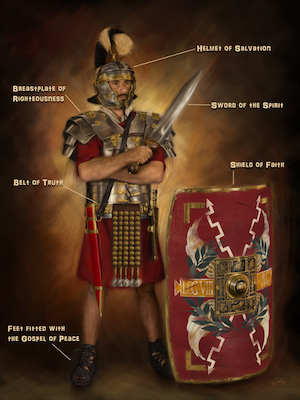
           Paul addresses six pieces of armor in the order that a Roman soldier would put them on (Eph. 6:14-17). The first three pieces of armor are introduced with the verb “to be.” The belt of truth, the breastplate of righteousness, and the shoes of peace we have with us all of the time [3] (“having girded… put on… shod…” – Eph. 6:14-15). [4] This is the state we are always to be in. But the last three pieces of armor – the shield of faith, the helmet of salvation, and the sword of the spirit – we are called to take and use as needed [5] (“taking … take…” Eph. 6:16-17). [6] Today, we will look at the second of these last three pieces of armor, “the helmet of salvation” (Eph. 6:17a).

    The Location of the Helmet

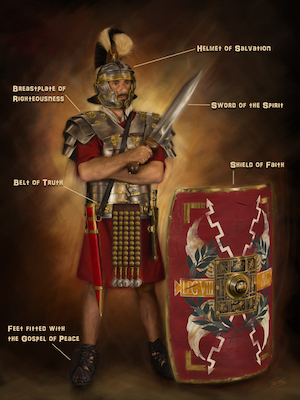
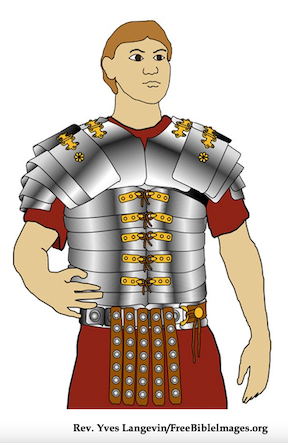
           The placement of the fifth piece of armor is very significant. After putting on his belt, breastplate, sandals, and taking up his shield, the Roman soldier would put on his helmet to protect his head, especially his brain, because injury to one’s head can be lethal.

           And the world recognizes this. Whenever we are in a situation that could be dangerous to our heads and brains, we are often required to wear a protective helmet. For example, construction workers wear a hard hat to protect their heads from falling debris in a construction area. Motorcyclists wear a helmet to shield their brains from serious injury in case they are in an accident. Those who refuse to wear a helmet when riding a motorcycle are flirting with tragedy because the likelihood of being killed in an accident increases significantly when a motorcyclist does not wear a helmet. [7]

          In American football, [8] a player wears a helmet to absorb the impact of colliding with another player so that the brain is not injured. Because the understanding is, if the brain is injured, bodily function is impeded. When you have players, whose heads are constantly absorbing violent collisions on the playing field, experiencing concussion after concussion, the brain can be severely damaged. And if the brain gets damaged, bodily function is impaired.

           The apostle Paul is saying in Ephesians 6:17a that the mind must be protected to absorb the shocks of being hit in the spiritual realm by the enemy. If our minds are not protected from these blows, our spiritual lives can be greatly impaired.

           Some of us know people who have contracted a debilitating disease known as Alzheimer’s whereby the brain is not able to function as it once did. And it progressively deteriorates over time so that the person is not able to care for themselves. The worse the brain problem gets, the less the person with Alzheimer’s can control.

           The less control you and I have in our Christian lives is because spiritual Alzheimer’s has set in. The mind is no longer functioning as God wants it to, impeding the soul from doing what it should, which results in the physical body being out of control.

           The apostle Paul is saying that Christians are to have a helmet on in this spiritual battle which takes place in the invisible realm if we are to have victory. Paul is dealing with a context of us being under attack.

           In an American football game, the quarterback is the leader on the football field. He is calling the play and setting the agenda, and he is always under attack. The defense is always trying to get to him, sack him, knock him down, move him out of the pocket, confuse him, and intimidate him so they can make him ineffective and inefficient.

           Sitting high above the quarterback in a booth is an offensive coordinator (OC). The OC’s job is to assess the schemes of the opposing team and speak to the quarterback about what he ought to be doing in light of those defensive schemes. In view of the attacks of the opposing team, the OC gives plays to the quarterback through a technological wonder called a one-way radio system in the quarterback’s helmet. So, with his helmet on, the quarterback receives instruction about how he is to function in light of the attack he is facing.

           The reason why the OC is the one who gives instructions to the quarterback is because he is sitting high and looking low. He has a bird’s eye view up there in the booth of how the enemy is attacking down there on the football field. He can analyze the enemy’s movements so he can inform the quarterback through his helmet, what the deliverance ought to be for the pressure he is now under.

           The apostle Paul says we are to put on the helmet which means our minds are to be properly programmed. If the mind is improperly programmed, then it will function improperly. That is, if we are thinking wrong, then we will act wrong, and experience spiritual defeat amid the spiritual battle (cf. Prov. 23:7).

           Our spiritual enemy is attacking us on the field of life. God wants us to put on the helmet of salvation so He can speak to us in our minds because He is seated high above everyone and everything else (cf. Eph. 1:20-21). God can see the field of life better than we can see it. He can examine it better than we can. God knows the enemy’s schemes and He knows how to overcome them.

           But we must wear this helmet of salvation so God can protect and direct our thoughts. [9] Our thoughts are a very important part of our whole person and being. Satan wants to control our minds. He wants to put his thoughts into our minds and deceive us into thinking that his thoughts are really ours so we will live life his way, rather than in the way God has prescribed in His Word. The Devil engages in mind control. Once he is successful in doing this, he wants to torment us with these thoughts, causing us to experience defeat instead of victory.

           This part of a Christian’s person comes under severe attack in spiritual warfare. Satan wants to control our thoughts. He wants to put his thoughts within our minds as he did with Peter (cf. Matt. 16:21-23). [10] Many times, these can be hideous thoughts. Thoughts that are totally foreign to what we would normally think.

           For example, a Christian may have intrusive thoughts about murder. He or she may suddenly think about murdering their own family, their loved ones, members of God’s family, or even themselves. Should this surprise us that he who “was a murderer from the beginning” would give us these kinds of thoughts (John 8:44)?

           One Christian man shared with a Christian counselor that he suddenly had thoughts crowding into his mind that he was going to molest a little child. Thoughts that were totally foreign to this man. These thoughts caused the man to initially think he was going crazy until he understood that Satan is eager to put his thoughts into this man’s mind.

           The Devil delights in giving us thoughts to curse God, to tear up our Bibles, to engage in uninhibited sexual activities that are repugnant to God. He may introduce nagging thoughts to us that tell us what a terrible person we must be. Thoughts that say, “I’m dumb, I’m ugly, nobody loves me, or I can’t do anything right.” There is no limit to the kinds of wicked thoughts that our enemy will introduce to us. 

           What do we do with thoughts like this? First, we need to understand that these thoughts may come from the kingdom of darkness. Secondly, we need to take up our helmet of salvation to resist these thoughts. All of us need a resistance prayer to respond to Satanic, intrusive thoughts. A prayer that goes something like this: “In the authority of the Lord Jesus Christ and by the power of His blood, I come against the power of darkness that just put that wicked thought in my mind. And I command you to leave me and go where the Lord Jesus Christ sends you.”

           We are not to accept these intrusive thoughts as our own. Especially if they are foreign to our common way of thinking. Some power of darkness is trying to convince us that we are a terrible person. If Satan tells us we are a terrible person, we must confront such an accusation with the truth. For if we are a child of God through faith alone in the Lord Jesus Christ alone (John 1:12), we are not in any sense a terrible person. We are a “saint” in Christ (I Cor. 1:2; 2 Cor. 1:1b; Eph. 1:1b), forever “sanctified” or set apart positionally from our sin and shame through the “once for all” sacrifice of Jesus Christ (cf. I Cor. 6:11b; Heb. 10:10, 14), so there are no grounds for accusation or condemnation (Rom. 8:31-34). Hence, those wicked thoughts do not belong to us. And we are privileged to wear our helmet of salvation.

           We must be tenacious in resisting these thoughts from the kingdom of darkness. Satan will not give up easily. So, we must persist in resisting these wicked thoughts. Don’t stop with one resistance. Each time a wicked thought comes into your mind, continue to pray, “In the authority of the Lord Jesus Christ and by the power of His blood, I come against the power of darkness that just put that wicked thought in my mind. And I command you to leave me and go where the Lord Jesus Christ sends you.”        

    Ways that Satan Attempts to Control our Minds [11]
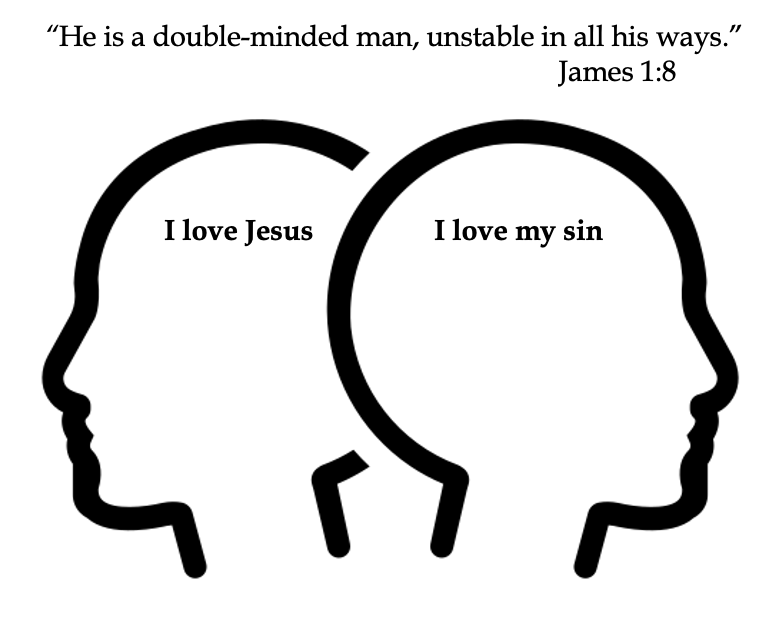
           The first way Satan tries to control our minds is through what James calls being  double-minded: 6 But let him ask in faith, with no doubting, for he who doubts is like a wave of the sea driven and tossed by the wind. 7 For let not that man suppose that he will receive anything from the Lord; 8 he is a double-minded man, unstable in all his ways.” (Jas. 1:6-8). Satan will do his best to make a Christian a spiritual schizophrenic with two minds. With our mind we want to love and serve the Lord, but also with our mind many times we want to toy with the things that are not of God.  Instead of relying solely on God’s wisdom (Jas. 1:5), the double-minded believer wants to rely on human wisdom. He wants to act independently of God. James warns us that this is an “unstable” existence.

           A divided mind is a very serious emotional state; but it is even more serious spiritually. We need to pray like King David prayed, “Unite my heart to fear Your name.” (Psa. 86:11b). David wanted God to bring a unity or single-mindedness to his heart, so the Lord was the center of everything in his life. 

           A second way the Devil attempts to control our minds is through a carnal mind. A carnal mind is an enemy of God. The apostle Paul tells us this in Romans 8. “For those who live according to the flesh set their minds on the things of the flesh, but those who live according to the Spirit, the things of the Spirit.” (Rom. 8:5). When Paul speaks of the carnally minded here (“set their minds on the things of the flesh”), he is referring to a believer who places himself under the law to try to become holy as Paul had tried to do only to experience spiritual defeat (cf. Rom. 7:4-25).

           “While striving for holiness under the law, Paul had focused on the commands (e.g., ‘lust’) so that his mind-set was fleshly: ‘I must steer clear of all lust.’ This fleshly orientation doomed him to commit the very sin he sought to avoid.

           “Simply put, if one lives with a fleshly orientation—even if it is the result of a vigorous effort to keep the law—he is going to fail because he has the wrong mind-set.” [12] [emphasis added]

           6 For to be carnally minded is death, but to be spiritually minded is life and peace. 7 Because the carnal mind is enmity against God; for it is not subject to the law of God, nor indeed can be.” (Rom. 8:6-7). These two mind-sets, “to be carnally minded,” or “to be spiritually minded,” are polar opposites. The first mind-set is in the sphere of “death” and results in “death.” But the “spiritually minded” believer experiences “life and peace.”

           “The trap into which a Christian falls when he is principally concerned with the law itself is that he cannot escape a preoccupation with the spiritual deadness within and around him. The mind-set of the Spirit, however, lifts his preoccupations to the level of supernatural life and peace.” [13] [emphasis added]

           Carnal mindedness is described in Galatians by Paul when he writes, 19 Now the works of the flesh are evident, which are: adultery, fornication, uncleanness, lewdness, 20 idolatry, sorcery, hatred, contentions, jealousies, outbursts of wrath, selfish ambitions, dissensions, heresies, 21 envy, murders, drunkenness, revelries, and the like…” (Gal. 5:19-21). Carnal mindedness focuses on the fleshly desires of our sinful nature. The longer a Christian sets his mind on his sinful flesh, the more likely his fleshly mind becomes a demonically dictated thought process. Satan uses this carnal mindedness to control a believer’s thoughts.

           The third way Satan will attempt to control our thoughts is through his version of God-is-our-enemythoughts. The Devil enjoys putting thoughts in our mind that say, “God is your enemy.” “God is not playing fair with you.” “He could make it different, but He is not.” “You ought to get angry with God.“ “If God truly loved you, He wouldn’t let you go through so much pain and suffering.” When we have thoughts like that, do we know where they are coming from?

           God cannot be anything but good (Psa. 106:1), gracious (Psa. 111:4), holy (Isa. 6:3), just (Isa. 45:21), kind (Joel 2:13), loving (I John 4:8b), merciful (Ps. 103:8), and righteous (Psa. 11:7). Regardless of what we are experiencing, God is Who He is because He cannot be anything but that.

           But Satan will come along when life is not what we hoped it would be, and he tries to rule our mind with wicked thoughts about God being our enemy. And these thoughts can easily make us angry toward the Lord.

           Fourth, the Devil can also try to rule our minds through deceiving, lying thoughts. Such was the case with Ananias and Sapphira. Satan filled their hearts to lie to the Holy Spirit and keep back part of the price of the land they sold for themselves (Acts 5:4, 8-9). It cost both of them their lives.

           Whenever we are tempted to lie, we can be assured that Satan is involved in that temptation. Jesus said the devil “is a liar and the father of it” (John 8:44).

           Fifth, Satan will also try to control our minds through fearful thoughts. The Bible tells us the that our “adversary the devil walks about like a roaring lion, seeking whom he may devour” (I Pet. 5:8b).

           Do you know how a lion uses his fearsome roar to frighten his prey? I’m told that the old male in a lion pride goes upwind of a herd of gazelles or whatever and lets out a roar. The terrified animals take off in the opposite direction, where the rest of the pride is waiting to gobble them up.

           “If we were to hear a lion roar, most of us would run. If he roared again, we would run again. Pretty soon we’re being directed by fear.” [14] [emphasis added]

           In the verse prior to I Peter 5:8, Peter writes, “…casting all your care upon Him, for He cares for you.” (I Pet. 5:7). We can cast all our cares or concerns upon God because “He cares for you.” This phrase can be translated, “You are a matter of concern to God.” [15] 

            Christians who are engaged in intense spiritual warfare, especially those who facing Satanic frontal attacks, may conclude, God doesn’t really care about me. If He did, He wouldn’t let me languish in this terrible bondage.” [16] [emphasis added]

           If we believe God doesn’t care about us, we will be plagued by all kinds of fear. Satan loves to put us in bondage to fear. He will even use violent fear and panic to immobilize us.

           But at the moment we feel that panic and fear, is the moment to use our helmet of salvation and pray, “In the mighty name of the Lord Jesus Christ and by the power of His blood, I command the wicked power of fear to leave my presence and go where the Lord Jesus Christ sends you.” God does not give us a spirit of fear, but of power and love and a sound mind (2 Tim. 1:7). The helmet of salvation enables our thoughts to be our own and to be like those of Christ.

           Thoughts that are projected into our minds by the enemy need to be recognized quickly and decisively! We need to understand this. We don’t have to accept those thoughts from Satan as our own.

           For example, one Christian young man was deeply troubled. Every time he began to pray to God, thoughts would enter his mind that said, “Pray to Satan…Pray to Satan… Pray to Satan.” He was tormented by these thoughts so much so that he became convinced he was going crazy. But once he understood where these thoughts were coming from, and resisted them, he was totally set free from those intruding thoughts. [17]

    The Person of Salvation
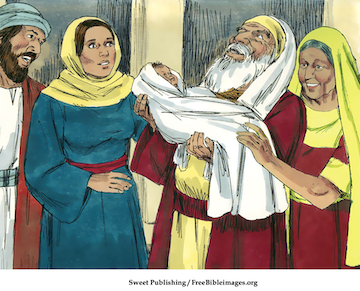
           This fifth piece of armor is called “the helmet of salvation.” What is salvation? The Bible informs us that salvation is a Person. David wrote, “The Lord is my light and my salvation.” (Psa. 27:1). The Hebrew word translated “salvation” is yeshu’ahYeshu’ah is the Old Testament word for “salvation,” and its basic meaning is “deliverance.” The English word Jesus, which means “God is salvation,” is also derived from this Hebrew word. Hence, David is saying, “The Lord [Yahweh] is my light and my Jesus [Yeshu’ah].” (Psa. 27:1). Salvation is a Person.

           This is why Simeon prayed in the temple as he held the Baby Jesus in his hands, “Lord, now You are letting Your servant depart in peace, according to Your word; for my eyes have seen Your salvation…” (Luke 2:29-30). Christ is our salvation. He is a Person.

           Thus, when we put on our helmet of salvation, we are putting on the Lord Jesus Christ to protect our mindsfrom the intruding thoughts of Satan and also to fill our minds with His thoughts. [18]

           The Lord Jesus is much greater than the Devil. Christ is seated at the right hand of God the Father in the heavenly places, “far above all principality and power and might and dominion,” including Satan and his demonic armies (Eph. 1:20-21). Jesus sits in a position of authority and power that is far greater than the kingdom of darkness and we are seated next to Him (Eph. 2:5-6).

           The apostle John tells us that this same Jesus indwells us: “You are of God, little children, and have overcome them, because He who is in you [Jesus through the indwelling Holy Spirit] is greater than he who is in the world [Satan].” (I John 4:4; cf. Gal. 2:20). Hence, we do not need to fear nor succumb to Satan’s attacks because Jesus in us is far greater than the Devil and his demonic armies who are in the world.

           The Greek word translated “salvation” (sōtēria) in the New Testament basically means  “deliverance.” [19] The apostle Paul refers to this helmet as “the hope of salvation,” that is, the hope of deliverance (I Thess. 5:8b). Why? Because Satan wants to convince us that our situation is hopeless. If we conclude that our situation is hopeless, that we are trapped in our bondage and there is nothing we can do, then we only have two choices: We can either abandon ourselves to the sin or get ready to check out of this life. [20]

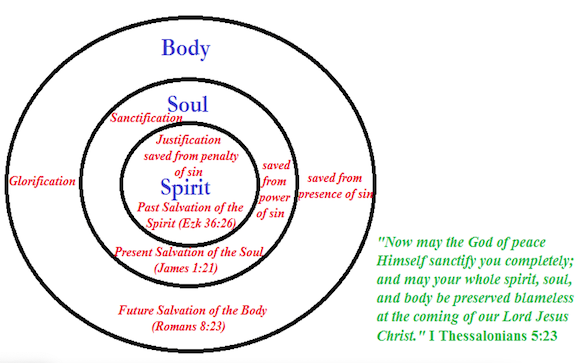
           The type of deliverance Jesus provides is determined by the context. As our “Salvation” (Psa. 27:1), the Lord Jesus provides three types of deliverances as they relate to our spirit, soul, and body (I Thess. 5:23).
    Our Past Salvation

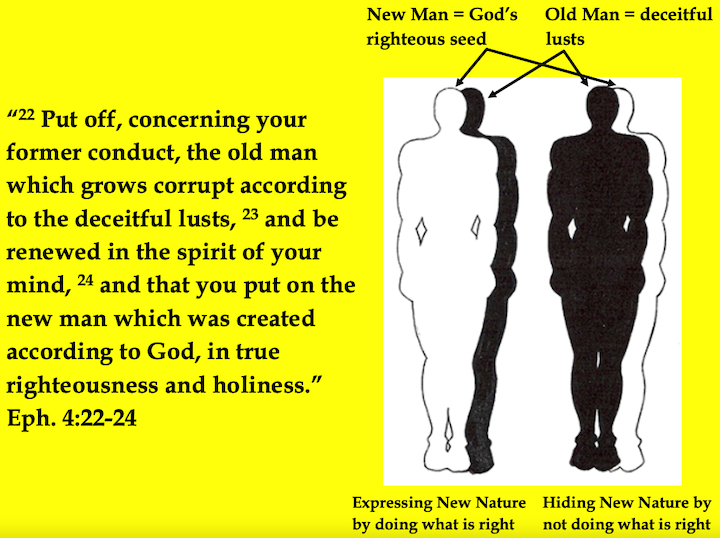
           The first type of salvation is our past salvation (a.k.a. justification) whereby our spirit is delivered from the penalty of sin forever when we believed in Jesus for His gift of salvation (Acts 16:31; Eph. 2:8-9). When we were born again by believing in Jesus (John 3:3-18), we received “a new spirit” (Ezek. 36:26) that “was created according to God, in true righteousness and holiness” (Eph. 4:23-24) and was “perfected forever” (Heb. 10:14). Our spirit “cannot sin because” it “has been born of God” (I John 3:9).

          Satan wants to steal the assurance of our past salvation. Since he knows we cannot lose eternal life (John 3:16; 5:24; 6:35-40; 10:28-29; 11:25-26; et al.), he tries to rob us of our assurance that we are God’s child. He may put hideous thoughts in our minds and then accuse us, saying, “No true Christian would never entertain such wicked thoughts.”

           Satan will use false teachers to try to steal our assurance of eternal life. The apostle John addresses this in his first epistle. John’s readers were being told by the antichrists (false teachers) that Jesus was not the Christ Who guarantees a future resurrection and never-ending life to all who believe in Him. But John refutes this by saying, “And this is the promise that He has promised us—eternal life.” (I John 2:25). Instead of listening to the falsehoods of the antichrists, John redirects his readers to the unchanging “promise” of God which guarantees “eternal life” to all who believe in Jesus (cf. I John 5:1, 13; John 3:15-16, 36; 5:24; 6:35-40, 47; 11:25-27; 20:31). This is the message they heard from the beginning of their Christian experience. This is how they began a personal relationship with God. Assurance of eternal life is found in God’s promises, not in the lies of false teachers which denied that eternal life is through simple faith in Jesus.

           There is much confusion today about assurance of salvation. Some insist that assurance of going to heaven is based on our performance and whether we measure up to certain tests concerning the quality of our Christian experience. [21] But if we look to our performance or experience, we will never be certain we have eternal life because we always fall short of God’s glory (Rom. 3:23; I John 1:8, 10). Whenever we take our focus off Christ and His finished work on the cross (John 19:30), we are more likely to doubt our salvation. Even on our best day, we still fall short of God’s glory.

           John wants his readers to look to the unchanging promises of God for the assurance of their salvation. “God’s promises don’t change. That’s why the promises of God are the foundation for our assurance of salvation. People who want to teach that 1 John is a book of tests to determine whether you are a Christian or not have gone completely against what John himself uses as his source of assurance: the promises of God.” [22]

           Why does John remind his readers of their secure relationship with Jesus? “These things I have written to you concerning those who try to deceive you.” (I John 2:26). John did not want his readers to be deceived by the false teachers who tried to undermine their assurance of salvation. Knowing they have eternal life simply be believing in Jesus for it would enable them to effectively resist these antichrists who taught John’s readers they were not genuinely saved because they lacked a secret knowledge which only the false teachers could give them to have eternal life. John understood if a Christian doubts his or her salvation they are more vulnerable to losing their fellowship with God and the apostles. Hence, I believe John would agree with the apostle Paul, that Christians must take up the helmet of salvation, so they do not lose the hope of their past salvation.  

    Our Present Salvation

           The second type of salvation is our present salvation (a.k.a. sanctification) whereby our soul is being delivered from the power of sin as we hear the word and do what it says (Phil. 2:12; Jas. 1:21-22). Just as we were justified and reconciled to God through faith in Jesus’ death, so now we are to be saved from the power of sin (God’s present-day wrath – Rom. 1:18-32) through faith in Jesus’ resurrection life (Rom. 5:9-10). This is a lifelong process called discipleship which begins at conversion and ends when we go to be with Jesus in His heaven (John 8:31-32; 13:34-35; 14:1-3; 15:1-8).

           Reimer writes, To really understand your identity, you have to properly divide soul and spirit. Your spirit has been made new. You are a new creation in Christ. You have received a new spirit and a new heart (Ezek. 36:26). Your spirit has been perfected in Christ. You have received every spiritual blessing you need in the heavenly realms (Eph. 1:3). You are adopted into the family of God (Eph. 1:5; Rom. 8:15). You are heirs of God…

           “These are all the claims of Scripture for who you are in Christ. Your spirit has been purified, purged, renewed, born again, and transformed. But your soul… well, that can still be a bit of a mess.

           “Your soul can have hurts and bitterness. Your soul can still have sin and demonic strongholds. Your soul can have fears and faulty beliefs about who you are. Your soul can still feel condemnation and shame.

           ”Sanctification, or the process of becoming like Jesus is simply becoming who you already are. You have to work out in the realm of the soul what has already taken place in the heavenly realms through the work of Christ in your spirit.

           “Your soul is where your mind, your will, and your emotions still hold sway over the reality of your daily existence. For example, you may know cognitively that you are loved, but because you grew up in an abusive home, or because of your own sinful behaviors, you don’t feel loved. You don’t act as if you are deeply loved. Your soul still feels shame, you may even feel unlovable, and you feel distant from God. Until you deal with the issues of your soul, you will not experience the fullness of God nor the intimacy with Him for which your heart longs.

           “Working out your identity is learning to become who you already are. This battle for your identity is a critical part to your spiritual maturity.” [23] [emphasis added]

           Satan wants to deceive us into thinking that the power of sin has not been broken in our lives. That we are still slaves to sin. He loves to whisper lies that say, “You can never change.” “This isn’t that bad.” “God gave you this desire, so use it.” “Everyone else is doing it.” “You deserve to feel pleasure.” “You cannot cope with your pain without doing this.” “God doesn’t want you to experience this because He knows you will become more like Him knowing good and evil, etc.” 

           The Bible describes the victory Jesus has already won for us, “Having disarmed principalities and powers, He made a public spectacle of them, triumphing over them in it.” (Col. 2:15).

           It is more natural to view the principalities and powers here as the defeated foes, driven in front of the triumphal chariot as involuntary and impotent witnesses to their conqueror’s superior might.” [24][emphasis added]

           “The picture, quite familiar in the Roman world, is that of a triumphant general leading a parade of victory…. To the casual observer the cross appears to be only an instrument of death, the symbol of Christ’s defeat; Paul represents it as Christ’s chariot of victory.” [25] [emphasis added]

           The death of Jesus did three things to the spiritual rulers of darkness. It disarmed them, displayed them, and dethroned them.

           How did Jesus do this? [26] Jesus “wiped out the handwriting of requirements that was against us, which was contrary to us. And He has taken it out of the way, having nailed it to the cross.” (Col. 2:14). When a person was executed under Roman law, the sentence was attached to the accused’s cross (see John 19:19). But Jesus took our sentence away, effectively nailing our certificates of debt to His cross. He paid our penalty in full (John 19:30); He died for our guilt and shame. God “made Him who knew no sin to be sin for us, that we might become the righteousness of God in Him.” (2 Cor. 5:21).

           Satan now has no legitimate grounds to accuse us of wrongdoing before God because Jesus already paid our sin debt to God in full. That is why Paul writes, “Having disarmed principalities and powers, He made a public spectacle of them, triumphing over them in it.” (Col. 2:15). A fallen angel is no match for the Son of God, Who took away Satan’s power. Satan is the accuser of Christian brothers and sisters (Rev. 12:10). He accused Job (cf. Job 1:9-11; 2:4-5) and Joshua the high priest (Zech. 3:1). But in light of the all-sufficient sacrifice of Jesus’ atoning sacrifice, Satan’s accusations are empty now.

           If somebody has a gun pointed at you, whether or not it’s loaded is a huge deal. The devil doesn’t want us to know that his gun has been emptied by the cross of Christ. Now, if we don’t know that, we are still going to cower and run, living in fear and shame. But we don’t have to listen to the devil any longer. Though he is right about our sin, our sin debt has been paid by Christ in full. We are free to live for God now. Satan still has power, but he no longer possesses final authority in our Christian lives.

           Thus, when the devil tempts us to sin, we can respond by saying, “Jesus has already broken the power of that sin through His death and resurrection (Rom. 6:10-11). Therefore, it has no power over me.”

    Our Future Salvation
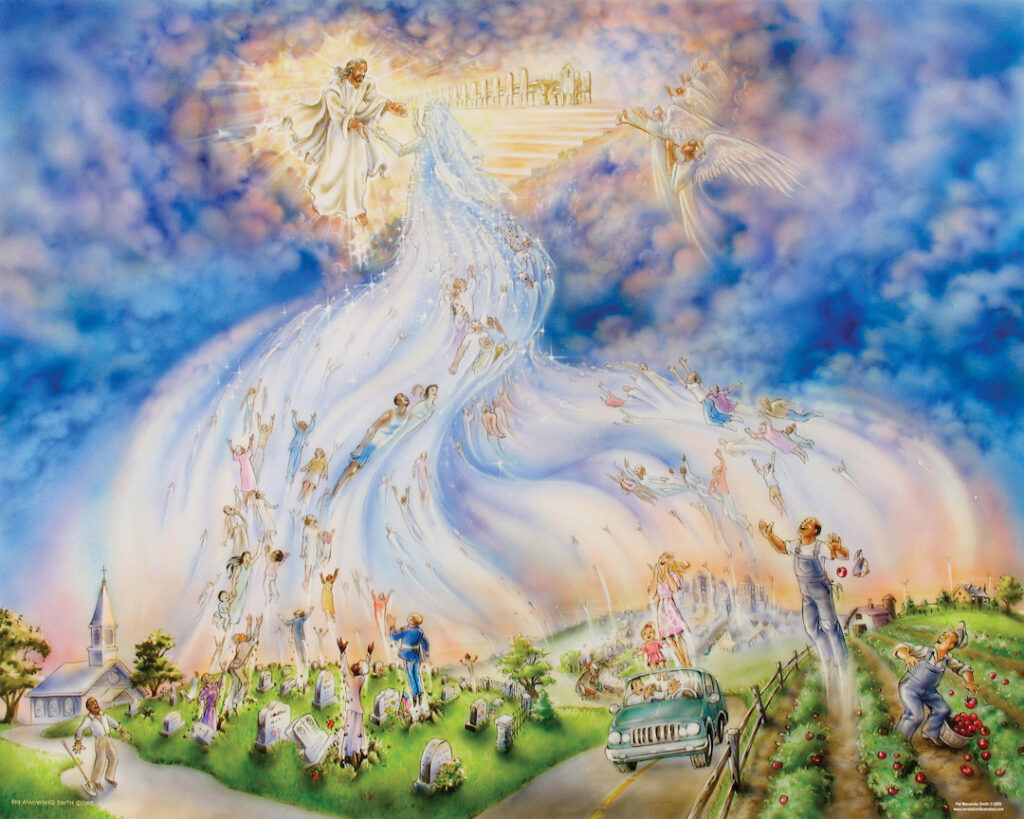
           Our third type of salvation is our future salvation (a.k.a. glorification) whereby our physical body is delivered from the presence of sin when Jesus comes back for His church (I Thess. 1:10; 4:13-18; 5:8b-10; I John 3:2-3). The apostle Paul writes, “And to wait for His Son from heaven, whom He raised from the dead, even Jesus who delivers us from the wrath to come.” (I Thess. 1:10). The Greek verb translated “delivers” [ruomenon] means to “rescue from danger.” [27] This deliverance or rescue is from the Tribulation “wrath to come” on earth (cf. Rev. 6:1-18:24) which is the theme of this epistle [28] (cf. I Thess. 2:19; 3:13; 4:13-5:11, 23). How does Jesus deliver Christians from this coming Tribulation wrath on earth?

           Paul explains in First Thessalonians 4:13-18. The apostle does not want his readers, including us, to be ignorant concerning believers who have died lest we “sorrow as others who have no hope.” (I Thess. 4:13). Paul understands that an ignorant believer can easily become a hopeless believer. [29] He then provides the order of events in the Rapture or sudden removal of the church from the earth.

           First, we see the return of Christ in the air with Christians who have died. “For if [or since] we believe that Jesus died and rose again, even so God will bring with Him those who sleep in Jesus.” (I Thess. 4:14). The rapture of the church is just as certain as the death and resurrection of Jesus Christ. At one point in time the death and resurrection of Christ were prophecy. But now they are history. We can believe the Rapture with equal certainty.

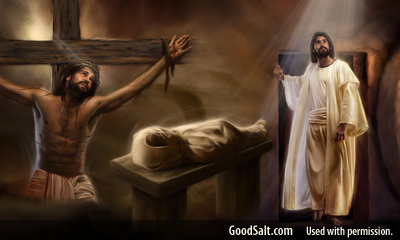
         When Paul refers to “those who sleep in Jesus,” he is talking about Christians who have died (cf. John 11:11-12). What happens when a Christian dies (see pic)? His spirit goes immediately to heaven, but his body “sleeps” in the grave. “We are confident, yes, well pleased rather to be absent from the body and to be present with the Lord.” (2 Cor. 5:8). To be absent from the body in death is to be present with the Lord Jesus in heaven.

           The second event is the resurrection of the bodies of Christians who have died. “For this we say to you by the word of the Lord, that we who are alive and remain until the coming of the Lord will by no means precede those who are asleep.” (I Thess. 4:15). The bodies of Christians who have died will be resurrected first by Jesus, so that their spirits, which are now with Christ, can re-enter their bodies permanently in resurrection. Notice that Paul included himself in these verses – “we who are alive and remain…” He expected to be “alive” when Jesus returned. He believed the Rapture could take place at any time and so should we.

           “For the Lord Himself will descend from heaven with a shout, with the voice of an archangel, and with the trumpet of God. And the dead in Christ will rise first.” (I Thess. 4:16). In the Rapture, it is the Lord Jesus Himself that is coming, not the Holy Spirit or God’s angels. There will be a magnificent sound much like a shout, like the voice of an archangel and like the sound of a trumpet all in one, and only those who have placed their trust in Christ as their Savior will hear it. For the Bible says, “The dead in Christ will rise first.” Only those who are “in Christ” through believing in Jesus, will respond to this sound. Those who have not believed in Jesus Christ will be left behind.

            Notice that Christians who have died will return with Jesus (I Thess. 4:14b) and receive a glorified resurrection body (“the dead in Christ will rise first” – I Thess. 4:16b) that is incorruptible (sinless) and imperishable (eternal), like the resurrection body of the Lord Jesus Christ (cf. I Cor. 15:35-51; Phil 3:20).

            Next is the removal of living Christians. “Then we who are alive and remain shall be caught up together with them in the clouds to meet the Lord in the air. And thus, we shall always be with the Lord.” (I Thess. 4:17a). The words “caught up” are from the Greek word haparzō which means “to snatch up or take away suddenly.” [30] Paul describes it like this:  “In a moment, in the twinkling of an eye, at the last trumpet… the dead will be raised incorruptible, and we shall be changed.” (I Cor. 15:52). In the time it takes you to blink your eye, the Lord will snatch all believers in Jesus off the earth to meet Him in the air – not one will remain behind.

           Finally, we see the reunion of both living and dead believers with the Lord in the air. “Then we who are alive and remain shall be caught up together with them in the clouds to meet the Lord in the air. And thus, we shall always be with the Lord.” (I Thess. 4:17). This sudden removal of all Christians from the earth is intended to comfort believers in Jesus. That’s why Paul writes, “Therefore comfort one another with these words.” (I Thess. 4:18.) If the rapture is at the middle or end of the seven-year Tribulation period of intense and unusual suffering on earth, there would be little comfort and encouragement in this. But the prospect of Christ coming at any moment is a much greater comfort.

           Paul alludes to putting on “as a helmet the hope of salvation” (I Thess. 5:8c). The Greek word translated “salvation” (sōtērias) in First Thessalonians is not deliverance from everlasting punishment in hell, but deliverance from the Tribulation wrath on earth. 9 For God did not appoint us to wrath, but to obtain salvation through our Lord Jesus Christ, 10 who died for us, that whether we wake or sleep, we should live together with Him.” (I Thess. 5:9-10). Christians will not go through the Tribulation because “God did not appoint us to wrath.” Thus, this “salvation” is deliverance from God’s Tribulation wrath on the earth via the Rapture of the church “through our Lord Jesus Christ.”

           Our precious Lord’s death (“Christ, who died for us”) guarantees that all Christians will be caught up to be with Jesus, “whether we wake or sleep,” spiritually (I Thess. 5:10; cf. I Thess. 5:4-7). Knowing and believing this truth acts as a protective helmet against Satan’s attacks. The Devil wants us to doubt that we will be delivered from God’s coming wrath through the Rapture of the Church. He has convinced many Christians that they will go through the Tribulation period. Some believers think we are now in the Tribulation.

            Satan wants us to conclude that Jesus is not coming back in our lifetime because he understands that we will then be more likely to live his way instead of God’s way. Jesus warned of this faulty conclusion when He told the parable of the faithful servant who became an evil servant (Matt. 24:45-51). Christ spoke of “a faithful and wise servant, whom his master made ruler over his household” (Matt. 24:45). If that servant remains faithful in light of his master’s soon return, his master “will make him ruler over all his goods” when he comes back (Matt. 24:46-47).

           But Jesus warns, “If that evil servant says in his heart, ‘My master is delaying his coming,’” he will be in danger of mistreating “his fellow servants” and living a self-indulgent life (“eat and drink with the drunkards”), resulting in a severe rebuke (“the master of that servant… will cut him in two,” cf. Heb. 4:12-13) and intense grief (“weeping and gnashing of teeth”) over the loss of eternal rewards at the Judgment Seat of Christ (Matt. 24:48-51; cf. Matt. 25:30; I Cor. 3:15; I John 2:28). [31]

           Even though it has been nearly twenty centuries since Jesus ascended to heaven, no Christian should dare to conclude that Jesus “is delaying His coming” for His church. That is what Satan wants us to do. He knows that if we lose sight of the nearness of Christ’s return, we will also lose hope.  

           The helmet of salvation provides hope for the believer. The hope that one day all the projected thoughts from the powers of darkness will be removed forever when the Christian is given a new resurrection body which will no longer be subject to sin and death.

           The promise that Jesus Christ could return for His church at any moment is one of the greatest reasons for us to live for Jesus now. Focusing on Christ’s any-time-return “purifies” us inwardly so we can have confidence and not be ashamed before Him when He appears (I John 2:28; 3:2-3).

    Conclusion

           Satan does not want us to put on the helmet of salvation because…

    • He wants us to live in the past filled with our sin and shame. But when we put on the helmet of salvation, the Lord Jesus instructs us to learn from the past, not live in the past because He has delivered our spirit from the penalty of sin forever the moment we believed in Him for His gift of salvation (Acts 16:31; Eph. 2:8-9; 4:23-24; cf. Ezek. 36:26).
    • He wants us to believe that we are still slaves to sin who can never change. But when we put on the helmet of salvation, Christ tells us that we can change because our soul is being saved from the power of sin which was broken through Jesus’ death and resurrection (Rom. 6:10-11). We must simply hear and do what Christ tells us (Jas. 1:21-22).
    • He wants us to doubt Jesus will return for His church in our lifetime so we will lose hope and live under his control instead of God’s. However, when the helmet of salvation is put on, we become watchful for Jesus’ soon return for His church when our physical bodies will be saved from the presence of sin forever (I Thess. 1:10; 4:13-5:11; I John 3:2-3). Focusing on Christ’s any-time-return “purifies” us inwardly so we can have confidence and not be ashamed before Him when He appears (I John 2:28; 3:2-3).

           As with the other pieces of armor, we put on the helmet of salvation through prayer (Eph. 6:18).
           Prayer: Father God, I recognize that my mind is a particular target of Satan’s deceiving ways. Thus, I cover my mind with the powerful helmet of salvation which protects and directs my thoughts, so my life is filled with hope. Thank You for the assurance that my spirit is saved from the penalty of sin forever when I put my faith in the Lord Jesus alone for His gift of salvation. I praise you for Jesus’ death and resurrection which broke the power of sin. By Your grace I pray for my soul to be saved from the power of sin as I yield to the Holy Spirit’s power to obey what Your Word says. And thank You Lord for the hope that my physical body will be saved from the presence of sin when Jesus gives me a new glorified resurrection body when He comes back for His church. Please show me any thoughts I am entertaining right now that are from the enemy. In the authority of the Lord Jesus Christ and by the power of His blood, I come against the power of darkness that just put that wicked thought in my mind. And I command you to leave me and go where the Lord Jesus Christ sends you.

    FOOTNOTES:

    [1] Adapted from David R. Anderson, Position and Condition: An Exposition of the Book of Ephesians (Grace Theological Press, 2017 Kindle Edition), pp. 369-370.

    [2] Ibid.

    [3] Tony Evans, The Tony Evans Bible Commentary, 2019 Kindle Edition, pg. 2665.

    [4] The first three verbs in Greek (perizōsamenoi… endysamenoi… hypodēsamenoi… ) are aorist middle participles which means they have already been put on by the soldier or Christian.  

    [5] Evans, The Tony Evans Bible Commentary, 2019 Kindle Edition, pg. 2665.

    [6] The Greek verb translated “taking…” (analabontes) is an aorist active participle, meaning the Christian is taking the shield of faith as needed and the last Greek verb translated “take…” (dexasthe) is an aorist middle imperative which is used of the last two pieces of armor and means for oneself to take them up as needed.

    [7] Retrieved on March 5, 2025, from an article entitled, “Motorcycle Helmet Laws and Safety Statistics 2024,” at lawtigers.com. The article states that “in states with universal helmet laws, 55 percent of motorcyclists killed in 2021 were not wearing helmets, compared to 9 percent in states with universal helmet laws.” 

    [8] The following lengthy discussion about the use of a helmet in American football is adapted from Tony Evan’s video message entitled, “The Helmet of Salvation,” on youtube.com.

    [9] Many of the following paragraphs are adapted from Mark Bubeck’s video message entitled “9. Head First Into Battle… Ephesians 6 Series,” on BRMinistry app, unless otherwise noted.

    [10] For a more detailed treatment of Matthew 16:21-23, see “Spiritual Warfare – Part 2” in Ropp Update & Reflections (July 2024).

    [11] Much of this section is adapted from Mark Bubeck’s video message entitled “9. Head First Into Battle… Ephesians 6 Series,” on BRMinistry app, unless otherwise noted.

    [12] Zane C. Hodges, “Romans,” The Grace New Testament Commentary: Revised Edition, 2019 Kindle Edition, pg. 1045.

    [13] Ibid.

    [14] Jim Logan, Reclaiming Surrendered Ground (Chicago: Moody Press, 1995), pg. 182.

    [15] Ibid.

    [16] Ibid.

    [17] Adapted from Mark Bubeck’s video message entitled “9. Head First Into Battle… Ephesians 6 Series,” on BRMinistry app.

    [18] The first three paragraphs of this section are adapted from Mark Bubeck’s video message entitled “9. Head First Into Battle… Ephesians 6 Series,” on the BRMinistry app.

    [19] Walter Bauer, A Greek-English Lexicon of the New Testament and Other Early Christian Literature: Third Edition, 2000 Kindle Edition, pp. 985-986.

    [20] Logan, Reclaiming Surrendered Ground, pg. 185.

    [21] Anderson, Maximum Joy: I John – Relationship or Fellowship? 2013 Kindle Edition, pg. 15 cites John MacArthur, Jr., Saved without a Doubt (Colorado Springs: Cook Communications, 1992), pp. 67-91; Tom Constable, Notes on I John, 2022 Edition, pg. 46 cites James Montgomery Boice, The Epistles of John (Grand Rapids: Zondervan Publishing House, 1979); John F. MacArthur Jr., The Gospel according to Jesus (Grand Rapids: Zondervan Publishing House, 1988); John R. W. Stott, Basic Introduction to the New Testament, 1st American ed. (Grand Rapids: Wm. B. Eerdmans Publishing Co., 1964); and Warren W. Wiersbe, The Bible Exposition Commentary, 2 vols. (Wheaton: Scripture Press Publications, Victor Books, 1989).

    [22] Anderson, Maximum Joy: I John – Relationship or Fellowship? 2013 Kindle Edition, pg. 128.

    [23] Dr. Rob Reimer, Soul Care: Seven Transformational Principles For A Healthy Soul (Carpenter’s Son Publishing, 2016), pp. 37-38.

    [24] Tom Constable, Dr. Constable’s Notes on Colossians, 2023 Edition, pg. 61 cites F. F. Bruce, “Colossians Problems,” Bibliotheca Sacra 563 (July- September 1984):198-199.

    [25] Ibid., cites Curtis Vaughan, In Ephesians-Philemon. Vol. 11 of The Expositor’s Bible Commentary, 12 vols. Edited by Frank E. Gaebelein and J. D. Douglas (Grand Rapids: Zondervan Publishing House, 1978), pg. 202.

    [26] The following three paragraphs are adapted from Tony Evans, The Tony Evans Bible Commentary, 2019 Kindle Edition, pp. 2701-2702.

    [27] Bauer, A Greek-English Lexicon of the New Testament and Other Early Christian Literature: Third Edition, 2000 Kindle Edition, pg. 907.

    [28]  Robert Wilkin, “I Thessalonians,” The Grace New Testament Commentary: Revised Edition, 2019 Kindle Edition, pg. 1463.

    [29] Evans, The Tony Evans Bible Commentary, 2019 Kindle Edition, pg. 2727.

    [30] Bauer, A Greek-English Lexicon of the New Testament and Other Early Christian Literature: Third Edition, 2000 Kindle Edition, pg. 134.

    [31] Hal Haller Jr., “Matthew,” The Grace New Testament Commentary: Revised Edition, 2019 Kindle Edition, pp. 179-182.

    Spiritual Warfare – Part 6

    Introduction

           As the celebration of Jesus’ birth approaches, I am reminded of that first Christmas which is recorded from a human perspective in Matthew’s and Luke’s gospels (Matt. 1:21-2:12; Luke 2:1-20). It is presented as a very peaceful event involving Mary and Joseph, some angels, shepherds, wise men, and the baby Jesus. The angels praised God saying, “Glory to God in the highest, and on earth peace, goodwill toward men!” (Luke 2:14). Hence, most Christmas celebrations today focus on the peace that surrounded the birth of Jesus, assuming He would bring peace “on earth” during His First Coming. 

            But at the beginning of the week before Jesus’ crucifixion when Christ triumphantly entered Jerusalem, a multitude of His followers praised God, saying: “Blessed is the King who comes in the name of the Lord! Peace in heaven and glory in the highest!” (Luke 19:38). Notice they say, “Peace in heaven,” not “peace on earth.” The first coming of Christ would establish spiritual peace “in heaven” between God and humankind (Rom. 5:1; Eph. 2:16-18). But it won’t be until Jesus’ Second Coming to earth that universal peace “on earth” will be established by King Jesus during His thousand-year reign on earth (Rev 20:4-6; Isa. 2:1-4; 9:6b-7; Mic. 4:1-5). 

           In Revelation 12:1-5, the apostle John shares a version of the Christmas story that is from heaven’s perspective, and it is the opposite of peace (see above picture). This version of the Christmas story involves three main characters: the woman, representing the nation of Israel who endured much pain in bringing the Messiah into the world (Rev. 12:1-2; cf. Gen. 37:9-11); the Child, representing the Lord Jesus Christ (Rev. 12:2, 5); and the dragon, representing the Devil (Rev. 12:3-4a, 9).

           When Jesus is born into the world, Satan is there with his army of demons represented by “a third of the stars of heaven” (Rev. 12:4a), waiting to destroy Him: “And the dragon (Satan) stood before the woman who was ready to give birth, to devour her Child (Jesus) as soon as it was born” (Rev. 12:4b – parenthesis added). While shepherds are watching, angels are singing, and wise men are worshipping, Satan is waiting to make his move. The attempt to kill the Child John sees in this vision is probably a reference to king Herod’s brutal attempt to kill Jesus (cf. Matt. 2:16).

           The next verse says, “She bore a male Child who was to rule all nations with a rod of iron. And her Child was caught up to God and His throne.” (Rev. 12:5). In this version of the Christmas story Jesus goes from being born at Bethlehem, to ruling on the throne of the universe. John uses this one verse to summarize the birth, life, death, resurrection, ascension, and future reign of the Lord Jesus Christ. Satan not only used Herod in an attempt to kill the baby Jesus, but He would later use Judas to betray Him, Pilate to condemn Him, and the Roman soldiers to crucify Him. All the fury of hell would be released against the Child born on that silent night.

          The rest of Revelation 12 talks about the last half of the Tribulation period when Satan and his fallen angels are cast down from heaven and persecute the people of God – the nation of Israel (cf. 12:7-17). Since Satan could not destroy the Christ Child Who is now on His throne in heaven, he is going to go after what is dearest to the Child – His own people. This is why there is so much opposition against God’s people today, especially His Jewish people, and it will only intensify as the Second Coming of Christ to earth draws near. If the Devil can destroy Israel before Jesus returns to earth with His Bride, the Church (Rev. 19:7-21), then there can be no triumphant return of Christ and Satan will rule the earth.

           John’s version of the Christmas story reminds us we are in a struggle with a dragon. It is a struggle we can’t win; it is a struggle Jesus already won. You see, if you are a child of God through faith in Jesus Christ, Satan is going to attack you. “Satan” means adversary. During this Christmas season (and all our lives), he wants to rob us of the joy and peace of Christmas by reminding us of our sins and shortcomings. He will accuse us of the times we have lied and been unfaithful, of the times we’ve lost our temper and broken our promises.

    The Armor of God

           How can we deal with this intense spiritual battle whereby the enemy seeks to rob us of God’s peace? The apostle Paul instructs his Christian readers (including you and me) to “put on the whole armor of God” so we may stand against the “wiles” or trickery of the Devil (Eph. 6:11). Paul describes the armor that Roman infantrymen wore in the order they would put it on.

           The soldier first puts on his belt which represents the Christian’s belt of truth (Eph. 6:14a). Since Satan is the father of lies (John 8:44), this first piece of armor is essential to protecting us from Satan’s deceptions and lies. We learned that truth is God’s viewpoint on a subject. It is the absolute standard by which reality is measured in its original form.Truth points us in the direction that God wants to lead us.

           After putting on his belt, the soldier then puts on his breastplate which protects his vital organs in his chest region. “The breastplate” we are to put on is “righteousness” (dikaiosunē) which refers to the quality of “being right.” [1] God’s truth is the informational base that tells us the right thing to do. The truth points our heart in the direction of God’s righteousness. The breastplate of righteousness is our response to God’s truth or viewpoint on a matter.

           When God’s truth and righteousness are operative in our lives, it will lead to the next piece of armor which has to with our feet or shoes (Eph. 6:15). Why is this so important?

    The Importance of Our Feet

          In the 21st century, we have shoes for every occasion. There are dress shoes, casual shoes, work shoes, and many kinds of athletic shoes. There are shoes for cold weather, warm weather, and rainy weather. We have indoor shoes and outdoor shoes. There are specialty shoes like dance shoes (ballet,  tap, etc.), work boots (steel-toe, waterproof, etc.), and orthopedic shoes. Some of you may have a closet full of shoes that are designed to adorn your feet. The fact that we have so many varieties of shoes today demonstrates the importance of our feet. [2]

          It is also a very serious thing to have feet that hurt. Have you ever noticed how difficult it is to focus on an objective when your feet are hurting? When your feet hurt, you hurt are over. When our feet hurt, we do not make a good soldier. This is why our military places great emphasis on examining the feet of a soldier. They understand that a person’s feet need to be comfortable to be a good soldier. God understands this more than anyone. [3]

    The Soldier’s Sandals

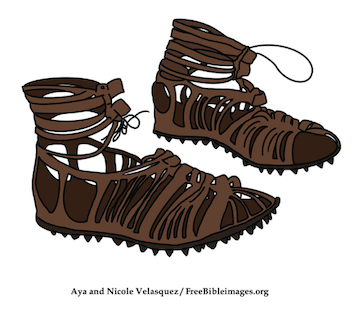
           God wants His people to wear a certain kind of shoes all the time because they will address an important issue regarding spiritual warfare in our lives. After a Roman soldier put on his belt and breastplate (Eph. 6:14), he then puts on his sandals: “And having shod your feet with the preparation of the gospel of peace.” (Eph. 6:15). The Greek word translated “shod” (hupodeō) is a compound word meaning “under” (hupo) plus “to bind/tie” (deō)or “to bind/tie under or beneath” [4](sandals). [5] It refers here to what you are wearing on your feet at all times. [6]

           The word translated “preparation” (hetoimasia) refers to the state of “readiness.” [7] If we are wearing these shoes, we will be ready for the Devil’s attacks against us. We will be prepared to deal with our enemy’s methods of deception.

            To properly understand this piece of armor, we need to realize that the Roman soldier had what modern-day American football players have. They had cleats or spikes coming out of the bottom of their shoes. “Roman soldiers wore sandals with cleats built in to help them have firm footing and to stand their ground under attack.” [8] These spikes on the bottom of a soldier’s sandals gave him stability and mobility on the battlefield. They kept him from slipping and sliding when he was under attack.

           If we were in a battle in Paul’s day, we had better be well-shod. There would be nothing worse than losing our footing with an enemy standing over us with a sword in his hand. [9]

           Paul has already emphasized the need to be stationary in battle by using the word “stand” (stēnai) or a form of this word (antistēnai/stēte) four times (Eph. 6:11, 13-14). Why? Because the Devil wants to knock us off our feet. He wants to knock us to the ground and keep us there. He desires to remove us from our place of stability.

           When Paul says to have our feet “shod,” he is talking about placing ourselves in a stationary position so that when all hell breaks loose “in the evil day” (Eph. 6:13), Satan cannot knock us down or knock us out. Why? Because what we are wearing on our feet gives us stability and sure-footedness.

           If you are like me, you know what it is like to be knocked over by the evil one. Our circumstances have knocked us over. Our finances have knocked us over. Our relationships with certain people have knocked us over. Our jobs have knocked us over. Our feet have slipped, and we are going down.

           So, what this third piece of armor teaches us is that God wants to create stability or sure-footedness for us so that when we face a Satanic full-frontal attack, we can stand firm. Evans explains, “Through the cross and resurrection of Christ, victory is already won. The devil has lost. The only power he has is the power you give him. We are to stand firm in Christ’s victory. Paul tells the Ephesians over and over: stand (6:11, 13-14). In other words, stay in the area where victory has been achieved under the cover of God’s armor. When you stand under an umbrella, it doesn’t stop the rain. But it does stop you from getting wet. You have to dress for success in this thing called the Christian life.” [10] [emphasis added]

    The Purpose of Satan’s Attack

           Remember that the Devil is a thief (John 10:10a). He knows he cannot take away our salvation because we are secure forever in Christ after we believe in Him for His free gift of eternal life which can never be lost (cf. John 3:16; 6:35-40; 10:28-29; Rom. 8:38-39; Eph. 1:13-14; I John 5:13). Since the evil one cannot keep us out of heaven, he wants to make us experience hell on earth. [11] How does he do this?

           This third piece of armor teaches us that Satan wants to rob us of God’s “peace.” The opposite of “peace” is anxiety. The Devil wants God’s children to live with anxiety and fear. He knows that whatever we fear, we give control to. Hence, the purpose of the enemy’s attacks is to keep God from controlling our lives, so our salvation is not manifested through us. He wants to keep us defeated and discouraged.

           But God wants His people to have feet that are not hurting in the area of “peace.” The Lord understands that one of the Devil’s strategies is to rob God’s people of His peace. Satan wants to promise us peace through his “wiles” or trickery. He will promise us peace through counterfeit religions, drugs, education, entertainment, materialism, the occult, and sex outside of marriage. Often times we discover that we have less peace than we did before we pursued the enemy’s counterfeit peace. It is that way with everything Satan promises to use to give us peace. Instead of giving us peace, Satan’s ways lead us into bondage and death.

    What is Peace?

           But God’s “peace” is real, and it protects us from the activities of the kingdom of darkness. But what is this “peace” God wants us to wear all the time? The Greek word for “peace” (eirēnē) in Ephesian 6:15 refers to a “state of concord, harmony, or well-being” [12] between Jews and Gentiles (Eph. 2:14-15) and between God and humankind (Eph. 2:16-18).

           Jesus used this word for “peace” (eirēnē) twice in John 14:27 when He referred to two types of peace. The first kind refers to His work on the cross. “Peace I leave with you.” (John 14:27a). The word “leave” (aphiēmi) implies something that Jesus does. Christ’s death on the cross would provide eternal “peace with God” (Rom. 5:1) for us because all our sins would be forgiven (Acts 10:43; Col. 2:13-14). The meaning of “peace” in this case “is the spiritual well-being that results from being rightly related to God through Jesus Christ.” [13]

           The second type of peace in verse 27 is the kind that Jesus enjoyed on earth. He says, “My peace I give to you” (John 14:27b). In the context (cf. John 14:21, 23), this peace of Christ’s is given to obedient believers. It arises from a life of faith in God. It refers to a calmness “that would come to their hearts from trusting God and from knowing that He was in control of all events that touched their lives.” [14]

           Christ distinguishes His peace from the kind of peace the world can give – “not as the world gives do I give to you.” (John 14:27c). The world cannot offer eternal peace with God. The world denies that people need to be reconciled to God. The world says that people are inherently good because they are created in the image of God. “Because God loves everyone,” the world says, “There is no need for reconciliation with God.” The world offers a false peace to people. Sin has distorted God’s image in people. Some churches deny this because the world has influenced them to believe that people are inherently good and do not need a Savior.

           The peace the world offers depends on one’s circumstances and is temporary. Itis deceptive and misleading. But the peace Jesus offers is the calm and tranquility of the soul that is independent of our external situation. [15]

           This peace is much like the painting above. [16] The sky is black with storm clouds. The waves are violently billowing up and down against the rocky shore. There is turmoil and chaos all around. 

           But on the right side of this portrait about halfway up the rocky cliff at the edge of this horrific circumstance of life, was a mother bird sitting on her nest protecting her young. One little light piercing the darkness of the clouds was shining down on the bird as it sat peacefully on its nest. 

           This picture portrays biblical peace. Biblical peace is not the absence of problems. It is not “when nothing is wrong, I am calm.” Biblical peace is when everything is wrong, and we are still calm. It is when circumstances or situations are not conducive to rest, but we are able to chill. Biblical peace is when there is calm on the inside while there is nothing but chaos on the outside. We do not know we have biblical peace until circumstances are not peaceful.

           When Jesus spoke of His peace in John 14:27, it was the night before His crucifixion. There was nothing peaceful about Jesus’ situation. He knew it would involve terrible darkness when all hell would break loose against Him and He would experience separation from His heavenly Father for the first and last time when the sin of the world would be placed upon Christ as our Substitute for sin (cf. 2 Cor. 5:21; I Pet. 3:18). Yet Jesus could speak with confidence about giving His peace to His disciples the night before His brutal death on a cross. Christ lived this peace, and He wants to empower us to do the same.

    Where Do We Find this Peace?

           This third piece of armor speaks of standing in “the preparation of the gospel of peace” (Eph. 6:15). The “peace” that Jesus gives us is found in “the gospel.” This peace is not found in a pill or an injection or in entertainment or in the accumulation of wealth. It is not found in our favorite television program or movie. Nor is it found on a vacation or in an image on the computer screen. This peace is not found in a better job or in a counseling session. That’s the world’s kind of peace which is momentary.

           The peace that God wants us to continually wear on our feet is found in “the gospel.” To understand the “peace” that the apostle Paul is talking about, we need to understand the gospel. The Greek word for “gospel” is euangelion, which means “good news.” [17] So, what is the good news?

           The apostle Paul defines the “gospel” or good news by which we are saved today when he writes, that Christ died for our sin according to the Scriptures, and that He was buried, and that He rose again the third day according to the Scriptures, and that He was seen by Cephas, then by the twelve. After that He was seen by over five hundred brethren at once…” (I Cor. 15:3-6). The gospel is that Christ died for our sins and rose from the dead. We are saved from an eternity in hell when we believe in the good news of Jesus’ death and resurrection as our Substitute for our sins (Acts 16:31). At that moment of faith in Christ, we receive both the complete forgiveness of all our sins (Acts 10:43; Col. 2:13-14) and the gift of eternal life (John 3:14-16). Jesus says we are born again (John 3:3). But you may say, “I am born again but I still have anxiety and worry – the opposite of peace.” 

           One reason we may still have worry after we are born again is because we do not understand or believe the gospel. Most Christians apply the gospel only to what it takes to get to heaven. But that is just part of the gospel. The gospel also has a lot to do with living a victorious life on earth. [18]

           The apostle Paul writes, “For if when we were enemies we were reconciled to God through the death of His Son, much more, having been reconciled, we shall be saved by His life.” (Rom. 5:10). Notice that “the death of” Jesus “reconciled” (past tense) us to God so we could go to heaven (justification), but Jesus’ “life” “shall” (future tense) save us from the power of sin and its consequences (sanctification) on earth (cf. Rom. 1:18-32; 5:9). [19] Most of us know the gospel because of Jesus’ death, but we have missed the gospel of His life which progressively gives us victory over the power of sin as we learn to walk in the Spirit (cf. Rom. 6:1-8:39).

           Evans writes, “The death of Jesus reconciled us to God, but Jesus didn’t stay dead. He’s alive right now. And He’s interceding for us (see Heb. 7:25) in order to give us victory over the power of sin and its consequences. Think about it. If Jesus could take you from hell to heaven by dying, what He can do for you by living is even more exciting. Many believers who have accepted the saving death of Christ have yet to understand and access the saving life of Christ, which gives us victory in history. [20] [emphasis added]

           Let’s look now at what our sandals of peace include. [21]

    Our Position that Protects our Mental Peace

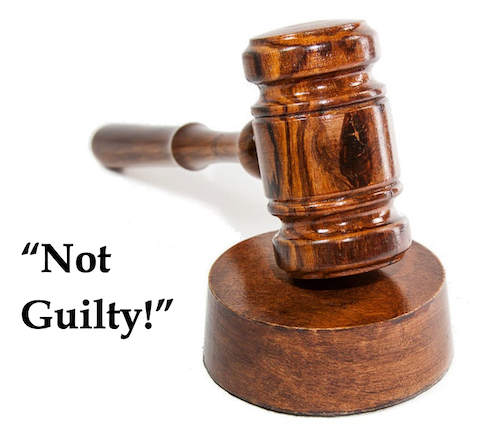
           These sandals of peace include our POSITION THAT PROTECTS OUR MENTAL PEACE: “Therefore, having been justified by faith, we have peace with God through our Lord Jesus Christ.” (Rom. 5:1). The Greek word translated “justified” (diakaioō) means to be declared totally righteous [22] by our holy God [23] in heaven’s courtroom.  The perfect righteousness of Christ in us has been imputed or credited to our account in heaven by virtue of our position in Jesus.[24] 

            “Justification is a legal concept meaning that in God’s courtroom, He pronounced us innocent of all charges. He does this through what theologians call ‘imputation’—taking Jesus’s perfect record and crediting it to our accounts.” [25] [emphasis added]

           Notice in Romans 5:1 that we are “justified” not by our good life, prayers, or religion, but “by faith.” Peace with God is “through our Lord Jesus Christ.” The moment we believe in Jesus Christ and His death on the cross for all our sins, we are “justified” or declared totally righteous before God as if we had never sinned.

           The preposition “with” (pros) in the phrase “peace with God” (pros ton Theon) is very important  (Rom. 5:1). This preposition used with the accusative case (ton Theon) refers to being “friendly with” God. [26] It is the promise that through justification by faith in Jesus, the enmity and hostility that existed between a holy God and a sinful people is totally removed. The war has ended between the Christian and his or her God! And we have peace “with God.”

           How does the Christian know he has peace “with” God? There is only one way to know this, and it is through faith in God’s promise. Justification before God is not a feeling or experience. It is a judicial, legal declaration from a holy God.

           The nature of this peace is of course judicial, since justification is the act of God as our Judge. We should avoid understanding the idea as inner tranquility. The peace involved here is like that which results when two warring nations are no longer in a hostile relationship to each other.” [27] [emphasis added]

           That is why Romans 5:1 begins with the word “Therefore…” It is as though God is pointing His finger back to the finished work of Jesus Christ on the cross (cf. Rom. 4:24-25). “Therefore,” because of what Jesus has done, you have “been justified by faith” and you “have peace with God.” The war with God is over! The battle has ended!

           But Satan will try to rob Christians of this peace. He will attempt to make us think that God is angry with us. That God could never forgive us. That God is against us. He may whisper in our ears, “The reason you have so many troubles is because God is mad at you. He keeps punishing you because He is against you.”

           While it is true that God disciplines His wayward children (Heb. 12:5-11), His discipline of us is not evidence that He hates us or is mad at us. It is evidence that He loves us: My son, do not despise the chastening of the Lord, nor be discouraged when you are rebuked by Him; for whom the Lord loves He chastens.” (Heb. 12:5-6).

           Thus, putting on the sandals of peace means we have an intellectual understanding of what God’s Word says – that the believer in Jesus has “peace with God.” If we are to “stand” against the wiles of the devil (Eph. 6:11), we must know this positional truth, review it, and abide in it daily, never turning aside from it even during Satan’s most vicious or subtle attacks.

    The Possession of Peace

           But our sandals of peace also include our POSSESSION OF PEACE. This can be seen in Philippians 4. Be anxious for nothing, but in everything by prayer and supplication, with thanksgiving, let your requests be made known to God; 7 and the peace of God, which surpasses all understanding, will guard your hearts and minds through Christ Jesus.” (Phil. 4:6-7). This aspect of our sandals of peace protects our emotional peace (“anxious”). God wants the Christian to not only have legal or mental peace (“peace with God”), but to also have emotional peace (“peace of God”).

          How do we gain this relationship of peace? It comes through the practice of prayer. When Paul writes in Philippians 4:6, “Be anxious for nothing…” (Phil. 4:6a), he is saying not to lose your emotional peace even though you may be facing a worrisome situation. Don’t try to resolve your anxiety by worrying about the situation. Instead, he says to resolve this worrisome situation with “prayer” (Phil. 4:6b). Talk to God about what makes you anxious. When was the last time we got alone with God and talked to Him about what we are worried about? Talking about it helps to diffuse the power of worry. But it does not stop there.

           Then God says, “in everything by… supplication” (Phil. 4:6c). The word “supplication” means to tell God what you need. Few people ever identify what they need because they are so busy worrying.

           For example, some of us may be worried about our health. So, we talk to the Lord about that. And as we do that, ask God to help us identify the underlying need. Perhaps we need protection from illness especially during the aftermath of COVID. Or perhaps we are afraid of death because we are not prepared for it. So, we need assurance of life after death. Ask God to give you the assurance that there is everlasting life both now and after death through believing in Jesus (cf. John 11:25-26). Thus, talk to the Lord about what you need from Him.

           Next, God says, “with thanksgiving, let your requests be made known to God” (Phil. 4:6d). One of my mentors taught me that the word “requests” refers to our heart’s desires which align with God’s will. Psalm 37:4 says, “Delight yourself also in the Lord, and He shall give you the desires of your heart.” The Hebrew word for “delight” (anog) can mean “to be soft” [28] or lean toward God. Just as a house plant leans in toward the sunlight coming through a window to get nutrients from the sun, so we need to lean into God during these challenging times to nourish our souls, and He promises to give us the desires or dreams of our hearts. So, talk to God about your desires or dreams. Ask God what He wants to do in your life.

           Notice that God wants us to pray with “thanksgiving.” He wants us to have a thankful heart. Why? Because when we trust God to supply our needs and wants in advance during difficult times, we can accept those circumstances and respond more appropriately. Also, gratitude stimulates the release of dopamine (happy chemical) in our brain which decreases our stress and enhances our sleep.

           As we talk to God about our anxiety, needs, and desires with thanksgiving, He promises that “the peace of God, which surpasses all understanding, will guard your hearts and minds through Christ Jesus” (Phil. 4:7). The “peace of God” is like a deep calmness in the midst of life’s storms. For example, the water underneath the surface of the ocean remains calm during a storm (see above pic). We can experience a deep-seeded calmness in our souls when we surrender to God in prayer as we face these challenging times.

           The phrase “will guard,” pictures an armed soldier walking back and forth in front of the city gate, protecting the occupants inside the city from intruders. God’s peace constantly protects those who choose to talk to Him about their worries and ask Him for what they need and want.

           Do we know this experientially? Are we practicing this kind of prayer? We live in a day of cell phones. If someone wants to get a hold of us, they send us a text or call us on our phones. Our phones alert us through vibration or a distinct sound that someone wants to talk to us.

           This illustrates how God sometimes wants us to talk to Him in prayer. One of the ways God may alert us to His desire for us to talk to Him is by allowing us to feel uneasy or anxious about something. This may be His way of inviting us to spend time alone with Him in prayer. Putting on the sandals of peace includes practicing this kind of prayer.

    The Protection of Peace

           Our sandals of peace also include THE PROTECTION OF PEACE. The apostle Paul writes, “The things which you learned and received and heard and saw in me, these do, and the God of peace will be with you.” (Phil. 4:9). Paul is not talking about the “peace of God” in this verse, but “the God of peace.” This aspect of peace results when believers walk in obedience to God (“The things which you learned and received and heard and saw in me, these do…”). Paul says that when we follow the godly example of another believer, we can experience “the God of peace” being with us.

           Bubeck suggests that “the God of peace” refers to the protection of our will. The strong powerful nearness of God to us (“the God of peace will be with you”) will protect our will. It is that “peace” which God brings to us when our enemies greatly outnumber us and are about to destroy us, and the God of peace says, “No more! You cannot touch him! He is mine!” [29] 

           There are many examples of this in the Old Testament when God’s people, Israel, are surrounded by their enemies who greatly outnumbered them and were about to destroy them with no apparent way of escape. And God’s people cried out to Him, and “the God of peace” showed up and put their enemies to flight or destroyed them. Sometimes He did this with hornets or sounds in the treetops (or heavens) which frightened them and caused confusion or fear, so they fled and were defeated (cf. Exod. 23:22-28; Deut. 7:17-22; Josh. 24:11-12; I Sam. 7:10-11; 2 Sam. 5:22-25; 2 Kgs. 6:8-23; 18:1-19:37; I Chron. 14:13-17; 2 Chron. 31:1-22). And at other times God caused Israel’s enemies to turn against each other so they could be defeated (cf. 2 Chron. 20:1-24).

           God is so powerful that “when a man’s ways please the Lord, He makes even his enemies to be at peace with him.” (Prov. 16:7). God is able to make our enemies be at peace with us quickly when we live in a way that pleases Him. They will have to flee simply because of Who God is.

           It is not surprising that the phrase “the God of peace” is used in the New Testament in the context of obedience and Christian growth (cf. Rom. 15:33; 16:20; 2 Cor. 13:11; Phil. 4:9; I Thess. 5:23; Heb. 13:20-21). If we are hurting in our peace, it is important to examine our obedience to God. Are we trying to walk our own way instead of God’s way? Are we seeking our own pleasure instead of God’s?

           The Lord may let us walk our own way, but please know that “the God of peace will be with” us. He wants us to be near to Him but that cannot be our experience if we are walking our own way instead of His way.

    The Person of Peace

           These sandals of peace also include THE PERSON OF PEACE. 13 But now in Christ Jesus you who once were far off have been brought near by the blood of Christ. 14 For He Himself is our peace, who has made both one, and has broken down the middle wall of separation.” (Eph. 2:13-14). Our sin not only separates us from God, but it also separates us from the people of God. The Ephesians were Gentiles who were called “Uncircumcision” by the Jews who are referred to as “the Circumcision” (Eph. 2:11).

           In their unsaved condition before the Cross, Ephesians 2:12 tells us that Gentiles “were without Christ,” having no corporate national hope centered on the promise of a coming Messiah, as the Jews did. They were “aliens from the commonwealth of Israel” in that God excluded them in having a part in what He planned to do in and through the nation of Israel. The Gentiles were “aliens” from Israel in this sense. [30] Nor did Gentiles have a direct part in the “promises” of God to Israel contained in the biblical covenants (e.g., Abrahamic – Gen. 12:1-3; 13:15-17; 15:17-21; 17:1-22; Mosaic – Exod. 19:1-24:8; and Davidic – 2 Sam. 7:12-17; I Chron. 17:3-14; 2 Chron. 7:17-18; 13:5; 21:7;  Psa. 89:1-4; et al.). As a race of people, the Gentiles had “no hope” of a corporate future promised by God to which they could look and in which they could hope, as Israel did. [31] And worst of all, they were “without God in the world.” The Greek word translated “without God” (atheos) is where we get our English word “atheist” from. Before the cross, Gentile unbelievers may have worshiped many gods, but they were without the one and only true God. [32]

           “But… the blood of Christ” not only brought us “near” to God, but it also brings Jews and Gentiles (“you who once were far off”) near to one another (Eph. 2:13). How did this take place? “For He Himself is our peace, who has made both one, and has broken down the middle wall of separation.” (Eph. 2:14). Jesus is “our peace” Whose atoning sacrifice on the cross has made Jew and Gentile “both one,” having “broken down the middle wall of separation.”

           What is this “middle wall of separation”? The next verse tells us: “…Having abolished in His flesh the enmity, that is, the law of commandments contained in ordinances, so as to create in Himself one new man from the two, thus making peace.” (Eph. 2:15). Jesus “abolished in His flesh” by dying on the cross “the enmity” or hostility that was created by the Jewish “law of commandments contained in ordinances.”

           The Mosaic Law had been the cause of the hostility between Jews and Gentiles. It was the “barrier” that separated Jews and Gentiles. Its dietary distinctions, and laws requiring separation in particular, created hostility between Jews and Gentiles. Jesus Christ broke down the barrier and the hostility that resulted from it by terminating the Mosaic Law. When Jesus Christ died, He fulfilled all the demands of the Mosaic Law (cf. Col. 2:14). When He did that, God ended the Mosaic Law as His rule of life for the Jews. The word “abolished” (katargeō) means to “cause something to come to an end or to be no longer in existence, wipe out.” [33] The Mosaic Law ceased to be God’s standard for regulating the life of His people when Christ died (Rom. 10:4; Gal. 3:24-25; et al.). [34]

           God did this through His shed blood on the cross to “create in Himself one new man from the two, thus making peace.” Christ died in our place “to make one body out of the two very distant groups. When a Jew or Gentile trusts in Christ for eternal life, he is placed in union with other believers in the Body of Christ. Jesus Christ by His death removed the barrier that separated Jews and Gentiles. By faith they become one new man, the Body of Christ, the Church. Christ is the end of the Law to all who believe (Rom. 10:4). 

           “God reconciled both Jews and Gentiles to Himself in one body through the cross, thereby putting to death the enmity (between Gentiles and Jews who believe in Christ). The Law that divided is removed, and Jews and Gentiles are in one body together.” [35] [emphasis added]

           Christ, Who is “our peace,” died “that He might reconcile” Jews and Gentiles “to God in one body,” the church, “through the cross, thereby putting to death the enmity” created by the Jewish Law (Eph. 2:16).

           This Person of peace protects our spirit. It has to do with our spiritual relationship with Jesus. [36] Our Christian faith is not primarily a system of dogmas and doctrines. It is primarily a relationship with a Person – Jesus Christ. This is a relationship that we enter into through faith alone in Christ alone (Eph. 1:13-14; 2:8-9). As we grow closer to Jesus, the more we can experience Him as “our peace” and the more we can live peaceably with other Christians. Satan seeks to divide Christians, so they do not express the image of God by living peacefully in unity with one another. But Jesus Christ is “our peace” and He is the source of reconciliation and restoration of peace within His body, the church.

    Conclusion [37]

           God wants His peace to be the norm for His children on the battlefield. When God’s truth is operative in our lives, it will point us in the direction of His righteousness. We are faced with a myriad of choices and decisions in life, but how do we know we have made the right choices or decisions? How do we know we are moving in the right direction? How do we know we have the right perspective on a matter? God’s peace will confirm it. The Lord will give us a deep-seeded calm to move forward (“feet” suggest movement) with a decision even though hell may be breaking loose in our lives.   

          But if anxiety or worry is our normal way of operating, then we are not wearing the shoes God has given us. Please note that I am not talking about certain times of worry because we all battle that in our flesh. But if worry is normative for us then these shoes or sandals of peace are not being worn on our feet.

           Are we wearing our sandals of peace every day? Do we take time to put them on? Are we taking time to remember and review that we have “peace with God” now because God has declared us (not made us) to be totally righteous (“justified”) the moment we believed in Jesus (Rom. 5:1)? Are we experiencing the emotional “peace of God” through prayer and the fullness of the Holy Spirit’s presence in our lives (Phil. 4:6-7)? Through obedience, are we experiencing “the God of peace” (Phil. 4:9) Who makes even our enemies to be at peace with us (Prov. 16:7)? And are we getting to know the Person of “our peace” (Eph. 2:13-17) more intimately, so we can live more peaceably with our brothers and sisters in Christ? In the midst of war, God wants us to stand victoriously in “the gospel of peace.”

           Submarine crewmen do not get nervous when there is a storm at sea because they can go deep down where the waters are calm. Fish do not have anxiety attacks when it is storming because they know that severe storms will only reach approximately three hundred feet below sea level, [38] so they go down three hundred and one feet where it is peaceful.

           When our world gets chaotic, it is time for us to go deep into the spiritual realm where God says there is peace and calm. God will give us “perfect peace” when our mind is focused on Him (Isa. 26:3). Instead of retreating to the world for its false sense of peace, we need to redirect our attention to the mind of God. When our thoughts agree with God’s, we will experience His peace.

           For example, [39] when the three Hebrew young men, Shadrach, Meshach, and Abednego, who had  been promoted “over the affairs of the province of Babylon where they were captives” (Dan. 3:49), refused to serve the gods of Babylon and worship the ninety-foot-tall gold statue (Dan. 3:1) of king Nebuchadnezzar, they were told by the king they would be “cast immediately into the midst of a burning fiery furnace” (Dan. 3:15). When these three young men heard this news that they were about to be burned alive – which, by the way, would normally obliterate anyone’s sense of peace – they responded to Nebuchadnezzar saying, 16 O Nebuchadnezzar, we have no need to answer you in this matter. 17 If that is the case, our God whom we serve is able to deliver us from the burning fiery furnace, and He will deliver us from your hand, O king. 18 If not, let it be known to you, O king, that we do not serve your gods, nor will we worship the gold image which you have set up.” (Dan. 3:16b-18).

           Their response infuriated Nebuchadnezzar, so he commanded his servants to “heat the furnace seven time more than it was usually heated” (Dan. 3:19b). The king was extremely upset that these Hebrew men feared their God more than the king’s death threat, so he had them tied up and thrown “into the midst of the burning fiery furnace” (Dan. 3:20-21). The flames of the furnace were so intense that the mighty men carrying them were “killed” (Dan. 3:22). Keep in mind that these three men were wearing several layers of clothing (Dan. 3:21) which were most likely flammable, so there appeared to be no hope of their survival. 

           After a while, the king looked into the furnace and he was shocked to “see four men loose, walking in the midst of the fire” (Dan. 3:25a) because they had only thrown three men into the furnace. And now he sees four of them, and the three men  were no longer tied up. They were “walking” around in the midst of these intense flames full of peace and calm, “and they are not hurt” (Dan. 3:25b). How was this possible? Because there was a fourth Person with them in the fire and the kings says He had “the form…  like the Son of God.” (Dan. 3:25c). This was the pre-incarnate Lord Jesus Christ Who joined them in this terrible circumstance. God’s presence protected them from the fire (cf. Isa. 43:2). 

           It is important to understand that God is not going to join the world to help us out if we retreat to the world to find peace. If we are conforming to the world’s values and allurements and get into a bad situation as a result, and then cry out to God, He is not going to join the world because then He would be compromising His peace to join the world’s peace. These men did not bow to the king of Babylon. They remained faithful to God even though they did not know for sure if He would deliver them from this terrible situation.  

           Instead of looking to the world for peace, God wants us to take a stand in this pagan world with our minds focused on the God of peace. When we do this, the God of peace will show up in the fiery trials of life and give us His peacewhich surpasses human understanding. His presence will remove the chains or ropes that bind us so we can move freely. His presence will deliver us from the intense fires of life.

           Some of us may be facing some very significant fiery trials right now. Maybe we have lost our job or lost our health. Perhaps we have lost a relationship with a loved one. God wants us to go deep into the spiritual realm to connect with His mind so His peace can be ours. He wants us to wear these shoes of peace at all times. 

           How do we do this? As with the other pieces of armor, we can put on our shoes of peace through prayer (Eph. 6:18).  

    Prayer: Lord Jesus, we are living in an increasingly chaotic world that lacks Your peace. We praise You because You not only brought us peace, but You are also our peace. Protect us from anything that would rob us of Your peace. Please help us to wear our sandals of peace every day so we may stand victoriously against the trickery of the Devil. We claim the peace with God that is ours through justification by faith alone in Jesus alone (Rom. 5:1). We desire the peace of God that touches our emotions and feelings through prayer (Phil. 4:6-7). Through our obedience, we seek the God of peace (Phil 4:9) Who makes even our enemies to live at peace with us. And we want to grow closer to You Jesus, because You are our peace. Satan and his kingdom of darkness are relentless in their efforts to keep believers divisive toward one another. As the accuser of believers, the Devil continually plants suspicions in our hearts. In the authority and name of the Lord Jesus Christ, we pull down that work of darkness and bind our enemy that he might not succeed. We ask the Holy Spirit to bring to a stop all divisive works active in our lives and in all the lives of other believers. The diversity of Your body, Lord Jesus, is part of its beauty and appeal to the lost. It adds to Your glory. Help us to love one another in our diversity. In Your precious and mighty name, we pray, Lord Jesus. Amen. [40]

    FOOTNOTES:

    [1] Walter Bauer, A Greek-English Lexicon of the New Testament, 2000 Kindle Edition, pp. 247-248.

    [2] Adapted from Tony Evans’ video message entitled “The Shoes of Peace” on youtube.com.

    [3] Adapted from Mark Bubeck’s video message, “7. Peace in the Midst of War: Ephesians 6 Series,” on the BRMinistry app.

    [4] Bauer, A Greek-English Lexicon of the New Testament, 2000 Kindle Edition, pg. 1037. 

    [5] Archibald Thomas Robertson, A. T. Robertson’s Word Pictures in the New Testament, 2014 Kindle Location 154992.

    [6] The Greek verb hupodēsamenoi is in the aorist or past tense, meaning “having shod.” As with the first two pieces of armor, this refers to the state we should always be in.

    [7] Bauer, A Greek-English Lexicon of the New Testament, 2000 Kindle Edition, pg. 401.

    [8] Tony Evans, The Tony Evans Bible Commentary, 2019 Kindle Edition, pg. 2666.

    [9] Jim Logan, Reclaiming Surrendered Ground (Chicago: Moody Press, 1995), pg. 182.

    [10] Evans, The Tony Evans Bible Commentary, 2019 Kindle Edition, pg. 2665.

    [11] Evans’ video message entitled “The Shoes of Peace” on youtube.com.

    [12] Bauer, A Greek-English Lexicon of the New Testament, 2000 Kindle Edition, pp. 287-288.

    [13] J. Carl Laney, Moody Gospel John Commentary (Chicago: Moody Press, 1992), pg. 265.

    [14] J. Dwight Pentecost, The Words and Works of Jesus Christ (Grand Rapids: Zondervan, 1981), pg. 440.

    [15] Evans’ video message entitled “The Shoes of Peace” on youtube.com.

    [16] This portrait is used with permission from the artist, Katrina Case (see  katrinacaseart.com). 

    [17] Bauer, A Greek-English Lexicon of the New Testament, 2000 Kindle Edition, pg. 402.

    [18] Adapted from Evans’ video message entitled “The Shoes of Peace” on youtube.com.

    [19] The theme of the book of Romans is the “salvation” or deliverance from God’s present-day wrath introduced in Romans 1:16-32. This deliverance includes justification through faith in Christ’s death (Rom. 2:1-5:9a, 10a) and sanctification through faith in Christ’s life (Rom. 5:9b, 10b-8:39). See Zane C. Hodges, “Romans,” The Grace New Testament Commentary, 2019 Kindle Edition, pg. 966ff; Evans, The Tony Evans Bible Commentary, 2019 Kindle Edition, pg. 2416ff; Joseph Dillow, Final Destiny: The Future Reign of The Servant Kings: Fourth Revised Edition (Grace Theology Press. 2018 Kindle Edition), pp. 198-199.

    [20] Evans, The Tony Evans Bible Commentary, 2019 Kindle Edition, pg. 2430.

    [21] Much of these next four sections are adapted from Bubeck’s video message, “7. Peace in the Midst of War: Ephesians 6 Series,” on the BRMinistry app, unless otherwise noted.

    [22] Tom Constable, Dr. Constable’s Notes on Romans, 2023 Edition, pg. 77.

    [23] The Greek word translated “justified” (dikaiōthentes) is in the passive voice, indicating that God is the One Who justifies the believing sinner.

    [24] David R. Anderson, Free Grace Soteriology: Third Edition (Grace Theology Press, 2018 Kindle Edition), pp. 115-116.

    [25] Evans, The Tony Evans Bible Commentary, 2019 Kindle Edition, pp. 2424-2425.

    [26] Bauer, A Greek-English Lexicon of the New Testament, 2000 Kindle Edition, pg. 874.

    [27] Hodges, The Grace New Testament Commentary, 2019 Kindle Edition, pg. 1012.

    [28] Francis Brown, Samuel R. Driver, and Charles A. Briggs, A Hebrew and English Lexicon of the Old Testament (Omaha, NE: Patristic Publishing, 2020 Kindle Edition), pg. 2564.

    [29] Bubeck’s video message, “7. Peace in the Midst of War: Ephesians 6 Series,” on the BRMinistry app.

    [30] Tom Constable, Dr. Constable’s Notes on Ephesians, 2024 Edition, pg. 59. 

    [31] Ibid.

    [32] J. B. Bond, “Ephesians,” The Grace New Testament Commentary, 2019 Kindle Edition, pg. 1367.

    [33] Bauer, A Greek-English Lexicon of the New Testament, 2000 Kindle Edition, pg. 525.

    [34] Constable, Dr. Constable’s Notes on Ephesians, 2024 Edition, pg. 63.

    [35] Bond, “Ephesians,” The Grace New Testament Commentary, 2019 Kindle Edition, pg. 1368.

    [36] Bubeck, “7. Peace in the Midst of War: Ephesians 6 Series,” on the BRMinistry app.

    [37] Much of this section is adapted from Evans’ video message entitled “The Shoes of Peace” on youtube.com, unless otherwise noted.

    [38] Retrieved on December 14, 2024, from “How do hurricanes impact the deep ocean?” at www.oceanexplorer.noaa.gov.

    [39] Adapted from Evans’ video message entitled “The Shoes of Peace” on youtube.com.

    [40] Adapted from Mark Bubeck’s prayers entitled, “Prayer for Christian Unity” and “Prayer to Wear the Armor of God,” from Spiritual Warfare Prayers pamphlet (Chicago, IL: Moody Publishers, 1997). 

    Spiritual Warfare – Part 5

    Introduction

           In our spiritual warfare series, we are now looking at each piece of armor that a Christian is to wear to successfully stand against “the wiles” or deceptions of the devil (Eph. 6:10-13). The six pieces of armor that Paul presents to us are in the order that a Roman soldier would put them on. They are divided into two categories of three.

           He introduces each of these two categories with different verbs. The first three are introduced with the verb “to be.” The last three are introduced with the verb “to take.” Why does Paul switch verbs halfway through the armament? He wants us to understand two specific, distinct orientations to the six pieces of armor. The first three relate to a state we should always be in. The last three are what we use on an as needed basis. [1]

           The first three pieces of armor we have with us all of the time [2] (“having girded… put on… shod…” – Eph. 6:14-15). [3] This is the state we are always in. But the last three pieces of armor we are called to take and use as needed [4] (“taking … take…” Eph. 6:16-17), [5] especially “in the evil day” (Eph. 6:13b) when all hell breaks loose and seeks to steal, kill, and destroy us (John 10:10a).

           Last time we looked closely at the first piece of armor, the belt of truth (Eph. 6:14a), which teaches us that Satan wants to deceive us or trick us to do what is contrary to God’s will. This piece of armor enables us to overcome the lies and deceptions of the devil.

           Truth is the absolute standard by which reality is measured. [6] It is God’s viewpoint on any subject. We can defeat Satan by reaching out and putting on each citadel of truth God has given us through prayer: The Person of Truth (John 1:14; 14:6; Rom. 13:14), The Spirit of Truth (John 14:26; 15:26; 16:13-14; I John 2:20-27), the Word of Truth (John 17:17; 8:31-32; Psa. 119:9, 11, 28-29, 43, 160; 2 Tim. 2:15; 3:16-17; and the Church, the Pillar and Foundation of Truth (I Tim. 3:15). [7]

    The Breastplate

           After a Roman soldier puts his belt on over his tunic (a loose, sleeveless shirt that reaches to his knees) to provide mobility in battle and serve as a place on which he could hang his armor, he then puts on his “breastplate” (thōraka). The breastplate was usually made of bronze or chain mail and covered the soldier’s body from his neck to his thighs, [8] protecting the vital organs in the chest area and below, [9] including his heart, lungs, liver, spleen, stomach, and intestines. And it also covered his back so that from the top of his spine to below his kidneys, he was protected from the thrust of the enemy’s spear or sword. [10] This is a vital piece of armor designed to protect a Roman soldier. Knowing this about the soldier’s breastplate ought to help us realize how vitally important this piece of armor is to the Christian.

           The Bible instructs us, “Keep your heart with all diligence, for out of it spring the issues of life.” (Prov. 4:23). Just as the physical heart is central to our physical well-being, pumping life-giving blood and giving us functionality in every part of our being, so God has given us a spiritual heart that pumps His life throughout all our spiritual relationships. And since our battle with the kingdom of darkness is spiritual, our spiritual heart becomes the pump that gives us spiritual victory. [11]

           Therefore, God has given us a special piece of armor called the “breastplate of righteousness.” This righteousness stands as our position with God which cannot be touched or altered by the enemy. It has been eternally settled in heaven’s courtroom. However, to be victorious on earth, our position in heaven must be matched with our practice on earth. Thus, once we learn what our position with God is, we can then align our practice with that position. And when we do that, God is free through the Holy Spirit to pump His life through our life, so we live life as God intended it to be lived, overriding Satan’s attempts and attacks to bring defeat into our Christian lives. [12]

    What is Righteousness? [13]

           Last time we discovered that we begin dressing for success in spiritual warfare by putting on the belt of truth (Eph. 6:14a). Truth is God’s viewpoint on a matter. So, in spiritual warfare, we start with truth by finding out what God thinks about a certain subject.    

           Then we are to put on “the breastplate of righteousness” (Eph. 6:14b). The breastplate Christians are to put on is “righteousness.” The word “righteousness” (dikaiosunē) refers to the quality of “being right” [14] as God defines it.               

           Righteousness” is not “better than others,” or “good enough,” but right, as in, “right with God.” [15]

           “Righteousness is the standard God requires for people to become acceptable to Him.” [16] This standard is based upon the truth. The truth is the informational base that tells me the right thing to do.

           The opposite of righteousness is wrongness. Wrongness is functioning or operating in opposition to the truth. But truth is whatever God says about a subject regardless of how many people agree or disagree with Him. Righteousness is my response to God’s truth.

           In basketball, the basketball hoop is ten feet high. That is the standard of the basketball goal if you are playing basketball. If we lower the basketball hoop, we have lowered the standard.

           What a lot of people do in relation to God, is lower the standard and shoot, and make the shot, and think they did something that is acceptable to the Lord. They adjusted God’s standard of righteousness to a level they could attain, and concluded they are okay to God, when in reality they were not. They had lowered the divine standard to a human standard.

           Until we operate on God-based truth that gives us the standard of God’s righteousness, we are not going to align with God’s standard of righteousness. Why is this so important?

    How Satan Attacks Us in the Area of Righteousness [17]

           Since the opposite of God’s righteousness is wrongness, when we do not align with God’s righteousness in our Christian lives, we are going to be very vulnerable to spiritual attack. Because Paul is talking about spiritual warfare and “wickedness in heavenly places” (Eph. 6:12), we need to understand that demons function on wrongness. Wrong is not just wrong. It is also an invitation to demons to join the wrongness.

           Evans illustrates this by saying that when we leave trash laying around our house for too long of a time, we don’t just have trash to deal with. The unaddressed trash invites roaches, ants, mice, and rats to join the party. When food has been left out for too long of a time, one roach tells another roach that they have been invited into the house. So, in addition to the trash in the house, we now have unwanted guests.

           God wants us to understand that unrighteousness (trash) is an invitation to demons (roaches) to join our “trashiness,” so we are not just dealing with unrighteousness (trash), we are also having to deal with demons who have made their home in our unrighteousness. And just as trash invites a variety of unwanted guests (e.g., ants, roaches, mice, rats, etc.,), so our unrighteousness invites a variety of demons of all sizes, shapes, and dispositions.

           Our unrighteousness invites the demonic flow and blocks the movement of God. Hence, two things happen with our unrighteousness. Demons are invited into our wrongness, which makes a bad place worse. And God is blocked out. Thus, God’s movement in our lives is limited because we are not wearing the breastplate of righteousness.

           Our unrighteousness gives Satan a legal right to occupy a place in our lives (cf. Eph. 4:25-27). We have invited the enemy to take up ground in our Christian lives. We have given him control over that part of our Christian lives. We can pray all we want about the roaches in the house, but until we remove the trash in the house, we are still going to have those unwanted guests. Why? Because those roaches (demons) have a legal right to be there because we are saying to them, “I am feeding you today.” As long as we continue in unrighteousness, no amount of praying is going to remove the demonic presence in our lives. They will not listen to our prayers because we are still feeding them with our trash.

           As Christians, we often settle for trash management. We know we should not have the trash (unrighteousness), and we don’t want the roaches (demons), so we try to manage the trash.

           For example, when we invite people to our house, we want our house to appear to be clean. So, we grab the trash and all the mess laying around, and we throw it in the closet. We want to keep our trash (unrighteousness) hidden so people will not know just how trashy (unrighteous) we truly are.

           So, we present an appearance of godliness. We try to think, speak, and act righteously, but inwardly our trash (unrighteousness) is producing a stench. It’s like having a trash compactor in the house. We keep putting trash in it and it reduces the size of our garbage. But the problem is, if we don’t take that trash out, eventually it will fill the house with its unwanted stench. And our spouse will get a whiff of that trash scent, and she will know it is there even if it is not visible, because there is a standard that has a scent to it.

           God can detect the scent for unrighteousness. So even if we are good at managing our trash, packing it down, hiding it in the closet, the garage, or in the attic so people cannot see it, God still knows it is in our lives. All demons have done is go to the garage, the closet, or garage – wherever we are hiding the trash. They have not left the premises because they know that the trash (unrighteousness) is still occupying the space.

            One does not have to be a Christian for long to understand how tenacious the Devil is with regard to his attacks against righteousness. We mentioned last time how each piece of armor teaches us how Satan can come against us. The Devil wants to devour us and destroy us in this area of righteousness (I Pet. 5:8). He primarily does this in two ways. [18]

           The first way Satan attacks us in the area of righteousness is to accuse us of our lack of righteousness. From his book, Overcoming the Adversary, Mark Bubeck shares four contrasts between the way the Holy Spirit comes to us and the way the Devil approaches us.    

           The first contrast shows us that when the Holy Spirit comes to us, He seeks to show us that our infinite worth and value to God makes God desire our fellowship (Gen. 1:26-27; Psa. 139:1-23; Matt. 13:44-46; I Cor. 6:20-21). He delights in spending time with us (Psa. 17:8; 18:19; 149:4; Isa. 62:5; Zeph. 3:17). But Satan wants to convince us that we are so bad and so flawed that God would not want anything to do with us.

           The second contrast teaches us that when the Holy Spirit comes to us, He seeks to show us that there is forgiveness and restoration available to us no matter how often or badly we have sinned (Psa. 23:3; 32:1-11; 51:1-13; 103:3, 10-14; Micah 7:19; John 21:15-17; Acts 10:43; Col. 2:13-14; I John 1:7, 9). But when the Devil comes to us, he seeks to persuade us that there is no forgiveness nor restoration available to us. He tells us we have committed the unpardonable sin [19] and that we are so bad that Satan deserves to have us forever!

           The third contrast instructs us that when the Holy Spirit comes to us, He uses God’s Word to give us hope and assurance of God’s love and forgiveness (cf. Rom. 5:1-8; 8:1, 5-6, 31-39). But when Satan approaches us, he takes God’s Word out of context to try to convince us that there is no hope for us; that God could not possibly ever forgive us.

           The fourth and final contrast shows that when the Holy Spirit comes to us, He builds faith, hope, and love in our hearts and increases our confidence in the assurance of our salvation (John 6:35-40; 10:28-29; I Cor. 13:13; I Thess. 5:8; I John 2:25-26; 5:1, 13). On the other hand, when Satan comes to us, he creates doubt, despair, and resentment toward God and toward His Word and His people. He wants to convince us that no one as bad as us could ever be saved and get into heaven.

          The second way Satan attacks us is to tempt us to compromise God’s righteousness. Satan seeks to convince us that it is not important to live according to the righteous standards God has given us in the Bible and even in our own conscience which many times has been made sensitive by the Holy Spirit and God’s Word.  

           The Devil seeks to get us to compromise the difference between right and wrong. He may say things to us like, “It won’t hurt you to try that especially if it helps you get what you want.” “Everyone else is doing it, so it must be okay.” “Go ahead and do it. It’s fun.” “No one else has to know.” “It doesn’t matter if you participate in a little worldliness. God understands your needs.” “It is only a weakness.” “This is the only way you can endure stress or face pain.” “You cannot change.”      

           On the other hand, when we do fail, Satan will come and try to persuade us that we have no righteousness; that we are not worthy before God at all. When we yield to sin repeatedly, without confessing or forsaking it, Satan has a right to claim that area we have compromised (Eph. 4:25-27).  

           Putting on the breastplate of righteousness means we combat these two ways that Satan attacks us in this area of God’s righteousness. It is at the very heart of the battle against the enemy.

          But what does it mean to put on the breastplate of righteousness? What is required to put on this piece of armor? First, we need a doctrinal understanding of the three types of God’s righteousness.

    Imputed Righteousness

           The word “impute” is not a common word that we use today, but the apostle Paul uses it in Romans 4 when he refers to Old Testament examples of justification by faith. For example, when he refers to David and Abraham’s examples of faith alone for justification, he writes, But to him who does not work but believes on Him who justifies the ungodly, his faith is accounted for righteousness, just as David also describes the blessedness of the man to whom God imputes righteousness apart from works… 21 And [Abraham] being fully convinced that what He had promised He was also able to perform. 22 And therefore ‘it was accounted to him for righteousness.’ 23 Now it was not written for his sake alone that it was imputed to him, 24 but also for us. It shall be imputed to us who believe in Him who raised up Jesus our Lord from the dead… ” (Rom. 4:5-6, 21-24). [brackets added] The word “impute” (logizomai) in these verses means the perfect “righteousness” of God is “credited” or “placed to one’s account.” [20]

           We may not be as familiar with the word “impute,” but the word “credit” probably speaks volumes to us. Anderson writes, “We have credit cards, we have a credit score, or we may have credit at the bank. If the bank were to ‘credit something to our account,’ we know what that means. And that is exactly what ‘impute’ means. When we trust Jesus as our Savior, His perfect life of righteousness is credited to our account in heaven.

           “Philippians 4:17 says that we have an account in heaven. This account has a debit column and a credit column. As unbelievers we had an account full of debits and no credits. Isaiah 64:6 says all of our righteous deeds were like dirty rags. This doesn’t mean I had no righteous deeds. I did. That’s why they were called righteous deeds. The problem is these righteous deeds don’t go into the credit column of our account in heaven. They’re called rags by Isaiah because they‘re not acceptable to God. Why? Because they were produced by my own human energy and strength. They were deeds of human righteousness and not divine righteousness.” [21] [emphasis added]

           All our righteous deeds are stained with sin according to Isaiah 64:6. Hence, all our righteous deeds cannot open the gates of heaven. For example, “When Bill Gates claims he does not believe in God, let alone Christ, and gives a billion dollars to help the problem of AIDS in Africa, that is most certainly a righteous deed. But that righteous deed would not open the gates of heaven for him. It does not go into the credit column of his account. Why? Because to get into heaven we have to be perfect. [22] [emphasis added]

           This is what Jesus taught in His Sermon on the Mount. He said, “For I say to you, that unless your righteousness exceeds the righteousness of the scribes and Pharisees, you will by no means enter the kingdom of heaven.” (Matt. 5:20). The scribes and Pharisees were considered by Jesus’ Jewish audience to be the most righteous people of that day. But Jesus says the “righteousness” of His audience must exceed the righteousness of these religious leaders to enter the kingdom of heaven. Whose righteousness would surpass these devoted religious leaders’ righteousness? Later, in the same chapter, Christ says, “Therefore you shall be perfect, just as your Father in heaven is perfect.” (Matt. 5:48). Only the righteousness of God is “perfect.” [23]

            It is important to understand that Jesus was speaking to both believers (“His disciples” – Matt. 5:1) and the unbelieving “multitudes” who had followed Him (Matt. 4:24-5:1). He was using His Sermon on the Mount to provide a standard of conduct for His believing disciples as they anticipate living in the coming Kingdom of God on earth. But Christ also uses His Sermon on the Mount to convict His unsaved audience of their need for God’s imputed righteousness through faith alone in Christ alone (cf. Rom. 3:21-4:24). [24]

           Anderson adds, Anything short of perfection will not do. There’s not a great scale in the sky on which God will put our debits on one side and our credits on the other side and accept us if our credits outweigh our debits. No, just one sin is one too many. That’s why when Satan committed one sin in heaven, he had to go. He was cast out of heaven.

           “So that leaves us with a big problem. The Bible says that all men fall short of the glory of God, which includes His perfect holiness. These sins go into our debit column. In order for us to go to heaven we need two things: we need to have the debits swept away, and we need to have a life of perfect righteousness. Since none of us can live the life of perfect righteousness, we must look to another.

           “Only Jesus Christ lived a perfect life, and when we trust in His work for us on the cross, our sins are wiped away because He took our sins upon Himself. But, secondly, His perfect life is credited to our account. That’s divine righteousness. When this is credited to our account, we have a new standing before God. Our new position is in Christ. And since we are in Christ, we are seated at the right hand of God the Father in heavenly places (Col. 3:1-3) [see also Eph. 1:19-21; 2:5-6]. And nothing can separate us from the love of God in Christ Jesus (Rom. 8:39).” [25] [emphasis and brackets added]

           Notice in Romans 4:5 that God “justifies” or declares righteous the “ungodly” person who “believes,” not behaves (“work”). It is the believing person’s “faith” that “is accounted for righteousness.” The moment we believe in Jesus Christ and His death on the cross for all our sins, God “justifies” or declares us totally righteous before Him as if we had never sinned.

           Hence, when a sinner believes in Jesus, he or she is declared by our holy God to be the opposite of what they are. So, if we were deceitful before our conversion, God declares us to be truthful. If we were greedy, God declares us to be generous. If we were hateful, God announces us to be loving. If we were impatient, God says we are patient. If we were promiscuous, God declares us to be pure at the moment of faith in Christ. If we were proud, God declares us to be humble. If we were selfish, God declares us to be selfless.

           However, there is a great deal of confusion today regarding the relationship between faith and works. Much of this confusion originates from a theologian and philosopher named Augustine (A.D. 354-430), who greatly influenced the soteriology (study of salvation) of Roman Catholics, the Reformers, and even Calvinists and Arminians today.

           Augustine had a scant knowledge of New Testament Greek which “caused him to misunderstand diakaioō (δικαιόω), translating it in its present infinitive form, ‘to make righteous,’ [26] “as opposed to the defining truth of the Reformers that this word meant ‘to declare righteous.’ The distinction was enough to cause a schism in Western Christianity. Whereas the former meaning signified a change of character, the latter meaning referred to a change of standing. ‘To make righteous’ looked to one’s experience in life, but ‘to declare righteous’ looked to the courtroom of heaven. The temporal significance of the distinction in meanings was monumental. Augustine saw justification (the making of righteous character) as a life-long effort, whereas Luther understood that one could be ‘declared righteous’ in God’s court at a moment of time.” [27] [emphasis added]

           This is extremely significant to understand. Martin Luther understood “court room” justification to mean “that one could be declared righteous (justified) in his position or standing before God, but still be sinful in his character and condition in his temporal body” [28] [emphasis added] – a truth that Augustine never understood.

           Augustine was persuaded “that the character of Christ needed to be infused into the character of the sinner from regeneration at water baptism (usually of infants) until death in order for the person to be made righteous (justified) enough to enter God’s heaven. Even the vast majority of God’s elect would not pass muster, so they would be consigned to Purgatory until the final vestiges of sin could be eliminated from their character. Only then could they march confidently through heaven’s gates. So, for Augustine justification was a life-long process. In fact, Purgatory was a provision of God for those in whom the process had not been completed.” [29] [emphasis added]

           What Augustine did was erroneously wed justification with sanctification. He confused entering the Christian life (justification) with living the Christian life (sanctification). This has led some teachers today to mistakenly front-load the gospel by requiring good works in order to get saved (Romanism & Traditional Protestantism). It has led other teachers to backload the gospel by requiring good works to stay saved (Arminianism) or good works as a necessary proof of genuine salvation (Calvinism), so that in each case you MUST HAVE GOOD WORKS to ultimately go to heaven. Consider these options which are taught today:

    ScenarioFaith in Jesus Christ +good works = maybe heavenFaith in Jesus Christ =maybe heaven if you maintain good works, confess your sins, remain faithful, etc.Faith in Jesus Christ = salvation + good works to ultimately arrive at heaven
    ProponentsRomanism & TraditionalProtestantismArminianismCalvinism

           Each of these scenarios requires good works in order to ultimately arrive in God’s heaven. This is NOT God’s grace. “But if it is of works, it is no longer grace.” (Rom. 11:6). Good works are not the means of obtaining or maintaining salvation but are designed to be the result of receiving God’s free gift of salvation (Eph. 2:8-10). When good works are required to enter heaven, how will you ever know when you have done enough? You won’t until after you die.

            Wiersbe correctly states, “Do not confuse justification and sanctification. Sanctification is the process whereby God makes the believer more and more like Christ. Sanctification may change from day to day. Justification never changes. When the sinner trusts Christ, God declares him righteous, and that declaration will never be repealed. God looks on us and deals with us as though we had never sinned at all!” [30] [emphasis added]

            In case you doubt that we need to be “justified” or declared totally righteous before a holy God, it is important to understand our condition before we come to faith in Christ. The Bible tells us, “And you, who once were alienated and enemies in your mind by wicked works…” (Col. 1:21). Before we became Christians, “we were enemies” of God and needed to be “reconciled to” Him “through the death of His Son” (Rom. 5:10). The prophet Isaiah tells us, “All we like sheep have gone astray; we have turned, everyone, to his own way; and the Lord has laid on Him the iniquity of us all” (Isa. 53:6). We need to be reconciled to God because of our sin. God does not need reconciling to us, we need reconciling to God. We turned away from God. He never moved. We moved. The people God created rebelled against their Creator and sinned so that death spread to all people because all sinned (Gen. 3:1-7; cf. Rom. 3:23; 5:12-14, 18a).

           The non-Christian is described in Ephesians when Paul writes, “we all once conducted ourselves in the lusts of our flesh, fulfilling the desires of the flesh and of the mind, and were by nature children of wrath, just as the others.” (Eph. 2:3). Because we were driven by our sinful lusts and desires, we were the objects of God’s “wrath” or displeasure before we became Christians. That is not a very likeable thought, is it?

           The apostle John writes, “He who believes in the Son has everlasting life; and he who does not believe the Son shall not see life, but the wrath of God abides on him.” (John 3:36). The person who refuses to believe in Christ remains under God’s “wrath.” The non-believer remains God’s enemy.

           How does the Christian know he or she is justified or declared totally righteous before God? There is only one way to know this, and it is through faith in God’s promise. Justification before God is not a feeling or experience. It is a judicial, legal declaration from a holy God.

           Logan explains why he believes the breastplate of righteousness refers to the imputed righteousness of God: “The reason for this is that when it comes to standing against the accuser, Christ is the only Person Who is totally blameless. Satan could point at no sin in Christ’s life (John 14:30), whereas you and I have plenty of things in our lives Satan can accuse us of, even things we have been forgiven of by Christ.

           “That’s why we need to stand with Christ’s righteousness around us like a breastplate. When we stand in Christ, Satan has nothing to touch in us, nothing to accuse us of. The enemy and his underlings aren’t afraid of us, but they’re afraid of Christ.” [31] [emphasis added]

    Imparted Righteousness

           The second type of righteousness we need to understand from the Scripture is the imparted righteousness of God. When we believed in Christ, the perfect righteousness of God was imputed or credited to our account in heaven. We were declared totally righteous in our standing before God.

           But when we believed in Jesus, God also imparted to us a new nature consisting of His righteousness and holiness. The apostle Paul writes, 20 But you have not so learned Christ, 21 if indeed you have heard Him and have been taught by Him, as the truth is in Jesus: 22 that you put off, concerning your former conduct, the old man which grows corrupt according to the deceitful lusts, 23 and be renewed in the spirit of your mind, 24 and that you put on the new man which was created according to God, in true righteousness and holiness.” (Eph. 4:20-24). Paul is telling us that we are not to live the way we used to live before we became Christians (Eph. 4:17-19) because we are not the people we used to be (Eph. 4:20-24).

           We “have not so learned Christ” by engaging in the activities that characterized our lives before we became Christians (Eph. 4:20). To learn Christ, we must be in a relationship with Him whereby we “heard Him and have been taught by Him, as the truth is in Jesus” (Eph. 4:21). Remember, “truth” is God’s viewpoint on a matter and that is where we need to start.

           The clothes of the “old man” (who we were before Christ) need to be “put off” before we can put on our new wardrobe. These old clothes refer to our “former conduct” as unsaved people who grew “corrupt according to the deceitful lusts” (Eph. 4:22). Lusts or sinful desires are “deceitful.” “They promise satisfaction but bring only an aftertaste of emptiness.” [32] Christians can permit their lusts or sinful desires to direct their decisions, leaving them defeated and discouraged.

           Paul is saying to take off those dirty clothes and put on the new clothes of the “new man” (our new nature) which include “true righteousness and holiness” (Eph. 4:24). This new nature “was created according to God.” When we were born again through faith in Jesus, God deposited a righteous seed (new nature) within us called the “spirit” (Eph. 4:23). [33]

           The apostle John speaks of this new nature in his first epistle: “Whoever has been born of God does not sin, for His seed remains in him; and he cannot sin, because he has been born of God.” (I John 3:9). John had just stated that “the Son of God was manifested, that He might destroy the works of the devil” (I John 3:8). The primary way that Christ destroys the work of the devil is to give believers (“whoever has been born of God”) a new sinless self (“His seed”) which “cannot sin” (I John 3:9). Since God cannot sin (I John 1:5), the divine nature He places inside His children cannot sin either. A sinless Parent cannot beget a sinful child. So, sin is never an act of the born-again nature inside us because it is incapable of sinning (I John 3:9) and because all sin is sourced in the devil (I John 3:8).

           Anderson writes, “His divine nature is passed down through His divine seed. The new birth places His seed in us. Just as my physical seed cannot produce something outside its genetic code, so God’s seed cannot produce something contrary to His nature, that is, sin. God’s nature cannot produce sin. God’s nature in us (His seed) cannot produce sin.” [34] [emphasis added]

           Many have wondered how this understanding can harmonize with John’s statement in I John 1:8 that Christians who say they have no sin are self-deceived. Hodges explains: “In 1:8 John warns, ‘If we say that we have no sin, we deceive ourselves.’ But in 3:9 he says, ‘whoever has been born of God does not sin.’ As total persons, believers do sin and can never claim to be free of it, but their ‘inward self’ that is regenerated does not sin.

           “In describing his struggle with sin Paul notes that two diverse impulses are at work. So he can say, ‘For I delight in the law of God according to the inward man. But I see another law in my members, warring against the law of my mind, and bringing me into captivity to the law of sin which is in my members’ (Rom 7:22-23; italics added). Previous to this he had concluded, ‘Now if I do what I will not to do, it is no longer I that do it, but sin that dwells in me’ (v 20; italics added). His conclusion is simple; ‘So then, with the mind I myself serve the law of God, but with the flesh the law of sin’ (v 24). At the core of his being (in his inward man) he does not and cannot sin. The inward man (the ‘regenerate self’) is absolutely impervious to sin, fully enslaved to God’s will. If sin occurs, it is not the inward man who performs it.

           Sin does exist in the Christian, but it is foreign and extraneous to his regenerated inner self, where Christ dwells in perfect holiness. Since Christ is eternal life (1 John 5:20), the one who possesses that life cannot sin because he is born of God. The divine seed (sperma) of that life remains (menō, ‘abides,’ ‘stays’) in him who is born again, making sin an impossibility at the level of his regenerate inward self.” [35] [emphasis added]

           How we see ourselves determines how we live. The apostle Paul wants his Christian readers, including you and me, to see themselves as a “new man” who possesses a new nature at the core of their being which is “created according to God, in true righteousness and holiness” (Eph. 4:24) so they will manifest this righteous nature by living righteously. This type of Christian is represented by the above image on the left. He or she is visibly manifesting God’s righteous nature inside them by doing what is right. However, this is not what gets them to heaven. We will only go to heaven by receiving God’s gift of salvation by grace through faith alone in Christ alone (Eph. 1:13-14; 2:8-9). But manifesting our true identity by practicing Christ’s righteous behavior will glorify God now on earth (Matt. 5:16) and reap eternal rewards in the future at the Judgment Seat of Christ (cf. I Cor. 3:8-15; 2 Cor. 5:10). 

           On the other hand, a Christian who is yielding to his or her sinful flesh (“deceitful lusts”) is hiding his or her new righteous and holy nature inside them. This type of believer is represented by the image on the right. He or she is concealing his or her righteous and holy born-again nature by not living righteously. Failure to manifest their new nature through their actions does not jeopardize their salvation, but it does disrupt their fellowship with God and other believers (I John 1:3-10; 2:9-11; et al.) and forfeit eternal rewards in the future (I Cor. 3:8-15). 

           So how does a Christian move from putting off the old man that is corrupted by deceitful lusts (Eph. 4:22) to putting on the new man that is characterized by God’s “righteousness and holiness” (Eph. 4:24)? This leads to the third type of righteousness.

    Implemented Righteousness [36] 

           When God makes our inside righteous at the moment of faith in Christ (imparted righteousness), He wants our outside to match (implemented righteousness). The way for a Christian to implement the righteous seed God has given him is to put off the clothes of the old man (Eph. 4:22) and put on the clothes of the new man (Eph. 4:24). How does he or she make that happen? The verse in between these two verses tells us how: “And be renewed in the spirit of your mind.” (Eph. 4:23).

           When speaking of unbelievers, Paul uses words like “mind,” “understanding,” and “ignorance” (Eph. 4:17-18). The common denominator is their thinking. Our lifestyle too is controlled by our thoughts. So, the key to taking off the old and putting on the new is to “be renewed in the spirit of your mind.” (Eph. 4:23). Instead of going back to the mindset we had before Christ, we must “put on the new man,” which requires a new way of thinking, a “renewed… mind.”  [37]

           The more we make our home in God’s Word (Psa. 119:9, 11; John 15:7; I John 2:14b), the more the Holy Spirit brings our thoughts in line with His own so that we think thoughts after Christ (I Cor. 2:10-16). The renewing of our minds involves God’s thoughts merging with ours so we can know and do His will (Rom. 12:1-2).

           What we are talking about here is the sanctification process which begins with our perfected and redeemed “spirit.” The Bible tells us, “Now may the God of peace Himself sanctify you completely; and may your whole spirit, soul, and body be preserved blameless at the coming of our Lord Jesus Christ.” (I Thess. 5:23).  Notice the word order: “spirit, soul, and body.” God’s truth informs us that He has deposited a righteous and holy seed in our “spirit” (Eph. 4:23-24; cf. I John 3:9). This is our new nature.

           Our “spirit” cannot receive any contaminated information because it has been sealed by the Holy Spirit (Eph. 1:13-14). Our “spirit” wants to lay hold of God’s truth. That is why Paul says, “I delight in the law of God according to the inward man.” (Rom. 7:22).  The “inward man” (Rom. 7:22) is the “new man” or new nature that is righteous and holy (Eph. 4:24). It craves the Word of God.

           Hence, when God’s truth says at the core of our being we were “created according to God, in true righteousness and holiness” (Eph. 4:24), our “spirit” snatches that truth up. As we continue to meditate on this truth from God, and our “spirit” takes it in, a release valve opens up. This release valve sends “righteousness” that is within our “spirit” out to our “soul.” Now our “soul” is becoming transformed into “righteousness,” not because our “body” has changed it, but because our “spirit” released “righteousness” into the “soul.” When the “soul” takes hold of this “righteousness” released by the “spirit,” it then tells the “body” it needs to think, speak, and act righteously. Since the “body” listens to the “soul,” and the “soul” now listens to the “spirit,” and the “spirit” listens to the truth of God’s Word, we end up being transformed into the “righteousness” of God.  

          Too many Christians are trying to manage “righteousness” by starting with the “body” instead of the “spirit.” They focus on behavior instead of belief. They work from the outside inward. This is backwards. We cannot fix ourselves.

           How many addicts have said, “I am not going to do that anymore”? That is not a bad thing to say, but it does not work because the addict does not have the power to stop his unwanted behavior. If he did have the power, he would not be addicted.   

           God wants us to start with the innermost part of our being, the “spirit.” God starts with the inside and works outward. Released righteousness makes us righteous in the heart and mind first, and then in our actions. That is how the breastplate of righteousness functions.

           If I told you I buried $1 million that is yours for the taking in your backyard, you would probably drop what you are doing right now and grab a shovel and run out into your backyard to start tearing it up. You are not going to answer your phone or check social media or change your clothes. You are going to streak out into your backyard and dig as deep and wide and for as long a time as it takes to uncover something of great value that has been buried deep down in your backyard. Every effort that you make to get to that $1 million will be worth it because it is so valuable. Once you dig it up, you can use it for so much more. [38]

           When we trusted Christ for His gift of salvation, God deposited deep down within our spirit all the righteousness that belongs to Jesus Christ. But we cannot benefit from that righteousness unless we are willing to go down there with God’s truth and dig it up. Then God can release His righteousness within our “spirit” and send it out into our “soul” which will send it to our “body,” transforming our “spirit, soul, and body” into the likeness of Jesus Christ. That is the breastplate of righteousness. It will guard our spiritual heart so it can pump God’s life throughout our “spirit, soul, and body.

    Conclusion

           How do we put on the breastplate of righteousness? The same way we are to put on all the pieces of God’s spiritual armor – by means of prayer. Paul concluded his teaching on the armor of God by inviting his readers to pray: “Praying always with all prayer and supplication in the Spirit, being watchful to this end with all perseverance and supplication for all the saints.” (Eph. 6:18).

    Prayer: Heavenly Father, thank You for providing the breastplate of righteousness to guard my spiritual heart so it can pump Your life throughout my spirit, soul, and body. I praise You for declaring me to be totally righteous in Your sight apart from any good works I do when I believe in Jesus Christ. I praise You for freely crediting Jesus’ perfect righteousness to my account in heaven so Satan cannot successfully accuse me or condemn me of wrongdoing in Your courtroom. Thank You that my salvation does not rely on my good works, nor my ability to keep rules and regulations, but on Jesus alone Who died in my place on the cross and rose from the dead. I praise You for depositing deep down in my spirit all the righteousness that belongs to Jesus Christ. Help me to appropriate that righteousness by faith as I dig deep with Your Word of truth so my spirit can release Your righteousness to my soul, and my soul can release that righteousness to my body, transforming my spirit, soul and body into Jesus’ likeness. Please help me, I pray, to manifest Your righteous and holy nature by doing what is right in Your eyes so my heart is protected from the assaults of the Devil. I beg You to strengthen and protect the most vulnerable places in my life with Your righteousness.  In the mighty name of the Lord Jesus Christ, I pray. Amen.     

    FOOTNOTES:  

    [1] Tony Evan’s video message at Dallas Theological Seminary (DTS) entitled, “The Armor of God,” on youtube.com.

    [2] Tony Evans, The Tony Evans Bible Commentary, 2019 Kindle Edition, pg. 2665.

    [3] The first three verbs in Greek (perizōsamenoi… endysamenoi… hypodēsamenoi… ) are aorist middle participles which means they have already been put on by the soldier or Christian.  

    [4] Evans, The Tony Evans Bible Commentary, 2019 Kindle Edition, pg. 2665.

    [5] The Greek verb translated “taking…” (analabontes) is an aorist active participle, meaning the Christian is taking the shield of faith as needed and the last Greek verb translated “take…” (dexasthe) is an aorist middle imperative which is used of the last two pieces of armor and means for oneself to take them up as needed.

    [6] Evans, The Tony Evans Bible Commentary, 2019 Kindle Edition, pp. 1820-1821.

    [7] Adapted from Mark Bubeck’s video, “5. Belted Against Satan’s Belt: Ephesians 6 Series,” on the BRMinistry app.

    [8] Tom Constable, Dr. Constable’s Notes on Ephesians, 2024 Edition, pg. 147 cites A. Skevington Wood, “Ephesians,” in Ephesians-Philemon Vol. 11 of The Expositor’s Bible Commentary 12 vols., Edited by Frank E. Gaebelein and J. D. Douglas (Grand Rapids: Zondervan Publishing House, 1978), pg. 87.

    [9] Walter Bauer, A Greek-English Lexicon of the New Testament and Other Early Christian Literature: Third Edition revised and edited by Frederick William Danker (Chicago: University of Chicago Press, 2000 Kindle Edition), pp. 463-464.

    [10] Mark Bubeck’s video, “5. Belted Against Satan’s Belt: Ephesians 6 Series,” on the BRMinistry app.

    [11] Adapted from Tony Evan’s video message entitled, “Breastplate of Righteousness,” on youtube.com

    [12] Adapted from Ibid.

    [13] Much of this section is adapted from Ibid., unless otherwise noted.

    [14] Bauer, A Greek-English Lexicon of the New Testament, 2000 Kindle Edition, pp. 247-248.

    [15] Evans, The Tony Evans Bible Commentary, 2019 Kindle Edition, pg. 2417.

    [16] Evans, video message entitled, “Breastplate of Righteousness,” on youtube.com.

    [17] Much of this section is adapted from Ibid., unless otherwise noted.

    [18] The following eleven paragraphs in this section are adapted from Bubeck, “5. Belted Against Satan’s Belt: Ephesians 6 Series,” on the BRMinistry app., unless otherwise noted

    [19] See article entitled, “Can a Christian Commit Blasphemy of the Holy Spirit?” at this LINK

    [20] Bauer, A Greek-English Lexicon of the New Testament, 2000 Kindle Edition, pg. 597.

    [21] David R. Anderson, Position and Condition: An Exposition of the Book of Ephesians (Grace Theological Press, 2017 Kindle Edition), pp. 435-436.

    [22] Ibid., pg. 436.

    [23] See Zane C. Hodges, Grace in Eclipse: A Study on Eternal Rewards (Corinth, TX: Grace Evangelical Society, 2016), pp. 33-39.

    [24] Ibid., pp. 33-42.

    [25] Anderson, Position and Condition, 2017 Kindle Edition, pp. 436-437.

    [26] Anderson, Free Grace Soteriology, 2018 Kindle Edition, pg. 8 cites Augustine, On the Spirit and the Letter, pg. 45.

    [27] Ibid., pp. 8-9.

    [28] Ibid., pg. 9.

    [29] Ibid.

    [30] Constable, Dr. Constable’s Notes on Romans, 2023 Edition, pg. 79 cites Warren W. Wiersbe, The Bible Exposition Commentary, 2 vols. (Wheaton, Ill.: Victor Books, Scripture Press, 1989), Vol. 1, pg. 552.

    [31] Jim Logan, Reclaiming Surrendered Ground (Chicago: Moody Press, 1995), pg. 181.

    [32] Anderson, Position and Condition, 2017 Kindle Edition, pg. 188.

    [33] Evans, video message entitled, “Breastplate of Righteousness,” on youtube.com.

    [34] David R. Anderson, Maximum Joy: I John – Relationship or Fellowship? (Grace Theology Press, 2013 Kindle Edition), pg. 159.

    [35] Zane C. Hodges, “I John,” The Grace New Testament Commentary: Revised Edition, 2019 Kindle Edition, pp. 1884-1885.

    [36] Much of this section is adapted from Evans, video message entitled, “Breastplate of Righteousness,” on youtube.com, unless otherwise noted.

    [37] Evans, The Tony Evans Bible Commentary, 2019 Kindle Edition, pp. 2653-2654.

    [38] Adapted from Evans, video message entitled, “Breastplate of Righteousness,” on youtube.com.

    I John 4 – Part 5

    4:21 And this commandment we have from Him: that he who loves God must love his brother also. 5:1a Whoever believes that Jesus is the Christ is born of God.” I John 4:21-5:1a

    When I was conducting discipleship training seminars in the Philippines, I would sometimes be asked by participants, “What if a person professes faith in Christ but does not go on to grow spiritually or produce fruit in their Christian life, are they truly saved?” This question assumes that a genuine Christian will grow spiritually or produce good works, and if he or she does not, then they are not saved. This kind of thinking is common among those who believe the book of I John was written to provide tests to see if you are genuinely saved and going to heaven when you die. 1 Those who hold this position would say if a professing Christian does not love his Christian brother, then he or she is not truly saved.

    When I was asked this kind of question, I would encourage our seminar participants not to judge the professing Christian who doesn’t go on to grow in the Christian life. Instead, I encouraged them to ask the professing Christian three questions to help that person discern their own spiritual condition. 2

    Does the professing believer believe the simplicity of the gospel? That is, do they believe that Christ paid the full penalty for their sins when He died on the cross and rose from the dead, so that God can now forgive them based on what He has done for them, not what they do for Him? A professing believer may not grow because they have not understood the gospel and believed in Christ alone for salvation and therefore do not have the Holy Spirit inside them to empower them to become more like Christ. If they do not understand the gospel, it is essential that we share the clear gospel of Christ with them so they may believe in Christ alone who died for their sin and rose from the dead to receive His gift of eternal life and the Holy Spirit to help them begin growing in the Christian life (cf. John 3:14-16; 7:37-39; I Cor. 15:3-6).

    Have they been trained by a disciple of Christ since professing faith in Jesus? Too often the reason a new believer does not grow is because the church has neglected to come alongside of them to teach them how to live the Christian life. It is much easier to say a struggling new believer is not saved and evangelize him or her than it is to get more involved in their lives and disciple them. Also, it is unrealistic to expect new believers to be where we are at in a few weeks when it has taken us several years to grow to where we are at now.

    Has the professing believer believed in Christ and then fallen away from the Lord? The Bible makes it clear that believers can fall away from the Lord and live contrary to His will. Examples include King Saul (I Samuel 28:4-19), King David (2 Samuel 11), King Solomon (I Kings 11:1-13), Ananias and Sapphira (Acts 5:1-11), the Corinthian believers who were factious, immoral, and prone to drunkenness (I Corinthians 3:1-6:20; 11:29-32), the Galatians who lapsed into the worst form of legalism (Galatians 1:6-9; 2:11-3:4; 4:16-5:4; 6:12-13), the Ephesians who engaged in Satanic arts for up to two years after their conversion (Acts 19:1-20), the readers of James who were arrogant, argumentative, slanderous and temperamental (James 2:1-13; 3:1-18; 5:1-6), and Demas (2 Timothy 4:10; cf. John 15:6; I Corinthians 3:15; Hebrews 6:4-8).

    It is important to warn the Christian who has fallen away from God of the painful discipline of God now (cf. John 15:6; Heb. 6:7-8; 10:26-31; 12:5-11, 28-29) and the painful loss of eternal rewards in the future at the Judgment Seat of Christ (Matt. 8:12; 22:11-13; 24:48-51; 25:24-30; Luke 19:20-26; Rom. 14:10-12; I Cor. 3:8-15; 4:5; 9:24-27; 2 Cor. 5:9-11; I John 2:28; 2 John 1:8; et al. ).

    Asking these three questions will help you discern what the professing believer needs. Don’t just assume they are unsaved because they are not manifesting enough fruit. Meet them where they are at so you can more effectively impact their lives.

    The book of I John informs us that the reason a believer is not growing is because he or she is out of fellowship with God (1:1-4ff). This may include having unconfessed sin (I John 1:7-10), disobedience to God’s commands (I John 2:3-6; 3:24), hatred toward other believers (I John 2:7-11; 3:10-15; 4:7-21), love for the world and the things of the world (I John 2:15-16), deception by false teachers concerning assurance of salvation and the identity of Christ (I John 2:18-27; 4:1-6; 5:6-13), misunderstanding one’s true identity in Christ (I John 3:1-9), not practicing righteousness which includes failure to love other Christians (I John 3:10-18), and not confessing that Jesus is the Son of God (I John 4:14-15).

    In our study of I John, we finished the body of the epistle (2:28-4:19) which ended with the words, We love Him because He first loved us.” (4:19). 3 The way we make our love for God visible is by loving other Christians (I John 4:12-16). Some Christians may read 4:19 and say, “It is easy for me to love God because He does not have any faults or imperfections. But loving my Christian brother or sister is another story because I have seen them up close and they are full of faults.” 4

    John responds to this type of thinking when he writes, “If someone says, ‘I love God,’ and hates his brother, he is a liar; for he who does not love his brother whom he has seen, how can he love God whom he has not seen?” (I John 4:20). John reminds his readers (including us) that a Christian cannot claim to “love God” and at the same time he “hates his brother.” Such a claim is false (“he is a liar”). However, it is understandable for a believer to think it is easier to “love God whom he has not seen” than to “love his” Christian “brother whom he has seen,” especially when he does not like what he sees in a fellow Christian. 

    “If I can see a physical being and am not willing to meet his physical needs, how can I possibly love a spiritual being whose needs I cannot see? That’s his reasoning. God’s commands draw our love for God and our brothers together. If we don’t keep His commands, we don’t love Him. And He commands us to love other believers. So, if we don’t love other believers, we don’t love God. Thus, to claim to love God when I don’t love my brother/sister makes me a liar.” 5

    It is important to know that our love for God is not measured by what we say (“I love God”), but by what we do 6 (“let us not love in word or in tongue, but in deed and in truth” – 3:18). Nor is Christian love an emotion.

    “The word for love throughout John is agapē, a word found only once in all of secular Greek, that is, Greek outside the Bible. And the amount of non-biblical Greek literature we have must be a thousand times more than the amount of Greek we have in the Bible, but this word agapē occurs in that literature only once. That should be a clue to us that this kind of love is only from God. And the issue here is not whether we feel warm and fuzzy toward God, but cold and callous toward our Christian brother/sister. The issue is action.” 7

    John has made it clear that loving God involves obeying His commandments, especially the command to love one another (I John 2:3-11; 3:16-24; 4:7-21; cf. John 14:15, 21, 23-24; 15:10-14). If a believer does not obey God’s commands, He does not love God no matter what he says or feels. Hence, a Christian who says, “I love God,” but does not obey God’s command to love his Christian brother, “is a liar” (4:20).8

    In addition, God commands us to love both Himself and our fellow Christian brothers and sisters: “And this commandment we have from Him: that he who loves God must love his brother also.” (I John 4:21). Notice the word “commandment” is singular and includes loving God and one’s Christian “brother” or sister. We cannot claim to love our invisible God if we do not love our fellow believer standing in front of us (4:20). We must not deceive ourselves. God’s commandment has interwoven loving Him and loving His children (4:21). We cannot disconnect them. 9

    Imagine someone telling you that he or she loved your head, but they hated your body. How would you feel? It would be hurtful, would it not!?! The Bible tells us that Jesus Christ is the head of the body, the church…” (Col. 1:18; cf. Col. 1:24; Ephes. 1:22-23; 4:15; 5:23, 30). Christ is our head, and His church is His body. How would Jesus feel if we said we love Him, but we detest His body? This would deeply hurt our Lord. When we are unloving toward other Christians, we are unloving toward our head, the Lord Jesus Christ.

    John anticipated his readers (including you and me) asking, “Who then is my Christian brother or sister?” John writes, “Whoever believes that Jesus is the Christ is born of God…” (I John 5:1a). John defines a Christian brother or sister as “Whoever believes that Jesus is the Christ.” The word “whoever” includes everyone with no exceptions. When the apostle uses the word “whoever,” he is inviting every person to become a Christian regardless of their country, culture, color, good works, lifestyle, or obedience. This includes the worst of people and best of people and everyone in between.

    What does John invite every person to do to become a Christian? BELIEVE. In fact, the words God uses most in evangelism in the New Testament are the words “believe” 10and “faith.” 11 Often times, however, Christians substitute other words or clichés to communicate the most important message given to humanity. Instead of using the words God uses most, they tell a non-Christian to accept Christ, be baptized, turn from your sins or be sorry for your sins, confess your sins, pray the sinner’s prayer, give your life or your heart to Jesus, ask Jesus into your heart, confess Jesus is Lord, follow or obey Jesus, commit your life to Christ, submit to Jesus as your Lord and Master, or surrender your life to Christ.

    I am not suggesting that no one has been born again when these clichés are included in a gospel presentation. In fact, there have been times in my own life when I have used some of these phrases. I like what evangelist Larry Moyer has said, “God can still use a crooked arrow to hit a target.” God can still use our unclear gospel presentations to help people come to Christ. But why use an unclear phrase or cliché which will do more to confuse a lost person than clarify what he must do to obtain eternal life? Would it not be better to use the clearest presentation possible so that the unsaved person has the best opportunity to respond to the gospel the way God wants him to respond?

    The word translated “believes” (pisteuōn) in I John 5:1 means to be persuaded that Jesus is the Christ and is therefore worthy of your trust. 12 To believe “Jesus is the Christ” is to believe that He is the promised Messiah-God (“Christ”) Who guarantees a future resurrection and never-ending life to all who believe in Him (cf. John 11:25-27). The one who believes Jesus is the Christ “is born of God.” The phrase “born of God” refers to new birth.

    Some theologians or Bible students will respond, “Oh, yes, there needs to be a confession of faith in Christ, but the person also needs to manifest fruit or good works or his or her profession of faith is false. A good root produces good fruit.“

    There is a problem with this response which I will now illustrate. I live in the Midwest where deciduous trees lose their leaves in the fall. Our state’s tree is the oak tree. During the winter, you could not tell if an oak tree was dead or alive simply by looking at its outward appearance. No one could tell if an oak tree is dead or alive in the middle of winter here … except God. Since God knows everything, He can see the root when all we can see is the fruit. Just because there is no fruit for a period of time does not prove there is no root. 13

    Since God can see faith alone with no accompanying outward manifestation, he only requires faith alone in Christ alone to be justified before Him (Rom. 4:5; Gal. 2:16) or have eternal life (John 3:15-16; 6:40, 47; et al.). But for people to see another person’s faith, it must be accompanied by works. This is why the Bible distinguishes justification before God (faith alone – Rom. 4:5; Ephes. 2:8-9) from justification before man (faith plus works – James 2:14-26). Justification before God is necessary to get to heaven. Justification before people is necessary to bring heaven down to earth (i.e., discipleship or spiritual growth).

    Since Christians are not all-knowing like God, we are to take a person’s confession of faith in Christ as true. This is what Jesus did in John 11. After Jesus claimed to be the resurrection and the life, and He guaranteed a physical resurrection and never-ending life to those who believe in Him (John 11:25-26a), He asks Martha, “Do you believe this?” (John 11:26b). Christ is seeking a confession from her. He is not asking her to change her life or produce good works. Martha replies, “Yes, Lord, I believe that You are the Christ, the Son of God, who is to come into the world.” (John 11:27). Neither she nor Jesus analyzes her faith to distinguish head faith from heart faith. Martha confidently affirms that Jesus is “the Christ, the Son of God, who is to come into the world.” What Martha believes about Jesus is exactly what John says in His purpose statement is all that a person must believe to have everlasting life (John 20:31). She knows she has believed in Christ, the Son of God, and therefore she is certain she has eternal life.

    Does Jesus correct Martha’s response? Does He caution her to wait and see if her faith is real (as so many do today) through the manifestation of good works or fruit first before making such a confession? Does He ask her if she believes in her “heart” and not merely in her “head”? He does not because as long as any sinner comes to believe that Jesus is “the resurrection and the life,” that is, “the Christ, the Son of God,” he or she knows they have everlasting life.

    John then writes, And everyone who loves Him who begot also loves him who is begotten of Him.” (I John 5:1b). The apostle is telling us that our love for God’s children is not based on their lifestyle or performance. It has nothing to do with their worthiness or deservedness. Our love for God’s children is based on our love for the Father of these children.

    “If we love the ‘Begetter,’ we should love the ‘begotten.’ If we love the Father, we should love His children. No love for the children? Then, no love for the Father.” 14

    As I read David Anderson’s commentary recently on I John, I was reminded of people who prayed for our family while all of us were living overseas in the Philippines. Even though some of these prayer partners had never met our children, they still cared enough and loved them enough to ask how they were doing and how they could pray for them. The reason they cared enough to pray for our children and ask about them was because for some unknown reason they loved their father. My children were an extension of me. It did not matter how well my kids behaved or how deserving they were. These prayer warriors simply loved my children because they loved their father. To love the father is to love his children. 15

    This is what the apostle John is saying in I John 5:1b. We are to love God’s children because we love the Father Who has begotten them. When we love God the Father, we love those who are born of Him. Whoever believes Jesus is the Christ is born of God, and everyone who loves the Begetter also loves all who are His begotten.

    Prayer: Heavenly Father, we praise You for Your amazing love for us that sent Your only perfect Son, Jesus Christ, to the cross to pay the full penalty for all our sins so we may be born into Your forever family the moment we believe Jesus is the Christ. Although You are unseen, we can make Your love visible by loving one another. Loving You involves obeying Your commands, especially the command to love one another. If we claim to love You Whom we cannot see and disobey Your command to love Your children whom we can see, we are deceiving ourselves. Loving other Christians is not based on their performance or worthiness, but on our love for You, the Father of those You have begotten. Forgive us for thinking more of ourselves than You and Your begotten children. And please help us show Your love to one another as You have shown to us through the Lord Jesus. In His mighty name we pray. Amen.

    ENDNOTES:

    1. David R. Anderson, Maximum Joy: I John – Relationship or Fellowship? (Grace Theology Press, 2013 Kindle Edition), pg. 15 cites John MacArthur, Jr., Saved without a Doubt (Colorado Springs: Cook Communications, 1992), pp. 67-91.

    2. Jeff Ropp, The Greatest Need in Evangelism Today is One Word: BELIEVE (Jeff Ropp, 2014), pp. 35-36 cites Larry Moyer, You Can Tell It! Seminar On Personal Evangelism Instructor Manual (EvanTell, Inc., 2003), pp. 46-47; cf. Larry Moyer, Free and Clear: Understanding & Communicating God’s Offer of Eternal Life, (Grand Rapids: Kregel Publications, 1997), pp. 108-113.

    3. The majority of Greek manuscripts contain the word “Him” (Auton) in 4:19. See Zane C. Hodges; Robert Wilkin; J. Bond; Gary Derickson; Brad Doskocil; Dwight Hunt; Shawn Leach; The Grace New Testament Commentary: Revised Edition (Grace Evangelical Society, Kindle Edition, 2019), pg. 601.

    4. Anderson, Maximum Joy, pg. 225.

    5. Ibid., pp. 225-226.

    6. Tony Evans, CSB Bibles by Holman, The Tony Evans Bible Commentary (B & H Publishing Group, Kindle Edition, 2019), pg. 2949.

    7. Anderson, Maximum Joy, pg. 225.

    8. Hodges, The Grace New Testament Commentary, pg. 601.

    9. Evans, The Tony Evans Bible Commentary, pg. 2949.

    10 Matt. 18:6; 21: 32(3); 24:23, 26; 27:42; Mark 1:15, 9:42; 15:32;16:16(2), 17; Luke 8:12, 13; 22:67; John 1:7, 12, 50; 2:11, 23; 3:12(2), 15, 16, 18(3), 36(2); 4:39, 41, 42, 48, 53; 5:24, 38, 44, 45, 46, 47(2); 6:29, 30, 35, 36, 40, 47, 64, 69; 7:5, 31, 38(2), 39, 48; 8:24, 30, 31, 45, 46; 9:35, 36, 38; 10:25, 26, 37, 38(3), 42; 11:25, 26, 27(2), 42, 45, 48; 12:11, 36, 37, 38, 39, 42, 44(2), 46, 47; 13:19; 14:12; 16:9, 27; 17:8, 20, 21; 19:35; 20:29, 31(2); Acts 2:44; 4:4, 32; 5:14; 8:12, 13, 37(2); 9:42; 10:43, 45; 11:17, 21; 13:12, 39, 41, 48; 14:1, 23, 27; 15:5, 7; 16:1, 31, 34; 17:4, 5, 12, 34; 18:8, 27; 19:2, 4, 9, 18; 21:20, 25; 22:19; 26:27(2); 28:24(2); Rom. 1:16; 3:3, 22, 4:3, 5, 11, 17, 24; 9:33; 10:4, 9, 10, 11, 14(2), 16; 13:11; 15:31; I Cor. 1:21; 3:5; 7:12, 13; 9:5; 10:27; 14:22(2); 15:2, 11; 2 Cor. 4:4; Gal. 2:16; 3:6, 9, 22; Eph. 1:13, 19; Phil. 1:29; I Thess. 1:7; 2:10; 4:14; 2 Thess. 1:10; 2:12,13; I Tim. 1:16; 3:16; 4:3, 10; 6:2(2); 2 Tim. 1:12; Tit. 3:8; Heb. 11:31; I Pet. 1:21;2:6, 7; I John 3:23; 5:1, 5, 10(3), 13.

    11. Matt. 9:2; Mark 2:5; Luke 7:50; 17:19; 18:42; Acts 6:7; 14:22, 27; 15:9; 16:5; 20:21; 24:24; 26:18; Rom. 1:17; 3:3, 22, 25, 26, 27, 28, 30(2), 31; 4:5, 9, 11, 13, 14, 16 (2); 5:1, 2; 9:30, 32; 10:6, 8, 17; 11:20; 16:26; I Cor. 15:14, 17; Gal. 2:16 (2); 3:2, 5, 7, 8, 9, 14, 22, 24, 26; 5:5; Ephes. 2:8; Phil. 3:9(2); Col. 1:4; 2 Thess. 3:2; 2 Tim. 3:15; Tit. 1:4; Heb. 6:1;11:31; James 2:1, 23, 24; I Pet. 1:21; 2 Pet. 1:5; I John 5:4.

    12. Walter Bauer, A Greek-English Lexicon of the New Testament and Other Early Christian Literature: Third Edition (BDAG) revised and edited by Frederick William Danker (Chicago: University of Chicago Press, 2000 Kindle Edition), pp. 816-817.

    13. Adapted from Anderson, Maximum Joy, pg. 226.

    14. Ibid., pg. 227.

    15. Ibid.

    Revelation 16 – Part 2

    5 And I heard the angel of the waters saying: ‘You are righteous, the One who is and who was, the Holy One, and who is to be, because You have judged these things. 6 For they have shed the blood of saints and prophets, and You have given them blood to drink. It is their just due.” Revelation 16:5-6

    After John heard a loud voice from the heavenly temple command the seven angels to to “pour out the bowls of the wrath of God on the earth” during the latter part of the Tribulation period (16:10), the first bowl judgment commences. So, the first went and poured out his bowl upon the earth, and a foul and loathsome sore came upon the men who had the mark of the beast and those who worshiped his image.” (Revelation 16:2). This first bowl judgment consisted of a dangerous(“foul”) and painful (“loathsome”) 1 “sore” that “came upon” those “who had the mark of the beast and those who worshiped his image” during the last half of the Tribulation.

    One interpreter suggests that these painful sores are directly related to the mark of the beast they received: “There, on the right hand, a horrible, putrefying, incurable cancer! There on the face, a loathsome, ugly, disfiguring, and agonizing blotch! Men become horrible to look upon and their pains never end.” 2

    “It is an awesome thought to consider almost the entire population of the world suffering from a painful malady that nothing can cure. Constant pain affects a person’s disposition so that he finds it difficult to get along with other people. Human relations during that period will certainly be at their worst.” 3

    These bowl “judgments are an expression of God’s active wrath on sinners. During the church age, sinners on earth primarily experience God’s passive wrath, in which He lets people face the just consequences of their sin without actively punishing them.” 4

    Those who refused to give their allegiance to the beast will not be struck with this first bowl judgment. But the ones who worshiped the beast and received his mark will think initially that they have saved their lives and their families as they watch the Beast and his regime hunt down and kill those dissenting citizens who believe in Jesus. However, with the commencement of the first bowl judgment, these beast-worshippers will start to realize that the tide is turning. They are about to experience the dreadful wrath of God in time and then in the lake of fire for eternity.

    While those stricken with these painful sores continued to suffer in agony, the second angel arrived to pour out his bowl on the sea. “Then the second angel poured out his bowl on the sea, and it became blood as of a dead man; and every living creature in the sea died.” (Revelation 16:3). This second bowl judgment turned all the oceans into “blood as of a dead man” so that all the marine life “in the sea died.” The “blood… of a dead man” is “coagulated or thickened into a coherent mass,” 5 causing “every living creature in the sea” to die.

    “The sea is a great reservoir of life. It is teeming with life, and the salty water is a cathartic for the filth of the earth. However, in this plague, blood is the token of death; the sea becomes a grave of death instead of a womb of life.” 6

    Imagine the devastating effect this bowl judgment will have upon the Beast’s economy. With the destruction of all the marine life in the oceans, those in the fishing industry who received the mark of the Beast to buy and sell food, will suffer a crushing blow to their livelihoods.

    As these beast-worshippers stagger from these first two bowl judgments, they turn their attention inland toward the fresh water supply of rivers and lakes. Just as they are about to take comfort in the fish supply in these fresh waters, the third angel arrives with his bowl of wrath. “Then the third angel poured out his bowl on the rivers and springs of water, and they became blood.” (Revelation 16:4). All the fresh water supplies “became blood” and therefore were useless to all of humankind. None of the fresh water supplies would be safe to drink. The only place for people on earth to turn for a drink of fresh water would be upward toward the sky, praying for fresh, drinkable rainwater to fall and moisten their parched throats. 7

    You may be wondering, “What kind of God would bring such harsh judgments to so many people on the earth? Does humankind deserve this kind of severe judgment?” The angel responsible for the plagues over the waters answers these questions.

    5 And I heard the angel of the waters saying: ‘You are righteous, the One who is and who was, the Holy One, and who is to be, because You have judged these things. 6 For they have shed the blood of saints and prophets, and You have given them blood to drink. It is their just due.” (Revelation 16:5-6). While sinful humanity on earth blasphemes the Lord (16:9, 11, 21), holy angels in heaven praise Him for His “righteous” and eternal (“the One who is and who was, the Holy One, and who is to be”) character in having “judged these things” (16:5) because the beast-worshippers “have shed the blood of saints and prophets.” Since the Beast and his followers beheaded the followers of Christ without restraint, they will now get what they deserve: “You have given them blood to drink. It is their just due” (16:6).

    Since God is always “righteous” and “just,” His judgments are always an expression of His righteous and just standards. And because God is eternal (“who is and who was, … and who is to be”), He never lowers those standards. We must either meet God’s righteous and just standards ourselves or have a substitute who meets those standards. Since none of us can live up to God’s standards (Romans 3:9-23), God provided a Substitute for us in the Person of Jesus Christ who lived up to God’s standards because He Himself is God. When a person believes in Jesus Christ for His gift of salvation, God imputes His righteous life to that believing person’s account; thus, that person is counted as having met God’s standard (Romans 4:5). Those who refuse to believe in Christ as their Substitute on the cross, will get what they deserve for their decisions and actions. 9  

    John heard one more heavenly praise toward God. “And I heard another from the altar saying, ‘Even so, Lord God Almighty, true and righteous are Your judgments.’” (Revelation 16:7). This may well have been from the Tribulation believers who were martyred (6:9). They are confirming that God is fair in all He does, saying, “Even so, Lord God Almighty, true and righteous are Your judgments” (16:7). God always judges consistently with His character which is “Almighty, true and righteous.” No one around God’s throne in heaven will question His righteousness or goodness when He severely judges rebellious humankind during the latter part of the Tribulation period.

    In conclusion, the horrific bowl judgments are God’s just and righteous response toward centuries of rejecting and killing His servants who have proclaimed His gospel message which states that faith alone in Jesus alone is the only way to gain a home in God’s heaven (16:2-7; cf. John 3:16; 14:1-3). Those who blaspheme God for His judgments, will reap what they have sown.

    Prayer: Lord God Almighty, we thank You for Your abundant mercy and grace during this church age when people do not experience Your active wrath against their sins. Instead, we face Your passive wrath which gives us over to the just consequences of our sins without You actively punishing us. But You have reminded us in Revelation 16 that Your active wrath is coming against rebellious humankind during the Tribulation period on earth when You will punish people directly for their sins. This will be a time of horrific agony and suffering unlike any other time in human history. No one around Your throne in heaven will question or doubt Your righteousness or goodness during this time. But on earth, peoples’ lives will be torn apart, and their only recourse will be to look upward toward heaven to obtain Your mercy through the Lord Jesus Christ. O Lord God, please give us all an abundance of mercy now through Jesus. None of us can live up to Your righteous and holy standards. Even so, thank You for providing Christ as our Substitute Who lived up to Your standards so we who believe in Him receive Your gift of righteousness and are counted as having met Your standards. We need You precious Lord. This world needs You. Use us to proclaim Your forgiving mercy to those whom You have prepared to hear and believe the gospel of Christ. In Jesus’ merciful name, we pray. Amen.   

    ENDNOTES:

    1. Bob Vacendak; Robert Wilkin; J. Bond; Gary Derickson; Brad Doskocil; Zane Hodges; Dwight Hunt; Shawn Leach, The Grace New Testament Commentary: Revised Edition (Grace Evangelical Society, Kindle Edition, 2019), pg. 1558.

    2. Charles R. Swindoll, Insights on Revelation (Swindoll’s Living Insights New Testament Commentary Book 15, Tyndale House Publishers, Inc., 2014 Kindle Edition), pg. 295 cites John Phillips, Exploring Revelation, rev. id. (Chicago: Moody Press, 1987), pg. 190.

    3. Tom Constable, Notes on Revelation, 2017 Edition, pg. 170 cites Warren W. Wiersbe, The Bible Exposition Commentary, Vol. 2 (Wheaton: Victor Books, Scripture Press, 1989), pp. 609-610.

    4. Tony Evans, CSB Bibles by Holman, The Tony Evans Study Commentary (B & H Publishing Group, Kindle Edition 2019), pg. 2406.

    5. Vacendak, pg. 1558.

    6. Constable, pg. 171 cites J. Vernon McGee, Thru the Bible with J. Vernon McGee, 5 Vols., (Pasadena, CA: Thru The Bible Radio; and Nashville: Thomas Nelson, Inc., 1983), 5:1023.

    7. Swindoll, pg. 296.

    8. Constable, pg. 172.

    9. Adapted from Evans, pp. 2406-2407.

    How Can I Overcome Failure? Real Solutions to Real Problems – Part 2 (Video)

    This is the second video in a series entitled, “Real Solutions to Real Problems.” In this presentation you will learn from the Bible three transforming principles for overcoming failure.

    All Scriptures are from the New King James Version Bible unless otherwise noted. Digital images are used with permission from Goodsalt.com, Good News Productions International and College Press Publishing / FreeBibleimages.org, John Paul Stanley / YoPlace.com, or they are creative common licenses.

    How do I overcome doubt? Part 4

    “And Thomas answered and said to Him, ‘My Lord and my God!’ ” John 20:28

    In John 20:24-29, we are learning how to overcome doubt. So far we have discovered we can overcome doubt when we…

    – Restore our fellowship with other Christians (John 20:24).

    – Readjust our unrealistic requirements for belief (John 20:25a).

    Redirect our wills toward believing (John 20:25b-27).

    Today we learn that the fourth way to overcome our doubts is to RENEW OUR CONFESSION OF FAITH (John 20:28). After Jesus gave Thomas undeniable evidence that He was alive and invited him to believe (John 20:26-27), “Thomas answered and said to Him, ‘My Lord and my God!’ ” ( John 20:28). A personal encounter with the risen Lord Jesus caused Thomas’ doubts to vanish. He then makes one of the greatest confessions in all of the Bible. “My Lord and my God!”

    When you hear the word “confession,” it may have a negative connotation to you. You might have this image of sitting in a booth in a church. It is there that you confess your sins to this guy you cannot see sitting on the other side of a partition. Or you may have an image of a windowless room in a police station somewhere with a bright light on you and you are being asked to confess a crime. I understand how these first two images can be unnerving. But the kind of confession we are talking about in this verse is a positive confession where we say the truth about someone or something. In this instance, we say the truth about God. 1  

    The apostle John uses Thomas’ confession to connect us back to the prologue where we read, 1 In the beginning was the Word, and the Word was with God, and the Word was God… 14 And the Word became flesh and dwelt among us, and we beheld His glory, the glory as of the only begotten of the Father, full of grace and truth… 16 And of His fullness we have all received, and grace for grace. 17 For the law was given through Moses, but grace and truth came through Jesus Christ.(John 1:1, 14, 16-17). At the beginning of his gospel, John wanted us to know that the Word, Jesus Christ, “was God.” He also tells us that Christ’s glory consists of being “full of grace and truth.” Jesus extends “grace for [after] grace” to His doubting disciple. Thomas knew that Jesus was God and also that Jesus was “full of grace” toward him despite his sinful unbelief. And now we see Thomas soaking up the riches of Christ’s grace as he worshiped his risen Lord and God.  

    This confession by Thomas is the high point of the gospel of John. Here was a skeptical man, confronted by the evidence of Jesus’ resurrection. He announced that Jesus, the Man of Galilee, is God manifest in the flesh. Thus the truths in the first chapter were realized personally in this apostle (1:1, 14, 18). The Resurrection (a) demonstrated that what Jesus predicted about His being raised was true (Mark 8:31; 9:9, 31; 10:34; John 2:19), (b) proved that Jesus is the Son of God (Rom. 1:4) and was sent by God (‘vindicated by the Spirit,’ 1 Tim. 3:16), (c) testified to the success of His mission of salvation (Rom. 4:25), (d) entitled Jesus to a position of glory (1 Peter 1:11), and (e) proclaimed that Jesus is the ‘Lord’ (Acts 2:36).” 2

    “John’s other witnesses to Jesus’ deity were John the Baptist (1:34), Nathanael (1:49), Jesus Himself (5:25; 10:36), Peter (6:69), the healed blind man (9:35), Martha (11:27), and John the Apostle (20:30-31).” 3

    “The thing that God used to make a believer out of Thomas is the same thing God wants to use to make a believer out of any skeptic – the resurrection of Jesus Christ.” 4 Atheists have tried to disprove Christ’s resurrection only to be persuaded of its truth. People of other faiths have tried to dismiss this most important event in history only to be converted to Christianity.

    There are several things we learn from this confession. The impact of this confession is underscored when we look at each word contained therein. 5  The first word is “my.” This is a personal word. A word of ownership. It is saying that faith does not belong to someone else. It belongs to me. It is mine.

    The next word is “Lord” 6  which refers to one who is in a position of authority.  It can mean “Master” and is a common designation for God. 7  When Thomas says, “my Lord,” he is declaring that Jesus is his Lord God. When I say Jesus is “my Lord,” I am saying that He is the One I look to for advice, direction, and guidance. He is my Boss and my Manager.

    The third word in this confession is “and.” It is such an easy word to skip over. But in this confession it reminds us that one cannot contain the Person of Jesus Christ in one word. Jesus is “my Lord,” but He is so much more than that, isn’t He? He is not only my Lord, but He is also my Creator (John 1:3), my Master (Luke 6:46), my Friend (John 15:14-15), my Savior (Titus 2:13), my great High Priest (Hebrews 4:14-15), and my King (I Timothy 6:14-16). He is so many more things. It is amazing that this former skeptic now recognizes the greatness of Jesus Christ.

    Then Thomas uses the word “my” again when he says, “my Lord and my…”  That tells us how incredibly personal his confession of faith in Jesus Christ is. It also reminds us how personal our confession of faith in Jesus needs to be. Yes, we gather together and sing together as the family of God. And yes, we need to draw from one another’s faith. But no one else can have faith for you or for me. No one else can trust in Jesus Christ for you or for me. It has to be your decision and my decision. 

    The final word in this confession is the most powerful word – “God.” Thomas looked at Jesus and says to Him, “my Lord and my God.” The Man Thomas has been walking with for over three years is so much more than a mere man. Thomas sees the truth about Jesus. Perhaps he sees it better than the other disciples. He says, “Jesus, You are not just a Messiah sent from God.” In some miraculous way that Thomas may not have totally understood, he said, “Jesus, You are God. You are the Creator. You are the One Who made me. You are the One Who is in charge of everything. You are the One Who is worthy of all my love, my devotion, and my worship. My Lord and my God. The Director of my life Whose Being cannot be contained in mere words. You are the One I look to for my very existence and purpose.”

    Throughout the Bible, we observe that worship takes place as people encounter Who God is and at that same moment, they see who they are in His holy presence. For example, when the prophet Isaiah saw God on His throne encompassed by angels proclaiming, “Holy, holy, holy is the Lord of hosts; the whole earth is full of His glory!” (Isaiah 6:3), Isaiah immediately cries out, “Woe is me, for I am undone! Because I am a man of unclean lips, and I dwell in the midst of a people of unclean lips; for my eyes have seen the King, the Lord of hosts.” (Isaiah 6:5). For Isaiah, that was a moment of overpowering worship!

    When Peter had fished all night without catching any fish and Jesus, Who was in the boat later that same day, provided a miraculous boat-sinking, net-breaking catch of fish, Peter’s immediate response was to “fall down at Jesus’ knees, saying, ‘Depart from me, for I am a sinful man, O Lord,’ ” (Luke 5:8). Peter got a glimpse of Who Jesus was and spontaneously worshiped his Lord. Later on when Christ calmed the wind and the waves that threatened to sink their boat, His disciples were afraid and marveled. They said to one another, “Who can this be? For He commands even the winds and water, and they obey Him!” (Luke 8:25). They witnessed the mighty power of Jesus which exposed their own weaknesses, and then they worshiped Christ.

    Thomas has the same experience when he encounters the risen Lord Jesus, Who materialized behind locked doors (John 20:26). Thomas hears Christ quote what he had said to the other disciples when Jesus was not there with them (John 20:25, 27). Immediately Thomas realizes that Jesus is not only risen, but He is also all-knowing! Thomas also recognizes his own sinful unbelief in doubting the resurrection. He spontaneously cries out, “My Lord and my God!” He was now believing in the risen Lord Jesus and was worshiping Him.

    Some skeptics, such as the Jehovah’s Witnesses, claim that Thomas was expressing shock like the common American expression, “O my God!” But that would violate the command not to take the name of the Lord our God in vain (Exodus 20:6), and Jesus would have certainly corrected Thomas. And, like Peter when Cornelius fell at his feet and worshiped him, Jesus would have rebuked Thomas and said, “Stand up; I myself am also a man.” (Acts 10:25-26). But instead of correcting Thomas, Jesus commends his confession and worship of Him as an example of the faith that all people are to have who have not seen Christ personally (John 20:29). All of us are to believe in and worship Jesus personally as “my Lord and my God.”

    In the gospel of John, God wants us to believe specifically “that Jesus is the Christ, the Son of God” (John 20:31). He wants us to believe that the risen Jesus is “my Lord and my God.” If Jesus is anything less than the eternal Lord and God of the Bible, it would be a terrible sin to worship Him. But if He truly is the eternal Lord and God (and He is), it would be a terrible sin not to worship Him.

    What will be your response? Can you say that Jesus is your Lord and your God? If not, what is keeping you from saying that? Your bitterness? Your disappointments? Your family? Your guilt or shame? Your ignorance? Your past? Your pride? Your presuppositions? Your religion? Your unwillingness to move toward believing?

    Thomas experienced the fullness of Jesus’ grace when He encountered Jesus behind locked doors. Have you experienced God’s abundant grace in Jesus Christ? He sends His Holy Spirit to convict us of our sin so we may see our need to believe in Jesus (John 16:7-9). He convicts us of our need for God’s righteousness through faith in Jesus instead of our own righteousness (John 16:10; Romans 4:5). He convinces us that we rightly deserve the same judgment that will be given to Satan in the lake of fire (John 16:11; cf. Revelation 20:10, 15).

    But then God’s Spirit opens our eyes to the good news that Christ Jesus came into this world to save sinners, including you and me (1 Timothy 1:15). And we realize that God does not save sinners after they have worked hard to clean up their lives and earn it. No, God saves sinners by His grace through faith alone in Jesus alone. A former persecutor of Christianity writes, “However, for this reason I obtained mercy, that in me first Jesus Christ might show all longsuffering, as a pattern to those who are going to believe on Him for everlasting life.” (I Timothy 1:16). Eternal life is a free gift that we receive by believing in Jesus. No amount of our good works can earn this gift. It has already been paid for through the death and resurrection of Christ (John 19:30; I Corinthians 15:3-6).

    But then after believing in Jesus, we still have doubts, just like Thomas did when he doubted the resurrection. What are we to do then? Like Thomas, we are to be honest with the Lord about our doubts. When we do this, we make a personal connection with Jesus so He can answer our doubts.

    What doubts are you struggling with right now? Some of us may have doubts about God’s direction in our lives. Perhaps we doubt God’s ability to provide for our needs. If you have doubts, don’t hide them. Talk to the Lord Jesus like Thomas did. When you start to make it personal between you and Him, He can start to answer those doubts. That is the beauty of what Jesus can do.

    Thomas teaches us some important principles about confessing our faith in the middle of our doubts. 9

    1. Confessions are important. Without them faith can lose its vitality. If I am not telling God what He means in my life then my faith will be less alive. If I am just listening to others talk about God or someone else sing to God, then my faith is going to become dead or useless. But when I confess my faith together with other believers and personally to God, my faith will grow in vitality.

    2.  Confessions are personal. Thomas said, “my Lord and my God.” The Bible’s idea of confession is a personal declaration of belief. You cannot live on borrowed faith. It doesn’t matter if it is your parent’s faith or your friend’s faith. It must be personal for you to overcome your doubts.  

    3.  Confessions are visible. They are heard by others. We are to confess our faith with our mouths before other people. The Bible tells us, 9That if you confess with your mouth the Lord Jesus and believe in your heart that God has raised Him from the dead, you will be saved. 10 For with the heart one believes unto righteousness, and with the mouth confession is made unto salvation.” (Romans 10:9-10). The “salvation” spoken of in these verses includes both salvation from hell and salvation from the power of sin after we become Christians. For this kind of “salvation” or deliverance to take place in our lives, you must first “believe in your heart that God has raised Him from the dead” to receive God’s “righteousness.” After we are justified and reconciled to God through faith alone in Christ’s death (Romans 3:21-5:9a), we can then be saved from God’s present-wrath (Romans 1:16-32) or the power of sin through faith in Christ’s life (Romans 5:9b – 8:39). 

    This second type of salvation requires confessing “with your mouth” and believing “with your heart.” God’s people could not ask for assistance (with the “mouth”) from Christ to obey God’s commands without first believing (with the “heart”) in Christ resulting in God’s righteousness. Verse 10 explains (“For”) this sequence: “For with the heart one believes unto righteousness, and with the mouth confession is made unto salvation.” We come to know Christ by believing in Him from the heart resulting in God’s righteousness (Romans 10:10a; cf. Romans 3:21 – 5:9a). We make Christ known to others by confessing Him with our mouths resulting both in salvation from God’s wrath on present-day sin (Romans 10:10b; cf. Romans 1:16-32; 5:9-10) and victory in our Christian lives (Romans 5:9-8:39; cf. Matthew 10:32; Luke 12:8). To believe in the heart resulting in God’s righteousness is justification. To confess with the mouth resulting in salvation is sanctification. 

    This sequence is confirmed by Romans 10:14-15a when the verbs in these verses are reversed – “sent …preach…hear…believe… call on Him.” We see that calling on the name of the Lord (confessing Christ) is done after believing in Christ and is therefore something Christians do after their conversion to obtain divine assistance in living the victorious Christian life (Romans 5:9-8:39; cf. Acts 9:21; I Corinthians 1:2). 

    These verses tell us the importance of making our confession of faith visible so other people can know about our faith. Obviously there are people who can’t speak but they can make their faith visible in other ways. The key is to be willing to share my faith with other people. This is what makes my faith real. One of the reasons we may have doubts about our own faith is because we are not telling other people about it. But once you start to let other people know about your faith in Jesus, you will find out what Thomas found out. Confessions of faith are vital to having a faith that is alive and growing.

    Prayer: Lord Jesus, we must admit that there are times when we struggle with doubts. Although we may have fewer doubts now than we used to have, there are still things we are not sure of. Some of us may have doubts about a decision we need to make or uncertainty about Your constant love for us or even doubts about Your forgiveness. Like Thomas did two thousand years ago, we need to admit we are doubters and talk to You about it so You can answer our doubts. Because of Your radical love for us, You can transform out doubt into faith if we will simply be honest with You. Lord, we cannot figure it all out on our own. So we come to You confessing our need for You. Help us to hear from You now, knowing that You want to be personally involved in the doubts we are facing. You have a personal answer for each of us. Please fill us with Your loving answers to our doubts. Grant us the courage to make our faith known to others so that our faith is alive and growing. In Your mighty name we pray. Amen.  

    ENDNOTES:

    1. Adapted from Tom Holladay’s August 28, 1996 sermon entitled, “How to Have Faith.”

    2. Edwin A. Blum, The Bible Knowledge Commentary Gospels, Editors John F. Walvoord and Roy B. Zuck, (David C Cook, 2018 Kindle Edition), pg. 700.  

    3. Tom Constable, Notes on John, 2017 Kindle Edition, pg. 383.

    4. The Evangelism Study Bible (Grand Rapids: Kregel Publications, copyright 2014 EvanTell, Inc.), pg. 1193.

    5. Adapted from Holladay’s sermon entitled, “How to Have Faith.”

    6. In the Greek it is Kurios.

    7.  Walter Bauer, A Greek-English Lexicon of the New Testament and Other Early Christian Literature: Third Edition (BDAG) revised and edited by Frederick William Danker (Chicago: University of Chicago Press, 2000 Kindle Edition), pg. 577-578.

    8. Adapted from Steven J. Cole’s sermon on September 6, 2015 entitled, “Lesson 103: The Aim of the Gospel (John 20:24-31)” at www.bible.org .

    9. Adapted from Holladay’s sermon entitled, “How to Have Faith.”

    Lasting Lessons from the Last Day in Jesus’ Life – Part 7

    “Then the soldiers, when they had crucified Jesus, took His garments and made four parts, to each soldier a part, and also the tunic. Now the tunic was without seam, woven from the top in one piece.” John 19:23

    We are discovering lasting lessons from the last day in Jesus’ life before His dead body is sealed in a tomb. Thus far we have learned the following:

    Like Pilate, we can avoid doing the right thing because of the cost involved (John 19:4-7).

    – No one has power in this world except what is given to them by God (John 19:8-12).

    – The closer we get to the cross, the more clearly we see who people really are, including ourselves (John 19:13-16).

    – The cross is the total expression of God’s grace to us in Christ (John 17-18a).

    – The two crosses teach that God gives each of us the freedom to choose (John 19:18b).

    – There is no person or language God will not use to proclaim who Jesus is (John 19:19-22).

    Today we discover in the seventh picture the apostle John presents to us, that JESUS’ GARMENTS WERE REMOVED SO WE COULD WEAR THE GARMENTS OF SALVATION (John 19:23-24). The words “when they had crucified Jesus” (John 19:23b) refer to the time when they nailed Jesus to the crossbeam and set the cross in place. 1  While Jesus is writhing in pain on the cross, John informs us, “Then the soldiers… took His garments and made four parts, to each soldier a part, and also the tunic. Now the tunic was without seam, woven from the top in one piece.” (John 19:23a, c).

    Four Romans soldiers under the leadership of a centurion were assigned to each person being executed. “It would be the privilege of the soldiers conducting the execution by crucifixion to divide the personal property of the crucified among themselves. In keeping with custom therefore, the four soldiers took Jesus’ garments and divided them into four parts among themselves.” 2

    It is significant to note that the Greek word for “garments” (hamatia) is plural. “When this word occurs in the singular it refers to the outer robe that most Jews wore. Here, because he used the plural, John evidently had in mind all of Jesus’ ‘outer garments,’ including His robe, sandals, belt, and head covering.” 3

    The “tunic” (chitṓn) that was also removed from Jesus “was a garment worn next to the skin, but it was not what we would think of as underwear. It was more like a long shirt.” 4  The Jewish historian, Josephus, used this word to describe the high priest’s tunic that was woven in one piece (Antiquities 3.161). 5 This undergarment “was without seam, woven from the top in one piece,” and therefore, was more valuable. Not wanting to tear this expensive article of clothing, the soldiers “said therefore among themselves, ‘Let us not tear it, but cast lots for it, whose it shall be.’ ” (John 19:24a). What a contrast between the innocent Lamb of God who was nearly stripped naked before a watching world to bear the shame of all our sin while Roman soldiers ignore Him because they were more concerned about accumulating wealth.

    The Bible often describes our behavior as the clothes we wear. For example, Peter encourages us to be “clothed with humility” (I Peter 5:5). King David writes of the wicked person, “As he clothed himself with cursing as with his garment.” (Psalm 109:18). Garments represent character, and like His tunic, Jesus’ character “was without seam, woven from the top in one piece.” (John 19:23a, c). Christ’s life was like His tunic: “uninterrupted perfection.” 6

    When John says Jesus’ tunic was “woven from the top,” Lucado suggests it means  “Jesus wasn’t led by his own mind; he was led by the mind of his Father. Listen to his words: ‘The Son can do nothing on his own, but only what he sees the Father doing; for whatever the Father does, the Son does likewise’ (John 5:19 NRSV).

    “’I can do nothing on my own. As I hear, I judge’ (John 5:30 NRSV).

    “The character of Jesus was a seamless fabric woven from heaven to earth… from God’s thoughts to Jesus’ actions. From God’s tears to Jesus’ compassion. From God’s word to Jesus’ response. All one piece. All a picture of the character of Jesus.” 7

    But when the Roman soldiers nailed Jesus to the cross, Christ took off His tunic of seamless perfection and put on a tunic of shame. Imagine what it was like for Jesus to be stripped down to a loin cloth in front of His own mother and loved ones. He was shamed before His family.

    Jesus was also shamed before His accusers. While Jesus hung on the cross for a few hours, it seemed as though the religious leaders were the winners, and Christ was the Loser.

    Worst of all, Jesus wore the shame of sin. Who Himself bore our sins in His own body on the tree.” (I Peter 2:24a). He not only was shamed before His family and before His accusers, He was shamed before heaven. Although Jesus had never murdered anyone or committed adultery, He felt the shame of the murderer and adulterer. Though He never lied or gossiped about anyone, He experienced the disgrace of the liar and the gossiper. Though He never lost control of His anger, He experienced the embarrassment of those who do. Though He never had any pride or selfishness, He felt the shame of the proud and the selfish. Because He became our Substitute, He felt “the collective shame of the world.” 8

    Jesus experienced the shame of all our sin while hanging on that cross in our place. Why? So we can wear the garments of salvation. His garments were removed so we can wear the robe of His righteousness. Only those who believe in Jesus alone for His gift of eternal life can say, “I will greatly rejoice in the Lord, My soul shall be joyful in my God; for He has clothed me with the garments of salvation, He has covered me with the robe of righteousness, as a bridegroom decks himself with ornaments, and as a bride adorns herself with her jewels.” (Isaiah 61:10).

    The Bible tells us,But to him who does not work but believes on Him who justifies the ungodly, his faith is accounted for righteousness.” (Romans 4:5). God clothes with His righteousness the person “who does not work.” Getting right with God is not based upon our works. It is based upon the finished work of Jesus Christ on the cross. If our works could gain us the robe of God’s righteousness, then there was no need for Jesus to remove His garments and die in our place.

    God puts His robe of righteousness on the person who “believes on Him who justifies the ungodly.” Getting right with God is not based upon behaving, but upon believing in Jesus Christ “who justifies the ungodly.” It does not matter how well you have behaved, you are still “ungodly” before a holy God. You may say, “Well, I’m not as bad as him or her.” You need to understand that God is not comparing your life to other sinful people. He is comparing your life to the only perfect Person who has ever lived on earth – Jesus Christ. And the Bible says, we  “all have sinned and fall short of the glory of God.” (Romans 3:23). We all fall short of the seamless perfection of Jesus Christ.

    The fact is that all people are “ungodly” sinners who deserve to be separated from God forever in a terrible place called the “lake of fire” (Romans. 3:9-23; Revelation 20:15). But the moment you believe in Jesus Christ alone, God gives you a right standing before Him as “your faith is accounted for righteousness.” He clothes you with His righteousness so that when He looks at your life, He sees the seamless perfection of His Son.

    Even though it seemed like Jesus Christ had been defeated by wicked men as He suffered on the cross, John then reminds us that God is still in control when he writes, “that the Scripture might be fulfilled which says: ‘They divided My garments among them, and for My clothing they cast lots.’ Therefore the soldiers did these things.” (John 19:24b). The soldiers’ dividing of Jesus’ garments and casting lots for His inner tunic fulfilled the Messianic prophecy in Psalm 22:18. Satan has not won a victory here. God used the wicked actions of wicked people to provide for our salvation. 9

    Even though Jesus was shamed before His family, His accusers, and before heaven, He did not let this shame keep Him from finishing His work on the cross. Hebrews 12:2 tells us, “Looking unto Jesus, the author and finisher of our faith, who for the joy that was set before Him endured the cross, despising the shame, and has sat down at the right hand of the throne of God.” Jesus “endured the cross” by “despising the shame.” The word “despising” comes from a compound Greek word, kataphronéō, which means “against, down” (kata) and “to think” (phronéō).” 10  Literally it means “to think against” or “to think little of.”

    Jesus was able to endure the embarrassment or humiliation of the cross and the sins He bore by “despising the shame” associated with them. He simply did not pay attention to that shame because it was not His and it was contrary to God’s original design for humanity (cf. Genesis 2:25). This shame was of little consequence compared to the surpassing “joy that was set before Him” when He would sit “down at the right hand of the throne of God” (Hebrews 12:2). Christ endured the pain and shame of the cross because of the joy that awaited Him on the other side when He would sit down on His everlasting throne next to His heavenly Father (cf. Hebrews 1:8-9).

    Christ endured being abandoned by His closest friends, being falsely accused, being beaten, mocked, spit upon, stripped down to His undergarments in public, and nailed to a cross like a terrible criminal to pay the penalty for all of our sins (Matthew 26:47-27:44; John 19:1-24). Worst of all, Jesus endured being rejected by His own Father in heaven when the sins of the world were placed upon Him because God is holy and righteous and cannot be around sin (Matthew 27:45-46). Did Jesus enjoy this shameful treatment associated with His crucifixion? No!!! He despised or looked down with contempt toward the shame associated with His sufferings and our sins. Jesus is showing us that just because something bad happens to you does not make you bad.

    Like Jesus, we may have experienced shame by being falsely accused. During our childhood we may have been told, “You are no good.” “You cannot do anything right.” “You will never amount to anything.” Or like Jesus, some of us have been abandoned by those closest to us. Perhaps a parent abandoned you physically at an early age or they abandoned you emotionally. They lived in the same house with you, but they did not provide the emotional nurturing and support you needed. Like Jesus, you may have been beaten physically by those in authority over you. As a result, the voice of shame told you that this happened to you because you are bad. You may have been mocked and verbally mistreated and the voice of shame said you deserved this. Like Jesus, we may have experienced the humiliation of being put on display with minimal clothes on (or no clothes on) in front of others.

    Or may be you have been shamed because of your commitment to follow Jesus. Perhaps you have been abandoned by those closest to you, falsely accused, beaten, mocked, or stripped naked all because of your love for Jesus. Please realize that Jesus understands how you feel because He has been through something similar (cf. Hebrews 4:15). Knowing He understands and sympathizes with us can embolden us to approach Him in prayer for His supernatural assistance. So instead of looking to our own shame whether it is based on our actions or the actions of others, we are to look to Jesus who despised the shame when He endured the cross on our behalf (Hebrew 12:2).

    Prayer: PreciousLord Jesus, thank You for loving us so much that You were willing to have your garments removed so our shame could be replaced with the garments of salvation the moment we believe in You. Thank You for enduring the cross by despising the shame associated with it and the sins You bore, so we could be clothed with Your robe of righteousness. Knowing that You understand how we feel when we are abandoned by those closest to us or falsely accused, beaten, mocked, or stripped naked all because of our love for You, emboldens us to approach You in prayer for Your supernatural assistance to keep running the race You have set before us. We love You our Lord and our God. In Your matchless name we pray, Lord Jesus. Amen.

    ENDNOTES:

    1. Robert Wilkin; J. Bond; Gary Derickson; Brad Doskocil; Zane Hodges; Dwight Hunt; Shawn Leach. The Grace New Testament Commentary: Revised Edition (Grace Evangelical Society, Kindle Edition, 2019), pg. 560.

    2. J. Dwight Pentecost, The Words & Works of Jesus Christ, (Grand Rapids: Zondervan, 1981), pg. 482.

    3. Tom Constable, Notes on John, 2017 Edition, pg. 354 cites Alfred Edersheim, The Life and Times of Jesus the Messiah, Vol. 1 (New York: Longmans, Green, 1912), pg. 625.

    4. Ibid.

    5. J. Carl Laney, Moody Gospel John Commentary (Chicago: Moody Press, 1992), pg. 347.

    6. Max Lucado, He Chose The Nails (Nashville: Word Publishing, 2000), pg. 73.

    7. Ibid.

    8. Adapted from Max Lucado’s He Chose The Nails, pg. 74.

    9. Laney, Moody Gospel John Commentary, pg. 347.

    10. https://biblehub.com/greek/2706.htm.

    Lasting Lessons from the Last Day in Jesus’ Life – Part 4

    17 And He, bearing His cross, went out to a place called the Place of a Skull, which is called in Hebrew, Golgotha, 18 where they crucified Him…” John 19:17-18a

    We are learning from John 19:4-42 that what happened to Jesus on the last day of His life also applies to us today. The apostle John has several images he wants to make sure that we see in the life of Jesus Christ. So far we have discovered that…

    Like Pilate, we can avoid doing the right thing because of the cost involved (John 19:4-7).

    – No one has power in this world except what is given to them by God (John 19:8-12).

    – The closer we get to the cross, the more clearly we see who people really are, including ourselves (John 19:13-16).

    The fourth lasting lesson we learn from Jesus’ last day is that THE CROSS IS THE TOTAL EXPRESSION OF GOD’S GRACE TO US IN CHRIST (JOHN 17-18a). Before we look at today’s verses, let’s review what has happened to Jesus so far on His last day before His dead body is sealed in a tomb. Prior to His crucifixion, Jesus had already suffered a great deal. In Gethsemane, He was under such emotional distress that tiny capillaries in His sweat glands broke and mixed blood with His sweat (Luke 22:44). After He was arrested and bound, He was unjustly tried before civil and religious authorities (Matthew 26:57-68; 27:1-2; Luke 23:6-12; John 18:12-14, 19-23, 28-40). During these trials Christ was falsely accused, insulted, rejected, and physically abused. Pilate then had Jesus scourged or beaten with a short whip made of braided leather thongs to which were attached small iron balls and sharp pieces of bone (John 19:1). This scourging left Jesus’ body tattered and torn. Christ was then beaten and mocked by Roman soldiers who placed a crown of thorns on His head and a purple robe on His severely wounded back (John 19:2-3; cf. Matthew 27:27-30).

    This brings us to the next image the apostle John presents to us. “And He, bearing His cross, went out to a place called the Place of a Skull, which is called in Hebrew, Golgotha.”  (John 19:17). Before the soldiers had Jesus carry His cross, they removed the purple robe from Christ (Matthew 27:31) which had become adhered to the clots of blood and serum in His wounds. This would have been very painful, much like carelessly removing a surgical bandage.

    When John tells us that Jesus was “bearing His cross,” we see the fulfillment of “two Old Testament symbols or types. Isaac carried his own wood for the sacrifice (Gen. 22:1-6) and the sin offering used to be taken outside the camp or city (cf. Heb. 13:11-13).” 1  So the sin of the world was placed on the innocent Lamb of God (John 1:29).

    The reference to Jesus “bearing His cross” refers to the crossbeam that prisoners had to carry to their place of execution. The upright part of the cross would have been out at the place of crucifixion. This crossbeam strapped to Jesus’ back would have weighed 100-150 pounds. This weight would have been similar to a couple of sacks of cement.

    It was a very heavy load especially for Jesus who had lost so much blood from the beating and flogging. Since Christ was very weak and faint, He could not carry this load all the way out to the place of execution. John does not tell us this because He is wanting to stress Jesus’ deity, but Luke informs us that “Simon a Cyrenian,” carried Jesus’ crossbeam for Him (Luke 23:26). 

    The place where Jesus would be crucified was “called the Place of a Skull, which is called in Hebrew, Golgotha.” It was most likely called this because the hill’s rock formations looked like a skull. 5

    John continues to describe his eyewitness picture of this when he writes, “where they crucified Him…” (John 19:18a). To help us understand the significance of John’s words, it would be beneficial for us to look at the history of crucifixion. 6

    The Romans did not invent crucifixion. It was probably invented by the Phoenicians.  The Phoenicians invented the cross for a very particular reason. They had a god that they served who was a god of the earth. They felt that for someone to die on the earth it would defile their god. So they ingeniously came up with a way to execute their prisoners lifted up off the earth so that they would not defile the earth. That is where it is believed crucifixion began. 

    Jesus made reference to His crucifixion when He said, “And I, if I am lifted up from the earth, will draw all peoples to Myself.” (John 12:32). The interesting thing is when you look at the real cross of Christ, the God of the universe was lifted up on a cross (John 1:1-3), not the god of the earth. Jesus did not defile or condemn the earth. He came to save the world (John 3:17). That is what actually took place.

    The Romans looked at the cross in a different way. Through the Egyptians and then the Romans, this idea of a cross came. The Romans saw the cross as a tool. They expertly used it as a tool of torture and punishment. They also used it as a tool to tell people if you rebel against Rome, you are going to face the cross and be put out in front for the world to see. Their suffering and their pain would endure for a long time so that when they punished their prisoners, many people would be brought under their control. That is what the Romans saw it as. 

    The Jewish people saw the cross as the most disgusting form of death because Deuteronomy 21:22-23 says, “If a man has committed a sin deserving of death, and he is put to death, and you hang him on a tree, 23 his body shall not remain overnight on the tree, but you shall surely bury him that day, so that you do not defile the land which the Lord your God is giving you as an inheritance; for he who is hanged is accursed of God.” When God put these verses in the Bible, He knew that Jesus would be cursed for our sins on the cross.

    So to the Phoenician, the cross was a means of death that satisfied their belief in a god of the earth. To the Romans, the cross became an expertly used instrument of torture and control. To the Jewish people, crucifixion represented the most disgusting form of death. But to the God of the Bible, the cross reveals the glory of Christ. To the Christian, the cross reveals Jesus’ glory, especially His amazing grace and love.

    When the Bible talks about Jesus dying, it simply says, “they crucified Him.” (John 18:18a). John doesn’t go into great detail. The reason for that is he did not need to because everyone in his day understood what crucifixion was all about. If I told you that somebody died by lethal injection, you would probably understand what that means. You can visualize the table and the room and the witnesses because you may have seen it on television or in an online video. We have also heard news reports about it. In John’s day, everyone would know the truth of what the cross was all about.

    The Romans had refined crucifixion to such an art, we can know what happened. 7 They had executioners whose sole job it was to carry out crucifixion time after time. So as Jesus was brought up to that hill, to the place where that standing post was, the executioner would lay the cross beam behind the victim and would jerk them to the ground across the beam. The executioners wore leather aprons. And in these leather aprons there were pouches with five-inch nails and a hammer off to the side. These were the tools of their trade.

    The executioner would kneel first on the right arm of the victim of the one who would be crucified. His knee would rest on the inside of the elbow. His hand would be placed on the arm of the victim so it was flat against the cross. He would feel for the hollow spot in the wrist between the bones so that no bones would be broken or arteries broken so the prisoner would be tortured as long as possible. Then he would take one of those five-inch nails and place it against that hollow place and in one sharp blow drive it into the wood through the flesh.

    They would do the left hand in the same way. Then two soldiers on each side would grab the two ends of the cross beam and on the signal, raise it up and place it into the notch of the upright post. When that crossbeam was set firmly, the executioner would reach up and set the sign that described the crime this person had committed. This was very important to the Romans because they wanted to discourage others from rebelling against Rome. 

    Then the executioner would kneel before the cross and take the right foot of the criminal and place it over the left foot, bending it slightly upwards and nail the feet to the cross.  Remember, Romans were experts at this. They had devised a means to know the exact angle at which to put the feet so the prisoner could live the longest possible time so they could endure the greatest possible agony as an example to the watching world of why not to commit this crime. 

    As Jesus’ feet were nailed on the cross, we become aware of two sources of pain. First, the pain in His shoulders, His arms, and His forearms of being in a “V” position. If you tried to do this for any length of time your arms would begin to cramp. This pain would begin to be greater than the pain of the nails that were in His hands and in His feet. Then the pain of the pectoral muscles – the muscles in His chest – beginning to constrict so He could breathe in but not breathe out.

    John was there. He was an eyewitness. He saw what they did to Jesus Christ. But there is something that John (and other eyewitnesses) did not see. Something, however, that Jesus did see. Max Lucado shares this insight as the soldiers were nailing Jesus’ arms to the crossbeam. “Jesus turns his face toward the nail just as the soldier lifts the hammer to strike it….

    “Couldn’t Jesus have stopped him? With a flex of the biceps, with a clench of the fist, he could have resisted. Is this not the same hand that stilled the sea? Cleansed the Temple? Summoned the dead?

    “But the fist doesn’t clench… and the moment isn’t aborted. The mallet rings and skin rips and the blood begins to drip, then rush. Then the questions follow. Why? Why didn’t Jesus resist?

    “’Because he loved us,’ we reply. That is true, wonderfully true, but – forgive me – only partially true. There is more to his reason. He saw something that made him stay. As the soldier pressed his arm, Jesus rolled his head to the side, and with his cheek resting on the wood he saw … between his hand and the wood there was a list. A long list. A list of our mistakes: our lusts and lies and greedy moments and prodigal years. A list of our sins.8

    The Bible tells us, 13 God made you alive with Christ. He forgave us all our sins, 14 having canceled the charge of our legal indebtedness, which stood against us and condemned us; He has taken it away, nailing it to the cross.” (Colossians 2:13-14 NIV).

    Lucado continues, “The list God has made, however, cannot be read. The words can’t be deciphered. The mistakes are covered. The sins are hidden. Those at the top are hidden by his hand; those down the list are covered by his blood. Your sins are ‘blotted out’ by Jesus (KJV)…

    “This is why he refused to close his fist. He saw the list! What kept him from resisting? This warrant, this tabulation of your failures. He knew the price of those sins was death. He knew the source of those sins was you, and since he couldn’t bear the thought of eternity without you, he chose the nails.” 9

    Out of love for you and me, Jesus chose the nails that not only attached Him to that wooden crossbeam, but also the list of all our sins. The word “canceled” (eksaleíphō) in Colossians 2:14, was a technical term in the apostle Paul’s day when he penned this. It refers to washing a piece of parchment clean for reuse. 10  Not only was the parchment clean enough to be written on again, it showed no evidence of ever having been written on in the first place.

    Jesus’ blood washed away any record of our past, present, or future sins and charges against us. This is called positional forgiveness which we receive the moment we believe in Jesus for it (Acts 10:43). That is why the cross of Christ is the total expression of God’s grace. It is through the cross that “Jesus destroyed the foundation of Satan’s strategies… 11  Satan’s methodology is one of accusation, always to increase our sense of shame which increases his control over us.” 12

    The truth is, no one can successfully accuse us of wrongdoing in God’s courtroom because Jesus Christ finished paying our sin debt in full when He died in our place on that cross (John 19:30; Romans 8:31-34). When we believe in Jesus, God justifies us or declared us totally righteous in His courtroom (Romans 8:33). If God pronounced that we are not guilty, then no one – not the devil, an ex-spouse, or an unforgiving boss – can reverse His verdict. No one can successfully accuse any Christian of wrongdoing in God’s courtroom because God does not even accuse us. He justifies us the moment we believe in Jesus alone (Romans 3:28, 30; 4:5; 5:1). This is what sets us free from the shame Satan wants to control us with.

    As you read this, you may be thinking, “But you don’t know how badly I have sinned or how often I have sinned.” You are correct, but Jesus Christ does. Before Jesus hung on that cross, all of your sins were yet future. At the cross, God took every sin that you would ever commit and placed them all on Jesus Christ. The Lord Jesus paid the penalty for all of your sins so you could be totally forgiven the moment you believed in Christ. Forgiveness means God has removed the barrier of all your sins so you can now enjoy closeness with God.

    What this means is that you can never lose your relationship with your heavenly Father. Just as you are born into your earthly family and can never cease to be your parents’ child no matter what you do, so too, when you are born into God’s family through faith in Jesus alone (John 1:12), you can never cease to be His child no matter how you live. You can sin as God’s child without ever ceasing to be His child. But your sin will break that closeness with God just as disobeying your parents breaks your closeness with them. When you sin (and we all do), you must daily confess your sins in order to maintain fellowship or closeness with Christ (I John 1:9).

    Knowing that all of your sins are positionally forgiven “in Christ” is essential for experiencing victory over the devil and the world (I John 2:12-14). A good soldier cannot do his best with the fear that a mistake or two would take him off the front lines. Satan tries to get believers to focus on their past sins or worry about their future sins to weaken them when facing the world’s temptations. By focusing on Christ’s complete positional forgiveness, a believer is able to focus on knowing Christ more intimately by abiding in His Word and experiencing victory over the devil and the world (I John 2:12-14).

    Prayer: Precious Lord Jesus, there is no greater expression of Your grace than the cross. When you spread your arms out on that crossbeam, You were showing the world how wide Your love truly is (John 3:16). It is wide enough for the worst of sinners and the best of sinners to be totally forgiven forever. Your love is wide enough for the whole world which includes every one of us. Sadly, others may exclude us but You never will if we come to You on Your terms (John 6:37). Thank You for demonstrating how much You loved us when You stretched one hand to the right and the other to the left and permitted the soldiers to nail them in that position so we would know that You died loving us. Thank You for canceling the list of all our sins which was between Your hands and the wooden crossbeam through the shedding of Your blood. Please use us now to proclaim Your forgiving love and grace to a lost and dying world. In Your matchless name we pray, Lord Jesus. Amen.

    ENDNOTES:

    1. Edwin A. Blum, The Bible Knowledge Commentary Gospels, Editors John F. Walvoord and Roy B. Zuck, (David C Cook, 2018 Kindle Edition), pg. 690.

    2. J. Carl Laney, Moody Gospel John Commentary (Chicago: Moody Press, 1992), pg. 345; Tom Constable, Notes on John, 2017 Edition, pg. 351, cited Darrell L. Bock, Jesus according to Scripture: Restoring the Portrait from the Gospels (Grand Rapids: Baker Book House; and Leicester, England: Apollos, 2002), pg. 535.

    3. Tom Holladay’s July 24, 1996 message entitled, “A Day in the Life of…  Jesus Christ.”

    4. Tom Constable, Notes on John, pg. 351.

    5. Robert Wilkin; J. Bond; Gary Derickson; Brad Doskocil; Zane Hodges; Dwight Hunt; Shawn Leach. The Grace New Testament Commentary: Revised Edition (Grace Evangelical Society, Kindle Edition, 2019), pg. 559; cf. Edwin A. Blum, The Bible Knowledge Commentary Gospels, pg. 690.

    6. Adapted from Tom Holladay’s discussion in his July 24, 1996 message entitled, “A Day in the Life of…  Jesus Christ.”

    7. Ibid.

    8. Max Lucado, He Chose The Nails (Nashville: Word Publishing, 2000), pp. 33-34.

    9. Ibid., pg. 34.

    10. A. T. Robertson, Word Pictures in the New Testament, Vol. IV (Nashville, TN: Broadman Press, 1931), pg. 494.  

    11. Ted Roberts, Seven Pillars of Freedom Workbook (Gresham, OR: Pure Desire Ministries International, 2014), pg. 72.

    12. Ted Roberts, Pure Desire (Bloomington, MN: Bethany House Publishers, 1999), pg. 83.

    How will you respond to Christ crucified? Part 1

    “Then they led Jesus from Caiaphas to the Praetorium, and it was early morning. But they themselves did not go into the Praetorium, lest they should be defiled, but that they might eat the Passover.” John 18:28

    A legend tells of an Irish king who disguised himself and went into the banquet hall of one of his barons. He was escorted to a lowly place among the throng who sat at the feast. The brilliance of his conversation and the nobility of his manner soon attracted the attention of someone with sufficient authority to escort him to a higher table. The same thing occurred again, and soon he was seated among the nobles of the realm. After another display of great wisdom, one of the lords spoke out, “In truth, Sir, you speak like a king. If you are not a king, you deserve to be one.” Then the king removed his disguise and took his rightful place among his subjects. 1

    This is what should have happened when the eternal Creator God of the universe, Jesus Christ, set aside His glory in heaven, took on human flesh, and dwelt among us (John 1:1-3, 14). Although Jesus was the Son of a carpenter from the despised town of Nazareth (Matthew 13:55; John 6:42), His words and works should have persuaded the Jews to understand that He was their promised Messiah and King. But the Jewish leaders were so blinded by the lies of their father, the devil (John 8:44), that even the incredible miracle of raising Lazarus from the dead only solidified their resolve to kill Jesus (John 11:45-53).

    We are gong to look at several different responses to Christ crucified in John 18:28-19:4. Most likely you will be able to identify with one of these responses to Jesus. Christ’s words and works demand a response. One cannot remain neutral toward Jesus Christ. If you choose to ignore or dismiss Jesus, you decide against Him. Let’s look now at the first possible response to Christ crucified: LIKE THE JEWISH LEADERS, WE MAY REFUSE TO BELIEVE IN JESUS BECAUSE OF OUR SELF-RIGHTEOUS RELIGIOUS PRIDE (JOHN 18:28-32).

    Luke informs us that the Sanhedrin had charged Jesus with blasphemy earlier (Luke 22:66-67) and they were intent on applying the death penalty to Him. But because these Jewish leaders did not have the legal right to put Jesus to death, the case had to be brought before the Roman governor, Pontius Pilate. In A.D. 6, Judea became a Roman imperial province ruled by a governor appointed by the emperor. Normally, Pilate “lived in Caesarea (Acts 23:25), but stayed in Jerusalem during the Jewish festivals to be available to handle a crisis and maintain order. Pilate is described by his contemporary Philo (Legatio ad Gaium 3-1-2) and later by Josephus (Atiquities 18.55-59; Jewish Wars 2.169-77) as a greedy, inflexible, and cruel leader. He created much antagonism between himself and the Jews on” a number of occasions. 3

    For example, “he and his soldiers brought standards into Jerusalem bearing the emperor’s image (Josephus Antiquities 18.55-59).” 4  According to Luke 13:1, Pilate’s soldiers killed “some Galileans while they were in Jerusalem offering sacrifices… Pilate used revenues from the Temple to construct an aqueduct to bring water to Jerusalem (Josephus Antiquities 18.60-62).” 5  As a result, Pilate did not have good relations with the Jewish people.

    After Jesus’ trial before the Jewish authorities (cf. Matthew 27:1-2; Mark 15:1; Luke 22:66-71), 6 John informs us, “Then they led Jesus from Caiaphas to the Praetorium, and it was early morning. But they themselves did not go into the Praetorium, lest they should be defiled, but that they might eat the Passover.” (John 18:28). The “Praetorium” was the Roman governor’s official residence either at one of King Herod’s palaces in West Jerusalem or at the Antonia fortress northwest of the the Temple area. 7  The Jewish authorities stayed out of the palace to avoid becoming ceremonially unclean by entering a Gentile dwelling. Should they become ceremonially unclean they would not be able to participate in “the Passover.” 8  The reason Gentile houses were thought to be unclean by the Jews is because Gentiles were believed to throw abortions down the drains. 9

    “Pilate then went out to them and said, ‘What accusation do you bring against this Man?’ ” (John 18:29). Pilate wants to know what formal charges these Jews brought against Jesus. His question does not mean he was completely ignorant of Jesus’ affairs. Matthew tells us that Pilate “knew that they had handed Him over because of envy” (Matthew 27:18). Christ was stealing their following. Multitudes of people followed Jesus because He healed their sick and He taught them with authority, not as their scribes taught (Matthew 7:29). After Jesus raised Lazarus from the dead, “the chief priests and the Pharisees gathered a council and said, ‘What shall we do? For this Man works many signs. If we let Him alone like this, everyone will believe in Him, and the Romans will come and take away both our place and nation.’ ” (John 11:47-48). Jesus’ growing popularity threatened their grip on power. Rather than lose their positions of power, these religious leaders wanted Jesus to lose His life.

    SoThey answered and said to him, ‘If He were not an evildoer, we would not have delivered Him up to you.’ ” (John 18:30). The Jewish leaders’ answer was evasive. They had no charge that would stand up in a Roman court of law. They simply wanted Pilate to confirm their verdict without further examination. “Certainly we wouldn’t trouble you, Pilate, if Jesus were not a criminal,” these leaders are saying,“Trust us, Pilate.” But Pilate had enough issues of state to attend to without getting involved with a petty Jewish controversy. “Then Pilate said to them, ‘You take Him and judge Him according to your law.’ ” (John 18:31a). Assuming Jesus had violated some religious law or custom, Pilate instructed them to try Jesus by their own “law.” Pilate’s response demanded that these Jews clarify their request.

    So they made it clear that they wanted an execution, not a fair trial. Yet they didn’t have the authority to inflict the death penalty, but the Romans did. Therefore the Jews said to him, ‘It is not lawful for us to put anyone to death,’ that the saying of Jesus might be fulfilled which He spoke, signifying by what death He would die.” (John 18:31b-32). If Jesus was executed by the Sanhedrin, it meant death by stoning. But for Jesus to be tried in a Roman court meant death by crucifixion. John tells us that this “fulfilled” Jesus’ teaching earlier where He alludes to death by crucifixion (cf. John 3:14; 12:32-33).

    Tragically these Jewish leaders had rejected God’s promised Messiah and were seeking to put to death an innocent Man, yet they were more concerned about being ceremonially unclean (John 18:28)! They failed to see that their wicked actions and intent toward Jesus already made them spiritually filthy! 10 They were more concerned about their image in front of people than the condition of their own hearts before a holy God.

    Jesus taught earlier that it is what comes out of our hearts that defiles us, not what we eat (Mark 7:19-23) or I might add – what places we go to. The religious leaders were concerned about making themselves look good on the outside, but wickedness came from within them. Following customs and traditions cannot cleanse our sinful hearts. Only Jesus Christ, through His atoning work on the cross, can grant us forgiveness of sins and a transformed heart (Hebrews 10:16-18) that is in sync with God, enabling us to love Him and others. 11

    Before we condemn these Jewish religious leaders, let’s take a look at our own hearts for a moment. Are we any different than these religious men? Have any of us refused to believe in Jesus because of our own self-righteous religious pride? Do we look at our own religious activities and conclude that we are better than others because they do not appear to be as good as we think we are? Do we think that our good life, prayers, or religion will gain us acceptance before God so we can enter His heaven? Are we offended when people suggest to us that we are sinners who need a Savior?

    If so, we need to understand that pride can be so much a part of us we don’t recognize it for what it is. For example, a woman said to C. H. Spurgeon, “I have not sinned for some time.” He replied, “You must be very proud of it.” “Yes, indeed I am!” she rejoiced. 12  What about you? Are you proud in areas you don’t even recognize?

    These Jewish religious leaders were. Their pride persuaded them to put God’s Messiah, an innocent Man, to death. They were so focused on Jesus and His growing popularity, that they were blind to their own sinfulness and need for Him.

    A woman was dying, but she had lived a good moral life and had never felt she needed a Savior. But when a minister offered to come and talk with her, she allowed him to visit. The pastor explained the way of salvation by grace through faith alone in Christ alone (Ephesians 2:8-9). Emphasizing that Jesus died for the sins of everyone in the world, including her, he urged her to trust the Savior.

    The woman responded, “Do you mean to tell me that if I’m going to be saved, I have to come to God on exactly the same terms as anyone else – even the most wicked person in the world?”

    “That’s right,” the pastor answered, “there’s only one way.” The woman thought for a moment and then declared, “Well, if that’s the case, I want no part of it!” (Our Daily Bread, 2000). 13  You may be like that woman. You see other people making mistakes, but not yourself. Don’t look at what the other person is doing, look at yourself. Be willing to say, “I have done wrong. I am a sinner.”

    Like the religious leaders, we may need to understand that all the good things we do, say, or think cannot make us righteous before a holy God. The Bible says, “For all of us have become like one who is unclean, and all our righteous deeds are like a filthy garment.” (Isaiah 64:6 NASB). God looks at all the righteous deeds we have done and sees that they are all stained with sin. None of these “good things” can take away our sins.

    We may have a tendency to compare our righteousness with the righteousness of other people and think we will go to heaven if ours is greater than theirs. But when God considers how sinful we have been, He compares us to the most perfect Person who ever lived, His Son Jesus Christ. “For all have sinned and fall short of the glory of God.” (Romans 3:23). The “glory of God” is Jesus Christ. Jesus never, ever told a lie. But we lie to ourselves and others daily. Christ never had one unkind thought. But we average a minimum of five a day. God’s Son never hated His enemies. But sometimes we can’t even stand the person we are married to or live with. So when it comes to behavior, in God’s eyes, we do not measure up. All of us fall short of God’s perfection and are guilty before Him.

    Therefore, we must come to God the same way as any other sinner. Simply recognize we cannot save ourselves from sin’s penalty. But Jesus Christ can because He died in our place for all our sins and rose from the dead. Jesus is alive today and He invites us to believe in Him alone for His gift of forgiveness and everlasting life (John 3:16; Acts 10:43). And the moment we do, His righteousness covers imperfect righteousness so God can accept us into His heaven.

    The Bible says, “Even the righteousness of God, through faith in Jesus Christ, to all and on all who believe.” (Romans 3:22). Just as there is no difference between Jews and Gentiles being guilty before God because “all are under sin” (Romans 3:1-9), there is also no difference in the way all people are “justified” (declared righteous) before God which is “through faith in Jesus Christ to all and on all who believe.” (Romans 3:22; cf. 3:21-26). The hand that receives God’s free gift of justification is “faith in Jesus Christ.” There is no other way to obtain a right standing before God.

    Henry Ironside shares a helpful illustration about what it means to be justified before God. One morning on his way to a sheep ranch, he noticed a very peculiar sight. He saw an old ewe loping across the road followed by the strangest looking lamb he had ever seen. It seemed to have six legs, and the last two were hanging helplessly as though paralyzed. When one of the sheep ranchers caught the lamb and brought it over to Ironside, the rancher explained that the lamb did not really belong to that ewe. She had a lamb that was bitten by a rattlesnake and died. This lamb that Ironside saw was an orphan and needed a mother’s care.

    But at first the ewe refused to have anything to do with it. She sniffed at it when it was brought to her, then pushed it away, saying as plainly as a sheep could say it, “That is not my lamb!” So the ranchers skinned the lamb that had died and covered the living lamb with the dead lamb’s skin. When the covered lamb was brought again to the ewe, she smelled it once more and accepted the lamb as her own as if to say, “That is Mine!”

    Like that orphan lamb, all people are born as outcasts, separated from God because of our sin. But God’s only Son, Jesus Christ, the Lamb of God (John 1:29), died in our place on the cross and rose from the dead, so that when we believe or trust in Him alone, God can accept us into His family because He sees we are now clothed with the righteousness of His Son! He can say, “That is Mine!”

    Prayer: Lord God, it is my tendency to avoid my own sin and shortcomings by focusing on the failures of others. I have convinced myself that I am better than others by the good things I think, say, or do. But You do not compare my righteousness with other people. You compare my righteousness with Your perfect Son, Jesus Christ. And I fall far short of His glory. All people are guilty sinners before a holy God. And therefore, I need Your perfect righteousness through faith in Jesus. As best I know how, I come to You right now as a guilty sinner. I cannot save myself. I believe Jesus is the perfect Lamb of God Who died in my place for all my sins and rose from the dead. I am now trusting in Jesus alone (not my imperfect righteousness), to give me His gift of righteousness and everlasting life so I may be accepted into God’s heaven. Thank You, my Lord and God, for covering me with Jesus’ righteousness and giving me everlasting life. Thank You for declaring me totally righteous before You the moment I believed in Jesus. In Jesus’ holy name I pray. Amen.

    ENDNOTES:

    1. Donald Grey Barnhouse,Let Me Illustrate (Grand Rapids: F. H. Revell Co., 1967), pp. 180-181.

    2. J. Carl Laney, Moody Gospel John Commentary (Chicago: Moody Press, 1992), pp. 326-327.

    3. Ibid, pg. 327.

    4. Ibid.

    5. Ibid.

    6. Tom Constable, Notes on John (2017 Edition), pg. 332.

    7. Ibid, pp. 332-333; Laney, pg. 327.

    8. There seems to be a conflict between the Synoptic gospels which teach that the Last Supper was the Passover meal (Matthew 26:2, 17-19; Mark 14:1, 12, 14, 16; Luke 22:1, 7-8, 13, 15) and the gospel of John, which teaches that the Last Supper was not a Passover meal (John 13:1; 18:28; 19:14, 31-36). This apparent contradiction between the Synoptic gospels and the gospel of John can be resolved when we recognize that in Jesus’ day there were two systems of reckoning the day: from sunset to sunset (Exodus 12:18; Mark 4:27; 5:5; Luke 2:37) and from sunrise to sunrise (Genesis 1:14, 16; Deuteronomy 16:4; Matthew 28:1; Acts 4:3; 20:7-11; 23:32). The Galileans and Pharisees used the sunrise to sunrise reckoning. Thus, according to the Synoptics, the Last Supper was a Passover meal. Since this day was to be reckoned from sunrise, the Galileans, and with them Jesus and His disciples, had the Passover lamb slaughtered in the late afternoon on Thursday, Nisan 14 (cf. Exodus 12:6) and later that evening they ate the Passover with the unleavened bread. On the other hand, the Judean Jews who reckoned from sunset to sunset would slay the Passover lamb on Friday afternoon which marked the end of Nisan 14 and would eat the Passover lamb with unleavened bread that night which had become Nisan 15. Thus, Jesus had eaten the Passover meal when His enemies, who had not as yet had the Passover, arrested Him. This interpretation eliminates the difficulties presented in John’s gospel. First, this gives good sense to John 18:28 where the Jews did not want to enter the Praetorium so as not to be defiled since later that day they would slay the Passover lambs for those who reckoned from sunset to sunset. Second, John 19:14 makes sense for it says that Jesus’ trial and crucifixion were on the “day of preparation for the Passover” and not after the eating of the Passover. Third, this fits well with John 19:36 where it speaks of the fulfilment of the Old Testament (Exodus 14:26; Numbers 9:12) when no bones of Jesus, the Passover Lamb of God, were broken. After Jesus’ trial and crucifixion, He died when the Passover lambs were slain in the temple precincts.

    9. Herbert Danby, The Mishnah (Oxford: Oxford Univ.: 1933), pg. 675, n. 10.  

    10. Tony Evans, CSB Bibles by Holman. The Tony Evans Bible Commentary (B & H Publishing Group, Kindle Edition, 2019), pg. 1819.

    11. Ibid., pg. 1602.

    12. R. Larry Moyer, Show Me How To Illustrate Evangelistic Sermons (Grand Rapids: Kregel Publication, 2012), pg. 127.

    13. Ibid, pg. 138.