
Spiritual Warfare – Part 4

A man walks with his Bible for a spiritual battle, represented by the verse Ephesians 6:12

Introduction

       Last time we observed that the apostle Paul prepared his Christians readers at Ephesus (and us) for spiritual warfare by talking about the spiritual blessings or resources we have in Christ (Eph. 1:3-14). Next, he prayed for us to understand and experience God’s great power in raising Christ from the dead (Eph. 1:15-23) and then spoke of the authority we have in Jesus (Eph. 2:1-6). After praying for his readers to be rooted in the unlimited love of Christ (Eph. 3:17-19), Paul advises us not to grieve the Holy Spirit by giving “place” or ground to the devil through unresolved anger (Eph. 4:25-31). Instead, we are to be “filled” or controlled by the Holy Spirit (Eph. 5:18) in all our relationships, including relations with church members (Eph. 5:19-21), our spouses (Eph. 5:22-33), our children (Eph. 6:1-4), and our work relationships (Eph. 6:5-9). 

       After talking about all these relationships with different people, Paul wants us to understand that people are not our primary problem. Our primary struggle is in the spiritual realm. Hence, the apostle writes, “Put on the whole armor of God, that you may be able to stand against the wiles of the devil.” (Eph. 6:11). The Ephesian believers are commanded to “put on the whole armor of God,” not just some of His armor. For what purpose? That they “may be able to stand against the wiles of the devil.” The battle that Christians face every day is “against the wiles of the devil.” The Greek word translated “wiles” (methodeias) refers to the methods or strategies of “the devil” that he employs to deceive or trick us. [1]

       It is not just “the devil” we are fighting against (Eph. 6:11). We are fighting “against the wiles of the devil” which permeate the whole kingdom of darkness. The apostle writes, “For we do not wrestle against flesh and blood, but against principalities, against powers, against the rulers of the darkness of this age, against spiritual hosts of wickedness in the heavenly places.” (Eph. 6:12). Last time we looked at the four groupings of demonic spirits in this verse. I won’t take the time to review them in this article. But the main thing to understand is that our battle is not just with the Devil, but with his entire kingdom of darkness consisting of various demonic spirits under different levels of authority, all of which are under Satan, who is “the prince” (Eph. 2:2) of this kingdom, “the god of this age” (2 Cor. 4:4), and “the ruler of this world” (John 12:31; 14:30; 16:11; cf. Matt. 4:8-9).

The Whole Armor of God [2]
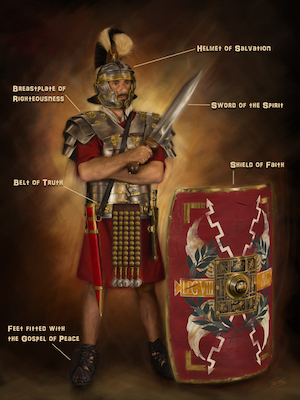
       Before we look in depth at the first piece of armor, the belt of truth today, we will look briefly at the “whole armor of God” (Eph. 6:11) because each piece of armor will describe some of the various ways the Devil tries to deceive or trick us. He will tempt us to think in a way that is contrary to God. So, keep this in mind as we look at each part of the armor of God in the months to come, Lord willing. 

       God is the One Who gives us the armor we need to stand victoriously against the enemy. But we must choose to use it. It is like a doctor giving us medicine, but it will not benefit us until we take it. If we do not use the armor God has given us, we will have no authority from heaven (Eph. 1:19-21; 2:5-6) with which to exercise here on earth against the wiles (trickery) of the Devil (Eph. 6:13). [3]   

       The six pieces of armor that Paul presents are divided into two categories of three. He introduces each of these two categories with different verbs. The first three are introduced with the verb “to be.” The last three are introduced with the verb “to take.” Why does Paul switch verbs halfway through the armament? He wants us to understand two specific, distinct orientations to the six pieces of armor. The first three relate to a state we should always be in. The last three are what we use on an as needed basis. [4]

      It is like a baseball player who has his uniform on during the entire game because that is the state he is in. But he only picks up the bat when it is time for him to go to the plate to play offense. And he only picks up his glove when it is time for him to go to the field to play defense. [5]

        The first three pieces of armor we have with us all of the time [6] (“having girded… put on… shod…” – Eph. 6:14-15). [7] This is the state we are always to be in. But the last three pieces of armor we are called to take and use as needed [8] (“taking … take…” Eph. 6:16-17). [9]

     The first piece of armor is the belt of truth (Eph. 6:14a). It teaches us that Satan wants to deceive us or make us be deceptive ourselves. [10] Either one is deadly. The New Age movement is part of his deception. Even evolution, which is so openly taught as science in our country’s educational system, has decreased peoples’ sensitivity to God and to what is right and wrong. 

       For example, years ago if people had mentioned casino gambling, horse track or dog track racing, or the lottery, the people of Iowa would have risen up in moral indignation. And yet subtly, the enemy of our souls has been able to persuade our state government to legislate such activities which say you really can gain something for nothing. You can get rich quickly so just gamble. Thousands of people are being deceived into gambling and are being robbed of their funds. Such behavior is addictive. But it doesn’t stop there, does it?

       There are also things like methamphetamine, cocaine, alcohol, pornography, sexual perversion, and occult experimentation – all of which are part of the Devil’s deception. Jesus reminds us that the Devil “is a liar and the father of it.” (John 8:44b). And one of the ways Satan wants to bring us into bondage is through his lies. This is why we need the belt of truth.

       Satan also wants to accuse us of wrongdoing and get us to compromise. He wants to point out our faults and weaknesses in addition to our sins so we will get so focused on our failures and problems, we won’t look to Jesus. He also wants us to lower our standards of righteousness by tempting us to open our lives to a little sinfulness or worldliness. It won’t hurt you to try that. Everyone else is doing it. Go ahead and do it. It’s fun. This is why we need the protection of the breastplate of righteousness (Eph. 6:14b). 

      The next piece of armor teaches us about that which will rob us of our peace – anxiety and worry. Hence, we need the sandals of the gospel of peace (Eph. 6:15) –  peace with God, peace of God, the God of peace, and the Person of peace. This piece of armor teaches us that Satan wants us to live in fear and anxiety. 

       The fourth piece of armor addresses unbelief. Hence, we are to take up the shield of faith (Eph. 6:16) which extinguishes all the fiery darts or arrows of the enemy. What is that talking about? It involves Satan’s temptation to get you to question God or to act independently of God. That is the way he approached Eve in the Garden of Eden (Gen. 3:1-5). Satan got Eve to question God and what He had said and what would happen if she were to partake of the forbidden fruit. 

       The fifth piece of armor deals with mind or thought control. Satan tries to put thoughts in our minds to make us think that his thoughts are our thoughts. And so, we are to wear the helmet of salvation (Eph. 6:17a). This is the one of the ways he primarily attacks the thoughts of believers. When he begins to move violently in a believer’s life, one of the first things they begin to be tormented with is that maybe they are not saved. Sometimes all manner of hideous thoughts projected into the believer’s mind are Satan’s way of putting his thoughts into our thoughts, making it so confusing that we conclude that his thoughts are really ours. Then he taunts us with, “How could anyone who claims to be a Christian have such sinful thoughts as that?” 

      The sixth and final piece of armor addresses the Devil’s attempt to get us to neglect the Bible. The last piece of armor is “the sword of the Spirit, the word of God” (Eph. 6:17b). Have you ever wondered why it is so difficult for you to read the Bible? Why is it so challenging to set aside time to study God’s Word and meditate on it? Why do you never get around to memorizing the Scripture? The Devil is behind this. He wants to keep you from being in the Word of God because it will expose him as a liar and deceiver. 

        We have an enemy who is very versatile and subtle, and he has schemes that if we are not aware of them, he will soon bring us into his bondage. Thankfully God has given us spiritual pieces of armor that are strong and powerful. Let’s begin now with the first piece of armor. 

The Importance of the Belt of Truth
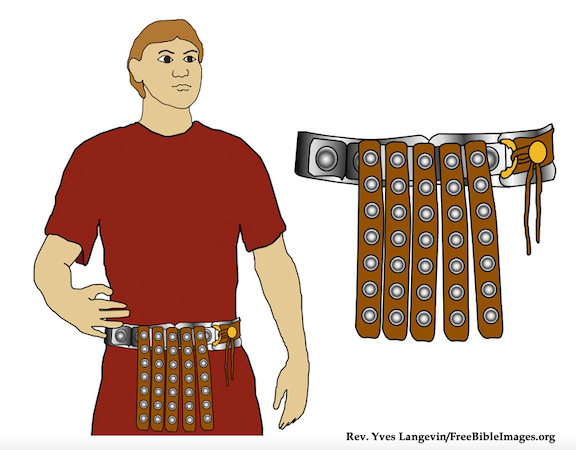
       When the apostle Paul wrote the book of Ephesians, he was a prisoner (Eph. 3:1; 4:1) under house arrest in guarded rental quarters (Acts 28:30), chained to a Roman soldier (Eph. 6:20). [11] As he looks at this Roman soldier, he begins to draw a comparison between the soldier’s armor and the spiritual armor of God. He will talk about each piece of armor in the order that a Roman soldier put it on.

       The first piece of armor was extremely important to a soldier. The soldier first put on over his tunic (a loose, sleeveless shirt that reached to his knees), a belt that would hold both the breastplate and sheathe for his sword in place. [12] He would be able to tuck his long clothes into the belt so he could run and be ready to fight. [13] Without this belt on, a soldier would be less mobile and more vulnerable to attack on the battlefield. 

       Likewise, Paul emphasizes the importance of this piece of armor by mentioning it first. “Stand therefore, having girded your waist with truth…” (Eph. 6:14a). This shows us how important the truth is in our battle against Satan and his demonic armies (Eph. 6:12). Since Satan “is a liar and the father of it” (John 8:44b), it is essential that Christians wear this piece of armor to overcome his deceptions. 

The Ruthless Nature of Satan [14]

       The Greek word translated “waist” (osphus) in Ephesians 6:14a can refer to “the place where a belt… is worn, waist” or to “the place of the reproductive organs, the loins.” [15] Some translations say, “having girded your loins with truth.” (ASV; LSB; NASB1995; RSV). By mentioning the belt first and in this way, Paul emphasizes the ruthless nature of Satan’s attack. This belt buckled around the waist and covered the soldier’s vital organs from his belt line down to his mid thighs. [16] It protected him from the violent and ruthless actions of an enemy who tried to destroy him. 

       The Psalmist had an awareness of the ruthless nature of Satan. David writes, 3b Let those be ashamed who deal treacherously without cause… 19 Consider my enemies, for they are many; and they hate me with cruel hatred.” (Psa. 25:3b, 19). The Devil never fights fair and is extremely cruel. He has no problem hitting us below the belt. Satan will try to hit us when we are most vulnerable, doing whatever it takes to incapacitate and eventually destroy us. 

       For example, when we are weakened by an illness or experiencing tremendous grief due to the loss of a loved one, the Devil will attack us with the purpose of destroying us. He shows no mercy to a suffering person.

       We also see the brutal, cruel, and violent ways of Satan in his appearances in Scripture. For example, the man in the country of the Gadarenes was so violently oppressed by the powers of darkness that “always, night and day, he was in the mountains and in the tombs, crying out and cutting himself with stones.” (Mark 5:5). Satan’s torment of this man was so severe that the man constantly endured self-inflicted agony. 

       On another occasion when the Lord Jesus came down from the Mount of Transfiguration with Peter, James, and John, He met a desperate father whose son had a ruthless demon. The father said to Jesus, “Lord, have mercy on my son, for he is an epileptic and suffers severely; for he often falls into the fire and often into the water. So, I brought him to Your disciples, but they could not cure him.” (Matt. 17:15-16). This wicked spirit would often come upon this man’s son when he was near “the fire” or “the water.” Why would this demon do that? Because he wanted to throw him into the fire so that violent burning would happen to this boy during his seizures. He wanted to throw him into the water so he could drown this boy. It was not enough for this little boy to have violent seizures. Satan wanted to add to his sufferings by throwing him into the fire or the water. This is how brutal and cruel the kingdom of darkness is toward suffering people. 

       What do these examples say about the kingdom of darkness? It says that Satan’s kingdom always has as its purpose to violently hurt, wound, and destroy (cf. John 10:10a). Most people who have had experiences with the kingdom of darkness have no doubt about the cruelty and ruthlessness of this kingdom. 

       This is why Christians must always be on guard against the lies of the enemy. Deception and lies always bring us into the realm of the kingdom of darkness. Satan always speaks his native language when he lies. Jesus said of the Devil, “He was a murderer from the beginning, and does not stand in the truth, because there is no truth in him. When he speaks a lie, he speaks from his own resources, for he is a liar and the father of it.” (John 8:44). At first, Satan’s lies may seem very appealing and even pleasurable. And when we are tempted to lie, we are never more yielding to Satan’s deceptive ways than in that moment. But in that moment, we must remember that the Devil always intends to brutalize us, oppress us, torment us, destroy us, and take away our freedom in Christ. 

The Subtle Nature of Satan’s Schemes 

        By mentioning the belt of truth first, Paul also calls attention to the subtle nature of Satan’s schemes. Not only in John 8:44 is Satan called “a liar and father of it,” but the very last picture of Satan in the Bible also points to his subtle nature. Now when the thousand years have expired, Satan will be released from his prison and will go out to deceive the nations which are in the four corners of the earth, Gog and Magog, to gather them together to battle, whose number is as the sand of the sea. They went up on the breadth of the earth and surrounded the camp of the saints and the beloved city. And fire came down from God out of heaven and devoured them. 10 The devil, who deceived them, was cast into the lake of fire and brimstone where the beast and the false prophet are. And they will be tormented day and night forever and ever.” (Rev. 20:7-10). At the end of King Jesus’ “thousand years” reign, “Satan will be released from his prison” in the abyss and will “deceive the nations” which are over all the earth “to gather them together to battle” against King Jesus and His people [“the saints”] in Jerusalem (“the beloved city”](Rev. 20:7-9a). The unbelievers in this battle led by their earthly leader “Gog” from the land of “Magog” (Rev. 20:8; cf. Ezekiel 38:2-3) will be as numerous “as the sand of the sea” and will be the offspring or descendants of the infants or children who survived Armageddon because they were below the age of accountability (Rev. 20:9b). God will intervene with “fire … out of heaven” and destroy them (Rev. 20:9c). Then “the devil, who deceived them, was cast into the lake of fire … where the beast the false prophet are. And they will be tormented day and night forever and ever” (Rev. 20:10). Satan concluded his career by doing what was most natural for him to do. He “deceived” the nations (Rev. 20:8a, 10a). 

      The Greek word translated “deceived” (planaō) means “to lead astray, mislead, to cause someone to wander from the right way.” [17] This is Satan’s main tactic – to get us to believe his lies so he can bring us under his control. 

       We see Satan’s lies working constantly in the world, especially in the political scene. For example, under communism, the lie is the truth. According to the dogma of communism, as long as it advances the cause of communism it is the truth. [18] We also see this kind of deception in our own government here in the USA. During this presidential election year, we see candidates making promises that are contrary to their past political decisions. They present lies as though they were the truth and sadly, much of the American public believes those lies. 

        Satan’s deceptions are also evident among the religions of the world. Having worked with those steeped in Islam, I have observed that if a lie supports the cause of Allah, then it must be true. A Muslim does not hesitate to lie if it advances the cause of Islam. 

       Janosik writes, “The Islamic practice of taqiyya [deception], which allows Muslims to mislead non-believers in regard to the nature of a Muslim’s own belief in order to avoid persecution. This practice allows Muslims, both Shia and Sunni, to lie to non-Muslims in a time of war, persecution, or even minority status if the lie will protect Muslims and further the goals of Islam. In his article on taqiyya, Raymond Ibrahim quotes a Muslim authority, Sami Mukaram, who says,” [emphasis and brackets added] [19] “Taqiyya is of fundamental importance in Islam. Practically every Islamic sect agrees to it and practices it … We can go so far as to say that the practice of taqiyya is mainstream in Islam, and that those few sects not practicing it diverge from the mainstream … Taqiyya is very prevalent in Islamic politics, especially in the modern era.” [20]

       Mormonism initially claims to embrace Christianity. But what they don’t tell you is Jesus Christ and Satan, like the rest of us, were spirit brothers and sons of God before the spirit of Jesus was given a body by Mary in Bethlehem. The Mormon ‘Book of Moses’ presents Satan and Jesus as contending for the privilege of taking a body of flesh in order to become the redeemer, with Jesus winning the contest. [See Joseph Smith, Pearl of Great Price, Book of Moses 4:1-4.]” [21]  [emphasis added] 

       Mormonism also believes “all human beings and spirits, including Jesus and Satan, existed as spirit beings before being born. Physical birth gives bodies to these spirits, and an opportunity to choose right or wrong. Thus, the present life is a period of probation. The way a person lives in this life determines their status in the life after the resurrection. If the deeds of this life have been satisfactory and all temple obligations have been fulfilled, the individual becomes a god and is considered eligible to create ‘spirit children’ as God the Father did and populate a world of his own.” [22][emphasis added]

       We also see Satan’s deceptions in the world’s educational scene in such things as evolution that is so ardently taught today. Anyone who knows the truth of God (Gen. 1-2; Exod. 20:8-11; Psa. 33:6-9; Rom. 1:18-23; 2 Pet. 3:1-7; et al.), knows that evolution is a lie. [23] But still it is taught as the truth.

       We also see that schools are teaching Critical Race Theory (CRT) which says that negative stereotypes are being assigned to members of minority groups to benefit white people and increase racial oppression. [24]

       Neil Shenvi defines critical race theory as “an ideology that divides the world into oppressed groups and their oppressors and aims to liberate the oppressed.” [25] Sometimes called “Cultural Marxism,” CRT borrows concepts from classical Marxism dividing the world into the “haves” and the “have nots” and attempts to right the wrongs of previous generations through a redistribution of wealth and power. Unfortunately, CRT is pitting ethnic groups against each other in hopes of correcting historic inequalities. [26]

       Biblically speaking, racism is the sin of ethnic partiality or prejudice (Jas. 2:8-9; Lev. 19:15). Racism is wrong because there is only one race, and it is the human race which is in Adam (Acts 17:26). Racism has not only caused division, but it has caused great pain and suffering throughout history. Since racism is a real sin, we should repudiate it and address it from a biblical perspective. 

       Unfortunately, CRT advocates that truth is not determined objectively outside of oneself. Instead, CRT says that truth is determined experientially by historically oppressed groups of people; thus, different groups of people can have different “truths” according to this view. 

       But truth does not work that way. Truth is true outside of anyone’s perspective. For example, two plus two equals four no matter what your skin color or any of your past experiences. Bowling balls fall from airplanes regardless of what anyone believes about gravity. 

       Christians must remember where truth comes from: the Bible (John 17:17) and Jesus Christ (John 14:6; 1:14). Truth resides in God’s Word and the Person of Jesus Christ, not in oppressed groups of people. It does not matter if older white males in a so-called domineering culture believe it, or a young black lesbian doesn’t believe it. Believing or not believing the Bible or Jesus has no bearing on the truthfulness of either. The reason for this is because truth does not reside in a person’s perspective: truth resides outside any group’s shared experience. Ultimately, truth resides in the Person of the Lord Jesus Christ. [27]

       Jesus did not focus on the education, ethnicity, gender, income, social identity, or the sexual orientation of a person. His love excluded no one. Jesus Christ desires “all” people to be saved regardless of their education, ethnicity, gender, income, social identities, or sexual orientations. The apostle Paul exhorts us to pray for “all” people because Jesus desires “all” people to be saved and He died for “all” people (I Tim. 2:3-6). Jesus’ love is inclusive, not exclusive. But Satan wants to deceive us into thinking otherwise.

       Satan has a subtle strategy of using deception and lies to bring us under his control. He seeks to mislead us into bondage. This is why it is so important to put on the belt of truth.

What is the Truth? [28]

       The belt Christians are to put on is “truth” (alētheia). But what is the truth? Truth is the absolute standard by which reality is measured. It’s not something that changes based on feelings or perspective. A person can deny that gravity is true, but if he decides to jump off a building to prove it, he’s going to find that truth doesn’t care about his feelings or perspective. Truth exists whether you embrace it or not.” [29] [emphasis added]

     Truth is simply God’s view on any subject on the front end. But often what happens is people start with man’s view and wind up with truth (God’s view) when man’s view has failed. 

       This is why the Bible speaks so much about first. “Seek FIRST the kingdom of God.” (Matt. 6:33). “He [Christ] is FIRST in everything.” (Col. 1:18 NLT). “You have left your FIRST love.” (Rev. 2:4). We always need to start first with God’s view on any subject.

       Truth is more than feelings because feelings can fluctuate. Truth is also more than facts. You can have facts and not have the truth. For example, I can say, “I have a headache. My head is really hurting me.” So, I go to Walmart and purchase some extra strength Tylenol because the fact is my head is hurting. But the Tylenol is not working. I still have my headache. So, I go to my doctor, and he does a head scan and discovers I have a brain tumor. I was treating the fact without knowing the truth. The truth was my head was hurting because of a brain tumor. Which means I was trying to solve the fact with an insufficient medication. 

       Truth is God’s view on any subject. God has spoken, He has not stuttered. There are two answers to every question: God’s answer and everyone else’s. And everyone else’s answer is wrong all the time. People can be so preoccupied with facts that they never arrive at truth. And thus, they never get solutions. 

      It is not the truth that sets us free. It is the truth that we know that sets us free. Jesus said, “You shall know the truth, and the truth shall make you free.” (John 8:32). So, if it is truth, and you do not know it, you are still in bondage. 

      In January of 1863, President Lincoln signed and issued his famous Emancipation Proclamation, freeing all slaves throughout the Confederacy. But the slaves in Texas were not told until June 19, 1865. The information of the signing was true, but it was not passed on to everyone. African Americans in Texas did not discover this truth until a year and a half later. So, during those eighteen months, they lived in bondage with no authority to exercise their freedom because they did not know the truth. 

       The reason this is so critical in spiritual warfare is because our enemy is a liar. That is all that he does. Satan is a liar (John 8:44) and a deceiver (Rev. 12:9). And if he can use facts to trick us, he will. If we do not start with the truth, that is, God’s view on a subject, then we will automatically be in bondage. And the Devil will even use religion to keep us there. Nothing holds more people hostage than religion. 

       When Satan went to Eve in the garden of Eden, the first thing he said to her was, “Let’s talk about God.” “Has God indeed said…?” (Gen. 3:1). But do you know an important word that the Devil left out when he tempted Eve? In Genesis 2, we read over and over again, the phrase, “the Lord God (’Elōhîm Yahweh) …” (Gen. 2:4-5, 7-9, 15-16, 18-19, 21-22). When Satan spoke to Eve, he left out God’s relational name “Lord” (Yahweh). This indicates that he doesn’t mind religion as long as there is no relationship with the Lord God driving it. [30]

Defeating Satan with the Truth [31]

       How do we defeat Satan with the truth? We daily reach out and put on the truth. The Bible gives us four expressions or citadels of truth. The first is THE PERSON OF TRUTH. The Lord Jesus Christ is “the truth” (John 14:6) and is “full of truth” (John 1:14). Hence, Jesus is the Person of truth.

       When we clothe ourselves with truth, we are putting on the Lord Jesus. “But put on the Lord Jesus Christ, and make no provision for the flesh, to fulfill its lusts.” (Rom. 13:14). The Greek compound word translated “put on” is enduō = en (in) [32] + dunō (go down, set) [33] and thus means “to clothe in the sense of sinking into a garment.” We can “put on the Lord Jesus Christ” by focusing our minds and morality on Him. When we live by faith in Him (2 Cor. 5:7; Gal. 2:20), studying His Word (Josh. 1:8; John 8:31-32; 15:7a; 2 Tim. 2:15; 3:16-17), talking to Him in prayer (John 15:7b; Phil. 4:6-7), and seeking to reflect Him in our actions (Col. 3:23-24; I John 2:6), we are putting on the Lord Jesus. 

       At the moment of faith in Jesus for His gift of eternal life, we are given a new nature (cf. Eph. 4:24; I John 3:9) and identity (2 Cor. 5:17), much like being given a brand-new tuxedo. Paul exhorts us to conduct ourselves according to this new nature and identity. 

       When he says not to make any “provision for the flesh” (Rom. 13:14b), it helps to ask ourselves, “Would I climb through a garbage dumpster while wearing a brand-new tuxedo?” No, that filthy environment would contaminate our pristine suit. Yet that is what we are doing when we make plans to gratify the sinful desires of our “flesh.” Instead, we are to put on Christ’s purity and avoid climbing through the dumpsters of sin. [34]

       However, if we have been making plans to gratify our sinful desires or we have actually been climbing through the dumpsters of sin, it is time to take our brand-new tuxedo to the cleaners and let the Lord Jesus completely cleanse it with His blood. Come back into the light by confessing our sins to God (I John 1:7, 9) and to safe brothers or sisters in Christ (Jas. 5:16), so God can heal us and restore us to fellowship with Him. 

       The second expression or citadel of truth in the Bible is God the Holy Spirit, Who is called THE SPIRIT OF TRUTH. Jesus said, 13 However, when He, the Spirit of truth, has come, He will guide you into all truth; for He will not speak on His own authority, but whatever He hears He will speak; and He will tell you things to come. 14 He will glorify Me, for He will take of what is Mine and declare it to you.” (John 16:13-14). What does it mean to put on the Holy Spirit? It means that we look to the Holy Spirit to lead us in accord with the truth (God’s view on a subject) of what Jesus taught (John 14:26) and what the Bible teaches us. The Spirit of God will never lead us in a way that contradicts what Jesus taught or what the Bible says. As we read the Word of God, we ask the Holy Spirit to enable us to understand the truth as God intended (I John 2:20-27). We measure everything by whether or not it aligns with what the Holy Spirit has already revealed in the Bible. 

       And we are to be very careful to honor the Spirit of God. When we have difficulty understanding a Bible passage, we ask the Holy Spirit to guide us into the truth (John 16:13) and to protect us from error (I John 2:20-27; 4:1-6). Instead of rushing into things, especially religious things that may seem overly ecstatic and exciting, we step back and take time to measure things to see if they are in accord with what God’s Spirit has already said in the Word because He is the Spirit of truth. He always guides us into truth (John 16:13) which is always in harmony with Who the Lord Jesus Christ is (John 15:26; 16:14; cf. I John 2:20-27; 4:1-6) and what He has done (I Cor. 12:3; 15:3-6) because Jesus is the truth (John 14:6). The Spirit of truth can show us the lies we believe that have kept us in bondage to sin and shame and replace them with the liberating truth of God’s Word (cf. Psa. 119:28-29). 

       The third expression or citadel of truth is THE WORD OF TRUTH, THE BIBLE. Jesus prayed to His heavenly Father, “Sanctify them by Your truth. Your word is truth.” (John 17:17). When we put on the belt of truth, we are putting on the Scripture. That means we understand that the Bible is the “word of truth” as it is called so many times throughout the Bible (cf. Psa. 119:43, 160;  Acts. 26:25; 2 Cor. 6:7; 2 Tim. 2:15; Jas. 1:18; et al.). This is why I believe that inerrancy [35] is an essential part of our Christian faith. We can trust what the Bible says in all things. It is the Word of truth, not the Word of error. We can build our lives upon the stable foundation of the Word of truth so we can endure the storms of life (Matt. 7:24-27). 

       The word “sanctify” (hagiazō) in John 17:17, literally means to “set apart” [36] from the world or “to make holy.”[37] This is not referring to sinless perfection. It is referring to spiritual growth or maturity – progressively becoming more like Christ. How? 

       We are to be “set apart” from the world’s influence and its values “by” the Father’s “truth” which is His “word,”the Bible. Throughout the Bible we see that God’s Word is true. It is not full of errors as many claim today. We cannot grow spiritually apart from God’s Word. So, the way we grow in holiness is by renewing our minds in accordance with the truth of God’s Word (cf. Rom. 12:1-2). Disciples of Jesus must abide in His word if they are to know the truth of His word and be set free from Satan’s lies that enslave their lives to sin (cf. John 8:31-36, 44). We must feed upon God’s word to experience the victory Jesus has already won for us (John 16:33). 

       At a meeting, a Native American Indian said a black wolf lived in his heart, but when Christ became his Savior, a white wolf came to live in his heart, and the two wolves were then fighting all the time. After the meeting, someone approached him and asked, “Which wolf wins, the white one or the black one?” The Indian replied, “The one I feed the most.” If we feed upon God’s Word and do it, we are going to experience more victory over the world and Satan in our Christian lives.  But if we feed upon the lies of Satan, we will experience more defeat in our Christian lives and be conformed to the world. I like what D.L. Moody wrote on the flyleaf of his Bible. “This book will keep you from sin or sin will keep you from this book.” That is the truth. If I let this book become more and more a part of my life it will keep me away from sin (Psa. 119:9, 11, 28-29). Or sin can keep me away from reading His word. 

       The final expression or citadel of truth in the Bible is the Church, THE PILLAR AND FOUNDATION OF TRUTH. Paul writes, “I write so that you may know how you ought to conduct yourself in the house of God, which is the church of the living God, the pillar and ground of the truth.“ (I Tim. 3:15). Paul describes the church as “the pillar and ground of the truth.“  

       “Much as a pillar supports a roof, the local church is to hold up the truth. Without the church, there would be nothing on earth to hold up God’s truth. 

       “The ground is that on which things are built. Thus, the church is the foundation on which the truth is built. Without the church, the truth would not have a foundation on which to stand. The church protects the truth in the face of all who attack it. 

       “Biblically sound churches bless those in their location by being there. Such churches shine the truth into a dark and dying world.” [38] [emphasis added]

       This is a great reason to stay close to a local church that embraces God’s truth. We need God’s perspective especially as it relates to spiritual warfare. And a local church that is biblically sound is a great source of encouragement and protection for every Christian. 

Conclusion
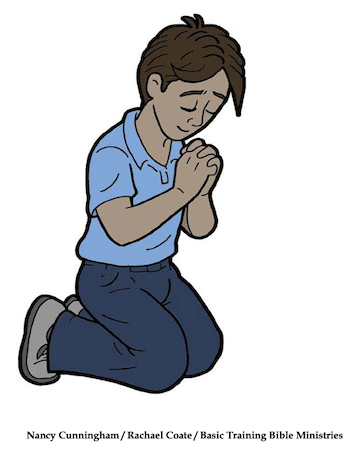
       How do we put on the belt of truth? The same way we are to put on all the pieces of God’s spiritual armor – by means of prayer. Paul concluded his teaching on the armor of God by inviting his readers to pray: “Praying always with all prayer and supplication in the Spirit, being watchful to this end with all perseverance and supplication for all the saints.” (Eph. 6:18). How often are we to pray the armor of God? “Always.” Prayer is to be woven into all of our lives. Satan and his demonic armies never take a day off, so it would be best that we don’t take a day off from praying the armor of God. 

       “We need to stay in regular communication with God and pray in the Spirit in order to access heaven’s authority for intervention on earth (6:18). In other words, we must be on the same page as the Spirit, utilizing spiritual wisdom. The most powerful way to do that is to pray God’s Word back to Him and apply it to your situation.” [39]

       Praying the belt of truth back to God can become a wonderful worship experience. We can express appreciation for the Lord Jesus, Who is the Person of Truth, and the Holy Spirit, Who is the Spirit of Truth, and the Bible, the Word of Truth, and the Local Church, the Pillar and Foundation of Truth.

       Prayer: In the name of the Lord Jesus Christ, I pray the protection of the belt of truth described in Ephesians 6:14a. I pray its protection over my personal life, my home, my family, and the ministry You, Lord, have appointed for my life. I use the belt of truth directly against Satan and his kingdom of darkness. I thank You heavenly Father for the Person of the Truth, the Lord Jesus Christ. I cling to Him Who is the truth and is full of truth, as my strength and protection from all of Satan’s deceptions. Thank You Father God for the Holy Spirit Who is the Spirit of truth. I look to You, Holy Spirit, to lead me in accord with the truth of what Jesus taught and what the Bible teaches. I ask You, Spirit of truth, to warn me before I deceive anyone and to protect me always from believing Satan’s lies. Forgive me, Lord, for not speaking the truth. Show me any way in which I am being deceived. I desire that the Bible, the Word of truth, shall constantly gain a deeper place in my life. I pray that the truth of the Word of God may be my heart’s delight to study and memorize. Thank You, Lord God, for making my local church a pillar and foundation for Your truth in my life. Help me relate to my church and give protection to others as well as receive it myself. Thank You, Lord Jesus, for showing me that my ability to be strong and to do Your will requires the stabilizing power of the belt of truth. Thank You for providing this part of the armor of God. In Your mighty name, I pray, Lord Jesus. Amen. [40]

FOOTNOTES:

[1] Walter Bauer,  A Greek-English Lexicon of the New Testament, 2000 Kindle Edition, pg. 625.

[2] Much of this section is adapted from Mark Bubeck’s video message entitled, “4. The Wholeness of the Armor: Ephesians 6 Series,” on the BRMinistry app, unless otherwise noted. 

[3] Tony Evan’s video message at Dallas Theological Seminary (DTS) entitled, “The Armor of God,” on YouTube.

[4] Ibid.

[5] Ibid. 

[6] Tony Evans, The Tony Evans Bible Commentary, 2019 Kindle Edition, pg. 2665. 

[7] The first three verbs in Greek (perizōsamenoi… endysamenoi… hypodēsamenoi… ) are aorist middle participles which means they have already been put on by the soldier or Christian.  

[8] Evans, The Tony Evans Bible Commentary, 2019 Kindle Edition, pg. 2665.

[9] The Greek verb translated “taking…” (analabontes) is an aorist active participle, meaning the Christian is taking the shield of faith as needed and the last Greek verb translated “take…” (dexasthe) is an aorist middle imperative which is used of the last two pieces of armor and means for oneself to take them up as needed. 

[10]  The next several paragraphs are adopted from Mark Bubeck’s video message entitled, “4. The Wholeness of the Armor: Ephesians 6 Series,” on the BRMinistry app, unless otherwise noted. 

[11] Evans, The Tony Evans Bible Commentary, 2019 Kindle Edition, pg. 2629.

[12] Tom Constable, Dr. Constable’s Notes on Ephesians, 2024 Edition, pg. 146.

[13] J.B. Bond, “Ephesians,” Grace New Testament Commentary: Revised Edition, 2019 Kindle Edition, pg. 1399.

[14] Much of this section is adapted from Mark Bubeck’s video message, “5. Belted Against Satan’s Belt: Ephesians 6 Series,” on BRMinistry app, unless otherwise noted. 

[15] Walter Bauer,  A Greek-English Lexicon of the New Testament and Other Early Christian Literature, 2000 Kindle Edition, pg.  730.

[16] Bubeck, “5. Belted Against Satan’s Belt: Ephesians 6 Series,” on BRMinistry app. 

[17] Bauer, A Greek-English Lexicon of the New Testament, 2000 Kindle Edition, pp. 821-822.

[18] Bubeck, “5. Belted Against Satan’s Belt: Ephesians 6 Series,” on BRMinistry app.

[19] Daniel Janosik, THE GUIDE TO ANSWERING ISLAM: What Every Christian Needs to Know About Islam and the Rise of Radical Islam (Cambridge, OH: Christian Publishing House, 2019 Kindle Edition), pg. 172. 

[20] Ibid., pp. 172, 321 cites Sami Mukaram, At-Taqiyya fi ‘l-Islam (London: Mu’assisat at-Turath ad-Druzi, 2004), 7, quoted in Raymond Ibrahim, Beware Islam’s Doctrine of Deception, PJ Media, September 24, 2015: http://www.meforum.org/5522/ben-carson-taqiyya.

[21] Retrieved on October 27, 2024, from the article entitled, “Mormonism – Does it truly follow Jesus Christ?” at www.christiananswers.net

[22] Ibid. 

[23] See the following helpful articles or books exposing the deceptions of evolution – Simon Turpin, “How the Apostle Peter Relates to the Age of the Earth Debate: Analyzing 2 Peter 3:1-7,” at www.answersingenesis.org; Harold Dressler, “Evolution – Still an Option?” at www.answersingenesis.org; Ken Ham, The Lie: Unraveling the Myth: Evolution/Millions of Years, Updated Edition (Green Forest, AR: Master Books, 1987, 2024); Roger G. Gallop, Evolution: The Greatest Deception in Modern History (Scientific Evidence for Divine Creation), Second Edition (Ponte Vedra Beach, FL: Red Butte Press, Inc., 2011, 2014). 

[24] Retrieved on June 2, 2024, from Wikipedia article entitled, “Critical Race Theory” at en.m.wikipedia.org.

[25] Retrieved on June 2, 2024, from Brandon Clay and Frost Smith’s September 29, 2020, article entitled “Critical Race Theory in the Church,” at www.answersingenesis.org.

[26] Ibid. 

[27] The previous four paragraphs were adapted from Ibid.

[28] Much of this section is adapted from Tony Evan’s video message at DTS entitled, “The Armor of God,” on Youtube, unless otherwise noted. 

[29] Evans, The Tony Evans Bible Commentary, 2019 Kindle Edition, pp. 1820-1821.

[30] Ibid., pg. 137. 

[31] Much of this section is adapted from Bubeck, “5. Belted Against Satan’s Belt: Ephesians 6 Series,” on BRMinistryapp, unless otherwise noted. 

[32] Bauer, A Greek-English Lexicon of the New Testament, 2000 Kindle Edition, pg. 327.

[33] Ibid., pg. 264. 

[34] Adapted from Evans, The Tony Evans Bible Commentary, 2019 Kindle Edition, pp. 2465-2466.

[35] Inerrancy states that the Bible is the inspired Word of God, without error in the original autographs, accurate in all areas it touches, and true in all it says (Psa. 119:86, 151, 160, 172; Prov. 30:5-6; Matt. 5:18; John 17:17; 2 Tim. 2:15; 3:16-17; 2 Pet. 1:20, 21). The Bible is God’s complete written revelation to humankind and is the final authority for guidance in living the Christian life (Deut. 4:2; 12:32; Prov. 30:5-6; I Cor. 13:8-13; Heb. 4:12; Rev. 22:18). As the Scriptures in their entirety point to Jesus Christ and His death for the sins of the world on the cross, they are a complete and trustworthy guide to reveal God’s plan of salvation for all humankind (Luke 24:27, 44-48; John 5:39; 2 Tim. 3:15).  

[36] J. Carl Laney, Moody Gospel John Commentary (Chicago: Moody Press, 1992), pg. 307.

[37] Bauer, A Greek-English Lexicon of the New Testament, 2000 Kindle Edition, pp. 9-10.

[38] Robert Wilkin, “I Timothy,” The Grace New Testament Commentary: Revised Edition, 2019 Kindle Edition, pg. 1531.

[39] Evans, The Tony Evans Bible Commentary, 2019 Kindle Edition, pg. 2667.

[40] Adapted from Mark I. Bubeck, a prayer entitled “Prayer to Know and Speak Truth,” from Spiritual Warfare Prayers pamphlet (Chicago: Moody Publishers, 1997).

I John 5 – Part 7

“And we know that the Son of God has come and has given us an understanding, that we may know Him who is true; and we are in Him who is true, in His Son Jesus Christ. This is the true God and eternal life.” I John 5:20.

This will be our last lesson on the book of I John. As we have stated several times before, this book is about fellowship with God (1:3-4). Being in fellowship with God depends on walking in the light as He is in the light (1:7), confessing our sins (1:9), keeping God’s commandments (2:3-5; 3:24), loving one another (2:9-11; 3:11-23; 4:7-5:3), hating the world (2:15-17), acknowledging Jesus is God’s Son (2:23; 4:2-3, 4:15), practicing righteousness (2:29-3:10), listening to and obeying apostolic teaching (4:6), and avoiding idolatry (5:21).

As the apostle John concludes his letter, he is seeking to encourage his Christian readers (2:12-14; 5:13) who may be moving deeper into darkness along the path of sin or they may know of other Christians who are, and therefore, may be in danger of a premature physical death (5:16-17; cf. Acts 5:5-10; I Cor. 3:16-17; 5:5; 11:30). John already presented two unchanging certainties in 5:18-19 beginning with the phrase “we know that…” (oidamen hoti). He wants his readers to know that no matter how far down into darkness a Christian brother or sister has traveled, they are still God’s child at the core of their being because His sinless seed remains in them (5:18; cf. 3:9) and he or she is on God’s side whether they consciously sense that or not, and will therefore feel like a foreigner in this Satanically controlled world (5:19; 2:16-17). 1

We are now ready to look at the third encouragement from the apostle in 5:20. This is one of the clearest verses in the Bible concerning the deity of Jesus Christ. “And we know that the Son of God has come and has given us an understanding, that we may know Him who is true; and we are in Him who is true, in His Son Jesus Christ. This is the true God and eternal life.” (I John 5:20). Again, we see the phrase, “we know that…” which reminds us that what John is about to say is absolute truth from God the Holy Spirit.

What is it we can know with certainty? “That the Son of God has come…” (5:20a). John and the other apostles were eyewitnesses to the coming of God’s Son in the first century (cf. 1:1-5; 2:7; 4:14). Jesus is not some mythical person. History attests to the fact that Jesus Christ was a real Person Who was born before King Herod’s death.

Luke 2:1 states that Jesus was born in the reign of Caesar Augustus (who reigned from March 15, 44 B.C. to August 19, A.D 14). Matthew 2:1 and Luke 1:5 inform us that Christ’s birth came before King Herod’s death. Herod’s death can be determined with certainty. According to the Jewish historian, Josephus (Antiquities 17.6.4), an eclipse of the moon occurred on March 12/13, 4 B.C. before Herod’s death. 2 Josephus also records (Antiquities 17.9.3; The Jewish War 2.1.30) that the Passover celebration that took place after King Herod’s death occurred on April 11, 4 B.C. 3 Hence, Herod must have died between March 12 and April 11, 4 B.C. Therefore, for these reasons Christ could not have been born later than March/April of 4 B.C.

Every time we write down today’s date, it goes back to Jesus. Today is May 11, 2023. Two thousand twenty-three years from what? From A.D. which stands for Anno Domini, which is Latin for “year of our Lord,” and it means the number of years since the birth of Jesus Christ.

“It might sound strange to suggest that Jesus Christ was born no later than 4 B.C. since B.C. means ‘before Christ.’ But our modern calendar which splits time between B.C. and A.D. was not invented until A.D. 525. At that time, Pope John the First asked a monk named Dionysius to prepare a standardized calendar for the western Church. Unfortunately, poor Dionysius missed the real B.C./A.D. division by at least four years!” 4

In addition to the historicity of Christ’s birth, there is also ample historical evidence for the death and resurrection of Jesus Christ. Josephus also wrote of Jesus’ death, “Pilate, at the suggestion of the principal men among us, had condemned him to the cross.” 5 Roman historian, Cornelius Tacitus, wrote, “a wise man who was called Jesus…. Pilate condemned Him to be condemned and to die.” In addition, he said that Jesus’ disciples “reported that He had appeared to them three days after His crucifixion and that He was alive.” 6  

A Roman writer, Phlegon, referred to Christ’s death and resurrection in his Chronicles, saying, “Jesus, while alive, was of no assistance to himself, but that he arose after death, and exhibited the marks of his punishment, and showed how his hands had been pierced by nails.” 7

In addition, Phlegon spoke of “the eclipse in the time of Tiberius Caesar, in whose reign Jesus appears to have been crucified, and the great earthquakes which then took place.” 8

The historical evidence for Jesus’ death is so overwhelming that even a Muslim scholar, Reza Aslan, who wrote the book, Zealot, was persuaded to conclude Jesus “was most definitely crucified.” 9 Despite the fact that the Quran denies Christ’s death (Sura 4:157),the historical evidence persuaded Aslan to conclude that Christ truly did die on the cross. “He believes so strongly in Jesus’ death by crucifixion that he uses it as the foundation for his entire theory of Jesus’ life.” 10

Just as history proclaims that George Washington was the first President of the USA, so history proclaims that Jesus Christ was born in 4 B.C., and thirty-three years later died and rose from the dead. The resurrection of Christ is the most attested fact of ancient history. Thomas Arnold authored a three-volume history of Rome and was appointed to Oxford’s Chair of Modern History. Concerning the evidence behind the resurrection of Jesus Christ, he said, “I have been used for years to study the histories of other times, and to examine and weigh the evidence of those who have written about them, and I know of no one fact in the history of mankind which is proved by better and fuller evidence of every sort, to the understanding of a fair inquirer, than that Christ died and rose from the dead.” 11

Frank Morison, a British trial lawyer, vowed to write a book disproving Christianity and committed to base his book on a collection of facts. Using a critical method of evaluation and despite his initial beliefs, he concluded that Christianity is true. The resurrection convinced him, and he wrote a book entitled, Who Moved the Stone? which begins with the chapter, “The Book that Refused to Be Written.”

Former atheists Josh McDowell and Lee Strobel set out to disprove the resurrection of Christ only to be persuaded by the historical evidence that Jesus did indeed rise from the dead. You can read about the evidence that persuaded them to believe in Jesus in their books: McDowell ‘s The New Evidence that Demands a Verdict (1999) and The Resurrection Factor (1981); Strobel’s The Case for Christ Revised (2013) and The Case for Easter (2004).

John states that Christ came “and has given us an understanding” (5:20b). The Greek word for “understanding” (dianoian) refers to “comprehending,” or “insight, intelligence.” 12 This is the only time John uses this word in his epistle. Christ’s coming provided the giving of the Holy Spirit or “the anointing” (2:21-20, 27) to all who believe in Jesus (John 7:37-39; Acts 10:43-48; 11:15-17; 15:7-11; Rom. 5:5; 8:9; I Cor. 12:13; Gal. 3:2-3; Ephes. 1:13-14; et al.).

In his gospel, John records that the night before His crucifixion, Jesus promised His disciples that the Holy Spirit would “dwell… in” them (John 14:16-17; cf. I Cor. 3:16; 6:19), “teach” them and bring to “remembrance all” that He taught (John 14:26), and “guide” them into “all truth” to “glorify” Jesus (John 16:13-14).

John informs us that this “understanding” the Holy Spirit gives believers (cf. I Cor. 2:9-16) enables them to “know Him who is true” (5:20c). The word “know” (ginōskōmen) refers to experiential knowledge (see comments on 2:3-4, 12-14). The coming of the Son of God has given believers the comprehension or intelligence necessary to “know Him” experientially “who is true.” This experiential knowledge is the result of obedience to God’s commands (2:3-4; c. John 14:21, 23). 13

“Christian love (obedience) is never absent where God is truly known (cf. comments on 4:7-8). There could be no true understanding of love or of God had not the Son of God come and died to reveal God’s love. Through His death the Son has given us an understanding (an intelligence) by means of which we may know God. The obedient Christian possesses the necessary spiritual capacity to know God.” 14

When John states “and we are in Him who is true” (5:20d), we are reminded that he equated being “in Him” (God) to “abiding” in Him (cf. 2:5-6), just as Jesus taught the branch is to abide in the vine (cf. John 15:1-8).Christ said that “abiding” is necessary to be a “disciple” who “bears fruit,” experiences answered prayer and “joy,” and glorifies “the Father” (John 15:1-11). To be “in Him” is equated to having fellowship with God. 15 Hence, John is not talking about our position or salvation in I John 5:20 when he speaks of being “in Him,” he is talking about our condition or fellowship with God. Being “in Him” refers to “abiding” in Him. 16

John then identifies the One “who is true” when he writes, “in His Son Jesus Christ” (5:20e). John heard Christ say the night before His crucifixion, “I am… the truth” (John 14:6). There is nothing false or misleading about Jesus Christ. He is the truth.Some suggest that the first “Him” in 5:20 refers to God the Father (“that we know Him who is true”) and the second “Him” refers to Christ(“and we are in Him who is true, in His Son Jesus Christ”).

“But to be in Him, that is, to abide in Him, is not only to abide in Him who is true (as John has just described God), but it is also to be in His Son Jesus Christ. There is no and between the phrases in Him and in His Son. To abide in God and to abide in Christ are the same thing.” 17

John then makes one of the clearest proclamations of the deity of Christ in all the Bible in the last part of the verse. “This is the true God and eternal life.” (5:20f). Clearly the nearest antecedent in 5:20 for the pronoun “this” (houtos) is Jesus Christ (Iēsou Christō) which agrees in gender (masculine) and number (singular). Christ is the main focus of this verse. John clearly states that Jesus Christ is “the true God and eternal life.” There is no other possible antecedent in this verse.

Someone might ask, “Didn’t Jesus deny that He was the true God when He prayed to His Father in heaven and addressed Him as the only true God in John 17:3?” Christ prayed to His Father in heaven, “And this is eternal life, that they may know You, the only true God, and Jesus Christ whom You have sent.” (John 17:3). Jesus was not denying He was the “true God,” but was praising His Father as such.

The very next words after this verse are: “I have glorified You on the earth. I have finished the work which You have given Me to do. And now, O Father, glorify Me together with Yourself, with the glory which I had with You before the world was.” (John 17:4-5). Jesus said He shared the glory of God the Father before the world was. But the Yahweh of the Old Testament says, “I am the Lord, that is My name; and My glory I will not give to another.” (Isaiah 42:8). How can Jesus claim to have the glory of His Father before the world was if Yahweh says He will not give His glory to another?

Because Jesus is the Yahweh of the Old Testament. He has the same divine nature as His Father. Jesus identifies Himself with the Father. Jesus “is in” the Father, and the Father “is in” Jesus (John 10:38). Jesus is “one” with the Father (John 10:30). They are not divided in essence. So, in one sense Jesus is in the Father; and if the Father is the only true God, then Jesus is also the true God.

The Greek word translated “only” (monos) in John 17:3 does not always refer to absolute exclusivity. For example, monos is used in Jude 1:4 of “the only” Lordship of Jesus Christ, “For certain men have crept in unnoticed, who long ago were marked out for this condemnation, ungodly men, who turn the grace of our God into lewdness and deny the only [monos] Lord God and our Lord Jesus Christ.” Jude is not excluding God the Father when he refers to “the only” Lordship of Jesus Christ. Other verses in the Bible confirm the Lordship of God the Father (Psalm 2:7; 110:1; Isaiah 63:16; Mark 13:20; Luke 10:21-22) and God the Son, Jesus Christ (Psalm 110:2; Luke 6:5; 19:31; John 13:13; 20:28; Acts 2:36; 10:36; 16:31; Romans 10:9; Philippians 2:11; Revelation 17:14).

To say that Jesus denies He is God in John 17:3 would contradict the entire message of the gospel of John which begins (John 1:1-18) and ends (John 20:28-31) with the fact that Jesus is God.

In John 17:3, Jesus was not creating a point of distinction between Himself and the Father in the expression, “only true God”, but between the Father and any other “so called god” such as idols. Christ had lived among the Romans with their many competing gods and Jesus was addressing the Father with these idols in mind.

This understanding is substantiated further by John in his epistle when he identifies Christ as “the true God” (5:20f). John clearly states that Jesus Christ is the true God. He then writes, “Little children, keep yourselves from idols. Amen.” (I John 5:21). John affirms that Jesus “is the true God” and then immediately warns his readers to guard themselves “from idols” or false gods.

In I John 5:20 the apostle also declares that Jesus Christ is “eternal life,” which connects back to the prologue (1:1-4) where the subject matter of John’s epistle was identified as “that eternal life which was with the Father and was manifested to us.” (1:2b). This supports the final statement in verse 20 as a reference to Jesus Christ. Taken together, 1:2 and 5:20 provide bookends for what John wrote. By saying Jesus is the “eternal life,” John has fulfilled his intention to “declare” to his readers this “eternal life” (1:2). 18

He has shown them that by ‘abiding’ in Him who is true (which is also to abide in His Son Jesus Christ), they can experience eternal life. That life, expressed in love toward their Christian brothers and sisters, springs out of the sinless inner self (5:18). It marks their life and experience as being of God rather than of the world (5:19), and expresses the spiritual understanding that the Son of God came to give them (5:20a).” 19

As we mentioned in our previous lesson, some of you may have a Christian spouse or child who has pursued the lusts of this passing world (2:16-17). They have been so twisted by the godless values of this world system that they are doing things that are contrary to their Christian beliefs and values. Because of their prolonged plunge into the deep darkness of sin, you have lost hope that they will ever return to fellowship with God and His people.

John wants to encourage us in 5:20 with this “spiritual radar system or search light the Holy Spirit uses to direct us to the true God. There are many false gods in the world (as the next verse warns), which can lead us far from the path of God. This internal guidance system can help bring us home. It’s what Paul would call the ‘mind of Christ’ (1 Cor 2:15-16).” 20

In stark contrast to the Lord Jesus Christ who is “the true God and eternal life” (5:20), John concludes his epistle with a final admonition to avoid false gods: “Little children, keep yourselves from idols. Amen.” (I John 5:21). John begins this verse with “Little children” (teknia, “born-ones”; cf. 2:1, 12, 28; 3:7, 18; 4:4) 21 which expresses his fatherly love and concern for these believers.

This concluding verse may seem out of place to us at first, but in view of John’s previous discussion on prayer for a sinning believer (5:16-17) and his three encouragements (5:18-20), the last of which uses the word “true” three times to describe our “God” (5:20), this is a very pertinent conclusion to the apostle’s epistle on fellowship with God and other believers.

The opposite of true is false. Our God is true (5:20), but “idols” are false gods (5:21). “There is no need to take ‘idols’ in a figurative sense. In the Greco-Roman world of John’s day, any moral compromise with worldly perspectives was likely to lead to some involvement with idolatry, since idolatry permeated pagan life at every level.” 22

Our spiritual radar system (intelligence given to us by the Holy Spirit – 5:20), can help us recognize the true God (Jesus Christ) in contrast to the false gods of this world. False gods can destroy our fellowship or closeness with God and other Christians. 23

Anderson observes that “we don’t have to study the Old Testament long to see that while kings ruled in Israel, idolatry reigned in the temple more years than Yahweh. God used the Assyrians and the Babylonians to purify His people from their idols. And since it was King Solomon who introduced idolatry into Israel through his intermarriage with foreign wives, we see how easily idolatry can creep into the life of a wise man who was even used by God to write inspired revelation.

“Idols are usually good things. The bronze serpent (Num. 21:4-9) was initially used by God to heal the Israelites from snake bites. But eight centuries later (2 Kgs. 18:4) Hezekiah had to destroy the bronze serpent, for it had become an idol called Nehushtan (piece of bronze) to which they burned incense. Our idols are usually not evil things, but rather good things: our possessions (cars, houses, even yards), our retirement accounts, our bodies, our success—you name it.” 24

How do we identify an idol? It has been said that “an idol is like an eclipse of the sun— the moon gets in the way. When something gets between us and God’s light, then darkness creeps in and whatever is blocking that light is an idol. Beware! Solomon was no dummy. He thought he was doing something good by expanding the land of Israel out to the borders promised by God to Abraham. But he had to compromise the guidelines laid down by God for a king (Deut. 17:17) in order to do it.” 25

Ask yourself the following questions:

  • Is it taking the place of God in my life? Is it becoming more important to me than spending time with the Lord Jesus?
  • Is it more important to me than my family, my Christian friends, and my ministry?
  • What do I turn to other than God to medicate my feelings of anxiety, boredom, depression, exhaustion, loneliness, self-doubts, or stress?
  • What do I turn to other than God to celebrate or reward myself for an accomplishment or achievement?

If you answered these questions honestly, you probably have a good idea of some idols in your life. An idol could be alcohol, your cell phone, drugs, entertainment, fame, feelings, intellectualism, novels, pleasure, possessions, power, sex, social media, sports, success, work, etc.

I believe one of the most dangerous and destructive idols for believers of all ages in the church today is pornography. 26 Yet most churches do not know how to address it in a way that offers hope and healing for those enslaved to it. 27 Churches often preach against the problem of pornography without providing a safe environment to address the real problem which is a deeper hurt in the hearts of those hooked on porn. Pornography is simply a surface coping mechanism for a deeper wound. Unresolved pain or trauma from our past is often what drives addictions of any kind.

The solution to overcoming pornography or any addiction for that matter, is to look to Jesus Christ, the true God and eternal life, to heal the pain that drives the addiction (I John 5:20). This is done through the discipleship process whereby a believer in Jesus learns to abide in Jesus’ word along with other believers so they can know the truth that sets them free from the lies that drive their bondage to sin and shame (John 8:31-36). As a believer identifies the lies that drive their addiction, they can learn to replace those lies in the power of the Holy Spirit with the truth of God’s Word that brings freedom from bondage to sin (cf. Psalm 119:28-29). This is to be done in the context of a loving community of like-minded believers who can encourage and empower each other on their journey to freedom (2 Tim. 2:22).

If you do not know for sure you have eternal life and a future home in Jesus’ heaven, you need to start with understanding that Jesus Christ is the only source of eternal life. The bookends of I John (1:1-3; 5:20) have informed us of this. To have eternal life in one’s life, you must have Jesus Christ, Who is eternal life (5:20), in your life (5:11-12). How do you get Christ in your life? John wrote, “These things I have written to you who believe in the name of the Son of God, that you may know that you have eternal life.” (I John 5:13). To “know” with absolute certainty, not guess, or hope that you “have eternal life,” you must “believe in the name of the Son of God.” There is no mention of having fruit, obedience, or a changed life to know you have eternal life. The only condition is to “believe in the name of the Son of God.” This is so simple that many adults miss it.

In this context, to “believe in” (pisteúō eis) the name of the Son of God means to be convinced or persuaded that Jesus Christ is the true God and eternal life (5:20) Who will give you eternal life as a free gift the moment you believe in His name. 28 Are you convinced or persuaded that this promise of God is true?  If so, then you can “know” with absolutely certainty that you now have eternal life. And you can be just as certain of heaven as the people who are already there. Knowing we are going to heaven is not a guess; it is a guarantee from Jesus Christ Who is the true God and eternal life (I John 5:1, 13, 20; cf. John 14:1-6). Christ cannot lie (Titus 1:2; Heb. 6:18). His promise is as true as He is true.

If you or a fellow believer close to you find yourselves moving deeper into darkness on the pathway of sin and there seems to be no hope of returning to fellowship with God and His people, I pray that God’s encouraging promises in John’s final words in his letter (5:18-21) will give you the assurance and guidance you need. These promises include… 29

1. God’s sinless seed (divine nature) remains in you or your loved one so that you (or he/she) are still the same holy child of God who remains untouched or harmed by evil or the evil one no matter how badly or long you (or he/she) have sinned (5:18; 3:9). This unchanged seed remains a base from which the Holy Spirit can work within you (or him/her) to bring healing to you (or him/her) so you can return to fellowship with God and His people.

2. You (or he/she) are on God’s side and will never be completely comfortable living for this world (5:19). As a child of God, you (or he/she) are totally separate from the whole world that lies under the influence of Satan, and to some degree you will never feel completely comfortable in this sin sick world. God can turn your (or his/her) discomfort into disgust so you (or he/she) will turn towards home (God).

3. God’s search light (inner, spiritual intelligence) within you (or him/her) can be used by the Holy Spirit to guide you (or him/her) back to the true God and eternal life, Jesus Christ (5:20-21). God’s Spirit can whisper what is right in the ear of a wayward believer whose fellowship with God and other Christians has been cut off by their focus on the idols of this world, so he or she will return to the only true God Who alone can give them fullness of joy as they resume fellowship with Him and His people.

Prayer: Heavenly Father, thank You for the book of I John which was written to help believers experience the joy of close fellowship with You and Your eternal Son, Jesus Christ. Unfortunately, there are many false gods or idols in the world that seek to draw us away from You and Your Word. Some of us or those we love, have become enslaved to these idols and we are in desperate need of Your Spirit to turn our discomfort in this sin sick world into disgust so we may return to the true God and eternal life, Jesus Christ. Forgive us Father for turning to the things of this world to medicate our pain instead of looking to Jesus, Who can heal us and satisfy our deepest needs. Thank You for the encouraging promises You have given us at the end of John’s epistle which offer us assurance and guidance. Help us to express our new nature and separateness from this Satanically controlled world system by guarding ourselves from the false gods of this world. Rescue us, restore us, and renew us, we pray. In the mighty name of the Lord Jesus Christ. Amen.

ENDNOTES:

1. David R. Anderson, Maximum Joy: I John – Relationship or Fellowship? (Grace Theology Press, 2013 Kindle Edition), pg. 265.

2. Retrieved on May 11, 2023, from Daniel B. Wallace’s article entitled “The Birth of Jesus Christ,” at bible.org and from the Biblical Archaeology Society Staff’s December 15, 2022, article entitled “Herod’s Death, Jesus’ Birth, and a Lunar Eclipse at biblicalarchaeology.org.

3. Ibid.

4. Wallace, “The Birth of Jesus Christ,” at bible.org.

5. Norman L. Geisler and Abdul Saleeb, Answering Islam: The Crescent in Light of the Cross, Second Edition (Grand Rapids: Baker Books, 2002), pg. 236 cites Flavius Josephus, “Antiquities of the Jews,” 18:3; trans. William Whiston, Josephus: Complete Works (Grand Rapids: Kregel, 1963), pg. 379.

6. Ibid. cites Cornelius Tacitus (A.D. 55? – after 117), Annals, 15.44.

7. Ibid., cites Phlegon, “Chronicles,” as cited by Origen, “Against Celsus” from The Ante-Nicene Fathers, trans. Alexander Roberts and James Donaldson (Grand Rapids: Eerdmans, 1976), vol. 4, pg. 455.

8. Ibid.

9. Nabeel Qureshi, No God but One: Allah or Jesus? (Grand Rapids: Zondervan, 2016 Kindle Edition), pg. 179 cites interview with Lauren Green.

10. Ibid.

11. Thomas Arnold, Christian Life, Its Hopes, Its Fears, and Its Close, 6th ed. (London: T. Fellowes, 1859), pp. 14-16.

12. Walter Bauer, A Greek-English Lexicon of the New Testament and Other Early Christian Literature: Third Edition (BDAG) revised and edited by Frederick William Danker (Chicago: University of Chicago Press, 2000 Kindle Edition), pg. 234.

13. Zane C. Hodges; Robert Wilkin; J. Bond; Gary Derickson; Brad Doskocil; Dwight Hunt; Shawn Leach; The Grace New Testament Commentary: Revised Edition (Grace Evangelical Society, Kindle Edition, 2019), pg. 604.

14. Ibid., pg. 606.

15. See Dillow’s thorough discussion of John 15 in Joseph Dillow, Final Destiny: The Future Reign of The Servant Kings: Fourth Revised Edition (Grace Theology Press, 2018 Kindle Edition), pp. 611-626.

16. Anderson, Maximum Joy, pg. 265.

17. Hodges, The Grace New Testament Commentary, pg. 606.

18. Ibid.

19. Ibid.

20. Anderson, Maximum Joy, pg. 265.

21. Zane C. Hodges, The Bible Knowledge Commentary Epistles and Prophecy, Editors John F. Walvoord and Roy B. Zuck (David C. Cook, 2018 Kindle Edition), Kindle Location 4130.

22. Ibid., Kindle Location 4130 to 4135.

23. Anderson, Maximum Joy, pg. 266.

24. Ibid.

25. Ibid., pp. 266-267.

26. Statistics indicate that 60-70 percent of men, 50-58 percent of pastors, and 20-30 percent of women in evangelical churches are sexually addicted – see Jeremy & Tiana Wiles, Conquer Series: The Battle Plan For Purity Study Guide, Vol. 1 (Stuart FL: KingdomWorks Studio, 2017), pg. 21; young people are also struggling with watching pornography online as young as four years of age and older because it is so accessible, addictive, aggressive, anonymous, and appealing (see Christian apologist and author Josh McDowell’s very informative and staggering videos on October 7, 2018 at Denton Bible Church entitled, “Breaking Free from the Porn Epidemic w/ Josh McDowell” at https://vimeo.com/294241982 and on August 3, 2021 with Pure Desire Ministries entitled, “The Effects of Pornography with Josh McDowell” at https://www.youtube.com/watch?v=y3sRmLFarZc .” Christians who are hooked on pornography have less spiritual interest in attending church, reading their Bibles, prayer, and hanging out with other Christians.

27. Less than 7% of pastors in America provide solutions to help their people break free from porn (see Ted Shimer, The Freedom Fight: The New Drug and the Truths that Set Us Free (Houston: High Bridge Books, 2020), pg. 89 cites Barna Survey at  https://www.charismnews.com/us/73208-15-statistics-about-the-church-and-pornography-that-will-blow-your-mind. However, Shimer also provides practical suggestions in his book on how churches can overcome the obstacles that keep them from addressing pornography in helpful and healthy ways (pp. 91-99).

28. The phrase to “believe in” (pisteúō eis) basically means to be convinced or persuaded that something is true and therefore is worthy of your trust – see Bauer, A Greek-English Lexicon of the New Testament, pp. 816-817.

29. Adapted from Anderson, Maximum Joy, pg. 267.

How can I overcome my fears? Part 4

“And when He had said this, He breathed on them, and said to them, ‘Receive the Holy Spirit.’ ” John 20:22

We are learning from Jesus’ appearance to His ten disciples the evening of His resurrection day how to overcome our fears. We have discovered we must…

– Rely on Jesus to calm our fear with His peace-giving presence (John 20:19).

– Redirect our focus to the evidence of Jesus’ resurrection to convince our doubting hearts (John 20:20).

– Renew our sense of purpose (John 20:21).

The ten disciples of Jesus had been calmed, convinced, and commissioned, but they were still paralyzed by fear. They were still  sitting in the locked room for fear of the Jews. They lacked power to overcome their fear, so Jesus prepares them physically and visibly for what would come to them spiritually at Pentecost, fifty days later (Acts 2:1-21). 1  “And when He had said this, He breathed on them, and said to them, ‘Receive the Holy Spirit.’ ” (John 20:22).

Some see this verse as a temporary filling of the Holy Spirit to give the disciples the knowledge, understanding, and enablement they would need to continue Christ’s work until Pentecost when they would receive the baptism of the Holy Spirit.2  But the weaknesses of this interpretation include the following:

“Two bestowals of the Spirit seem unusual, in view of Jesus’ earlier promises to send (not impart) the Spirit (7:39; chs. 14—16), and the importance in Acts of the Spirit’s coming at Pentecost (Acts 1:5; 2:4; 11:15). Also, opponents of this view claim that there is no indication that this temporary infusion with the ‘Spirit’ had any effect on the disciples.” 3 The disciples do not go out and share their faith. Rather, they hide, and on occasion go fishing (21:1-11).” 4  “Furthermore, there is no evidence that when Thomas returned to the scene, Jesus gave him the Spirit—as one would expect if the Spirit’s presence was essential for the disciples then (v. 26-29).” 5

It is better to see John 20:22 as a physical and visual preparation for the coming of the Holy Spirit fifty days later on the Day of Pentecost in Jerusalem (Acts 2:1-21; 11:15-16). This “was a demonstration of what Jesus would do after He returned to the Father, and which He did do on Pentecost. He was not imparting the Spirit to them in any sense here. This interpretation accounts for Thomas not receiving the Spirit before Pentecost. It also explains why this event may have had no permanently changing effect on the disciples comparable to that of Pentecost. Evidently there was only one coming of the Spirit on these disciples, and that happened on Pentecost.” 6

Also in favor of this view is that an aorist imperative, which is used in John 20:22 (Labete – “Receive”), is used by Jesus in this way elsewhere. For example in John 2:19, Jesus said, “Destroy this temple, and in three days I will raise it up” (John 2:19). It was three years before that imperative was fulfilled. 7  Likewise, the coming of the Holy Spirit to indwell Jesus’ disciples would take place fifty days later. Keep in mind that the time of Acts 1:5 is forty days after John 20:22, and the baptism of the Holy Spirit was still future. In Acts 11:15-16, the apostle Peter explains that the Gentiles in Acts 10 had received the baptism of the Holy Spirit “as upon us at the beginning.” That means that the beginning of the baptism of the Holy Spirit was on the day of Pentecost as recorded in Acts 2. Therefore, John 20:22 is not referring to the baptism of the Holy Spirit, but to the preparation for it.

The word “breathed” (emphusáō) in John 20:22 is also used in the Greek Old Testament in Genesis 2:7 where God “breathed” into Adam the breath of life. John seems to be connecting the disciples’ experience with Adam’s to show that Jesus is the Giver of both physical and spiritual life.

After the early stages in Acts when some received the Spirit after being born again by believing in Jesus (cf. Acts 2:38; 8:14-17; 19:6), reception of the Holy Spirit always occurred at the very moment a person believed in Christ for everlasting life (e.g., Acts 10:43-48; 15:7-8; 19:2; cf. Mark 1:8; I Corinthians 12:13; Galatians 3:2, 26-27; Ephesians 1:13-14).

Overcoming our fear, especially in carrying on the work of Jesus Christ, is not something we do in our own strength. The Holy Spirit must empower us. So the fourth way to overcome our fears is to RELATE TO THE PERSON OF THE HOLY SPIRIT (John 20:22). The power for overcoming our fear is not found in our personality or our performance. It is found in the Person of God the Holy Spirit. Get to know the Holy Spirit.

The Bible tells us that the Holy Spirit is God, since lying to the Holy Spirit is equal to lying to God (Acts 5:3-4). But the Holy Spirit is not only God, He is a Person. He is not an impersonal force or influence. Like God the Father and God the Son, He possesses the same characteristics of a Person that they have:

1. He has knowledge or intellect. The Bible tells us, 10 But God has revealed them to us through His Spirit. For the Spirit searches all things, yes, the deep things of God. 11 For what man knows the things of a man except the spirit of the man which is in him? Even so no one knows the things of God except the Spirit of God.” (I Corinthians 2:10-11).  The Holy Spirit “searches” (ereunaō) all things which means He has the ability “to examine or investigate.” 10 This implies He has personality. He searches “the deep things of God” and reveals them to believers in Jesus. He “knows” (eídō) the things of God. This means he has the capacity “to grasp the meaning of something or to understand.” 11  The Holy Spirit has the ability to think and know things which are attributes of personality.

2. He has emotions or the ability to feel. The Holy Spirit not only thinks like a person, He feels like a person.The Bible says, “And do not grieve the Holy Spirit of God, by whom you were sealed for the day of redemption.” (Ephesians 4:30). Christians can “grieve” (lupéō) or cause severe emotional distress 12 to the Holy Spirit with our hurtful communication to one another (Ephesians 4:29). The fact that He can be “grieved” or offended reveals personality since one cannot hurt an influence or an impersonal force. The Bible also instructs us that the Holy Spirit has the ability to give and receive love (Romans 5:5; 15:30). The fact that the Holy Spirit responds emotionally the way that a person responds, demonstrates that He is a Person.

3. The Holy Spirit possesses a will or the ability to choose. After referring to various spiritual gifts of the Holy Spirit, the apostle Paul says, “ But one and the same Spirit works all these things, distributing to each one individually as He wills.” (I Corinthians 12:11). The Holy Spirit not only empowers these gifts, He also distributes them “to each one individually as He wills.” The Holy Spirit has the ability to choose which is also a mark of personhood. Just as God the Father and God the Son have a will, so does the Holy Spirit.

We also see in the Bible that the Holy Spirit acts like a Person. He teaches (John 14:26; 15:26-27; I Corinthians 2:13), gives guidance (Romans 8:14; Acts 16:6-7; 20:22-23), helps or comforts (John 16:7), convicts (John 16:8-11), gives commands (Acts 8:29; 10:19-20), He appoints believers to leadership (Acts 20:28), gives understanding (John 16:13), speaks (Acts 13:2), He intercedes or speaks on behalf of people (Romans 8:26), performs miracles (Acts 2:4; Romans 15:19), gives spiritual gifts (I Corinthians 12:8-11), raises the dead (Romans 8:11), creates (Genesis 1:2), provides companionship (John 14:16-18), testifies and bears witness to Jesus (John 15:26-27), and glorifies Jesus (John 16:14). All of these actions demonstrate that the Holy Spirit is a Person. He does things that only a Person can do. But keep in mind that He is Spirit, which means He does not have a physical body like we do. He is a Person without a physical body which enables Him to indwell believers in Jesus (John 14:16-17; Romans 8:11; I Corinthians 6:19).

In conclusion, I want to share an illustration our pastor shared with us at church a few weeks ago. 13  It involves a woman who just graduated from Harvard University. She went to the Amazon River area of South America and was given a choice. She could either have a perfect map to navigate this area unknown to her or she could choose a guide to enable her to reach her destination. She said, “I just graduated and I’m pretty smart, so I will choose the map.”

The map was perfect and she was smart. So the first couple of days went fairly well using the map to navigate the area. But after three days or so, things got rough. It began to rain extremely hard. She tried using the map, but she didn’t know what to do. She was extremely confused about which way to go. Suddenly, she hears the voice of the guide. He says, “Hey, come this way. Follow me.” So he helps her navigate her way through that mess and confusion. He asks her, “Do you want me to stay with you?” She says, “No, I’ve got my perfect map.”

Using only a map to guide her, she starts going again. Three days later, she ends up in another confusing situation in a bog and gets lost. Finally the guide comes again and asks her, “Do you need help?” Ashamed, she says, “Yes, I need help.” As they are walking, the guide asks her, “Do you want me to help you?” She says, “Yeah, that’s fine. You can help me and guide me.” Then she says, “Do you need the map?” He replies, “No, I don’t need the map. I wrote the map.”

The Holy Spirit wrote our map, the Bible (2 Timothy 3:16; 2 Peter 1:20-21). He enabled holy men to record God’s Word without error in all of the Bible (2 Timothy 3:16; 2 Peter 1:19-20), so that every word in the Bible is from the mouth of God. As “the Spirit of truth” (John 14:17; 15:26; 16:13), the Holy Spirit guides us with the Bible. We must have the Holy Spirit to understand the Bible (I Corinthians 2:10-16).

The way we receive the Holy Spirit, is to believe in Jesus for His gift of everlasting life (John 7:37-39; Acts 10:43-48; 15:7-8; 19:2; I Corinthians 12:13; Galatians 3:2, 26-27; Ephesians 1:13-14). Every believer in Jesus has God the Holy Spirit indwelling him or her (John 14:16-17; Romans 8:11; I Corinthians 6:19) to guide them into all truth (John 16:13; Romans 8:14; Acts 16:6-7; 20:22-23) and empower them to live a life that glorifies Jesus Christ (John 16:13-14; Galatians 5:22-23). Learn to listen to the Spirit’s guidance through the Scriptures. Rely on His powerful presence to overcome your fears and become more like Jesus Christ (Romans 8:26-29; 2 Corinthians 3:16-18).

Prayer: Lord Jesus, thank You so much for sending Your Holy Spirit to indwell us and empower us to become more like You. We could never overcome our fears in our own strength. But You have given us the Person of the Holy Spirit to enable us to not only overcome our fears, but to replace our fears with Your courage and boldness. Holy Spirit, teach me to hear Your voice through the holy Bible so I can know You more intimately and experience the joy that You, the Father, and Jesus created me to have. Forgive me for neglecting my relationship with You. Please renew my love relationship with You so I can not only overcome my fears, but become more like my Savior, Jesus Christ. In the matchless name of Jesus Christ I pray. Amen.  

ENDNOTES:

1. Tony Evans, CSB Bibles by Holman. The Tony Evans Bible Commentary (B & H Publishing Group, Kindle Edition, 2019), pg. 1829. 

2. Edwin A. Blum, The Bible Knowledge Commentary Gospels, Editors John F. Walvoord and Roy B. Zuck, (David C Cook, 2018 Kindle Edition), pg. 699; J. Carl Laney, Moody Gospel John Commentary (Chicago: Moody Press, 1992), pg. 366; Leon Morris, The Gospel According to John: Revised Edition (New International Commentary on the New Testament series. Grand Rapids: Wm. B. Eerdmans Publishing Co., 1995), pp. 747-48.

3. Tom Constable, Notes on John, 2017 Edition, pg. 379.

4. Robert Wilkin; J. Bond; Gary Derickson; Brad Doskocil; Zane Hodges; Dwight Hunt; Shawn Leach. The Grace New Testament Commentary: Revised Edition (Grace Evangelical Society, Kindle Edition, 2019), pg. 565.

5. Constable, pg. 379.

6. Ibid.

7. Wilkin, pg. 565.

8. Ibid.

9. Ibid.

10.  Walter Bauer, A Greek-English Lexicon of the New Testament and Other Early Christian Literature: Third Edition (BDAG) revised and edited by Frederick William Danker (Chicago: University of Chicago Press, 2000 Kindle Edition), pg. 389.

11. Ibid., pg. 694.

12. Ibid., pg. 604.

13. Adapted from Pastor Tim Agrimson’s April 25, 2021 sermon entitled, “The Spirit of Peace” at https://www.newlifedsm.com/episode/the-spirit-the-spirit-of-peace/ .